Antique Identifier App — Photo ID and Value Range
The antique identifier app helps collectors, sellers, and curious owners turn a photo into a likely identification and an estimated value range. Start free on the web or in the antique app — three scans are included — then upgrade if you need unlimited identifications. Results are research leads, not a formal appraisal.
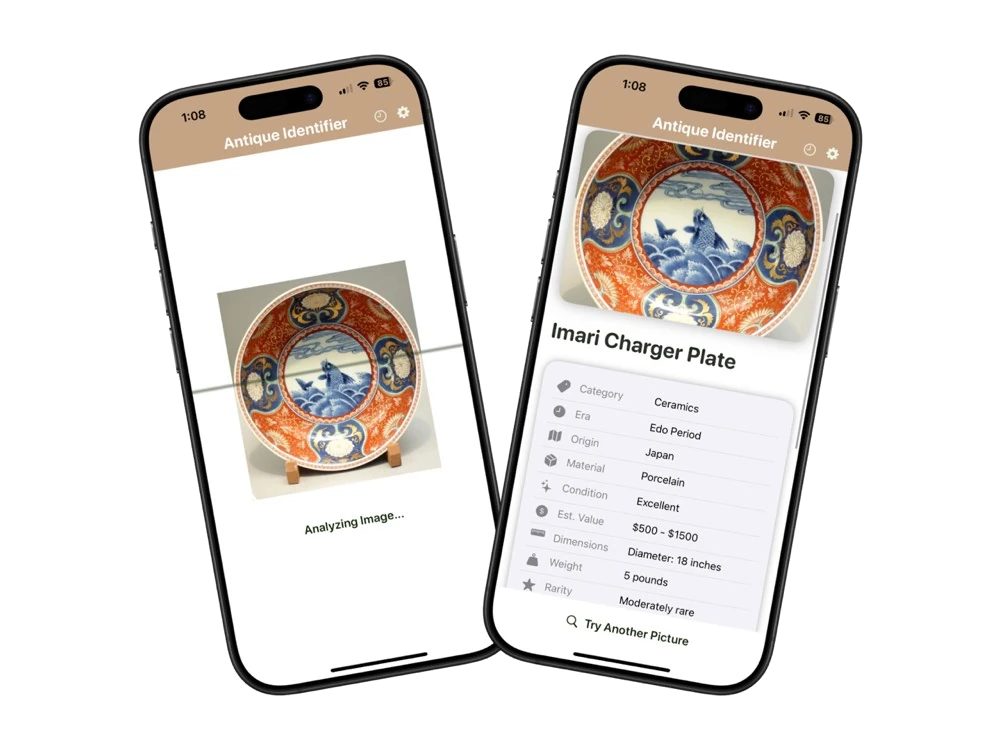
What the Antique Identifier app does
Photograph furniture, pottery, glass, jewelry, or another collectible. The antique identifier returns a likely name or type, category and era notes, and an estimated value range you can use as a starting point for your own research.
Photo to ID
A likely identification from a single picture.
Upload or snap a photo. The antique identifier app looks at form, materials, style, and visible marks to suggest what the object may be.
Estimated value range
A ballpark range, not a sale guarantee.
Each result includes an estimated market range based on what is visible in the photo. Condition, provenance, and the selling venue can move the real price.
History and context
Period, style, and what to inspect next.
Results add likely era, origin, materials, and notes so you know which marks, construction details, or comparables to check.
Saved scan history
Keep identifications in one place.
Signed-in users can revisit photos, notes, and ranges in their history instead of starting over each time.
How it works
Three steps on the web antique identifier or in the antique app: photograph the object, review the likely ID and value range, then use the notes to keep researching.
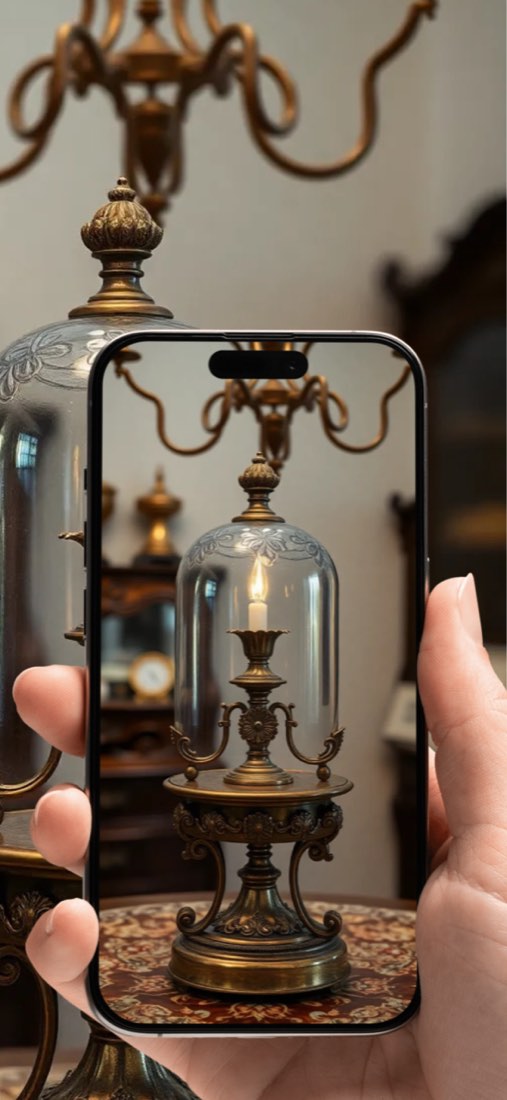
1. Take a photo
Snap the whole object in good light, or upload a gallery photo. Close-ups of marks, labels, and joints help when you have them.
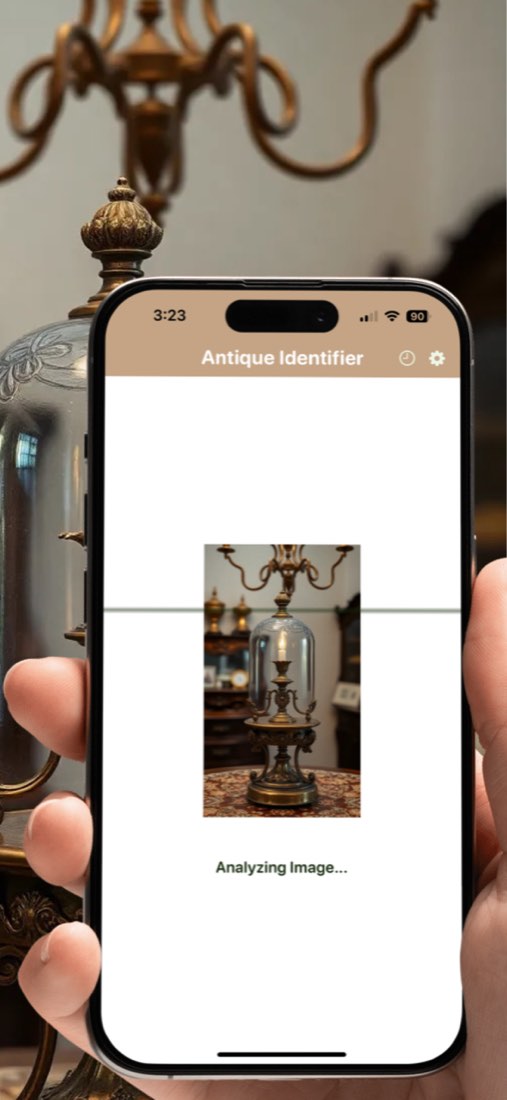
2. Get a likely ID
The antique identifier app returns a suggested identification, period and material notes, and an estimated value range.
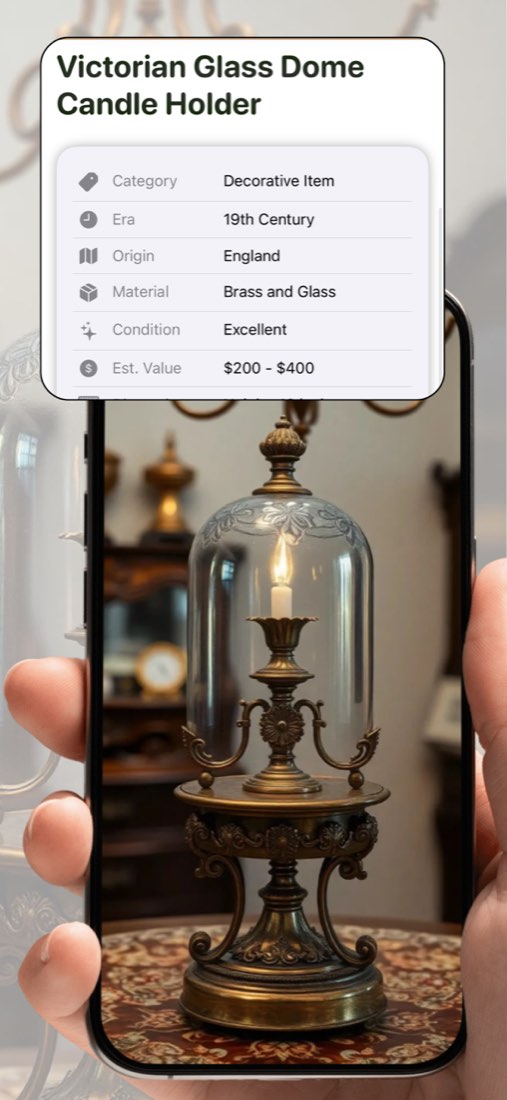
3. Keep researching
Treat the result as a lead. Check marks, condition, and comparables — and use a specialist when the stakes are high.
What it can and can't identify
The antique identifier app is built for everyday objects you can photograph. It is a research aid, not a laboratory or auction-house appraisal.
What it can help with
- Furniture, pottery and ceramics, glassware, jewelry, silver, clocks, toys, books, textiles, and similar collectibles.
- A likely type or style, period notes, and visible-mark observations from the photo you provide.
- An estimated value range you can compare with completed sales and a specialist when needed.
For category-specific methods, see the pottery marks guide, glassware identification, and antique furniture guide.
What it can't do
- Issue a formal, insurance, or lab-grade appraisal, or certify authenticity.
- Inspect construction in person, test materials, or verify provenance and legal or cultural-property status.
- Promise a sale price, or identify an object from a dark, cropped, or heavily filtered photo with any certainty.
Read the identification and valuation disclaimer before relying on a result for buying, selling, or insurance.
Photo tips
Clear photos give the antique identifier more to work with. You do not need studio lighting — just show the object honestly.
Use even light
Daylight or a shaded outdoor spot beats a harsh flash. Avoid deep shadows and glare on glass, glaze, or polished metal.
Show the whole object
Include the full silhouette against a plain background so shape and proportions are obvious. Crop later if you need a detail.
Photograph marks and joints
If there is a maker's mark, hallmark, label, signature, or construction joint, add a sharp close-up. Those details often matter more than the pretty front view.
Keep it sharp
Hold steady, skip heavy filters, and do not cover damage. Wear and repairs belong in the frame — they affect both ID and the value range.
Loved by collectors and enthusiasts
See what our users are saying about their experience with Antique Identifier App.

Margaret T.
Antique Dealer
"This antique identifer app has transformed how I evaluate new inventory. The app has helped me identify several rare pieces that I would have otherwise overlooked. The historical information is incredibly detailed and accurate."

Robert J.
Collector
"As someone new to collecting antiques, this app has been invaluable. I've learned so much about different periods and styles. The value estimates have helped me avoid overpaying at estate sales and auctions."

Claire M.
Interior Designer
"This antique identifier app has become an essential tool in my design business. When sourcing vintage pieces for clients, I can quickly identify items and provide them with the fascinating history behind each piece, which they love."
Antique identifier app FAQ
Accuracy, offline use, privacy, and how the free antique identifier tier works.
Scan an antique or download the app
Start with a free antique identifier scan on the web, or install the antique app on your phone. Three identifications are included before premium.
Free to start · Optional premium for unlimited scans