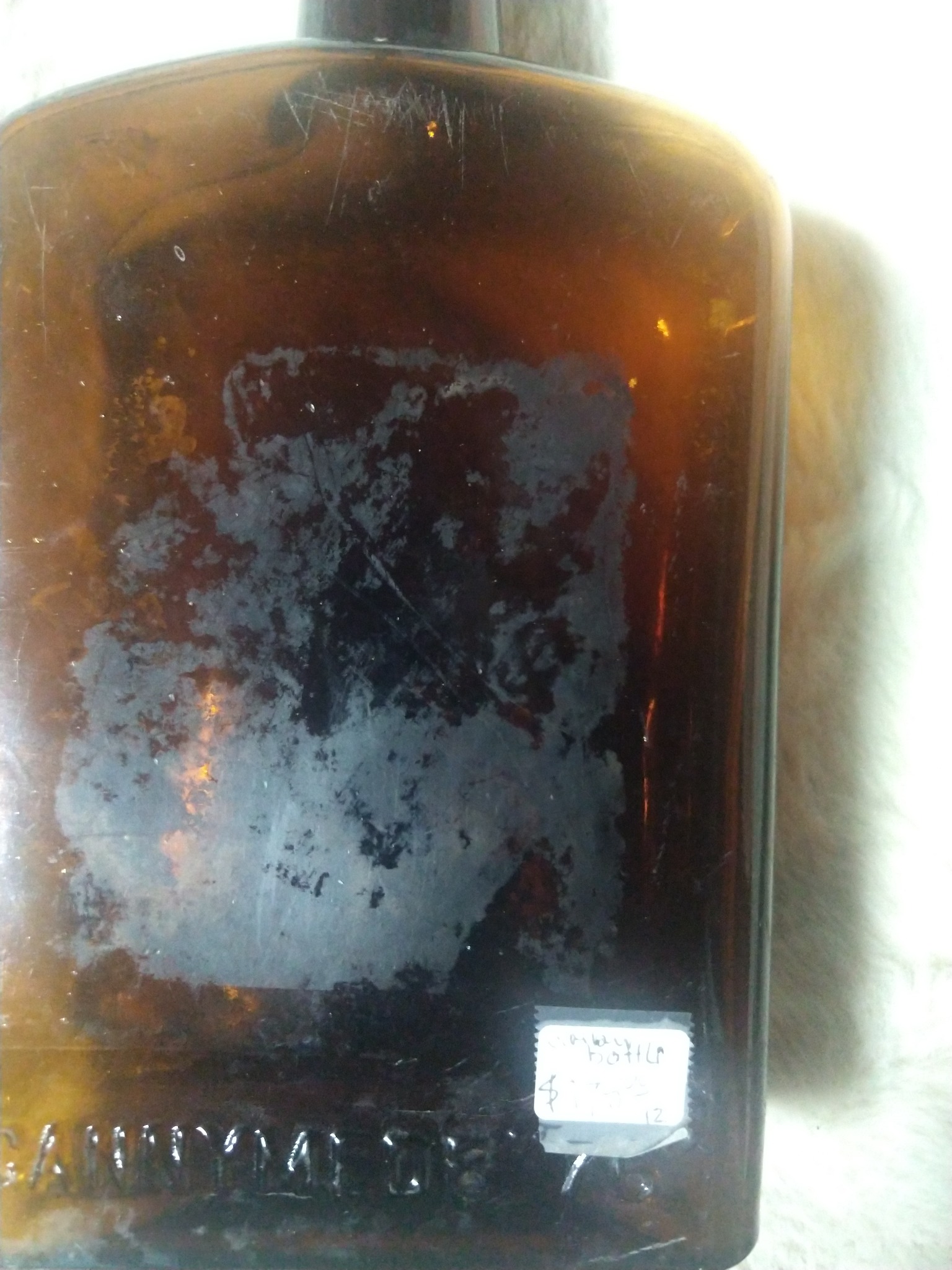
Amber glass bottle or demijohn-style bottle
Estimated Value
$20-$75
A large amber-brown glass bottle with a rectangular body, rounded shoulders, and a narrow neck. The glass appears thick and utilitarian, suggesting it may have been used for storage, chemicals, beer, medicine, or household liquids. The base shows molded ridging or embossing, though the text is not legible in the photo. A small paper price sticker is present near the lower right side, but it does not provide enough information to identify the maker or contents. The bottle has substantial surface wear and mottling, which may be from age, storage conditions, or residue.
Era
Late 19th century to early 20th century, possibly 1890s-1930s
Origin
Likely United States or Europe; exact origin unknown
Material
Amber/brown glass
Condition
Fair to Poor; heavy surface wear, scratches, clouding/iridescent staining, and possible residue or internal discoloration. No obvious chips or cracks are clearly visible from this image, but the surface is significantly worn.
Physical Details
Dimensions
Approximately 12-16 inches tall, based on proportions; exact size unknown
Weight
Medium to Heavy
Authentication
Authenticity Score
Medium; the bottle appears period-appropriate and genuinely old, but the exact age, maker, and original use cannot be confirmed from the image alone.
Provenance
Likely a mass-produced utilitarian bottle from a commercial or industrial context; specific provenance cannot be determined from the image alone.
Historical Significance
Amber glass bottles were widely used in the late 19th and early 20th centuries because the darker glass helped protect contents from light damage. Such bottles are historically interesting as examples of everyday industrial and domestic packaging, but they are usually common unless tied to a rare maker, embossed label, or unusual form.
Restoration Notes
- •No clear evidence of professional restoration visible
- •Possible surface residue, staining, or weathering on the glass
This identification and value range are AI-generated research aids, not authentication, certification, or a formal appraisal. Learn about the limitations and when to consult a qualified professional appraiser.
Research this item further
Related Identifications
Browse all →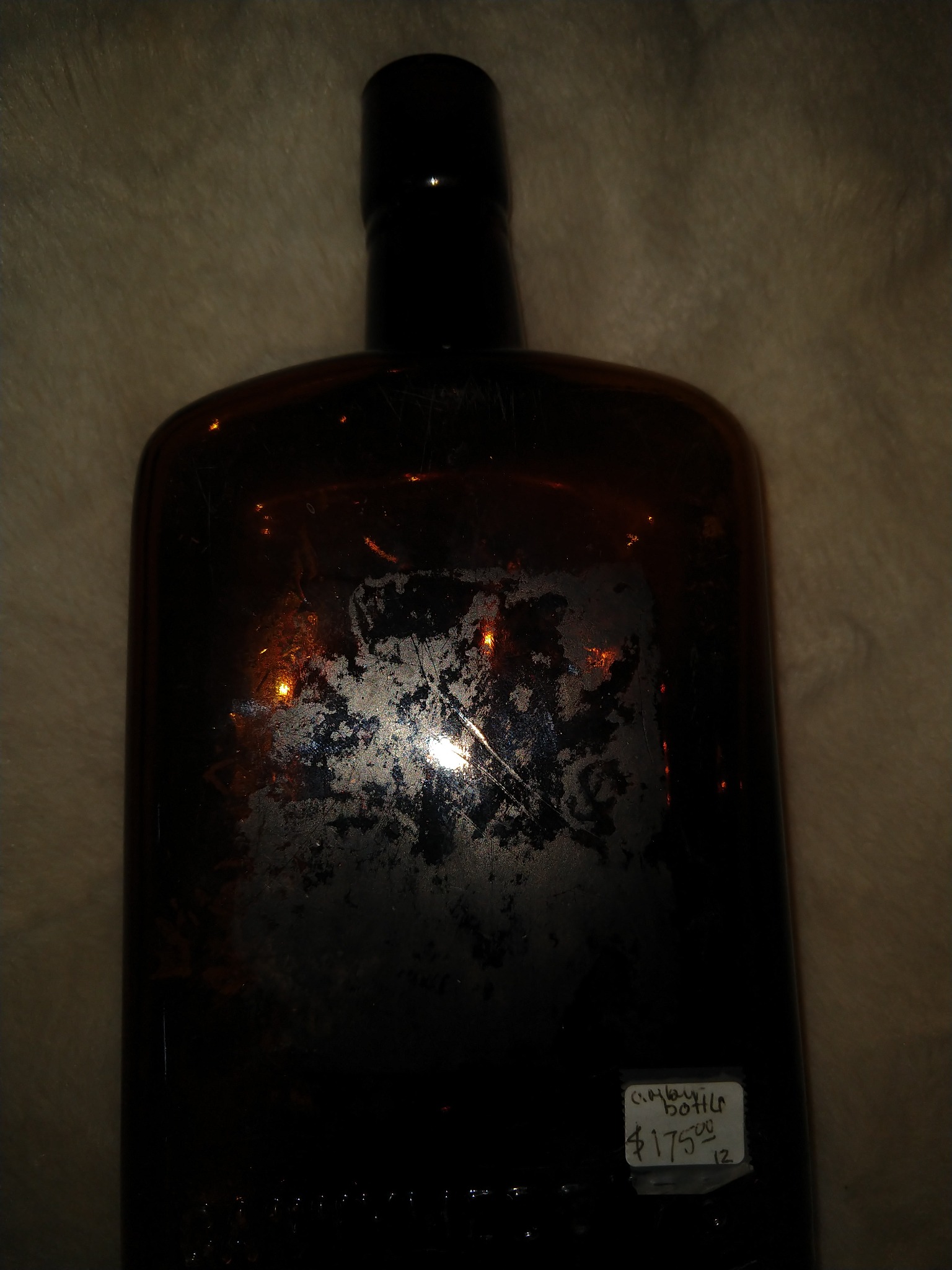
Antique amber glass bottle with applied neck
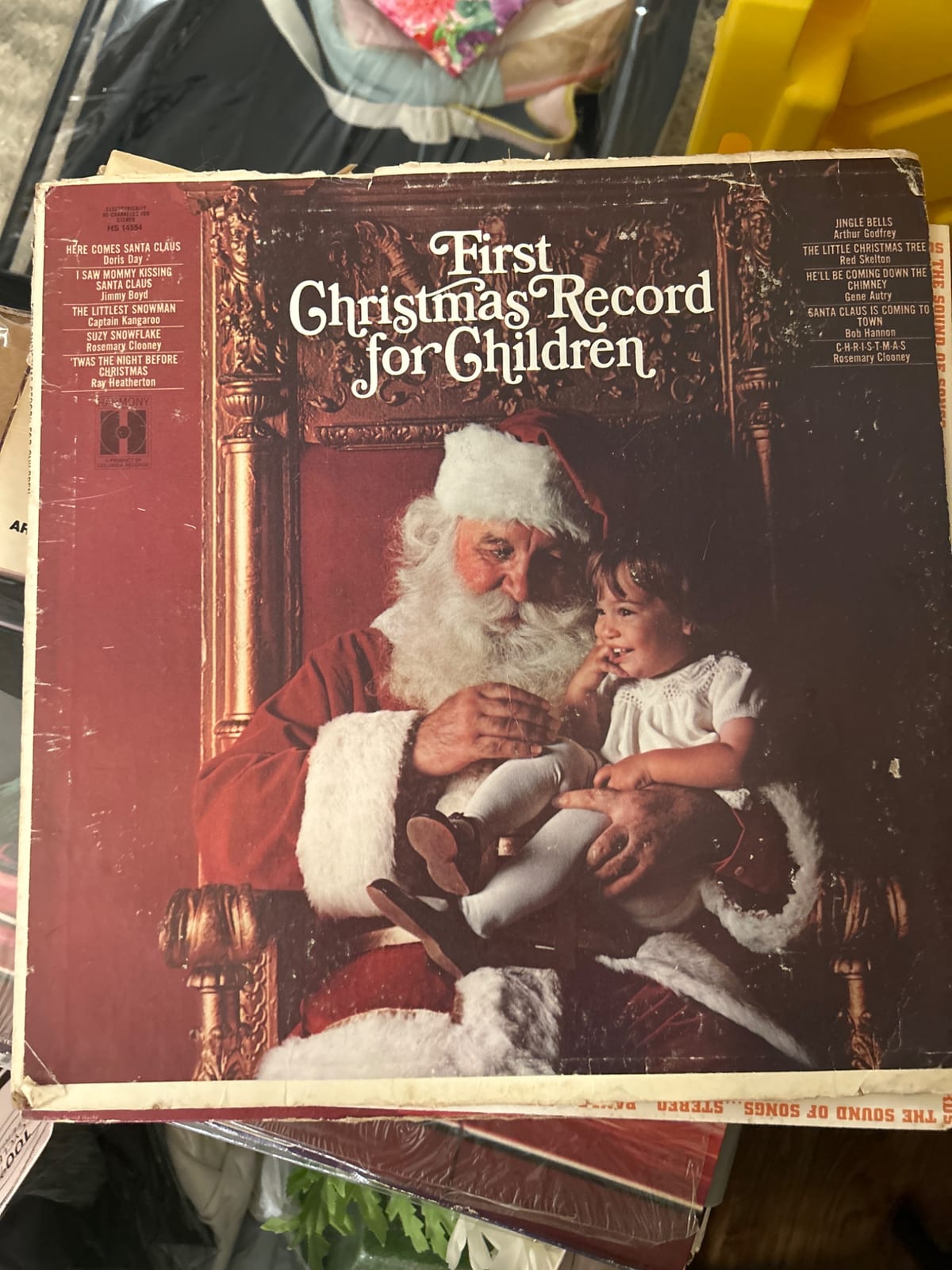
Vintage vinyl record album cover: "First Christmas Record for Children"
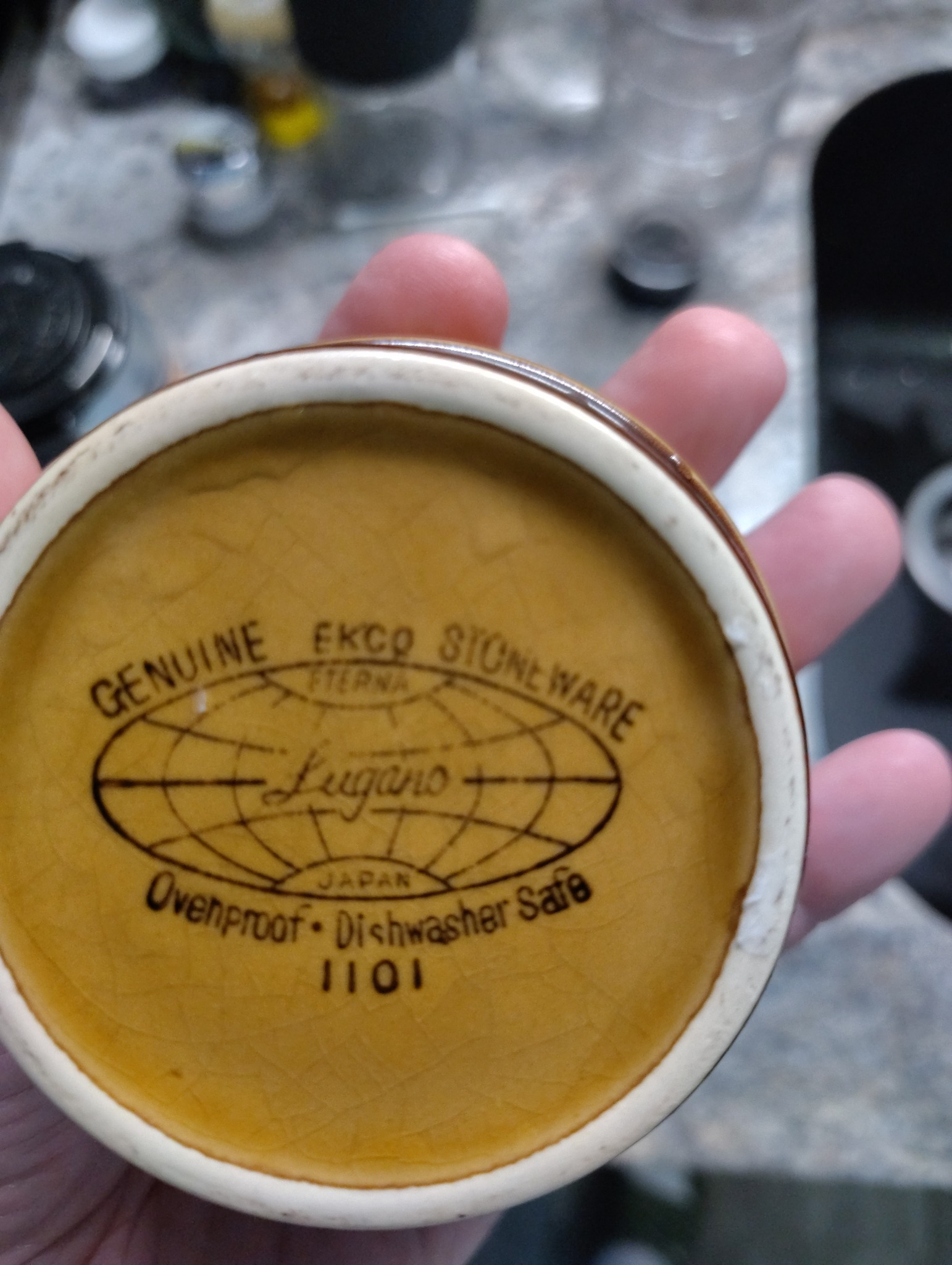
Lugano Genuine Ekco Stoneware Ovenproof Dishwasher Safe Japan small ceramic vessel or lid
Unknown amber glass bottle or jar fragment
Multi-tool pocket knife / folding corkscrew knife (Swiss Army-style utility knife)
Luxury fountain pen (likely modern gift pen, possibly Laqi/LAQI brand)
Small molded glass bottle or vial