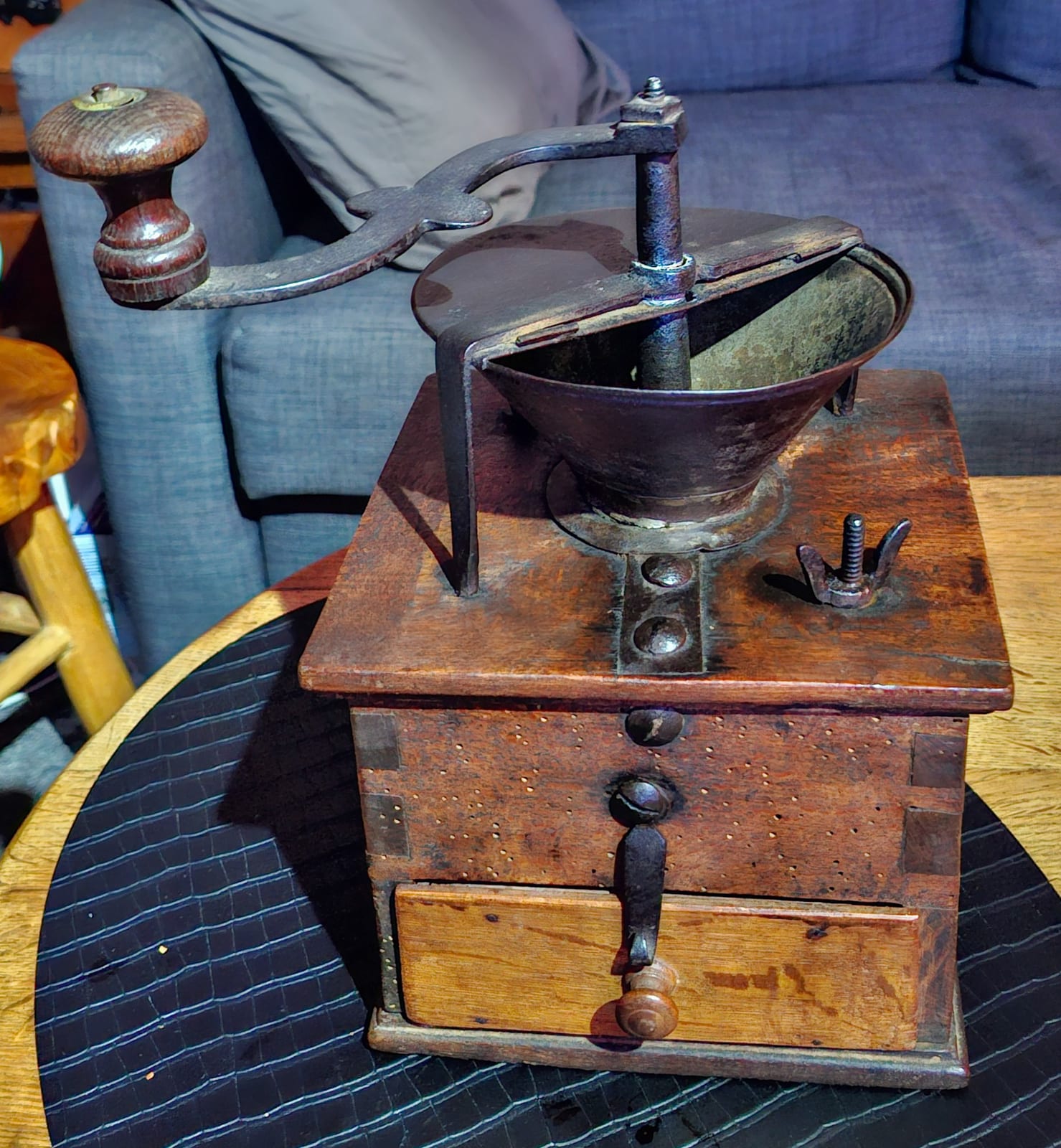
Antique hand-crank coffee grinder / mill
Estimated Value
$75-$250 USD
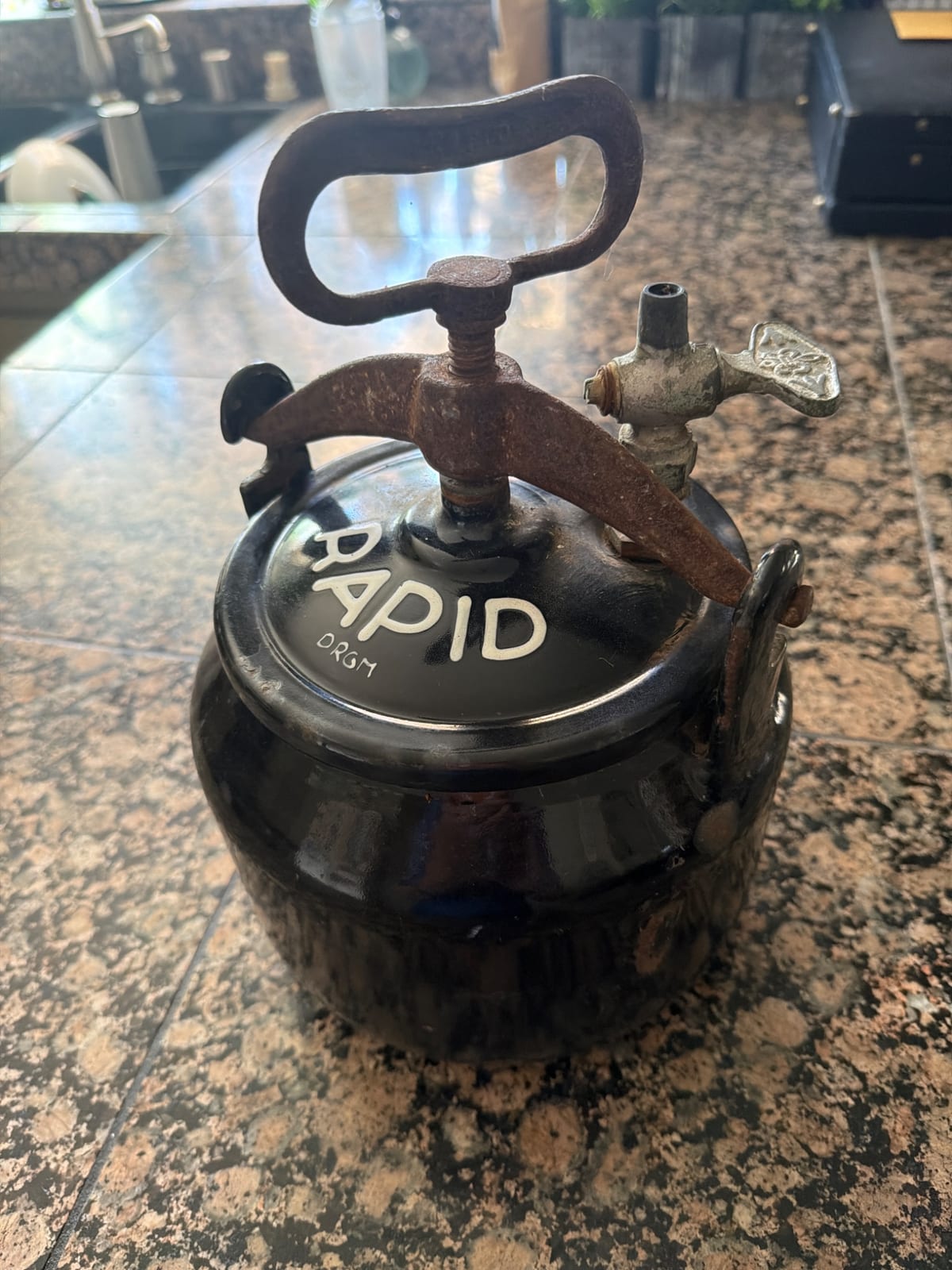
This appears to be an antique hand-operated coffee grinder or grain mill with a wooden cabinet base, front catch drawer, and a cast-iron top assembly. The large curved crank arm with a turned wooden handle drives a central spindle connected to the grinding chamber. The hopper and upper cover are metal, with visible patina and oxidation consistent with age. The design suggests a utilitarian household mill intended for grinding coffee beans or similar dry goods. The piece has a rustic, functional appearance and may have been made for domestic use rather than decorative display, though it now has collectible appeal due to its age and craftsmanship.
Era
Late 19th century to early 20th century (Victorian Era into early Edwardian period)
Origin
Likely Europe or North America; exact country unknown
Material
Wood base and drawer, cast iron frame and crank, steel grinding mechanism, possibly brass or iron fasteners
Condition
Fair to Good; shows significant age, oxidation, surface rust, wear to finish, and grime. Appears structurally intact with no obvious major breaks, but likely needs cleaning and possible mechanical servicing.
Physical Details
Dimensions
Approximately 12-16 inches tall, 8-10 inches wide, and 8-10 inches deep
Weight
Heavy
Authentication
Authenticity Score
Medium; the construction, wear, and materials are consistent with an antique hand-crank mill, but no maker's mark or close-up of the mechanism is visible to confirm manufacturer or exact date.
Provenance
Likely from a domestic kitchen or general store setting; no maker's mark or label is visible in the image, so precise provenance cannot be determined.
Historical Significance
Hand-crank coffee grinders and small household mills were common before electric appliances became widespread. They represent an important stage in domestic food preparation and early industrial-era cast-iron manufacturing. While not especially rare as a type, well-preserved examples with original parts and finish are increasingly collectible.
Restoration Notes
- •No obvious restoration is visible
- •Possible cleaning or oiling may have occurred, but not clearly evident from the image
- •Surface oxidation and wear suggest original aged finish rather than recent refinishing
This identification and value range are AI-generated research aids, not authentication, certification, or a formal appraisal. Learn about the limitations and when to consult a qualified professional appraiser.