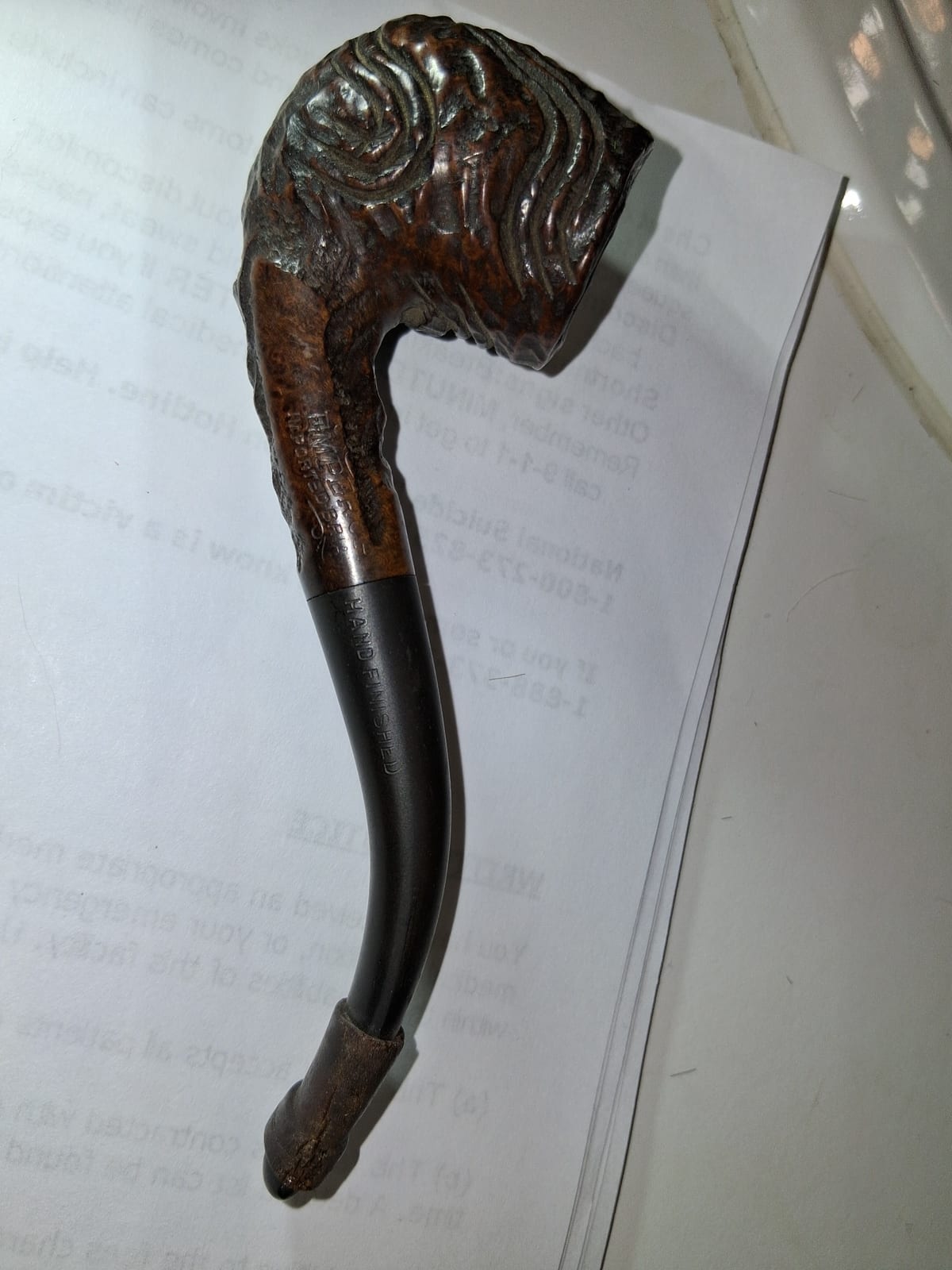
Carved briar smoking pipe with horn stem
Estimated Value
$40-$150
This appears to be a hand-carved smoking pipe with a deeply sculpted, organic bowl resembling a root or burl form. The bowl has pronounced swirling relief carving and a rich dark-brown patina consistent with long use and age. The shank is curved and bears an impressed maker's mark that is partially legible, though not enough to identify with confidence from the image alone. The stem is long and gently bent, likely horn or vulcanite, with a darker mouthpiece section. The overall style suggests a collectible vintage briar pipe, possibly a handmade or artisan piece rather than a mass-produced example.
Era
Early to mid-20th century, likely 1920s-1950s
Origin
Likely Europe, possibly France or Italy
Material
Carved briar wood bowl, horn or vulcanite stem, leather or rubber mouthpiece/ferrule
Condition
Fair to Good; visible heavy surface wear, darkened patina, possible oxidation and age-related cracking/wear at the stem end, but the pipe appears structurally intact
Physical Details
Dimensions
Approximately 5.5 to 7 inches long; bowl roughly 2 to 3 inches across at the widest point
Weight
Light
Authentication
Authenticity Score
Medium; the materials, carving style, and wear are consistent with an authentic vintage smoking pipe, but the maker and exact age cannot be confirmed from the image alone
Provenance
Likely a European artisan tobacco pipe, possibly sold through a pipe maker or tobacconist; exact maker and provenance are unknown due to limited legibility of the stamp
Historical Significance
Hand-carved briar pipes were popular among smokers and collectors in the late 19th and 20th centuries, especially in Europe. Artisan pipes with distinctive sculptural bowls can be desirable to collectors, particularly when attributed to a known maker.
Restoration Notes
- •Possible wear or repair at the mouthpiece/stem end
- •Surface oxidation and heavy use patina visible
- •No clear evidence of major restoration, but the stem and ferrule area may have been replaced or reconditioned
This identification and value range are AI-generated research aids, not authentication, certification, or a formal appraisal. Learn about the limitations and when to consult a qualified professional appraiser.
Research this item further
Related Identifications
Browse all →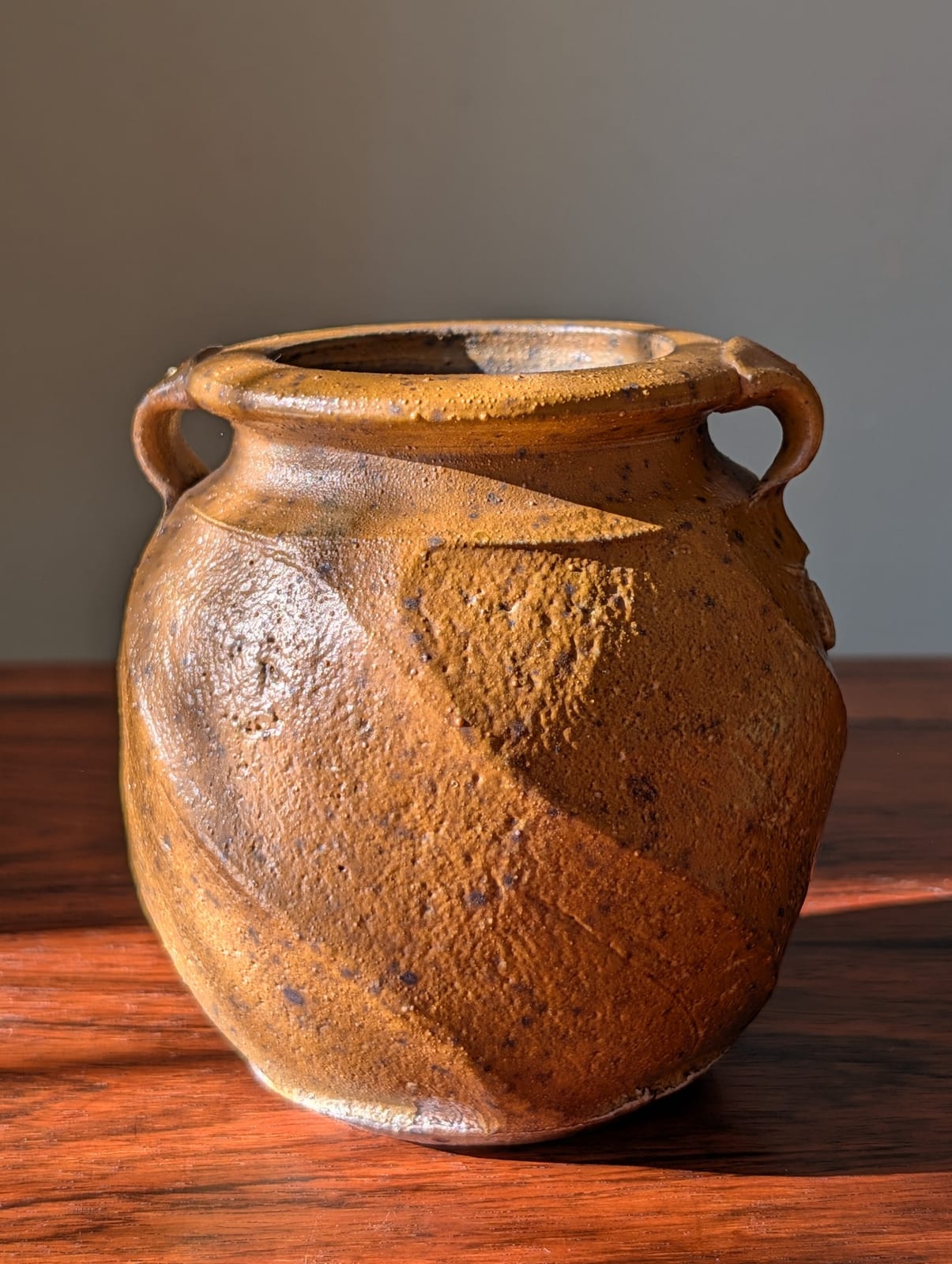
Handmade stoneware storage jar / crock
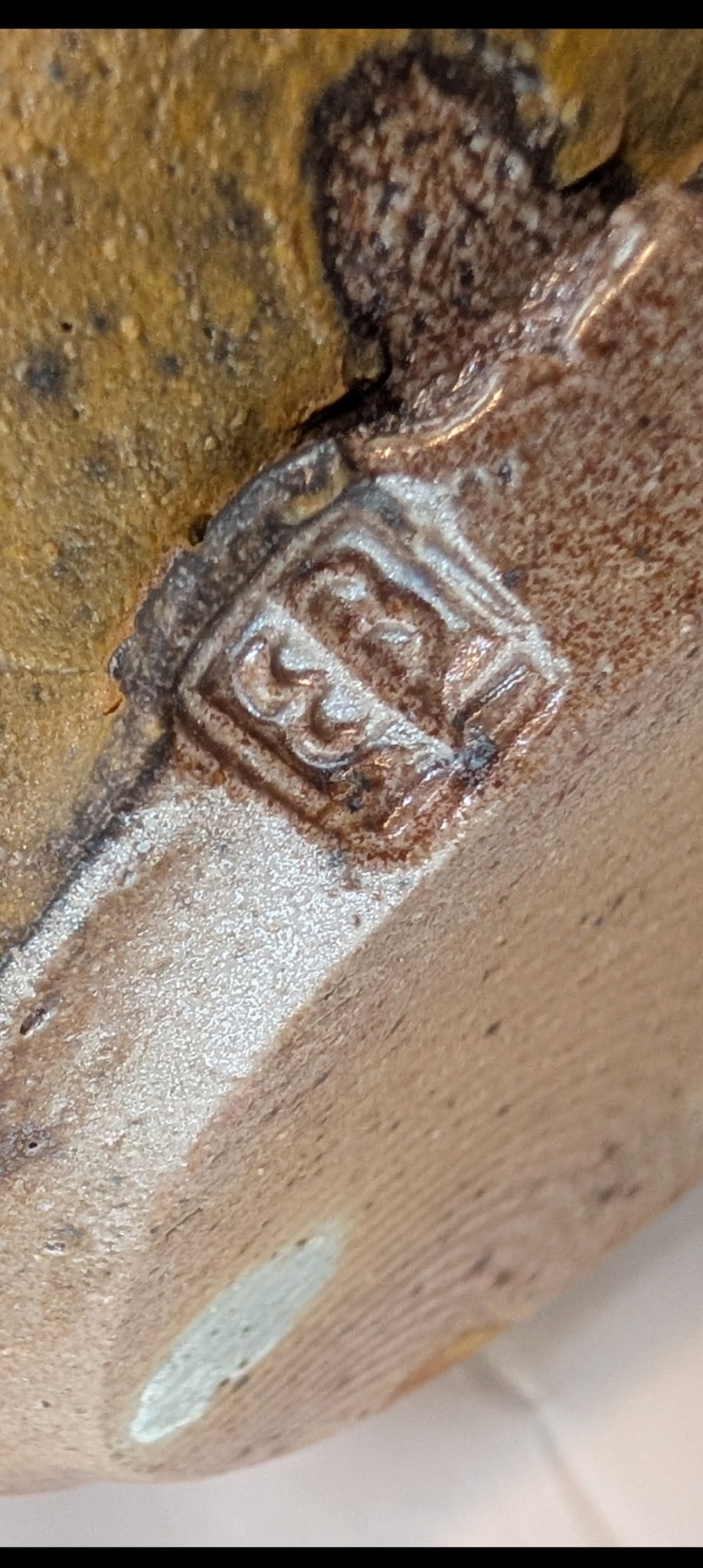
Ceramic or pottery vessel fragment with impressed maker's mark
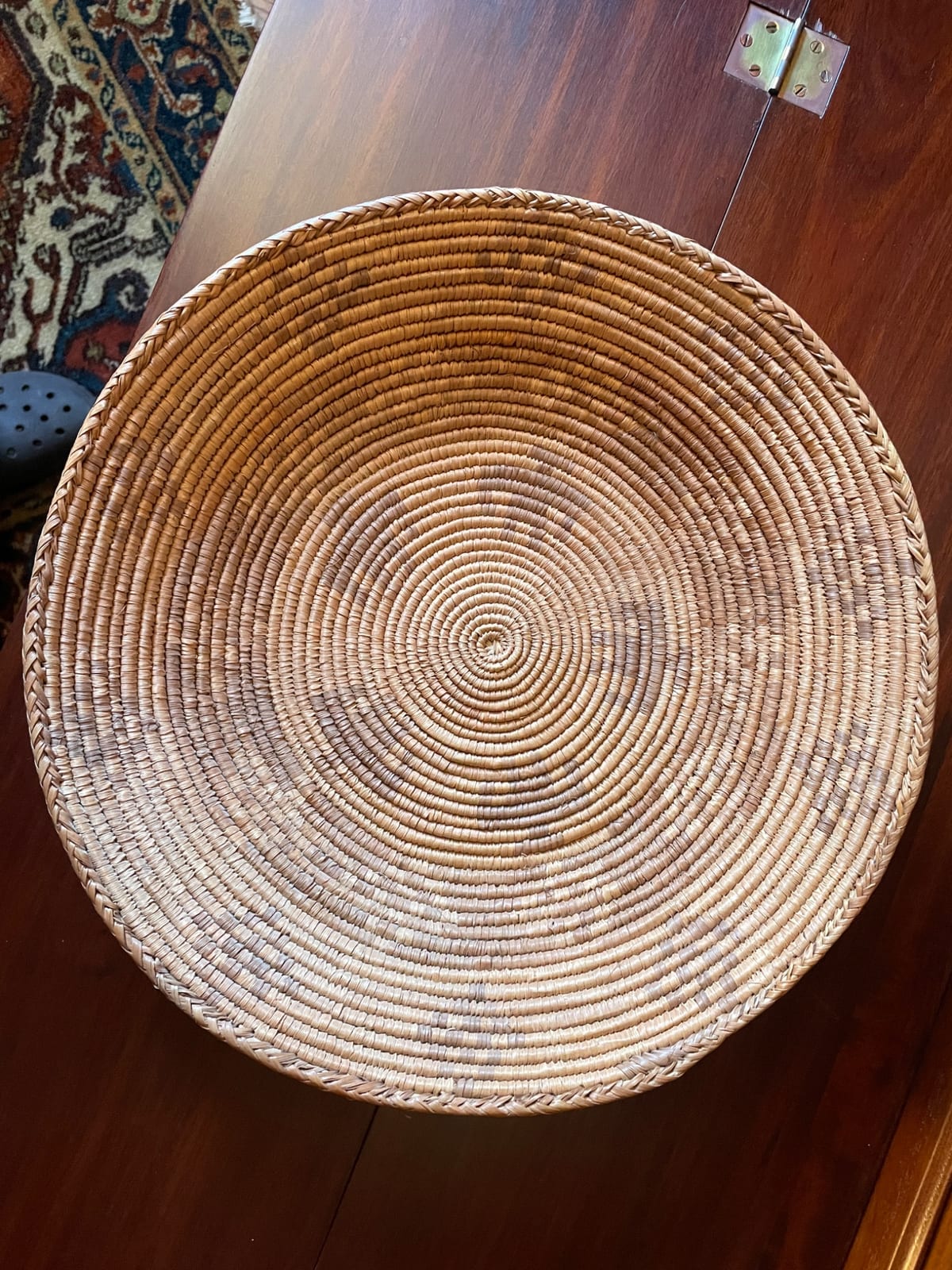
Round coiled woven basket or tray
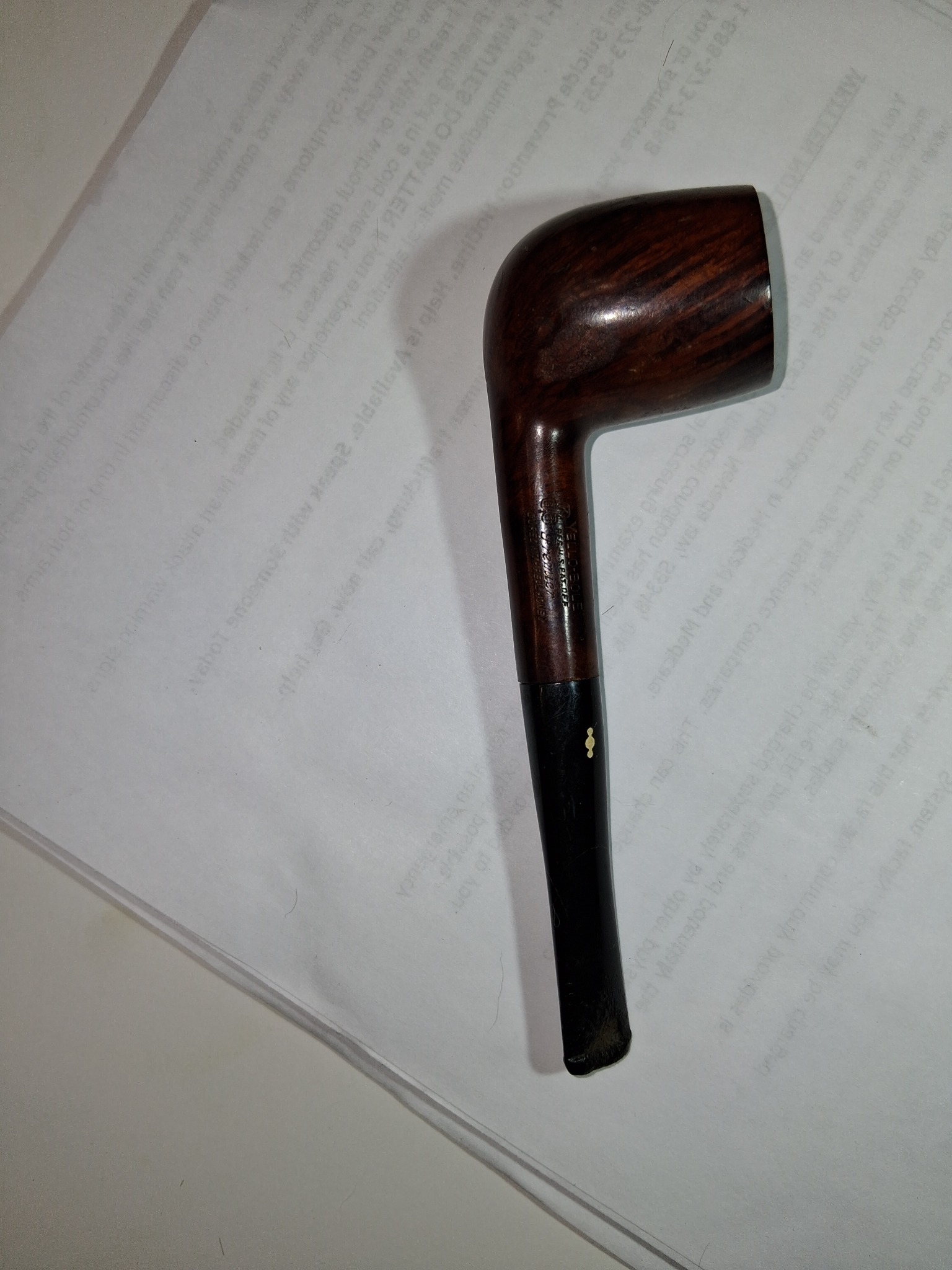
Tobacco smoking pipe (bent billiard style)
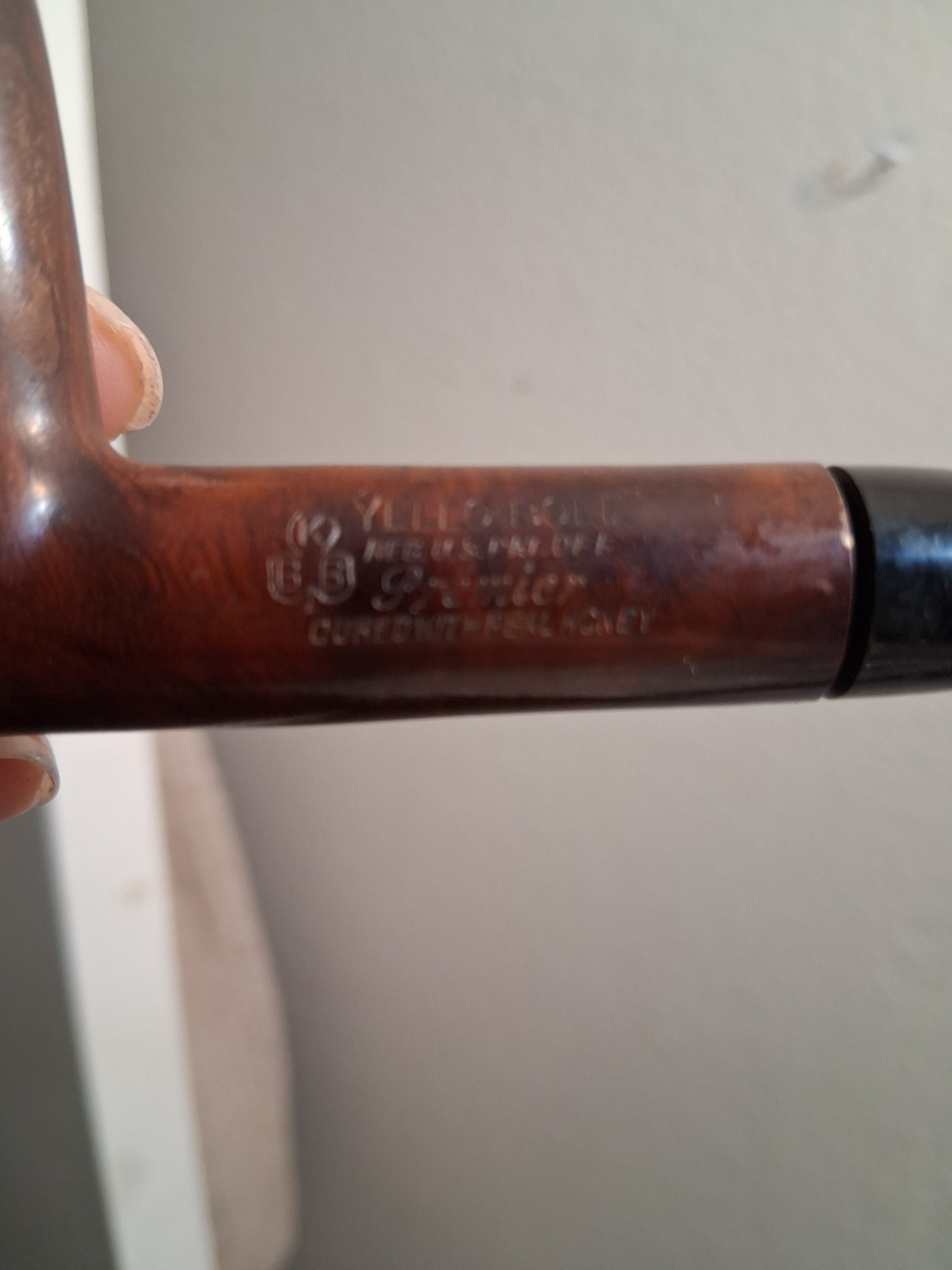
Vintage briar smoking pipe
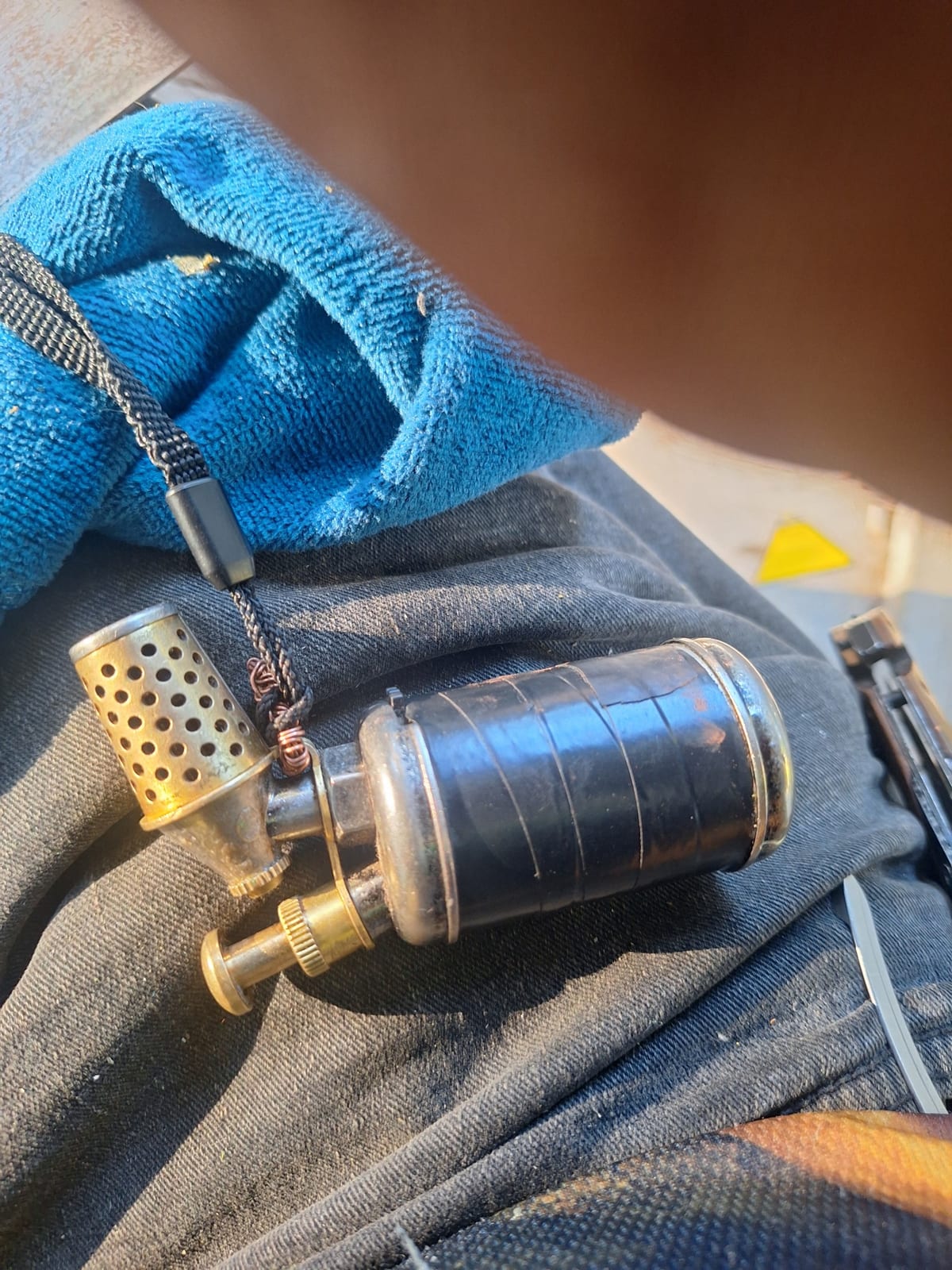
Vintage portable cigarette lighter / pipe lighter