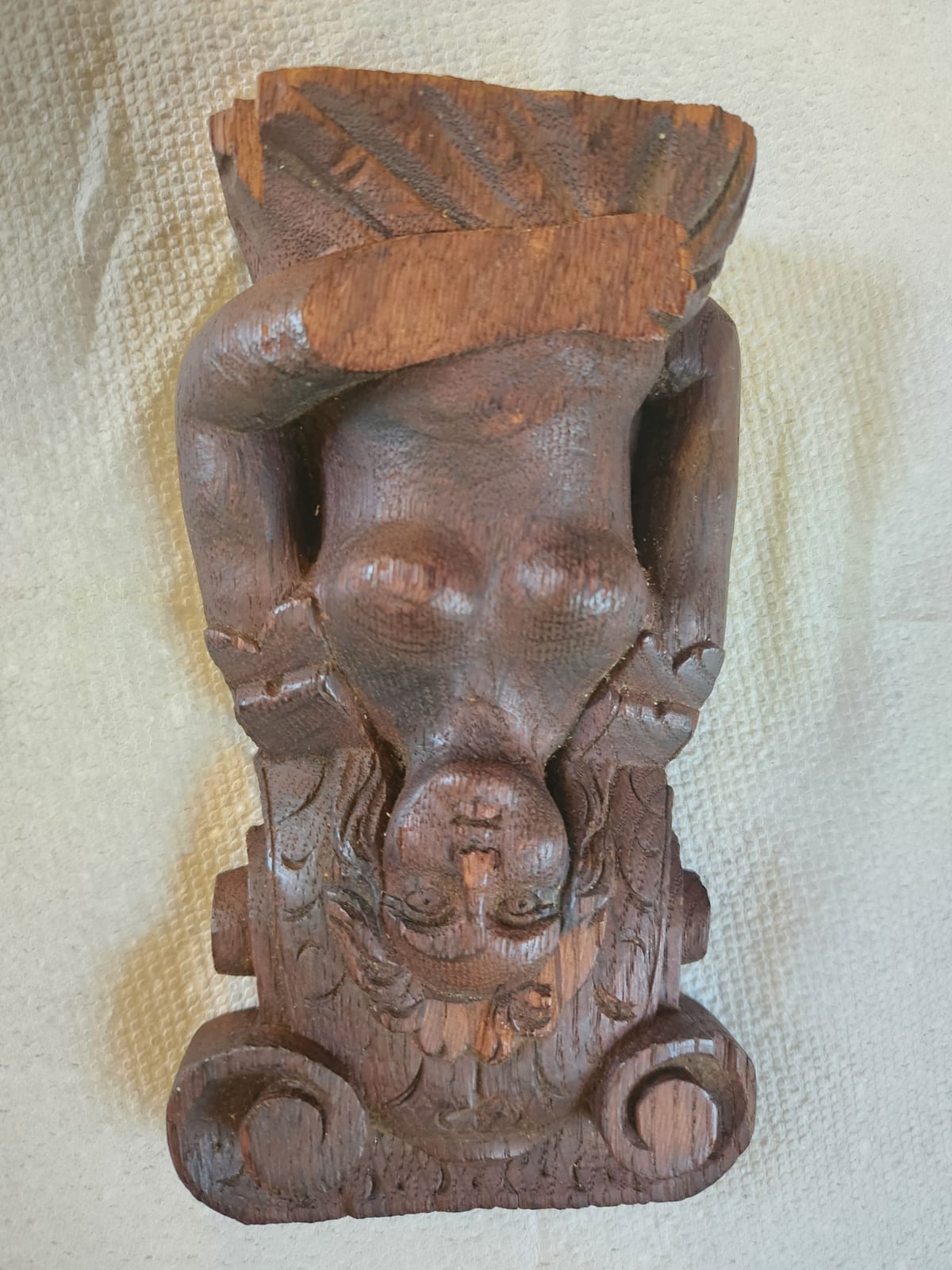
Carved wooden architectural bracket or decorative corbel with figural face
Estimated Value
$150-$500
This appears to be a hand-carved wooden decorative support or bracket, likely originally part of furniture, an architectural element, or a decorative interior fitting. The piece features a stylized human face or mask with symmetrical carved details, rounded scroll-like forms at the base, and a broad top section that may have served as a mounting point or support surface. The carving is bold and somewhat primitive/folk in execution, with deep relief and visible tool marks. The dark brown surface suggests age, handling, or an applied stain/finish. The design may have symbolic, folkloric, or purely ornamental intent.
Era
Late 19th century to early 20th century (best estimate; exact date unknown)
Origin
Likely European or North American, possibly hand-carved in a vernacular or folk style
Material
Carved hardwood, likely oak or a similar dense wood, with dark stained or aged finish
Condition
Fair. Visible wear, surface abrasion, edge losses, and a significant split/crack at the top. The carving remains intact overall, but the upper section appears chipped and worn, with age-related drying and possible later finish.
Physical Details
Dimensions
Approximately 12-16 inches tall, 6-8 inches wide, and 4-6 inches deep (estimated from image only)
Weight
Medium
Authentication
Authenticity Score
Medium. The carving shows genuine hand-work characteristics and age wear, but without provenance, marks, or additional views, the exact age and original function cannot be confirmed.
Provenance
Unknown. The style suggests it may have come from a carved architectural interior, altar piece, furniture support, or folk-art decorative object. No maker's mark or inscription is visible.
Historical Significance
Carved figural wood elements like this are often associated with vernacular craftsmanship, architectural ornament, or folk traditions. Such pieces can be significant as examples of hand-carved decorative woodwork and regional stylistic traditions, especially if they originated from a larger historic structure or piece of furniture.
Restoration Notes
- •Possible surface refinishing or later dark stain
- •Visible crack/split at the top
- •Minor edge losses and wear consistent with age
This identification and value range are AI-generated research aids, not authentication, certification, or a formal appraisal. Learn about the limitations and when to consult a qualified professional appraiser.