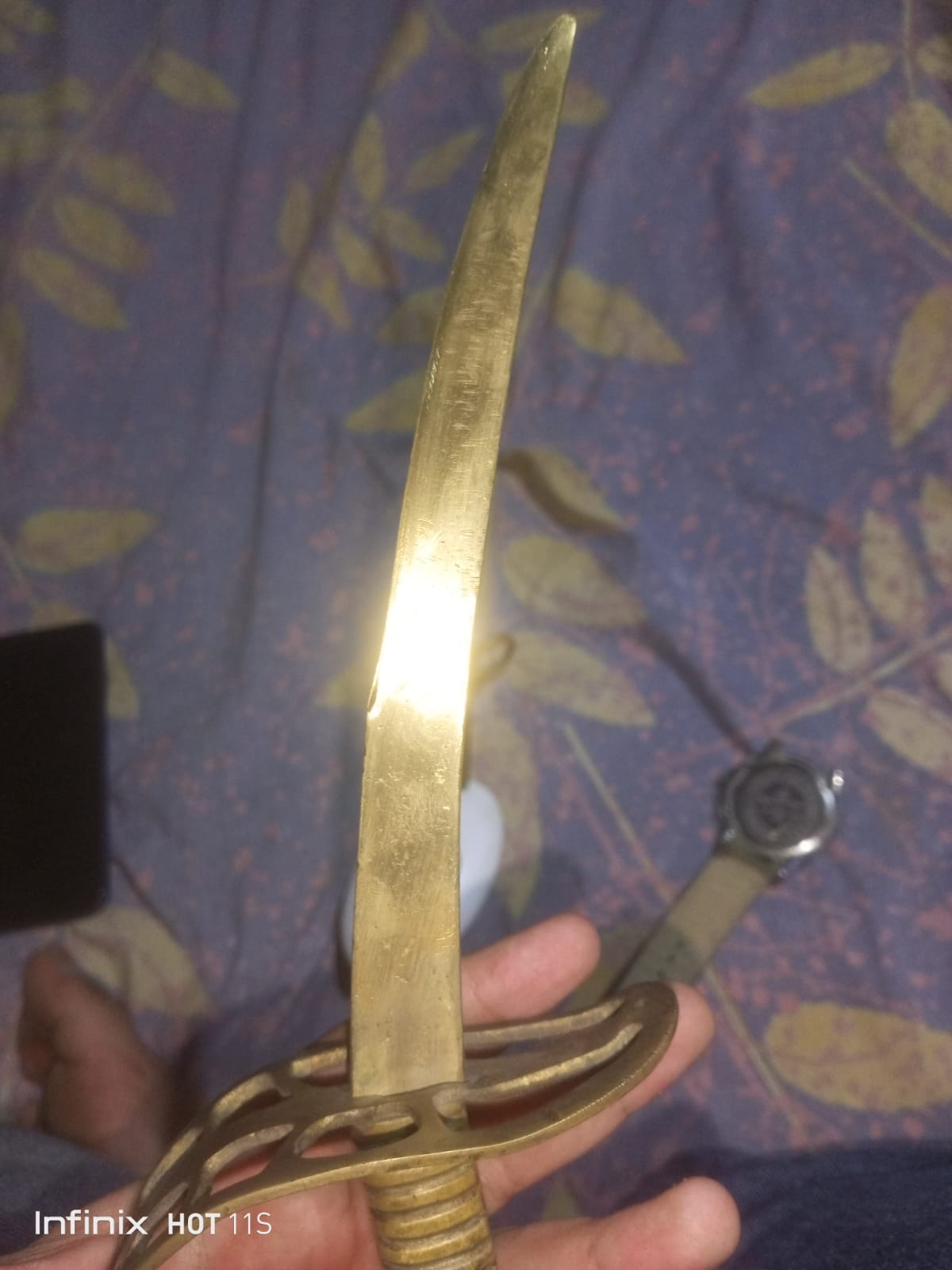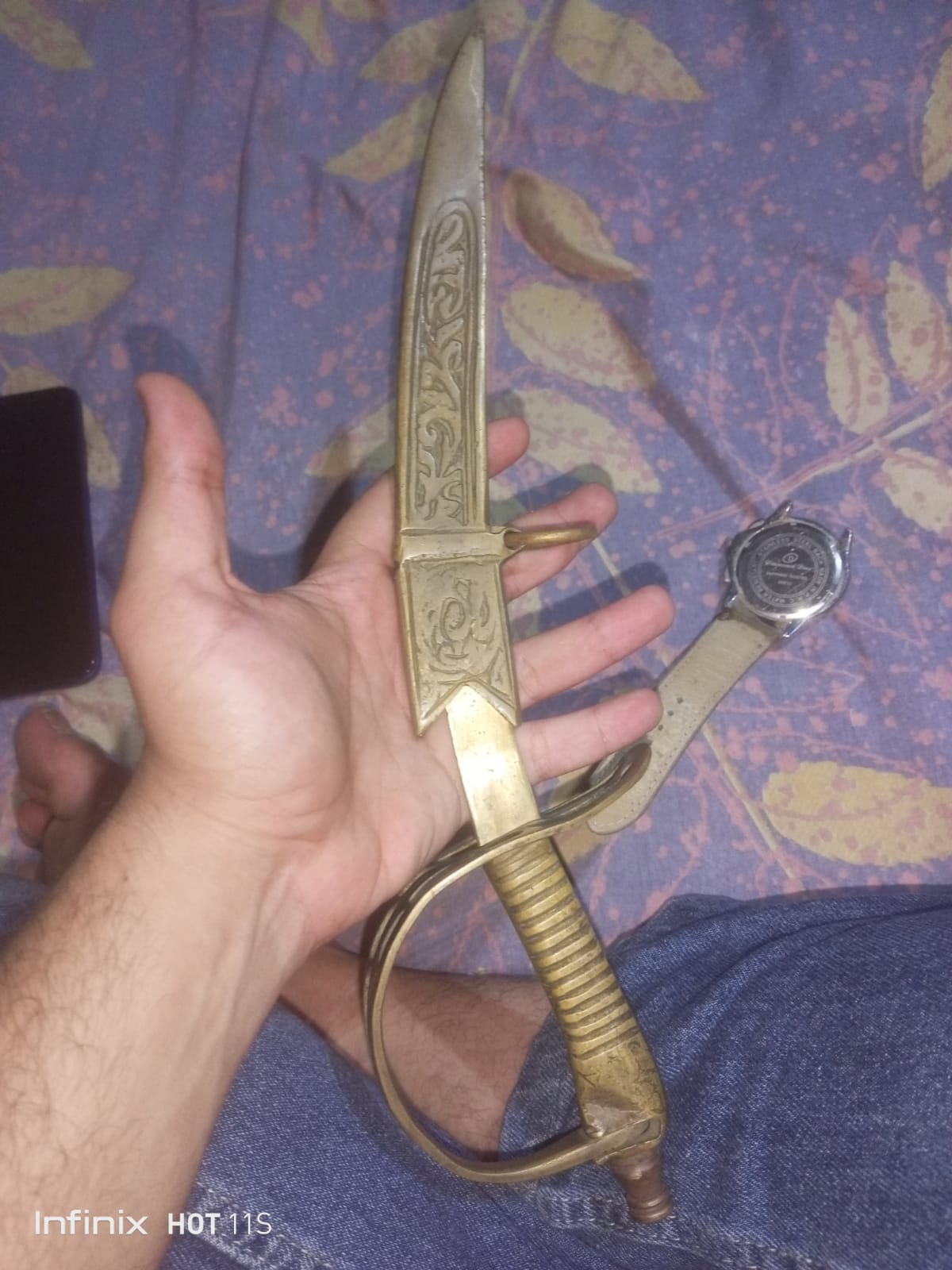
Decorative brass dress dagger or ceremonial dagger
Estimated Value
$75-$250 USD
A decorative dagger with an elongated, narrow steel blade and highly ornamented brass-colored hilt and scabbard fittings. The handle appears ribbed for grip, and the upper section features engraved or cast floral/scroll motifs. A large circular suspension ring or belt loop is attached, suggesting it may have been worn as part of traditional dress, ceremonial attire, or military-style presentation. The overall design is more ornamental than utilitarian, and the piece resembles a dress dagger, jambiya-style ceremonial weapon, or tourist/collectible ethnic dagger rather than a standard combat knife. No maker's mark or inscription is clearly visible in the image.
Era
Late 19th century to mid-20th century (likely 1900s-1940s; exact date unknown)
Origin
Likely South Asian, Middle Eastern, or North African region; exact origin unknown
Material
Brass or brass-plated metal scabbard/handle fittings, steel blade, possibly leather or metal suspension loop
Condition
Fair to Good; visible tarnish, surface wear, and age-related patina. No obvious major breaks visible in the photo, but the blade edge and fittings may have wear. Exact condition of blade tip and any internal corrosion cannot be confirmed from image alone.
Physical Details
Dimensions
Approximately 12-16 inches long overall; blade appears roughly 7-10 inches
Weight
Light to Medium
Authentication
Authenticity Score
Medium-Low; the object appears old or at least aged, but the exact period, authenticity as an antique, and regional attribution cannot be confirmed from a single photo. It may be an antique, vintage ceremonial dagger, or a later decorative reproduction.
Provenance
Likely from a traditional dress or ceremonial context; possibly made for local use or export/collecting. Without marks or clearer regional features, precise provenance is unknown.
Historical Significance
Ceremonial daggers of this type are often associated with traditional dress, status display, and regional craftsmanship across parts of the Middle East, South Asia, and North Africa. Such pieces can reflect local metalworking traditions and social customs, though this example cannot be tied confidently to a specific culture or period.
This identification and value range are AI-generated research aids, not authentication, certification, or a formal appraisal. Learn about the limitations and when to consult a qualified professional appraiser.