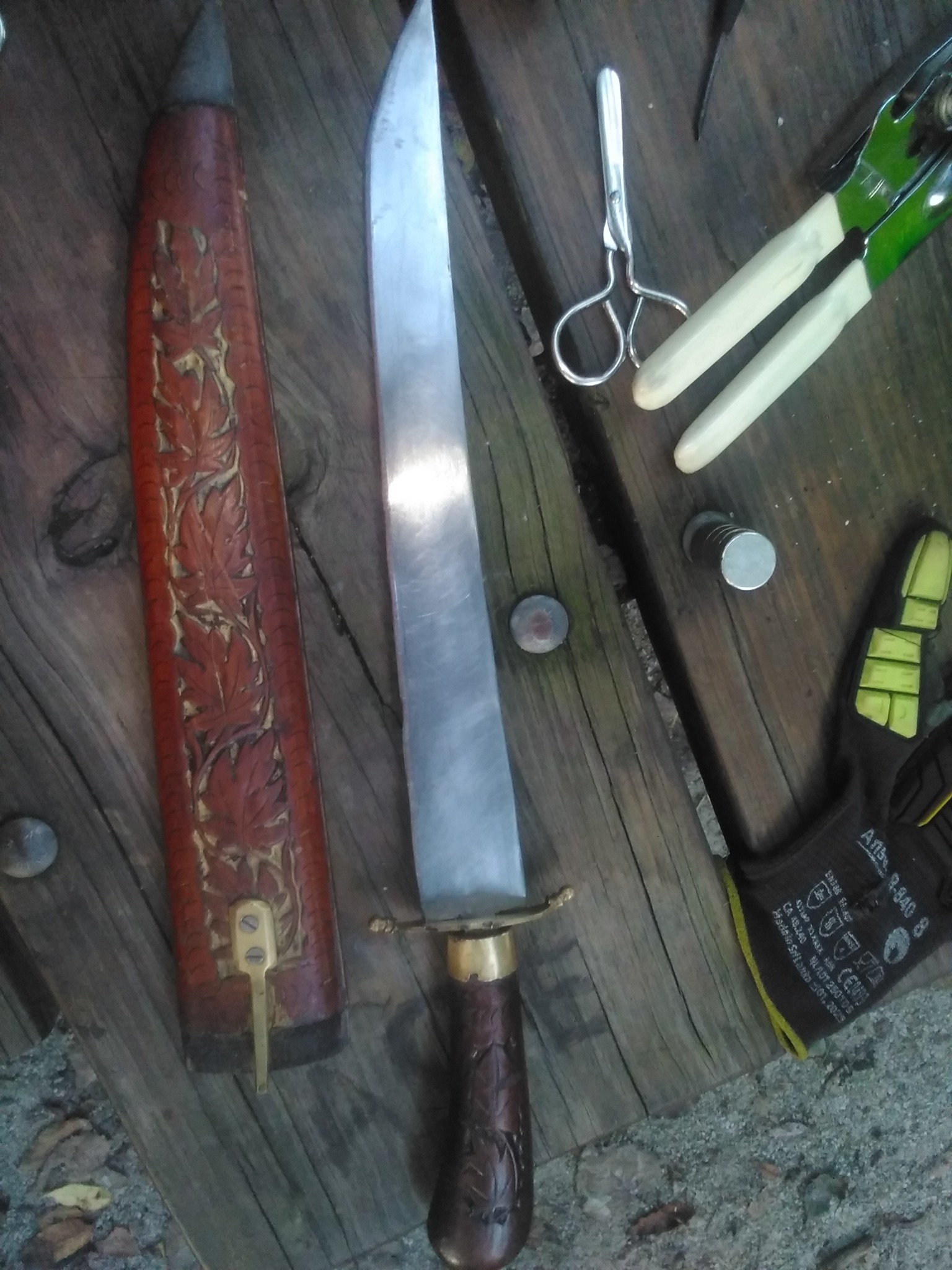
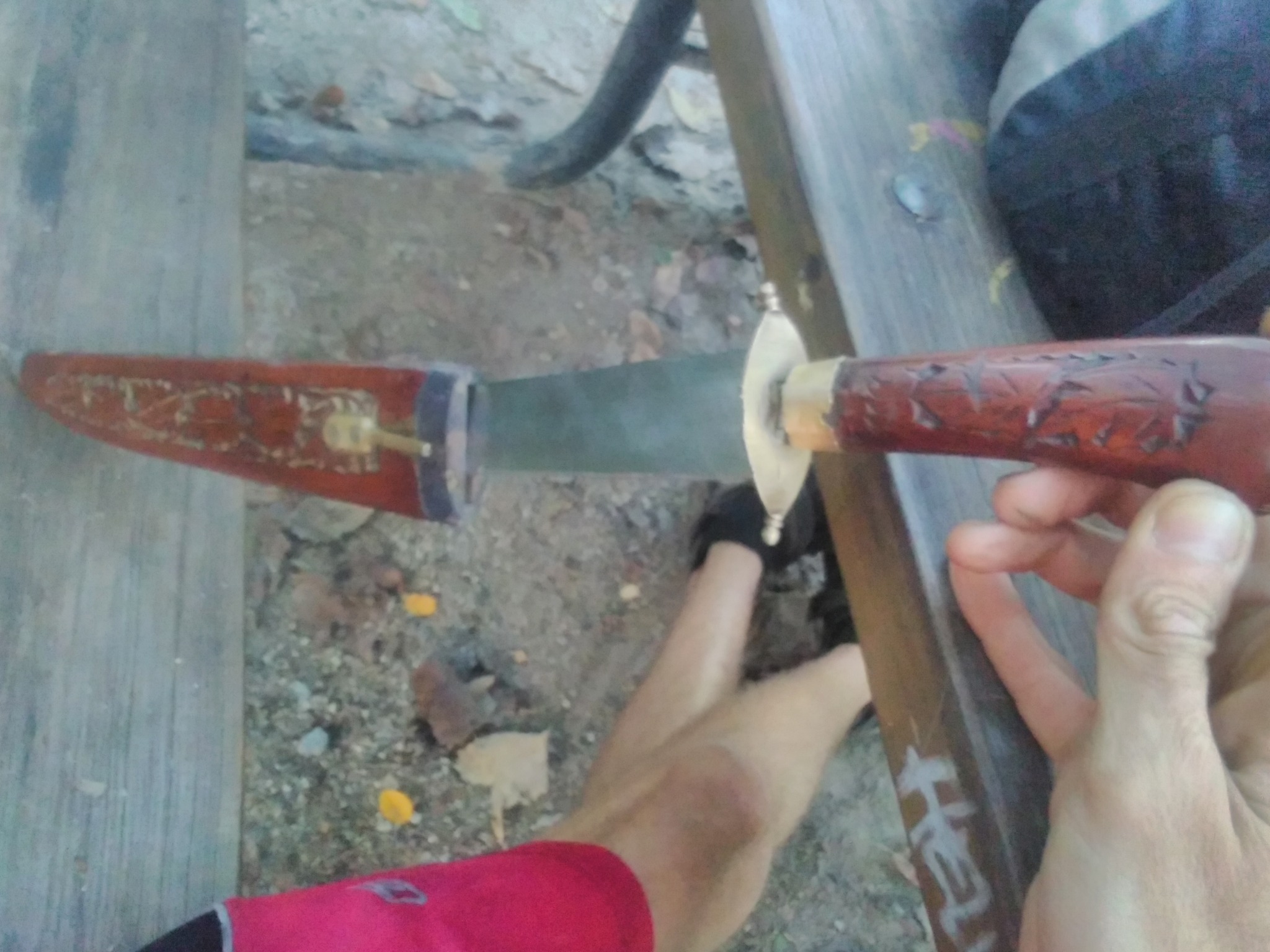
Decorative Filipino-style bolo or machete with carved wooden scabbard
Estimated Value
$75-$250
The image shows a long, single-edged blade resembling a bolo, machete, or decorative Filipino fighting/utility knife. It has a broad, slightly curved blade with a simple guard and a dark carved wooden handle. The accompanying scabbard is richly decorated with carved leaf or vine motifs and stained in red-brown tones, with brass-colored fittings at the throat and tip. The style suggests an ethnographic or tourist-market piece rather than a high-grade military weapon. The craftsmanship is decorative, with emphasis on the scabbard carving rather than fine blade finishing. No maker's mark or clear inscription is visible in the photo.
Era
Mid-20th century to late 20th century (approximate; exact dating unknown)
Origin
Philippines or Southeast Asia (likely Filipino-made decorative/utility blade)
Material
Steel blade, carved and stained wood scabbard and handle, brass or brass-colored fittings
Condition
Fair. Blade shows visible surface wear, light scratching, and possible oxidation spots; scabbard has significant decorative wear and loss to the finish; overall appears intact but used and aged.
Physical Details
Dimensions
Approximately 20-28 inches overall length; blade appears roughly 14-20 inches long
Weight
Medium
Authentication
Authenticity Score
Medium. The form and materials are consistent with a real traditional-style blade, but the exact age, maker, and whether it is an authentic period piece versus a later decorative example cannot be confirmed from the image.
Provenance
Likely Philippine origin, possibly made for local use, ceremonial display, or tourist trade. Exact provenance cannot be confirmed from the image alone.
Historical Significance
Bolo-style blades are historically significant in the Philippines and neighboring regions as tools, agricultural implements, and weapons. Decorative carved scabbards are often associated with regional craftsmanship and souvenir production, reflecting local artistic traditions.
Restoration Notes
- •No obvious restoration visible; finish wear and scuffing suggest age and use rather than recent professional restoration.
This identification and value range are AI-generated research aids, not authentication, certification, or a formal appraisal. Learn about the limitations and when to consult a qualified professional appraiser.
Research this item further
Related Identifications
Browse all →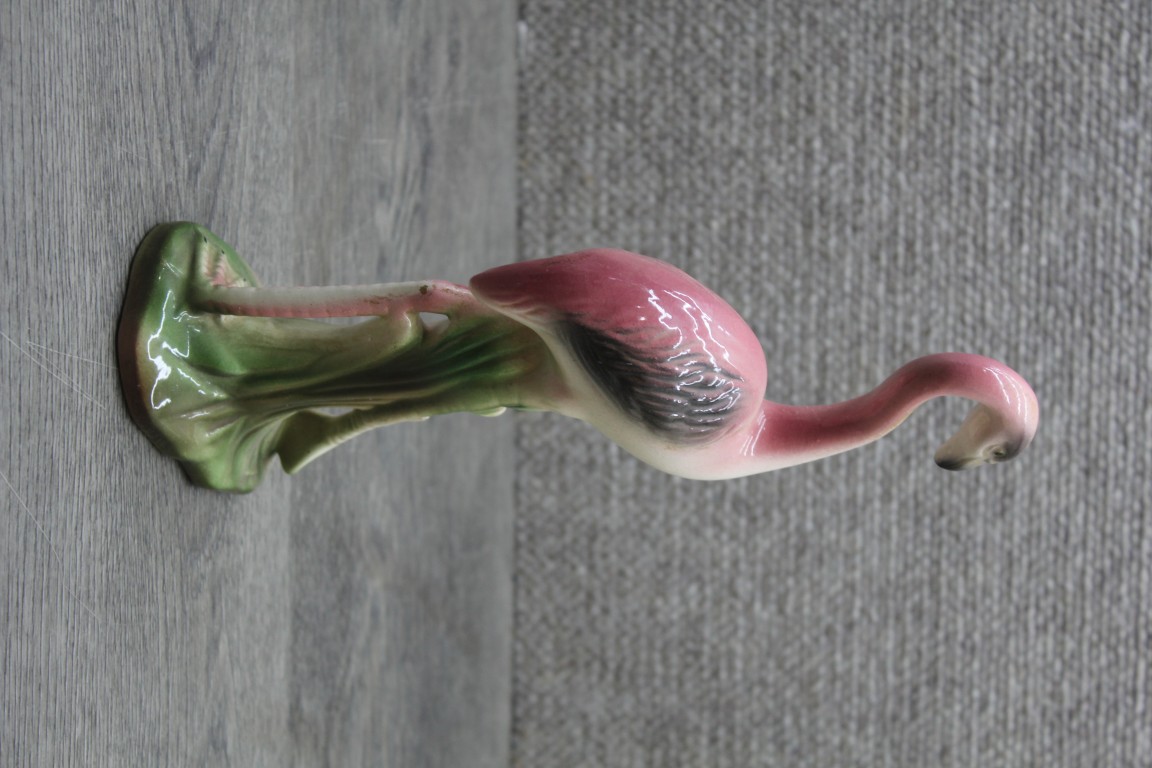
Ceramic flamingo figurine
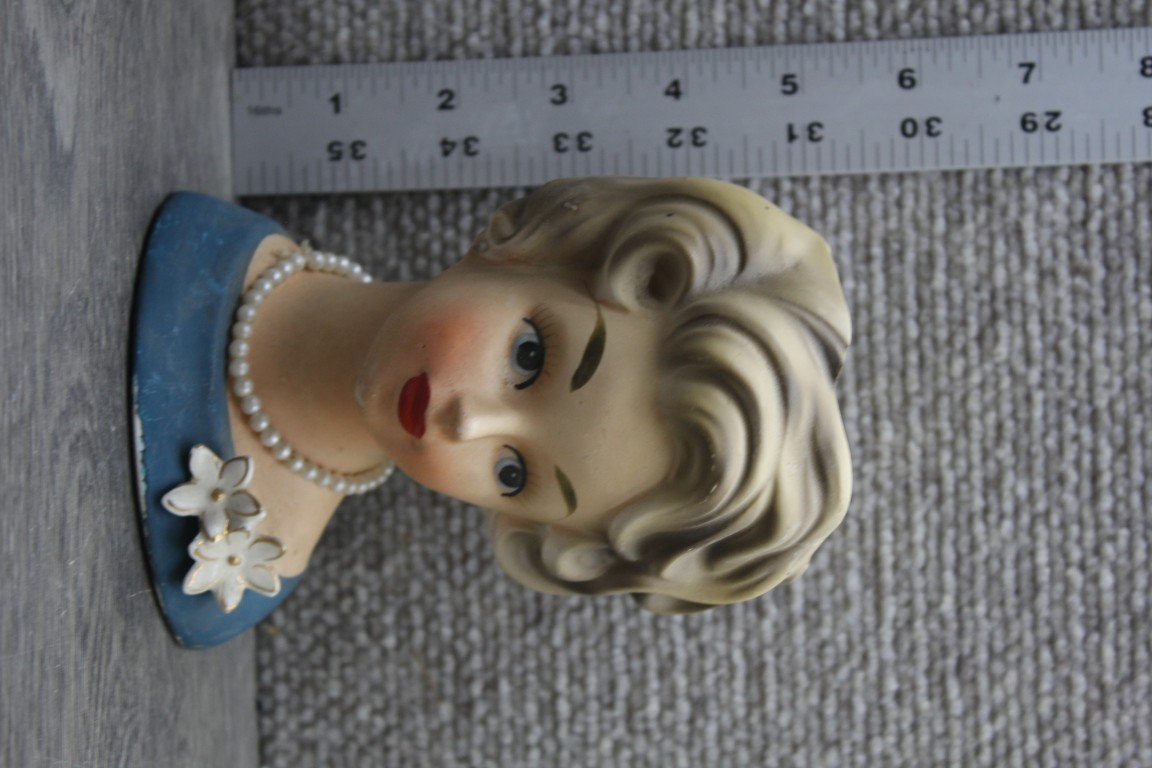
Decorative lady bust figurine / head vase-style portrait sculpture
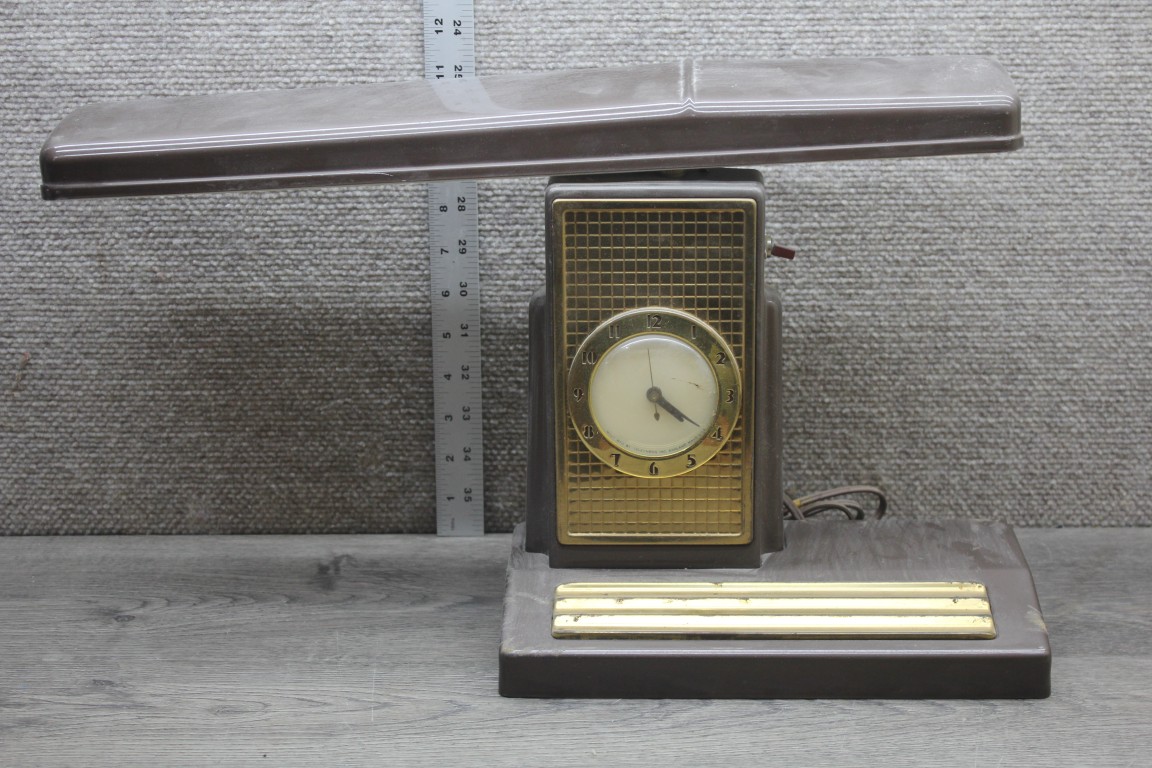
Vintage electric desk lamp with integrated clock
Decorative fixed-blade knife (possibly a souvenir or custom-made dagger-style knife)
Victrola-style wind-up phonograph with large horn
Horn gramophone / wind-up phonograph with large acoustic horn