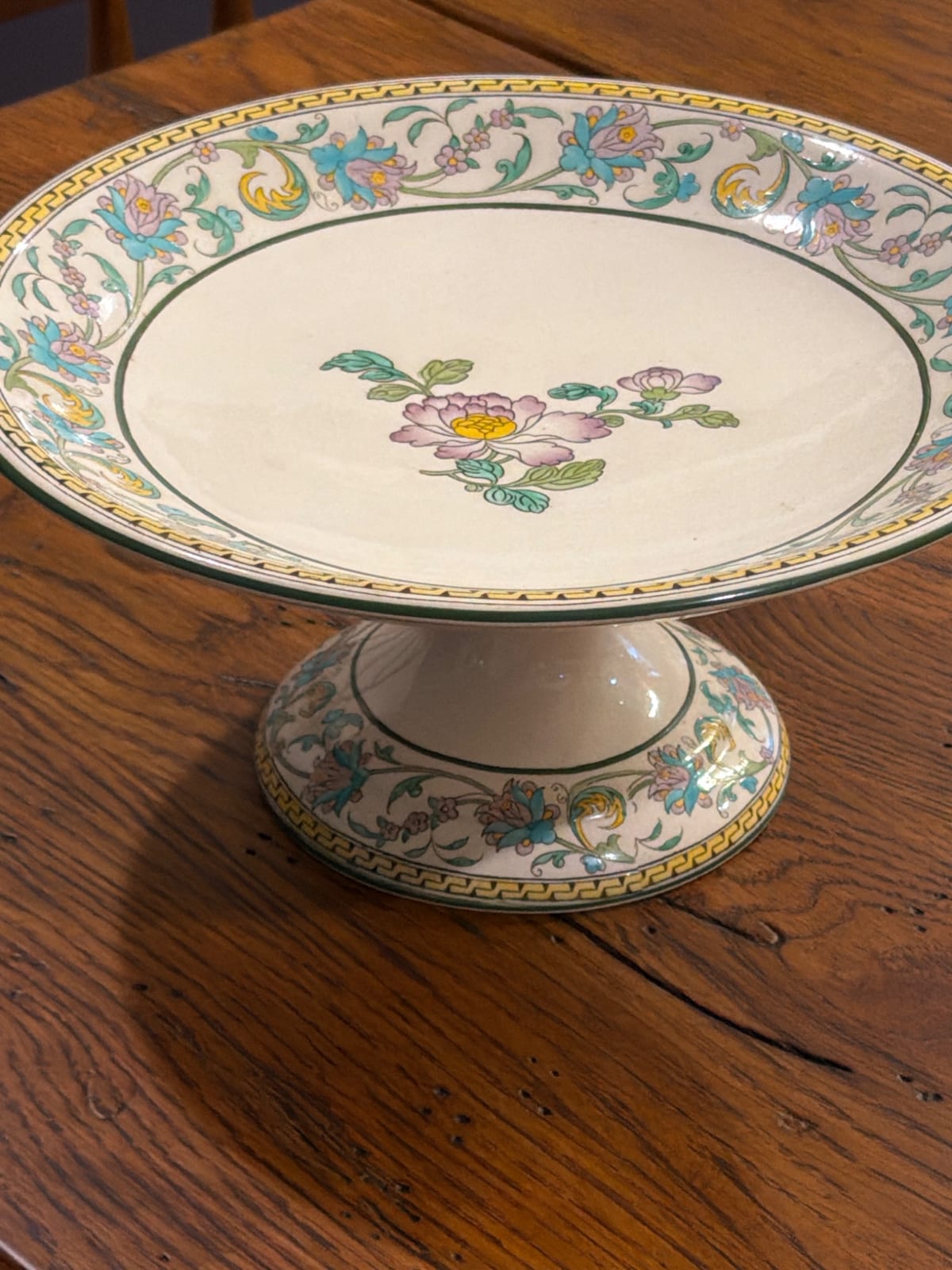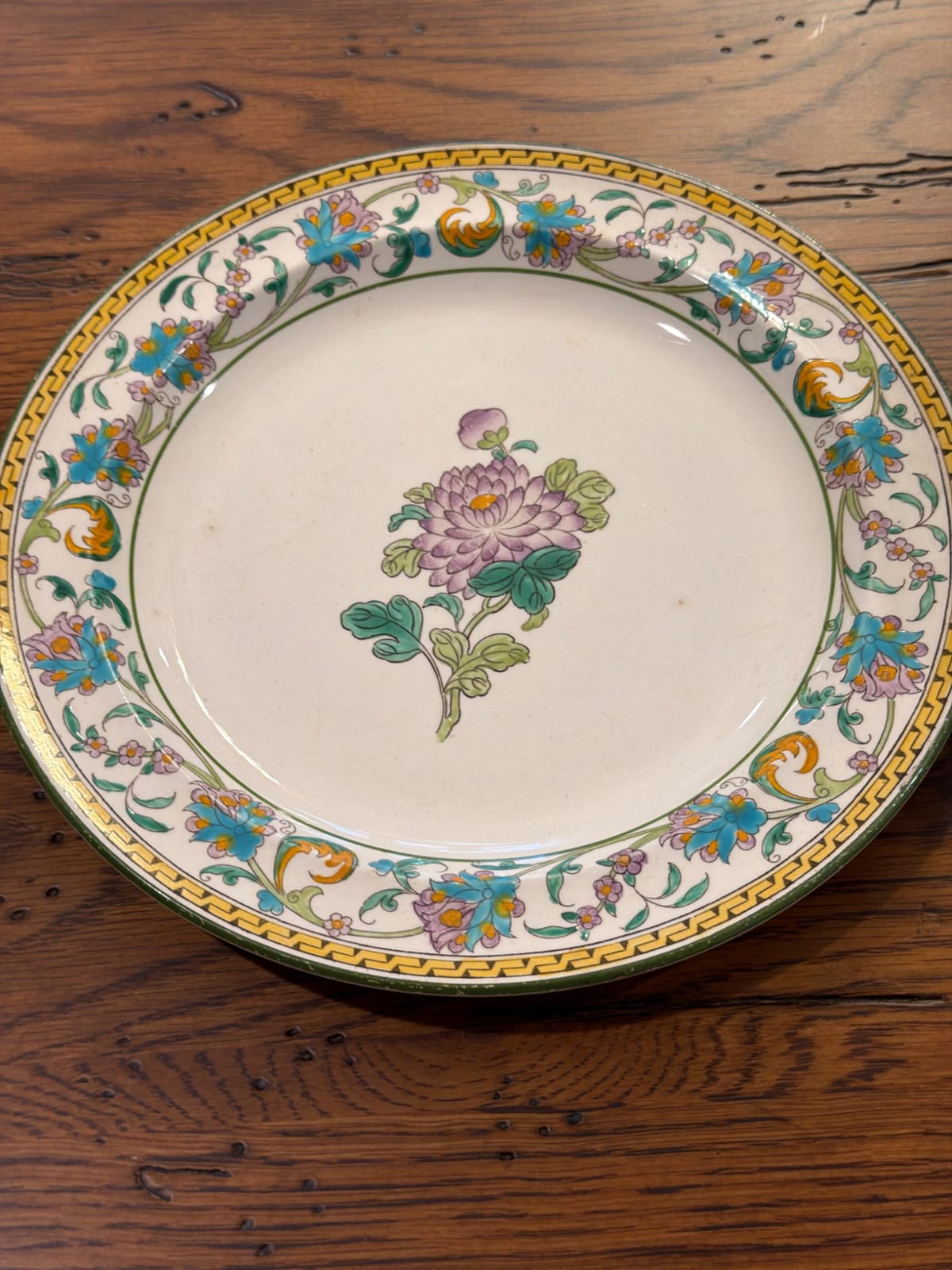
Decorative porcelain dinner plate with floral border
Estimated Value
$20-$75
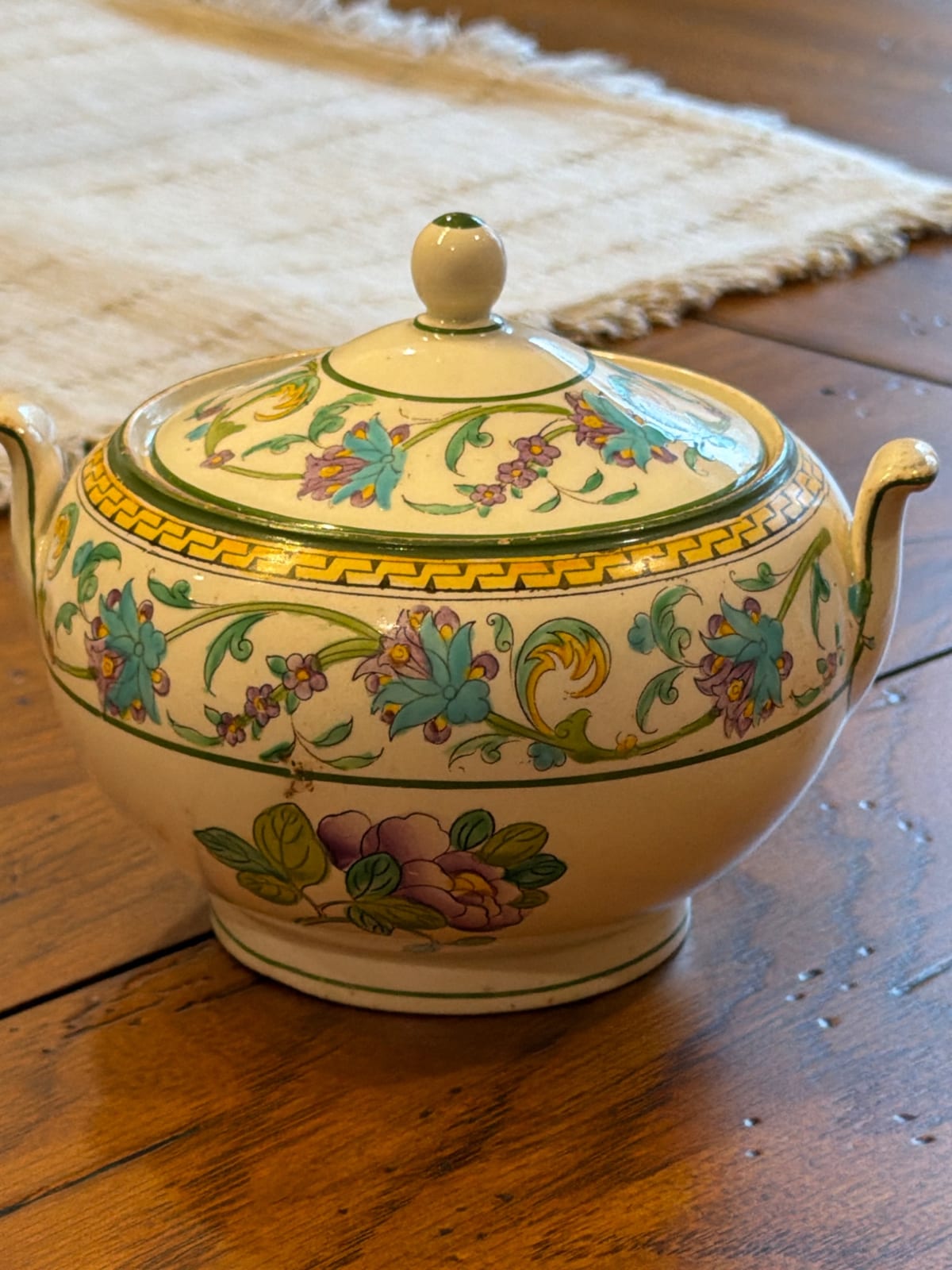
A round decorative dinner plate featuring a cream-colored central field with a single stylized chrysanthemum-like floral motif in the center. The rim is decorated with a repeating floral and vine border in turquoise, lavender, green, and orange-yellow, finished with a geometric yellow-and-black Greek key style band near the edge and a green outer rim. The design suggests a refined tableware pattern, likely intended for formal dining or display. The decoration appears crisp and colorful, with a combination of floral sprays and scrolling ornament typical of late 19th- or early 20th-century decorative porcelain.
Era
Late 19th century to early 20th century (Victorian/Edwardian style revival; exact date unknown)
Origin
Likely Europe or Japan; exact origin unknown from visible image alone
Material
Glazed porcelain or fine earthenware with hand-painted or transfer-printed enamel decoration and gilt accents
Condition
Good overall condition with light surface wear, minor utensil marks, and small age-related discoloration; no obvious chips or cracks visible in the image
Physical Details
Dimensions
Approximately 10 to 11 inches in diameter
Weight
Light to Medium
Authentication
Authenticity Score
Medium - the plate appears period-appropriate and genuinely vintage, but the lack of a visible backstamp, maker's mark, or reverse image limits certainty
Provenance
Likely part of a dinner service or decorative plate set; no maker's mark or backstamp is visible in the provided image, so provenance cannot be confirmed
Historical Significance
Decorative floral porcelain of this type reflects the popularity of ornate tableware in the Victorian and Edwardian periods, when richly patterned dinner services were common among middle- and upper-class households. The stylized floral border and gilt-like geometric trim are characteristic of export wares and fashionable domestic ceramics of the era.
This identification and value range are AI-generated research aids, not authentication, certification, or a formal appraisal. Learn about the limitations and when to consult a qualified professional appraiser.