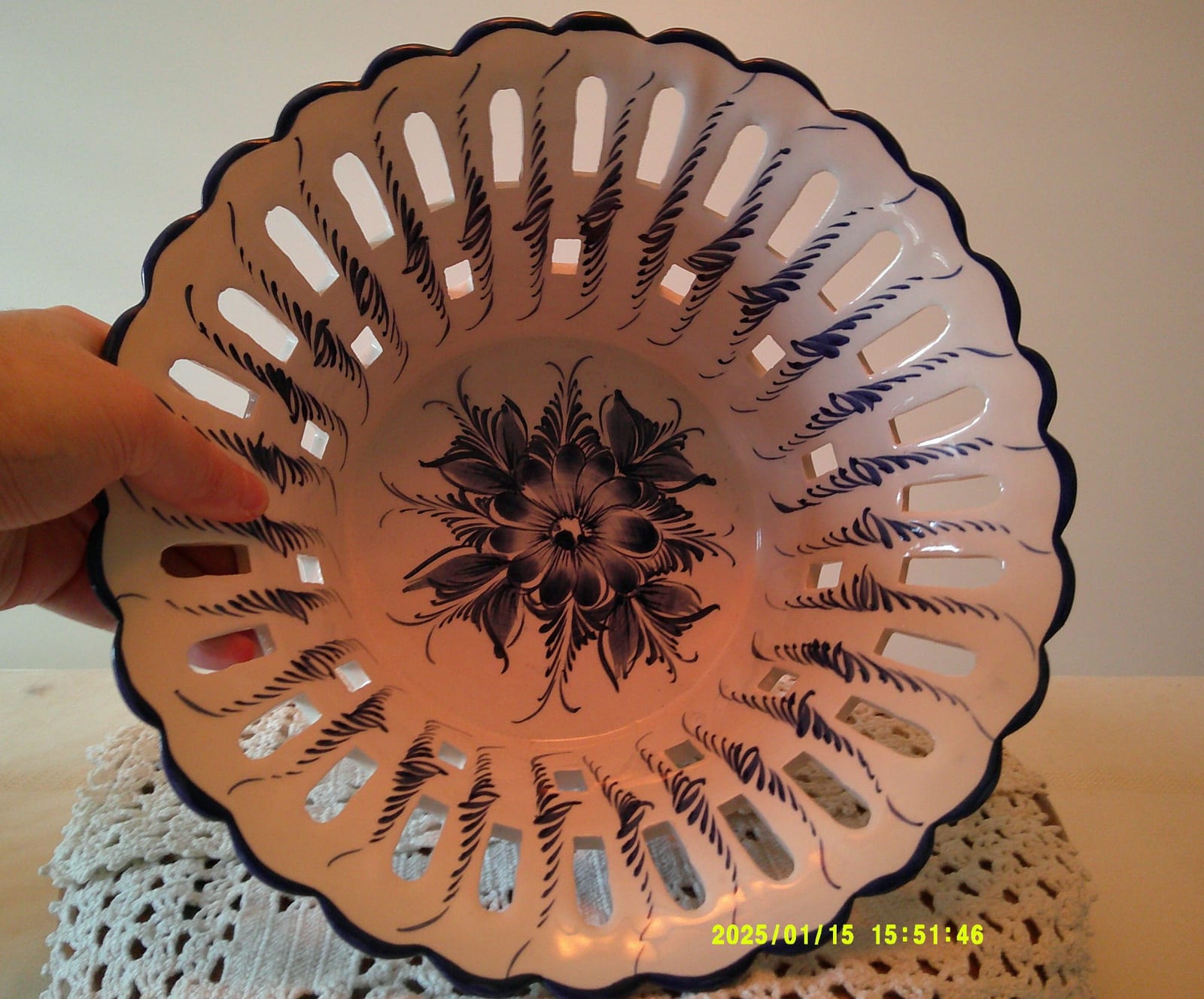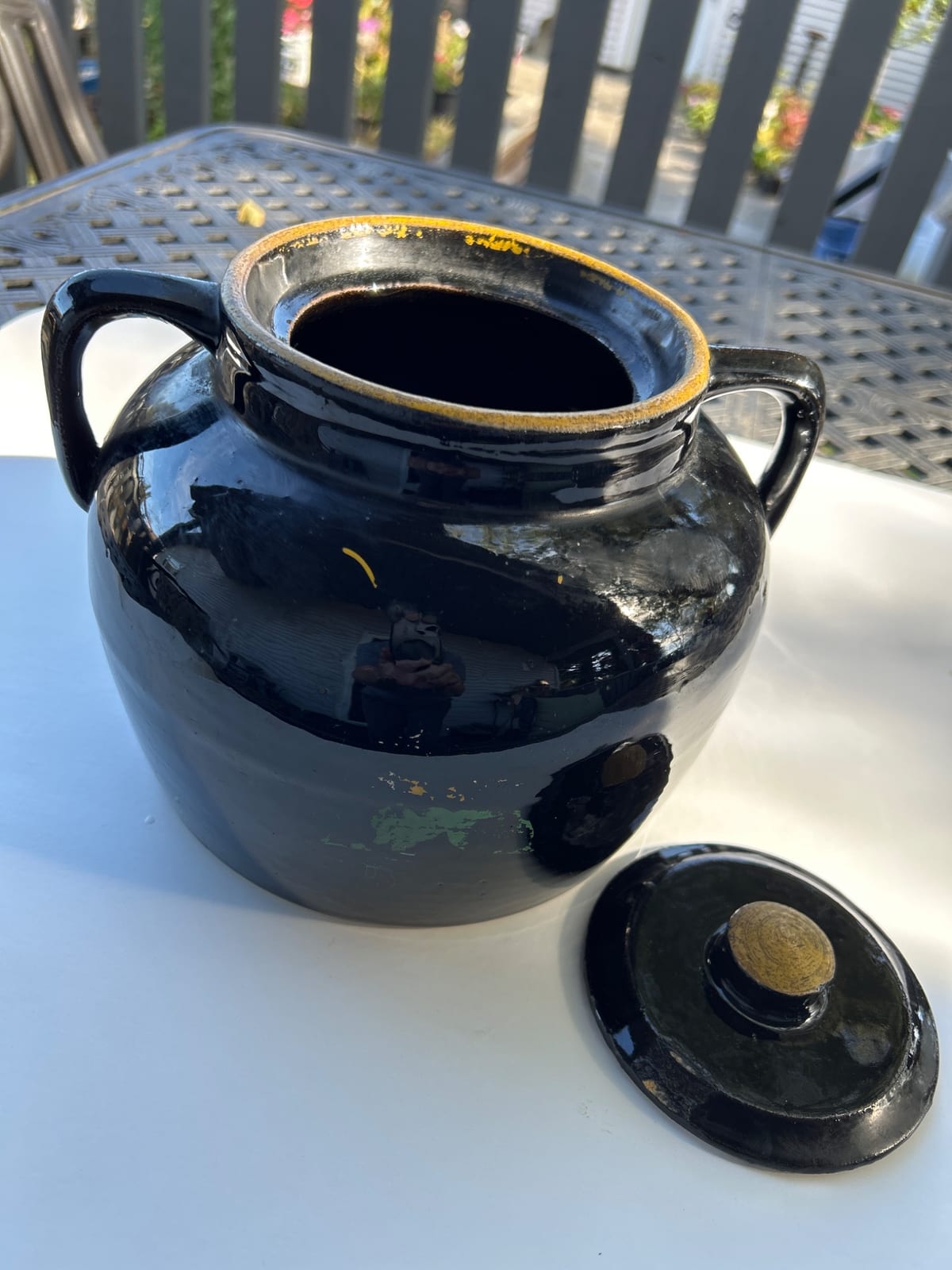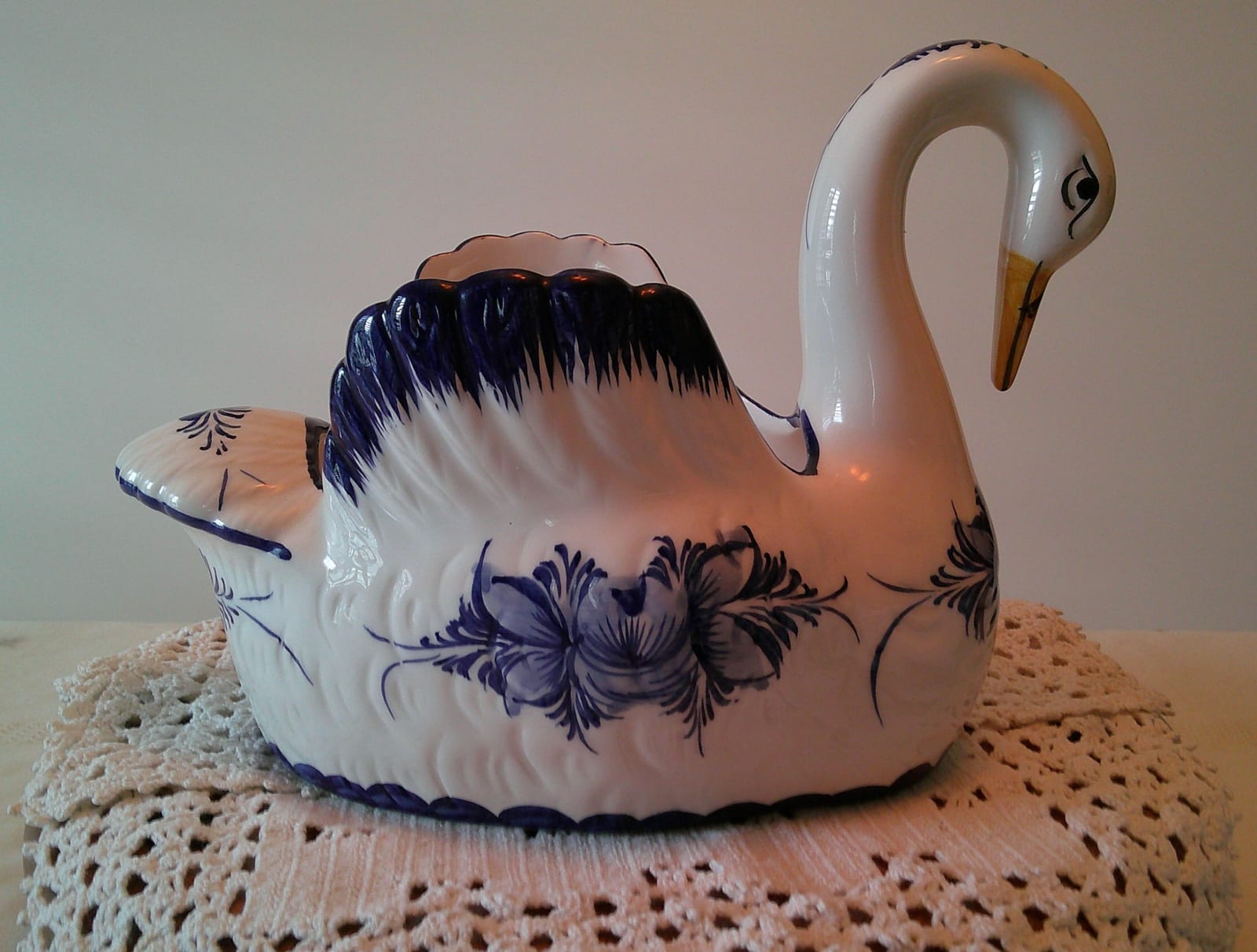
Decorative porcelain swan-shaped covered dish or tureen
Estimated Value
$75-$250
A decorative porcelain vessel modeled as a swan, with a sculptural arched neck, molded feather detailing, and hand-painted blue floral motifs. The piece appears to function as a covered dish, tureen, or serving container, with the open top likely accepting a lid or serving insert not visible in the image. The glossy white glaze and cobalt blue accents are characteristic of decorative tableware or ornamental porcelain made for display and occasional service. The form is elegant and highly stylized, suggesting a late Victorian or Edwardian taste for novelty ceramics and animal-form table objects.
Era
Late 19th century to early 20th century (Victorian/Edwardian style; exact date unknown)
Origin
Likely Europe, possibly Germany or France; exact origin unknown
Material
Glazed porcelain with hand-painted cobalt blue decoration
Condition
Good overall condition with visible wear to painted decoration and minor surface age-related wear; no obvious major chips or cracks visible from this angle, though underside and lid fit cannot be confirmed
Physical Details
Dimensions
Approximately 12-16 inches long and 10-14 inches tall
Weight
Medium
Authentication
Authenticity Score
Medium - The piece appears consistent with period decorative porcelain, but the absence of a visible maker's mark, base view, or close-up of construction details limits certainty
Provenance
Likely a European decorative porcelain piece intended for domestic table service or display; no maker's mark visible in the image, so specific factory attribution is unknown
Historical Significance
Swan-form porcelain tableware was popular in the 19th and early 20th centuries as part of elaborate decorative dining and parlor culture. Such pieces reflect the era's interest in naturalistic forms, novelty serving ware, and ornate hand-painted ceramics.
This identification and value range are AI-generated research aids, not authentication, certification, or a formal appraisal. Learn about the limitations and when to consult a qualified professional appraiser.