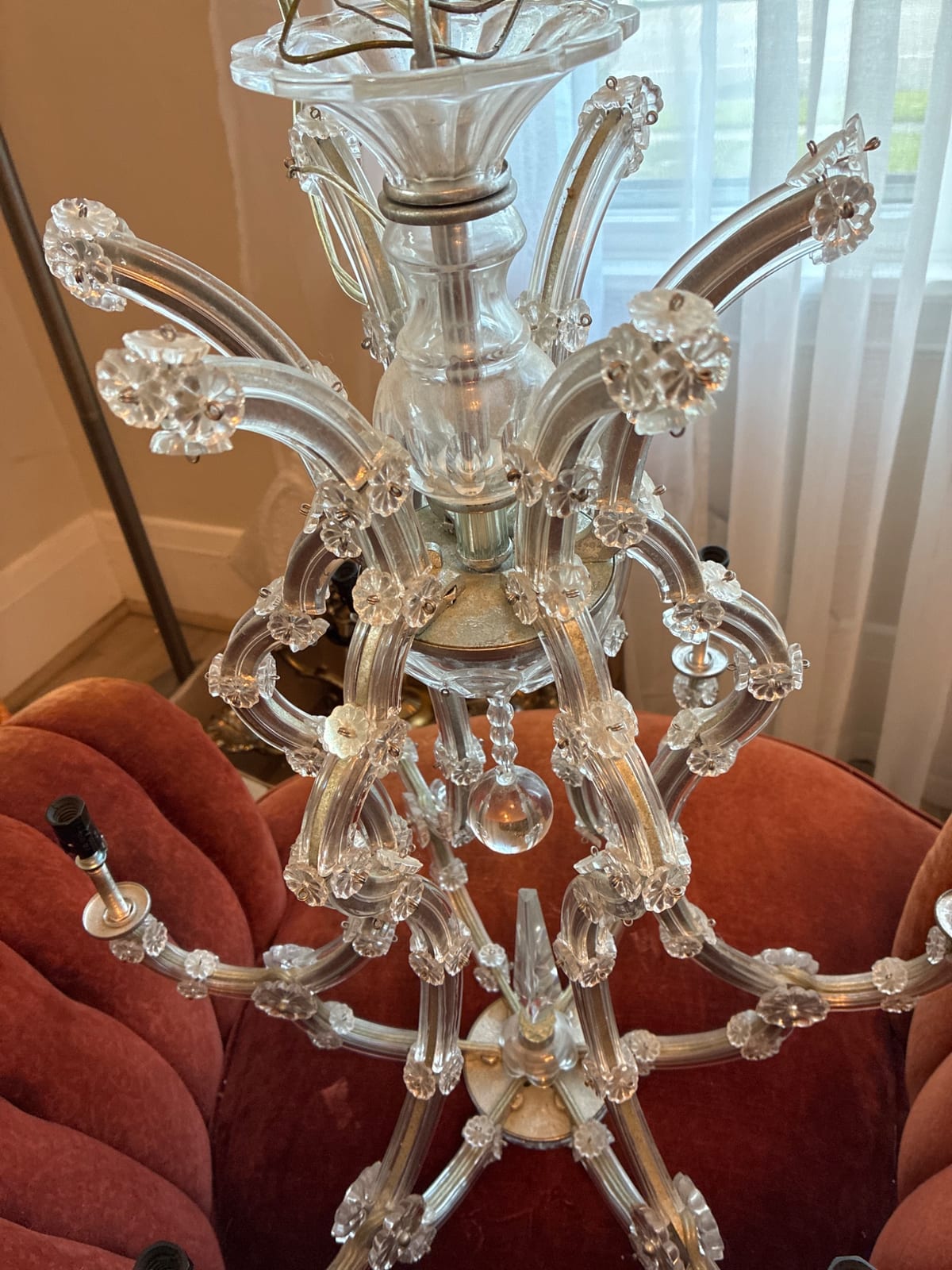
Glass and metal chandelier
Estimated Value
$800-$2,500
An ornate multi-arm chandelier made primarily of clear molded glass with decorative floral rosettes and looping arms. The design is highly elaborate, with repeated curved glass elements attached to a central stem and metal support structure. The overall aesthetic suggests a decorative revival piece inspired by 19th-century gaslight or early electric chandeliers. The craftsmanship appears machine-made or later decorative production rather than hand-cut crystal, based on the uniformity of the glass components and repeated floral appliqués.
Era
Late 19th century to early 20th century, likely Victorian/Edwardian revival style
Origin
Likely Europe or North America; exact country unknown
Material
Clear molded glass, metal frame, possible brass or plated metal fittings
Condition
Good overall condition with visible age-related wear; appears largely intact, with some surface oxidation/tarnish on metal components and possible minor dusting or grime. No obvious major cracks or missing major structural elements visible in the image.
Physical Details
Dimensions
Approximately 30-40 inches tall and 18-24 inches wide, based on scale relative to surrounding furniture
Weight
Heavy
Authentication
Authenticity Score
Medium - The piece appears to be an authentic vintage chandelier, but the exact age, maker, and whether it is an original antique versus a later reproduction cannot be confirmed from the image alone.
Provenance
Likely from a decorative lighting manufacturer producing revival-style chandeliers for upscale interiors; exact maker and provenance cannot be determined from the image alone.
Historical Significance
Chandeliers of this type reflect the transition from gas to electric lighting and the continued popularity of ornate revival lighting in affluent interiors. The use of clear glass ornamentation and floral motifs is characteristic of decorative lighting trends from the late Victorian through early 20th century period.
Restoration Notes
- •Possible re-electrification or later wiring conversion may be present, but this cannot be confirmed from the image
- •Minor oxidation/tarnish visible on metal fittings
- •No obvious structural repairs visible
This identification and value range are AI-generated research aids, not authentication, certification, or a formal appraisal. Learn about the limitations and when to consult a qualified professional appraiser.
Research this item further
Related Identifications
Browse all →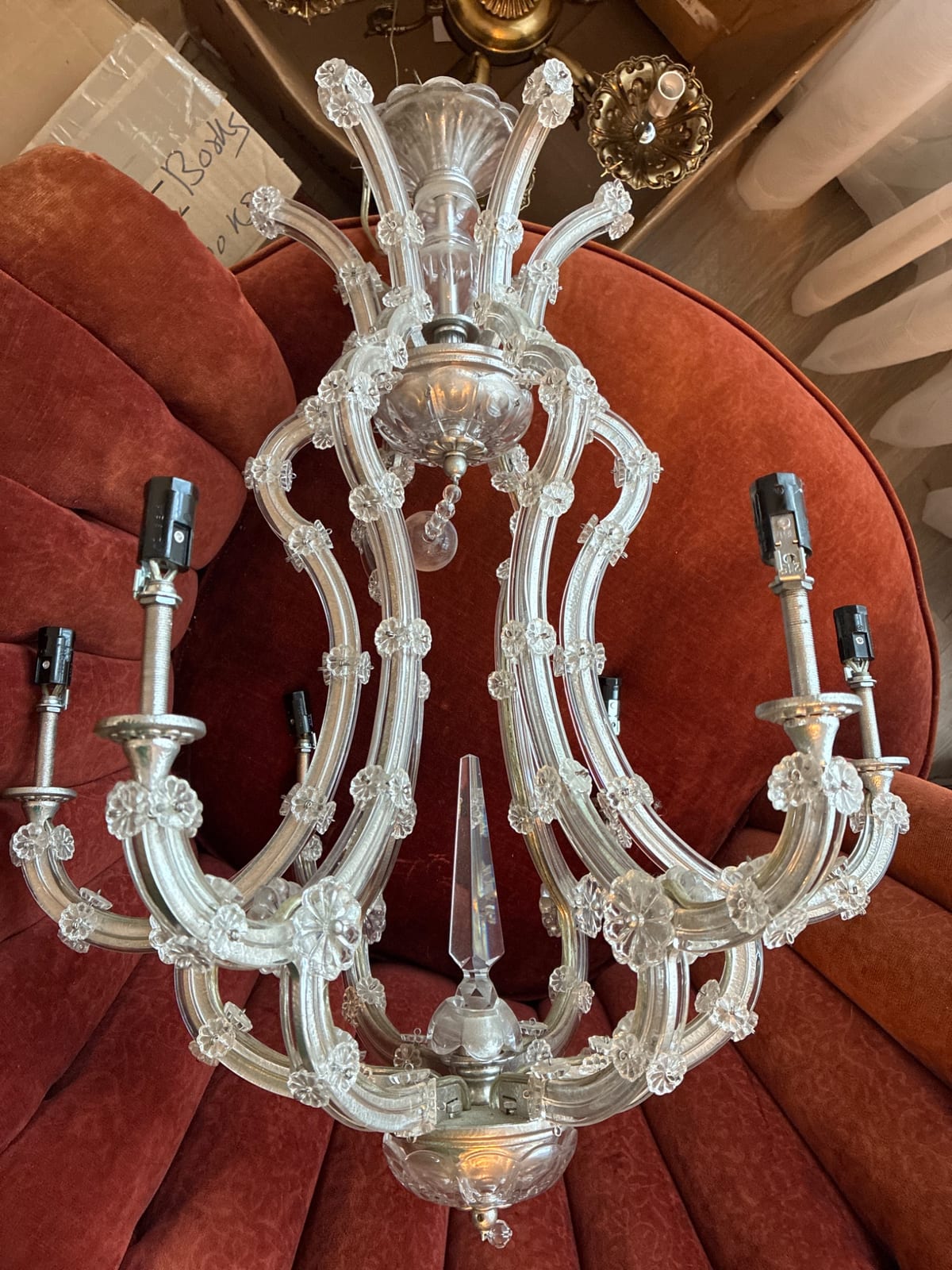
Clear glass and metal multi-arm chandelier / pendant light fixture
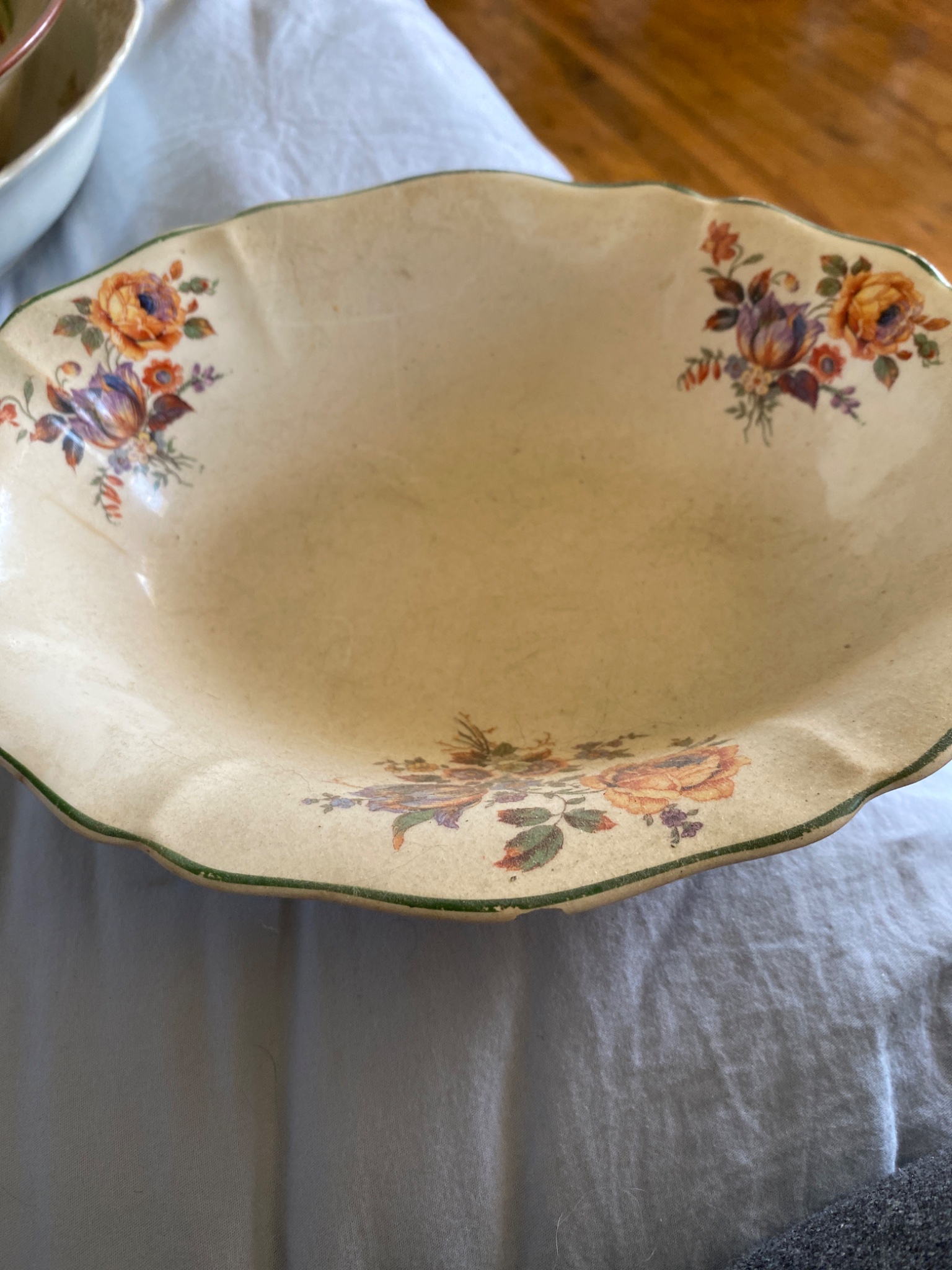
Floral transferware or hand-decorated ceramic serving bowl
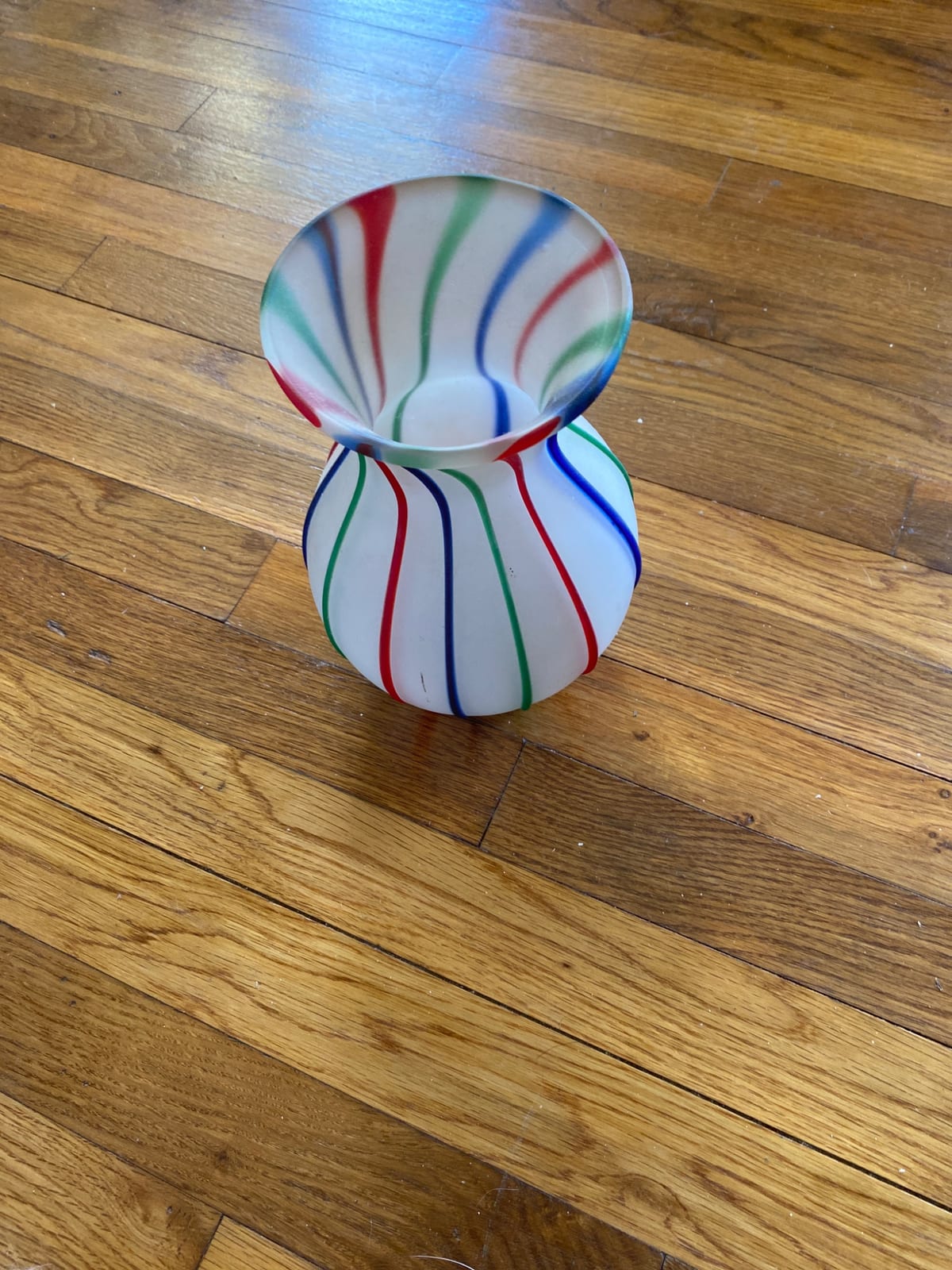
Art glass vase or small decorative bowl
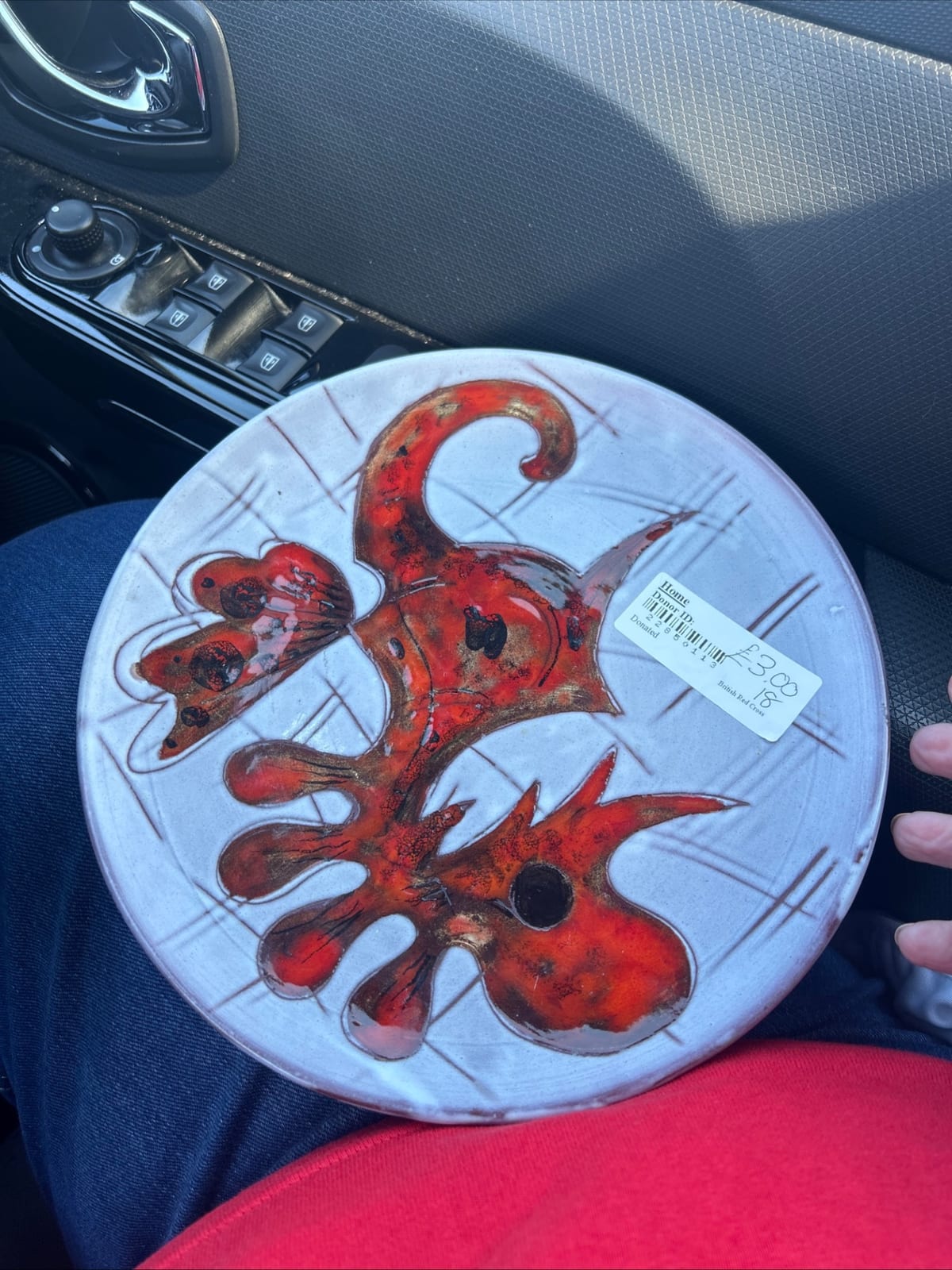
Decorative ceramic wall plate / charger
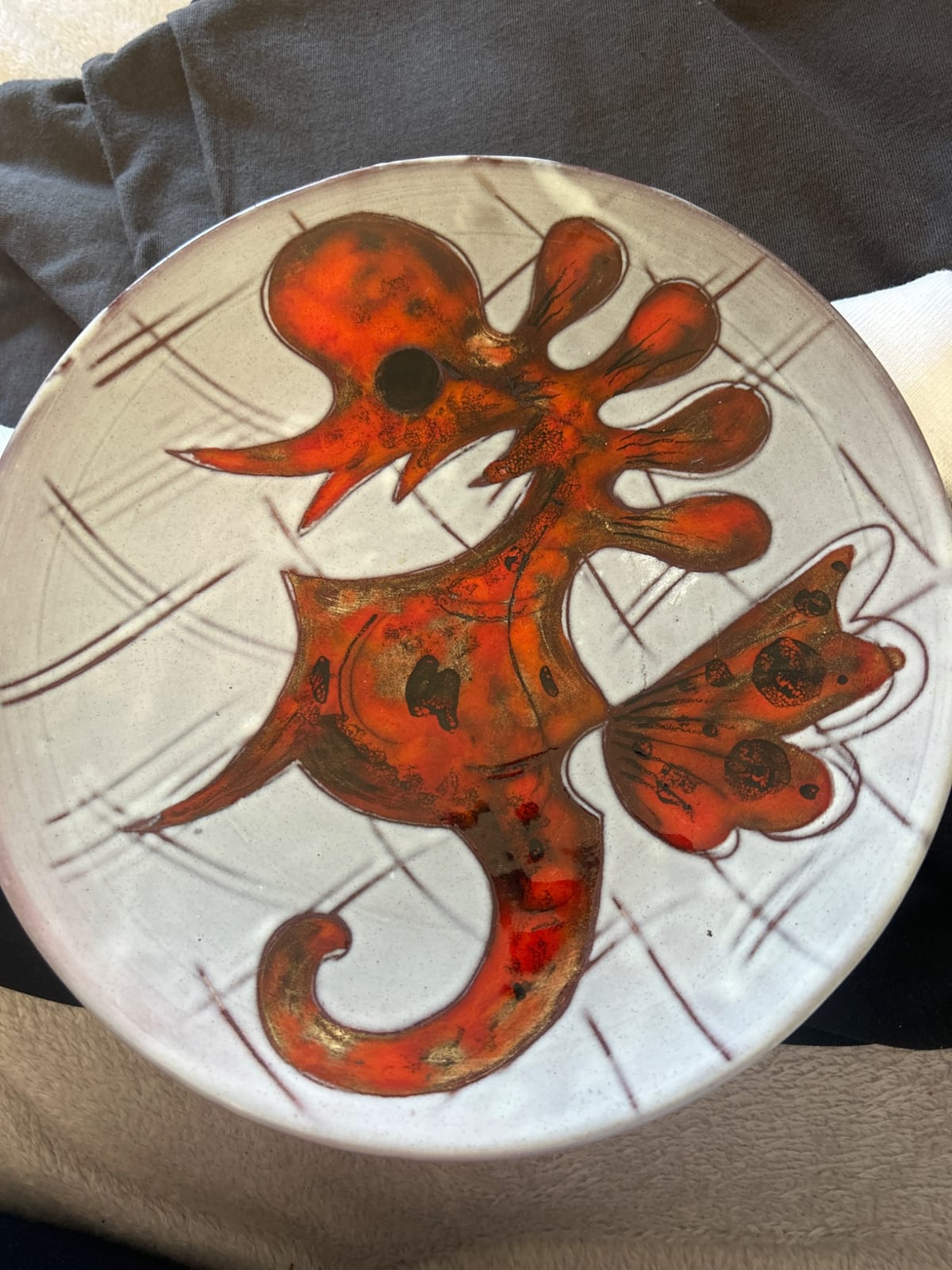
Hand-painted decorative ceramic plate or charger with abstract fish/octopus motif
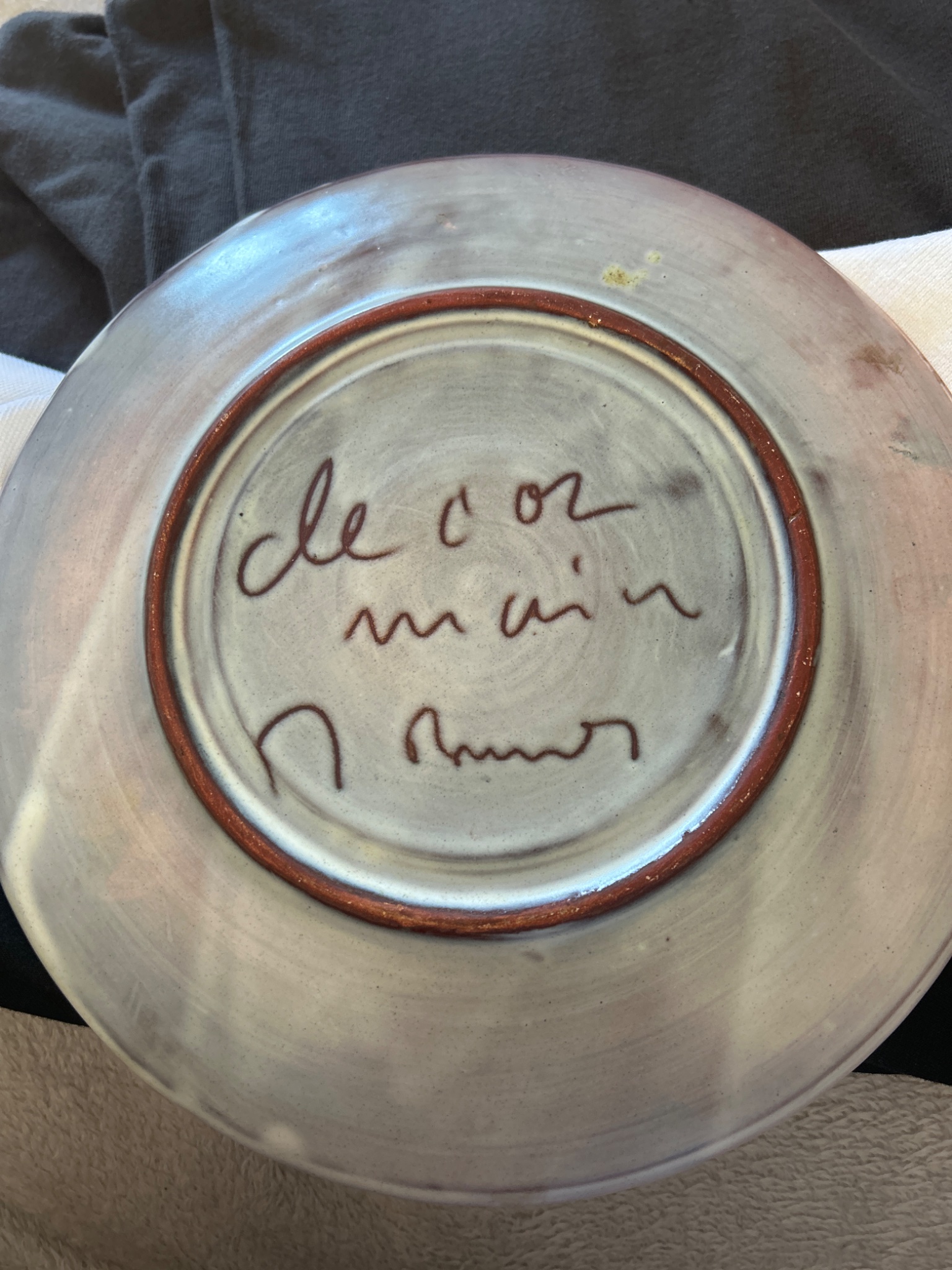
Hand-thrown ceramic bowl or plate with handwritten inscription/signature
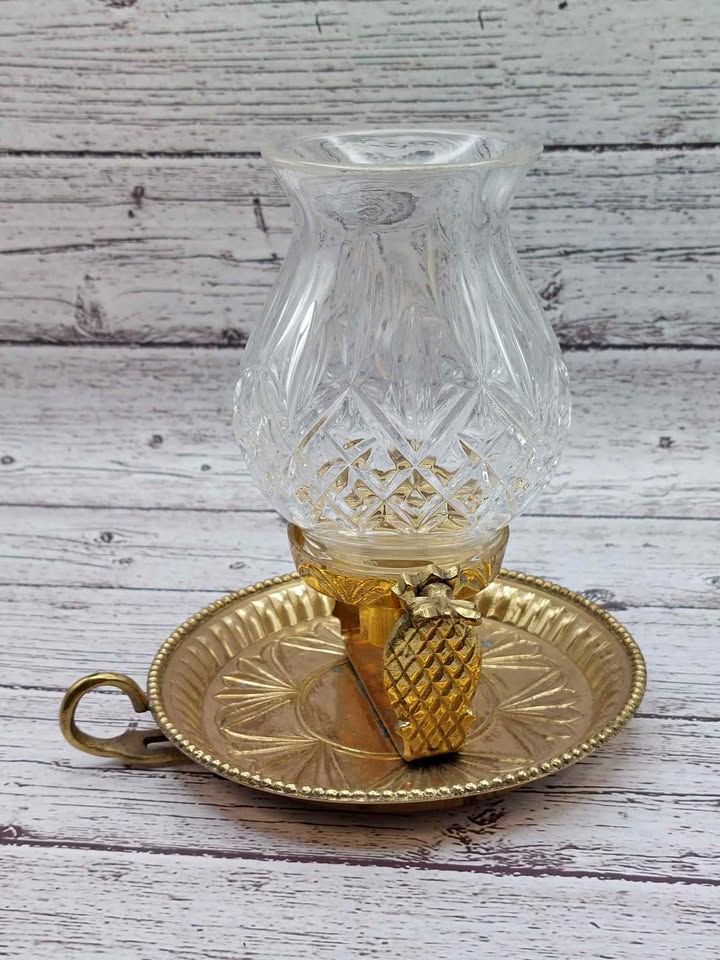
Cut glass oil lamp or candle lamp with brass/metal saucer base

Ornate wrought iron or metal chandelier / wall-mounted candelabra