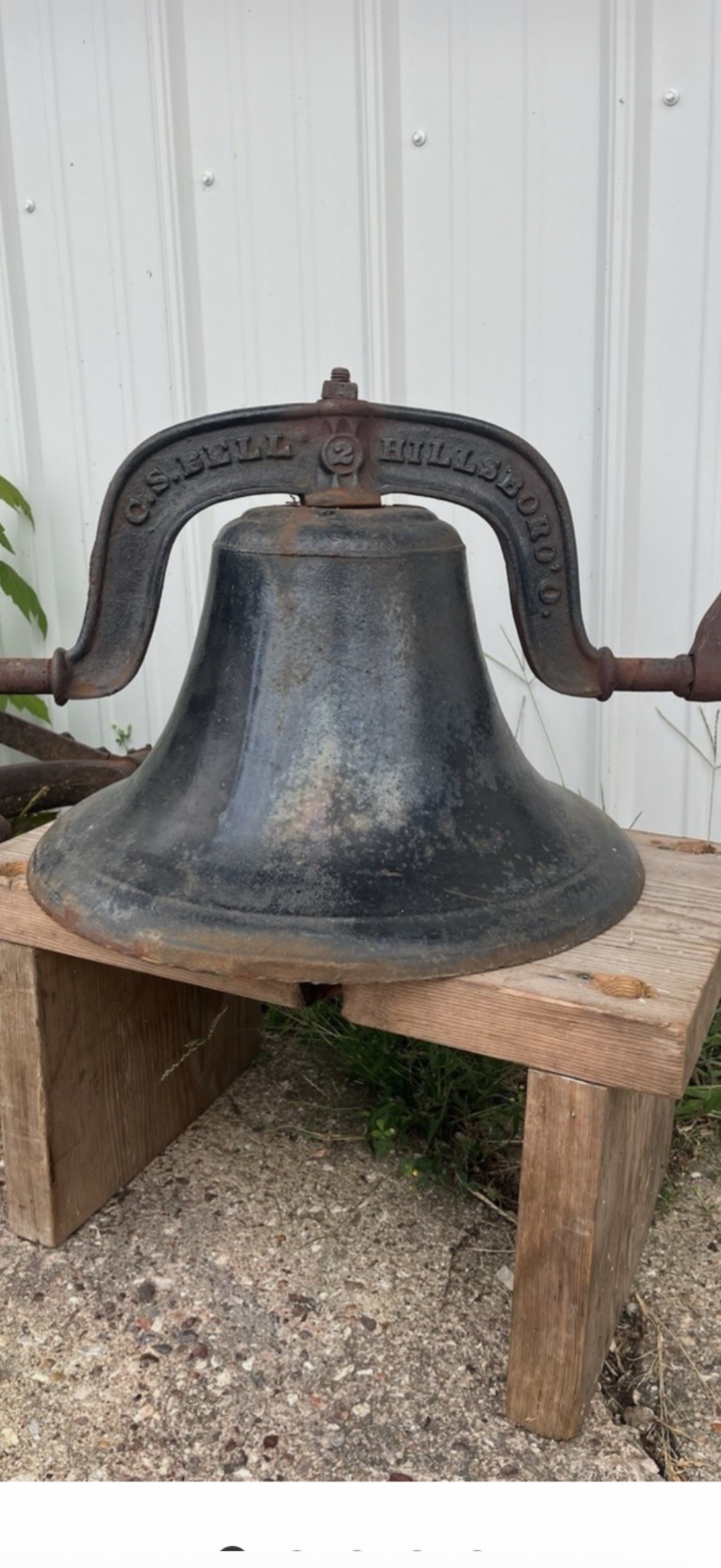
Large cast iron bell
Estimated Value
$300-$900
This appears to be a large cast iron farm, school, or institutional bell mounted in a heavy yoke. The yoke is cast with the maker's name 'CASSELL HILLSBORO, O.' indicating manufacture by Cassell of Hillsboro, Ohio. The bell has a broad flared mouth, thick cast body, and a substantial top crown typical of utility bells used on farms, schools, churches, or factories. The overall form suggests a practical American-made bell rather than a decorative one. The visible patina and rust indicate age and outdoor exposure, and the piece retains strong visual presence as a functional antique metal object.
Era
Late 19th century to early 20th century (c. 1880s-1910s)
Origin
United States
Material
Cast iron with steel/iron yoke and clapper assembly
Condition
Fair to Good; heavy surface rust, oxidation, and weathering visible. No obvious cracks are visible from the photo, but the bell appears well-used and likely stored outdoors. Finish is worn and original paint, if any, is largely gone.
Physical Details
Dimensions
Approximately 20-28 inches tall and 24-32 inches in diameter at the mouth, based on visual scale
Weight
Heavy
Authentication
Authenticity Score
Medium-High; the cast maker's name and construction are consistent with an authentic period bell, though exact date and model cannot be confirmed from the image alone.
Provenance
Likely manufactured by Cassell in Hillsboro, Ohio, and originally used in a rural or institutional setting in the American Midwest or similar region. Exact provenance is unknown from the image alone.
Historical Significance
Cast iron bells were important in 19th- and early 20th-century American daily life for signaling time, work, school, fire alerts, and community gatherings. Bells from identifiable regional foundries such as Cassell are of interest to collectors of Americana, farm equipment, and industrial metalware.
This identification and value range are AI-generated research aids, not authentication, certification, or a formal appraisal. Learn about the limitations and when to consult a qualified professional appraiser.