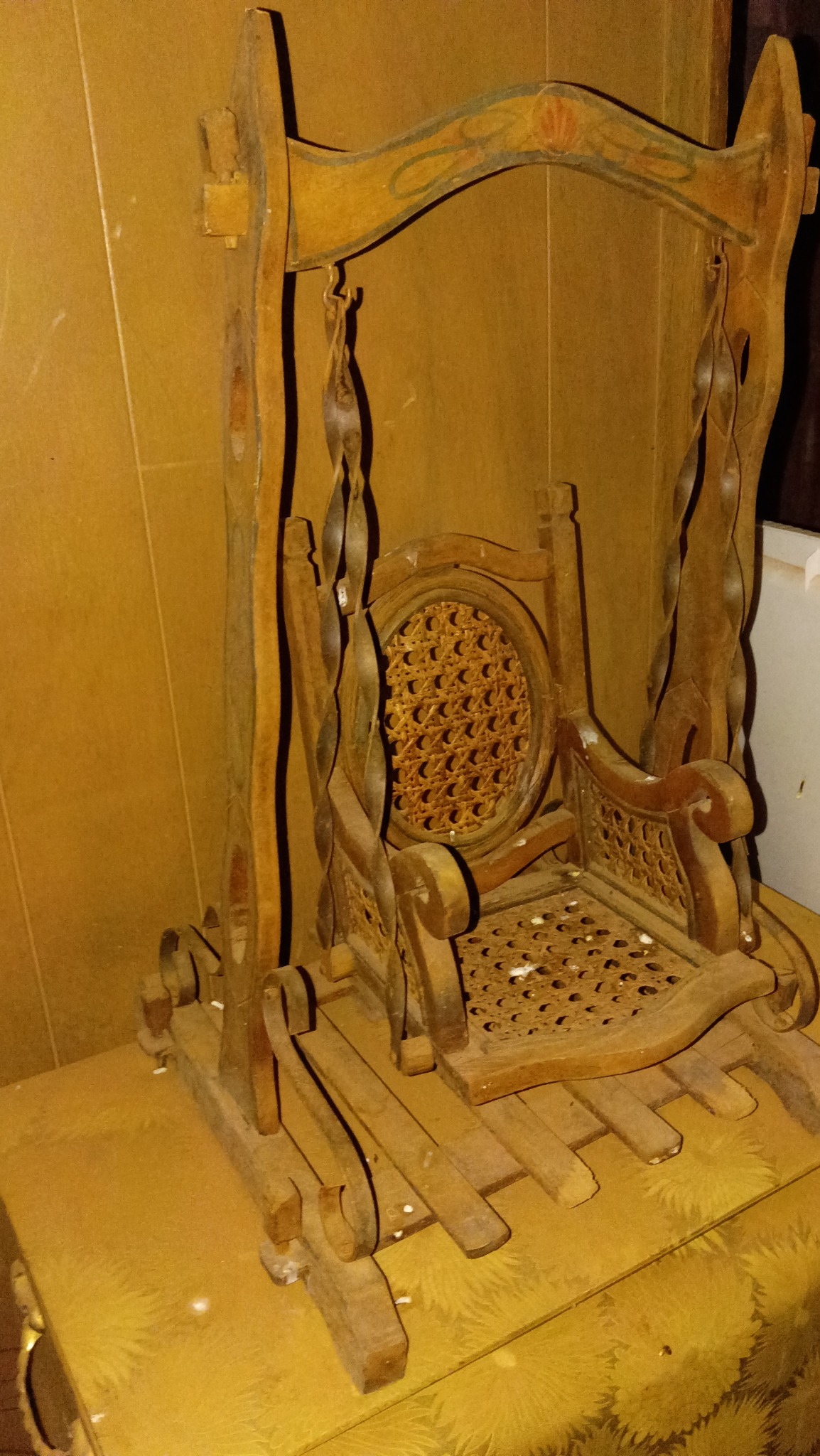
Ornate wooden rocking chair or child-sized chair with woven cane seat and back
Estimated Value
$150-$600
This appears to be an ornate wooden chair or small rocking chair with a highly decorative silhouette, carved side supports, and woven cane panels in the seat and back. The form suggests a late 19th-century decorative seating piece, possibly intended for a parlor, nursery, or as a child-sized chair. The curved crest rail and pierced cane work indicate a handcrafted or semi-handcrafted piece influenced by Victorian design tastes. The visible painted accents on the crest rail suggest it may once have had a more colorful decorative finish. The chair is shown in a dusty storage or attic-like setting, which makes precise identification difficult.
Era
Late 19th to early 20th century, likely Victorian to Edwardian period
Origin
Likely Europe or North America; exact origin unknown
Material
Carved wood with woven cane/rattan seating and back panels; traces of painted decoration
Condition
Fair to Poor. Visible wear, dust, surface abrasion, finish loss, and possible structural stress or looseness in joints. Cane appears aged but largely intact from the visible side. Paint/decorative elements are faded and worn.
Physical Details
Dimensions
Approximately 30-40 inches tall; width and depth appear small to medium, likely around 18-24 inches wide
Weight
Medium
Authentication
Authenticity Score
Medium. The construction and style appear period-appropriate, but the image does not show enough detail to confirm age, maker, or whether it is an authentic antique versus a later reproduction.
Provenance
Unknown. It may have been a domestic decorative chair from a Victorian or Edwardian household, possibly produced in Europe or the United States. No maker's mark or label is visible in the image.
Historical Significance
Decorative cane seating was popular in the Victorian and Edwardian eras, especially in parlors, conservatories, and children's furniture. Pieces with elaborate carved frames and cane inserts reflect the period's interest in ornamentation, lightness, and exotic materials. If original and period-made, it represents a good example of domestic decorative furniture from that era.
Restoration Notes
- •Possible repainting or decorative touch-up visible on the crest rail
- •General wear suggests age and use; no clear evidence of professional restoration visible
- •Potential joint repairs or reinforcement cannot be ruled out from the image
This identification and value range are AI-generated research aids, not authentication, certification, or a formal appraisal. Learn about the limitations and when to consult a qualified professional appraiser.
Research this item further
Related Identifications
Browse all →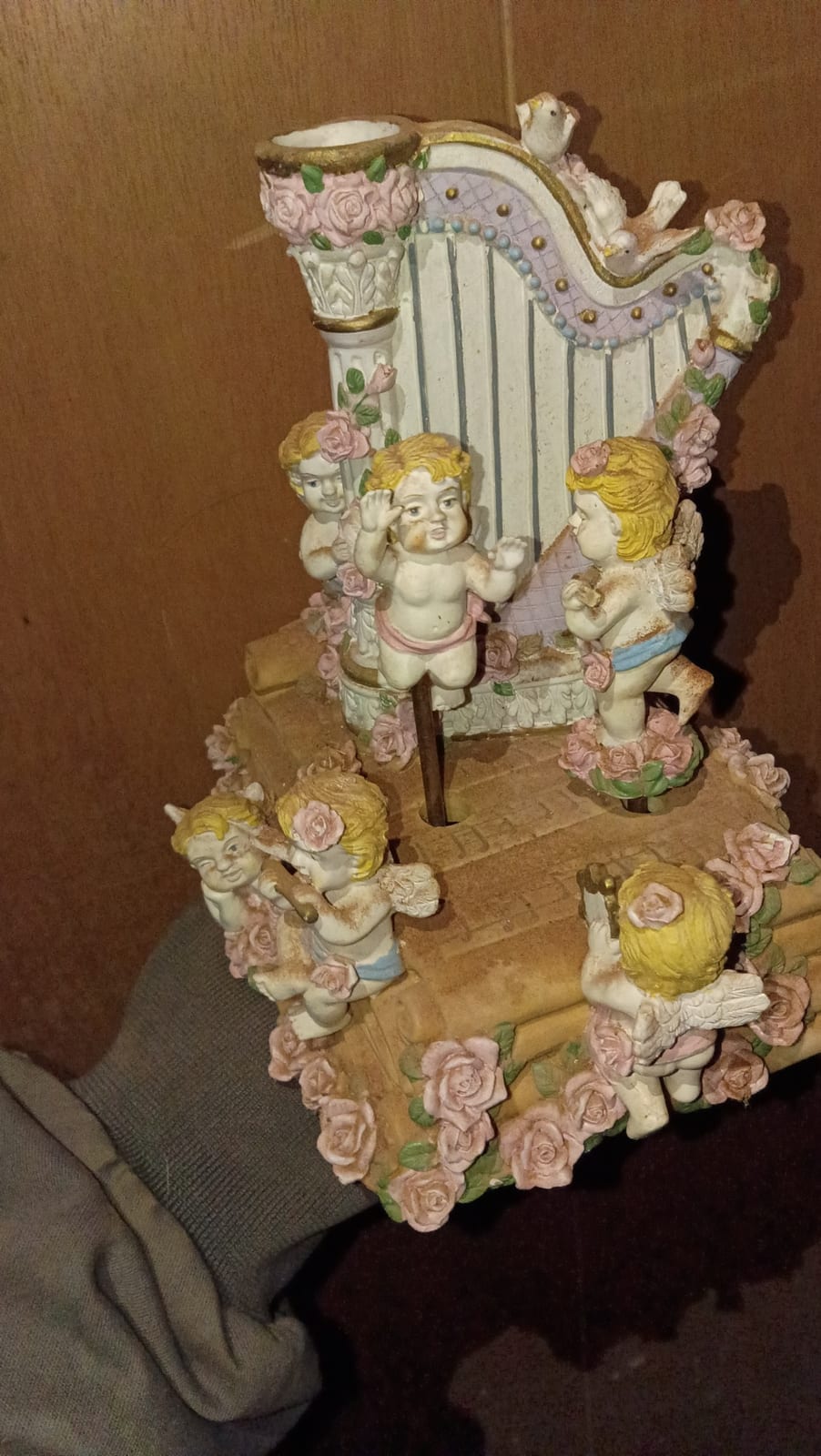
Decorative cherub figurine music box or tabletop ornament
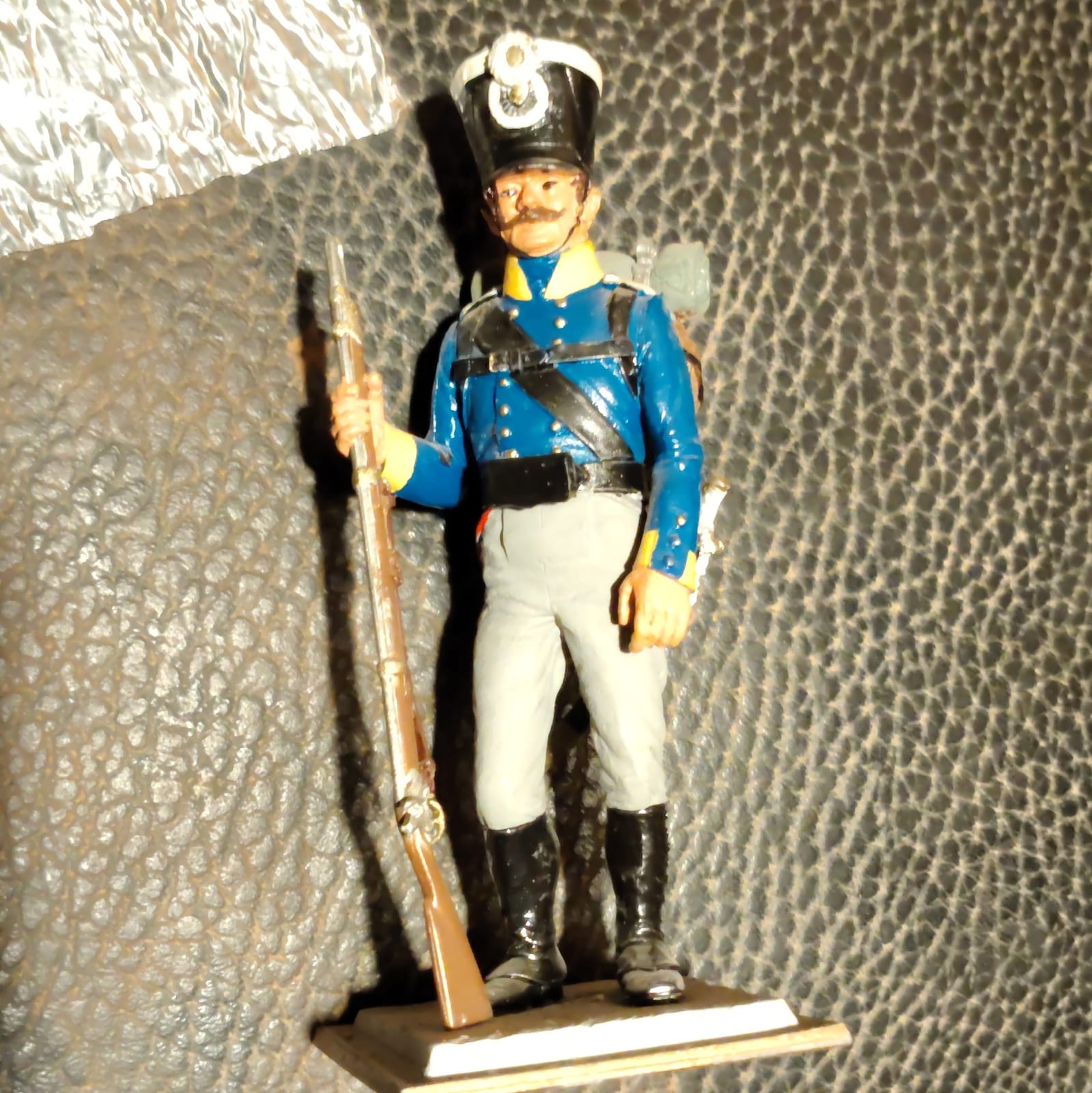
Painted toy soldier figurine (likely a British infantryman or Napoleonic-era soldier)
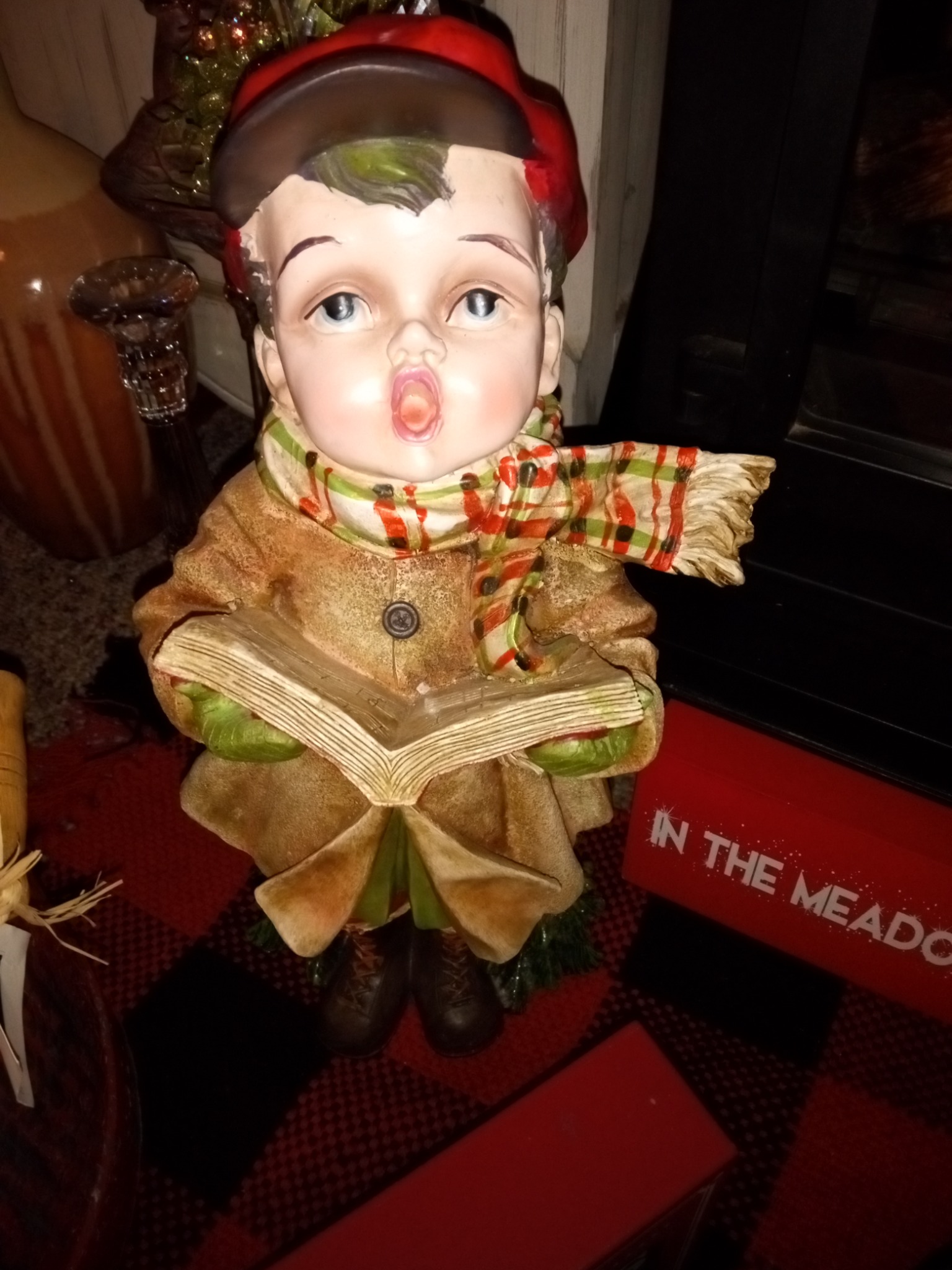
Decorative singing child figurine with book
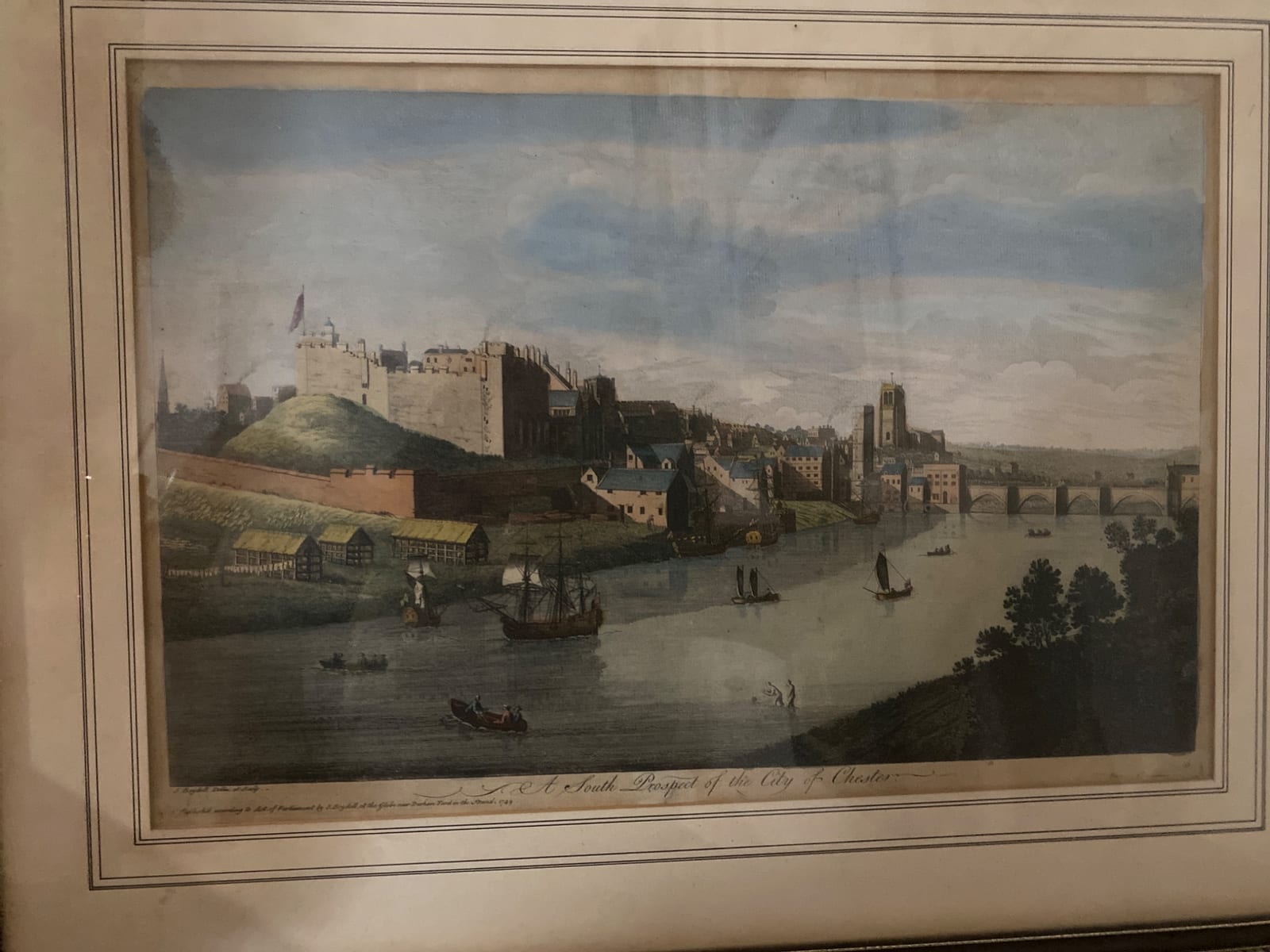
Hand-colored engraved print of "A South Prospect of the City of Chester"
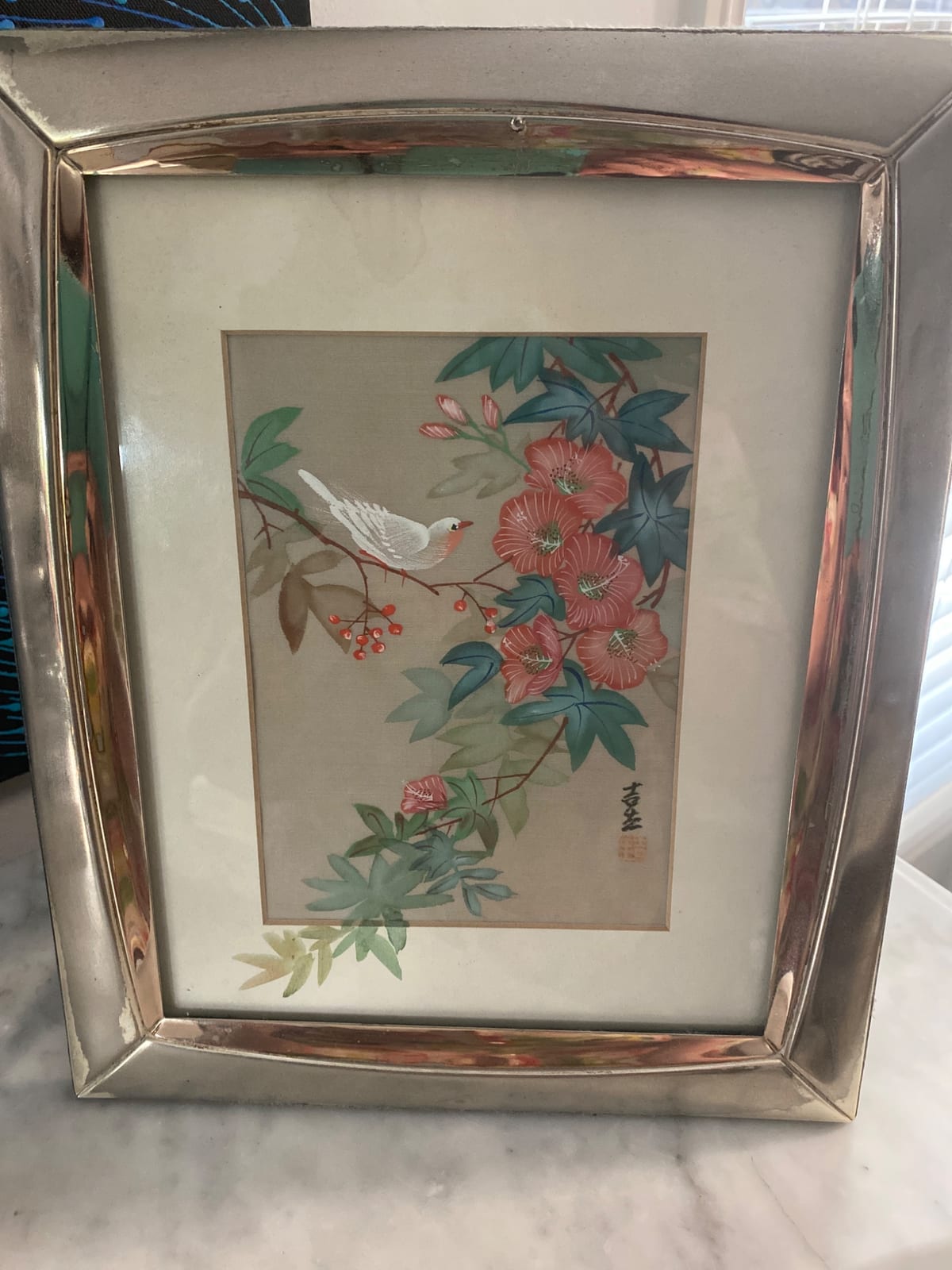
Framed Japanese silk embroidery or painted textile panel with floral and bird motif
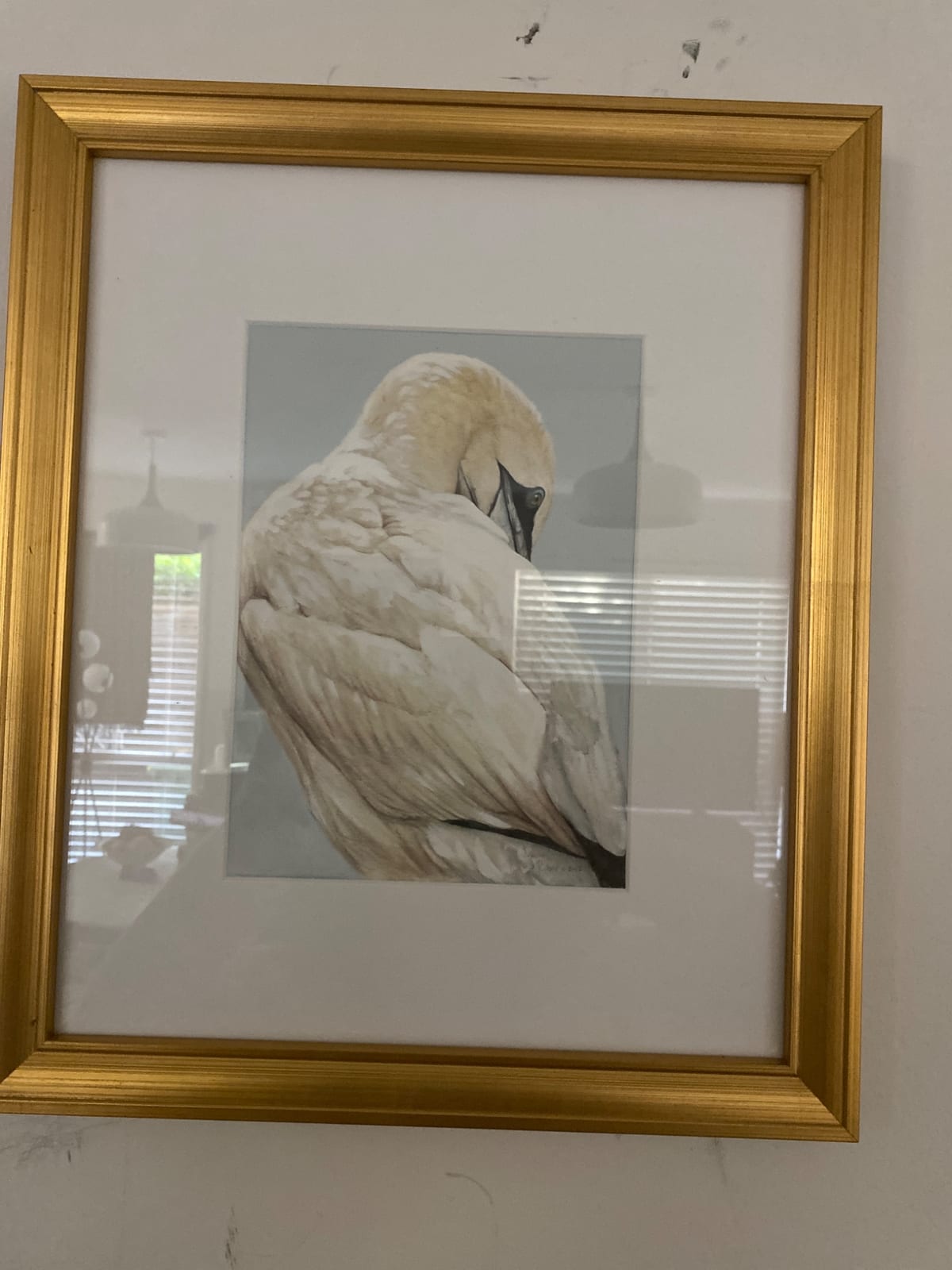
Framed bird print or watercolor depicting a swan or pelican
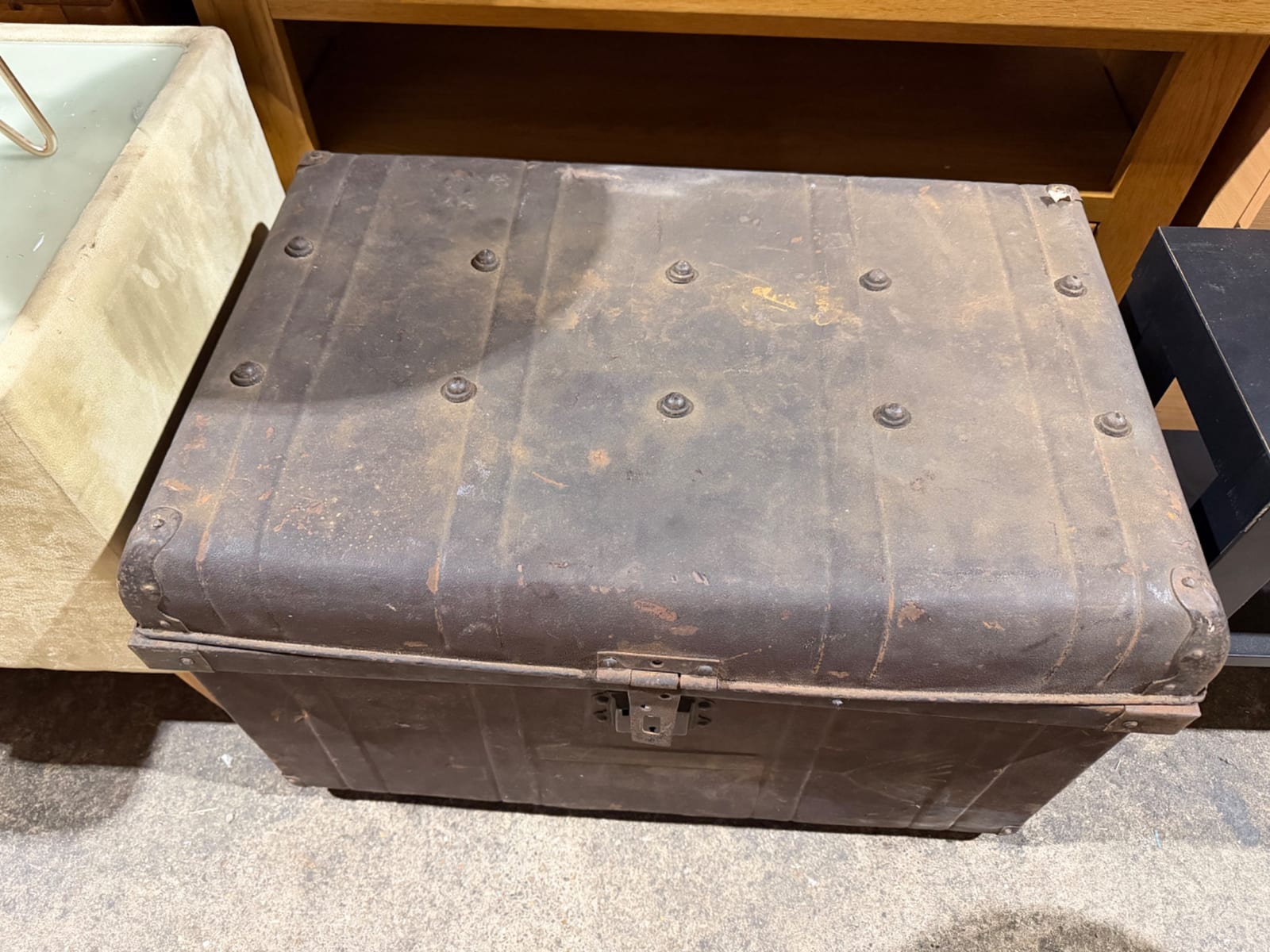
Vintage steamer trunk / travel chest
Vintage steamer trunk / travel chest