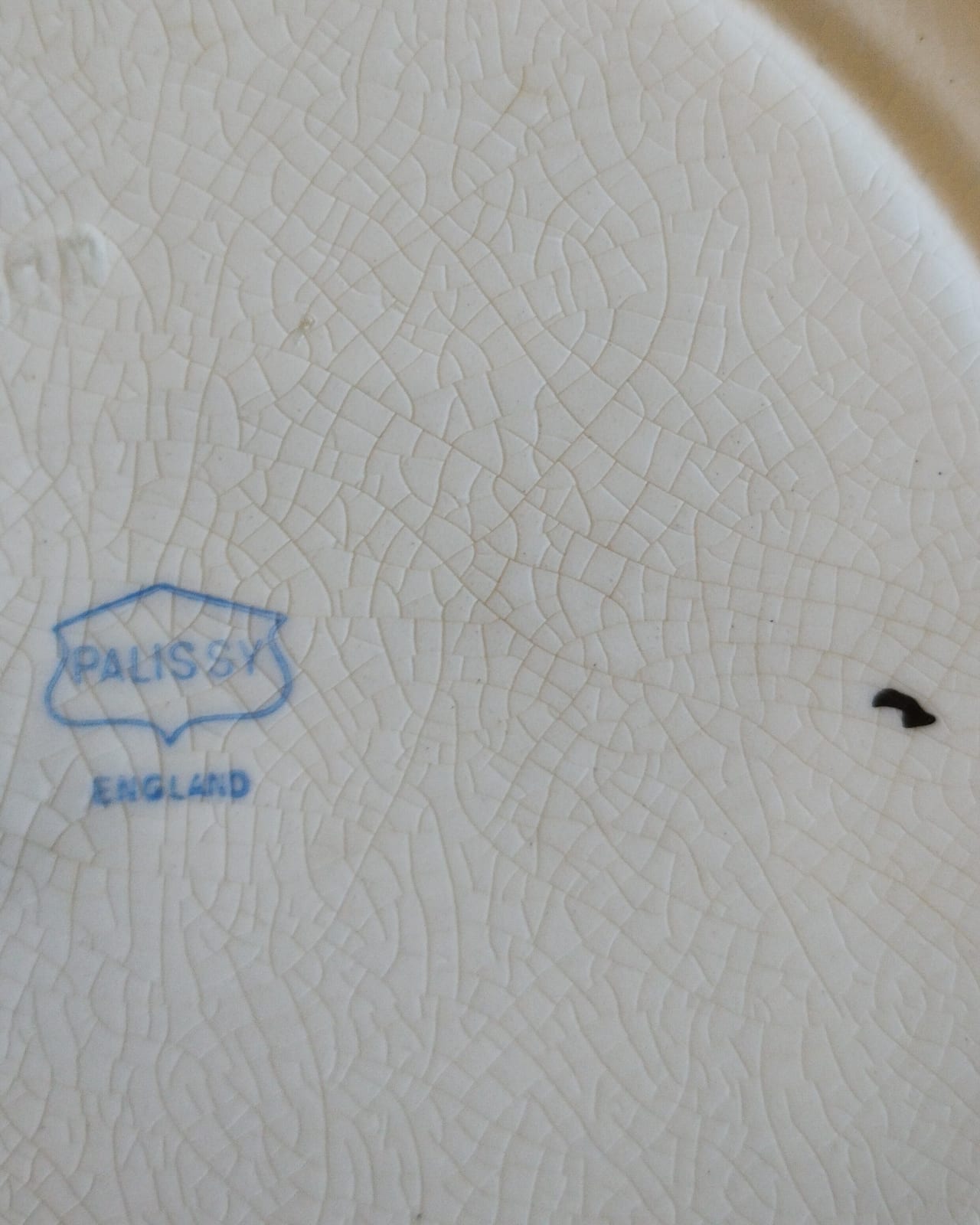
Palissy-style English ceramic plate or dish
Estimated Value
$40-$150
This appears to be the underside or reverse of a ceramic plate, charger, or shallow dish marked in blue with a shield-shaped cartouche reading 'PALISSY' and 'ENGLAND.' The heavily crackled glaze is characteristic of Palissy-style decorative wares, which were popular in England as revival pieces inspired by French Renaissance and later naturalistic ceramic traditions. The mark suggests an English-made piece, likely intended as decorative tableware rather than fine porcelain. The visible surface shows an off-white glaze with extensive age-related crazing, consistent with older earthenware or stoneware.
Era
Late 19th century to early 20th century (Victorian/Edwardian revival style)
Origin
England
Material
Glazed earthenware or stoneware with crackle glaze; hand-painted blue maker's mark
Condition
Fair to Good; visible crazing/crackle throughout the glaze, minor surface wear and small dark blemish/possible chip or firing flaw visible on the right side. No major structural damage visible in this image.
Physical Details
Dimensions
Unknown from image; likely approximately 8 to 12 inches in diameter if a plate or dish
Weight
Medium
Authentication
Authenticity Score
Medium; the mark and glaze appear consistent with an English ceramic piece, but the exact maker and period cannot be confirmed from this single underside image.
Provenance
Likely English manufacture, possibly from a pottery producing Palissy-style wares for the domestic or export market. Exact maker unknown from this image alone.
Historical Significance
Palissy-style ceramics were part of a broader 19th-century revival of decorative earthenware inspired by Bernard Palissy and naturalistic ceramic traditions. English examples are collectible, especially when clearly marked and in good condition.
Restoration Notes
- •No obvious restoration visible in the image
- •Extensive crazing is present and appears original to the glaze
This identification and value range are AI-generated research aids, not authentication, certification, or a formal appraisal. Learn about the limitations and when to consult a qualified professional appraiser.
Research this item further
Related Identifications
Browse all →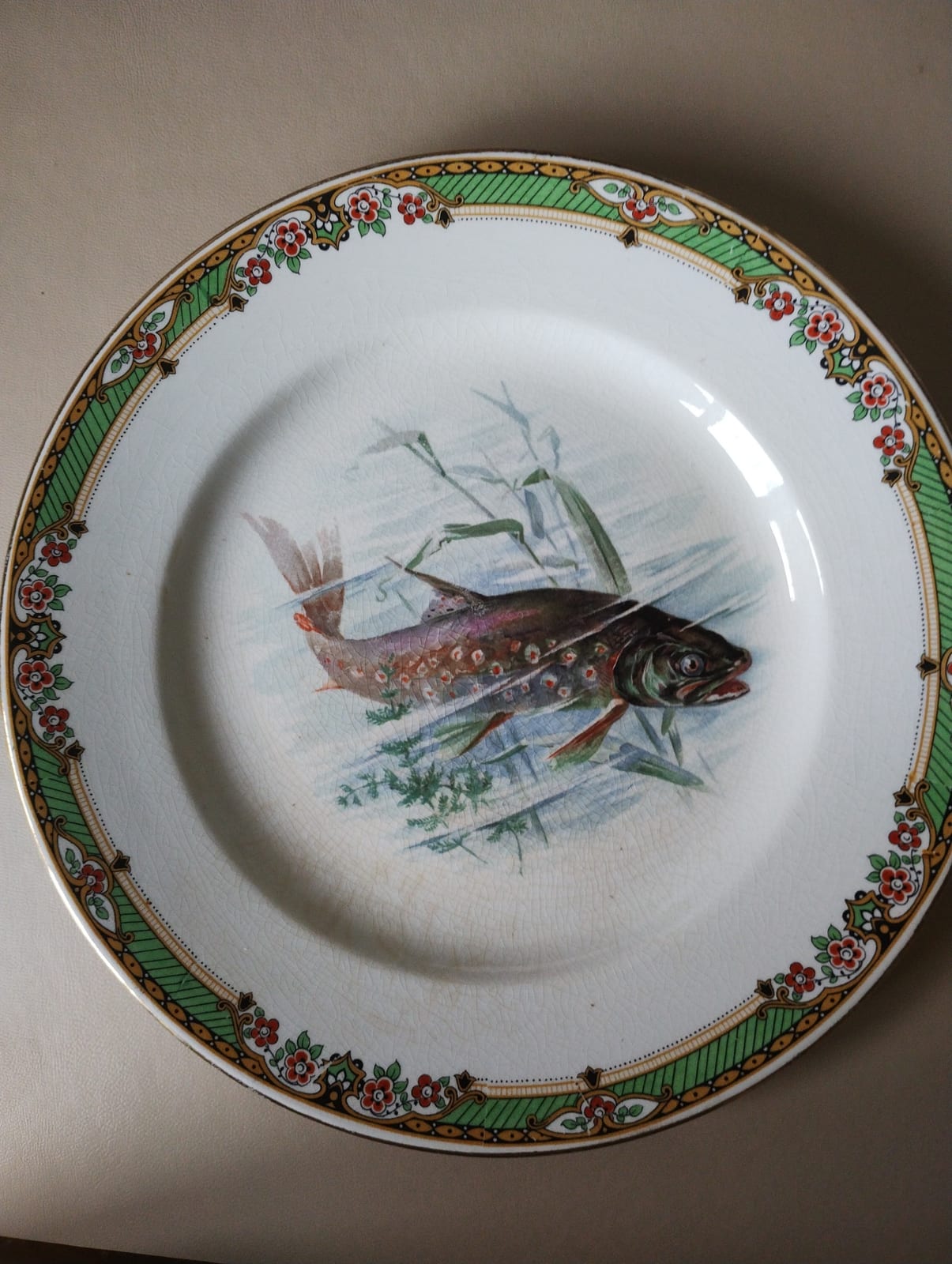
Decorative porcelain fish plate
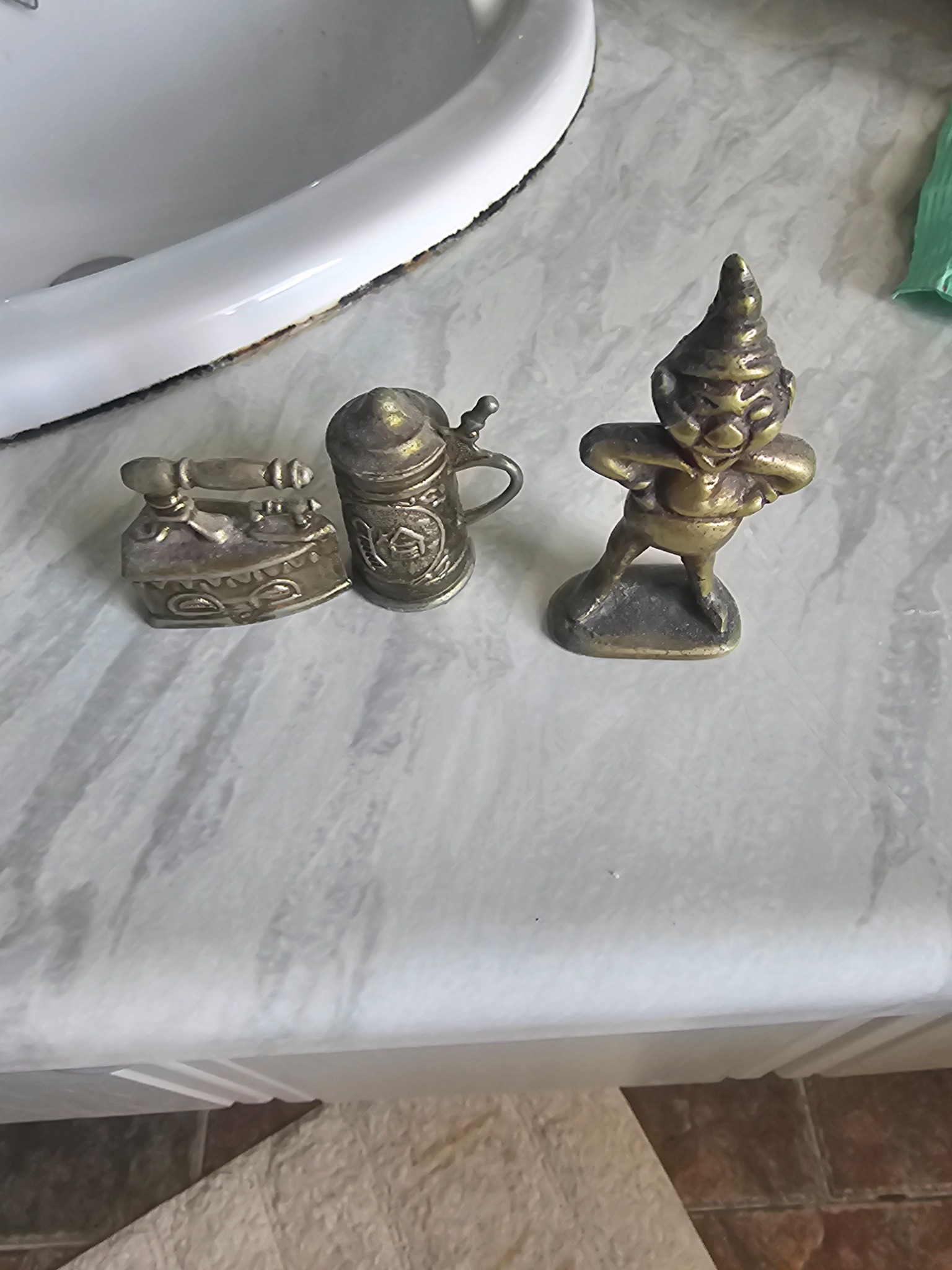
Assorted miniature brass novelty figurines and decorative trinkets
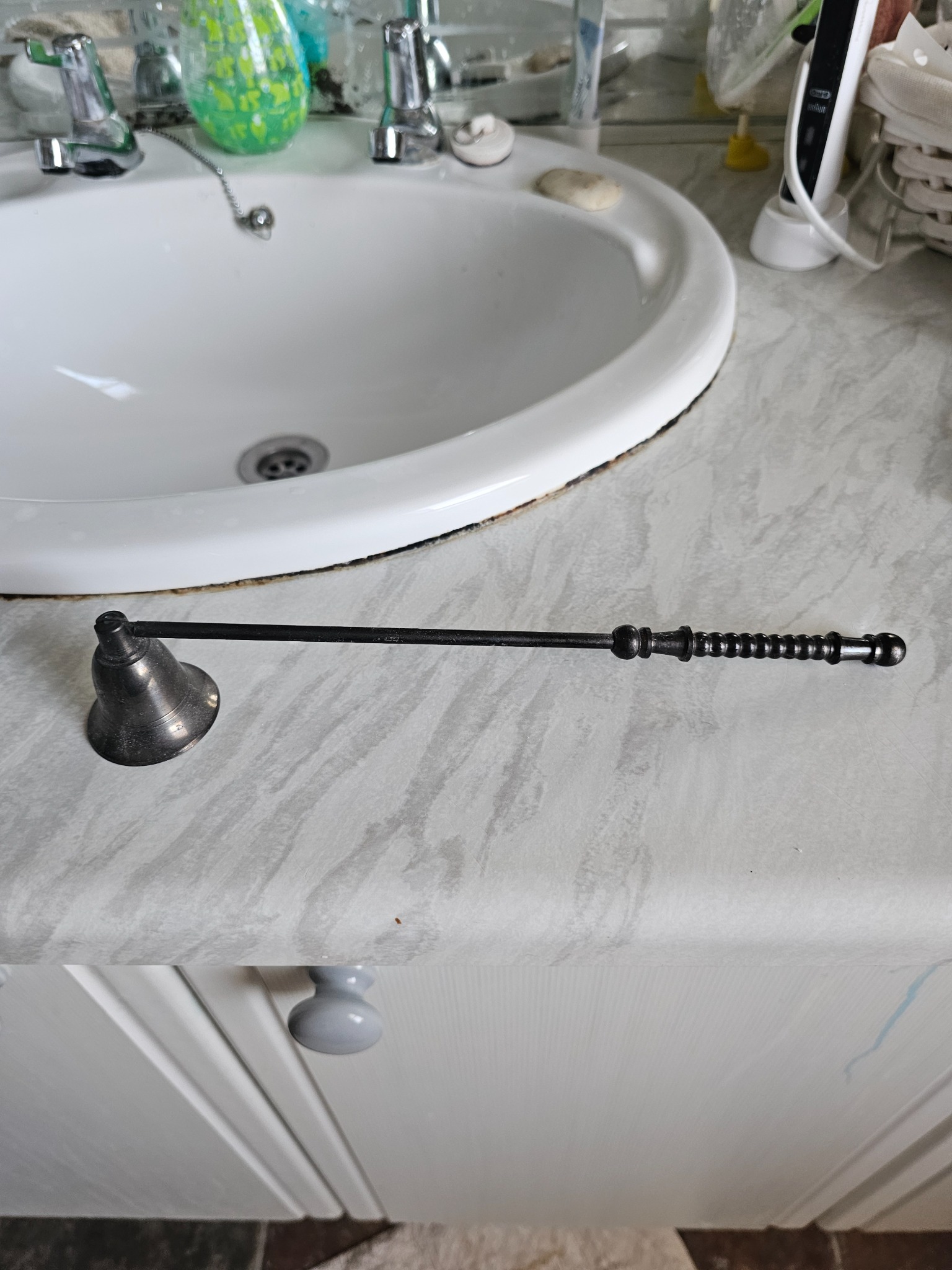
Vintage metal candle snuffer (bell-shaped snuffer with turned handle)
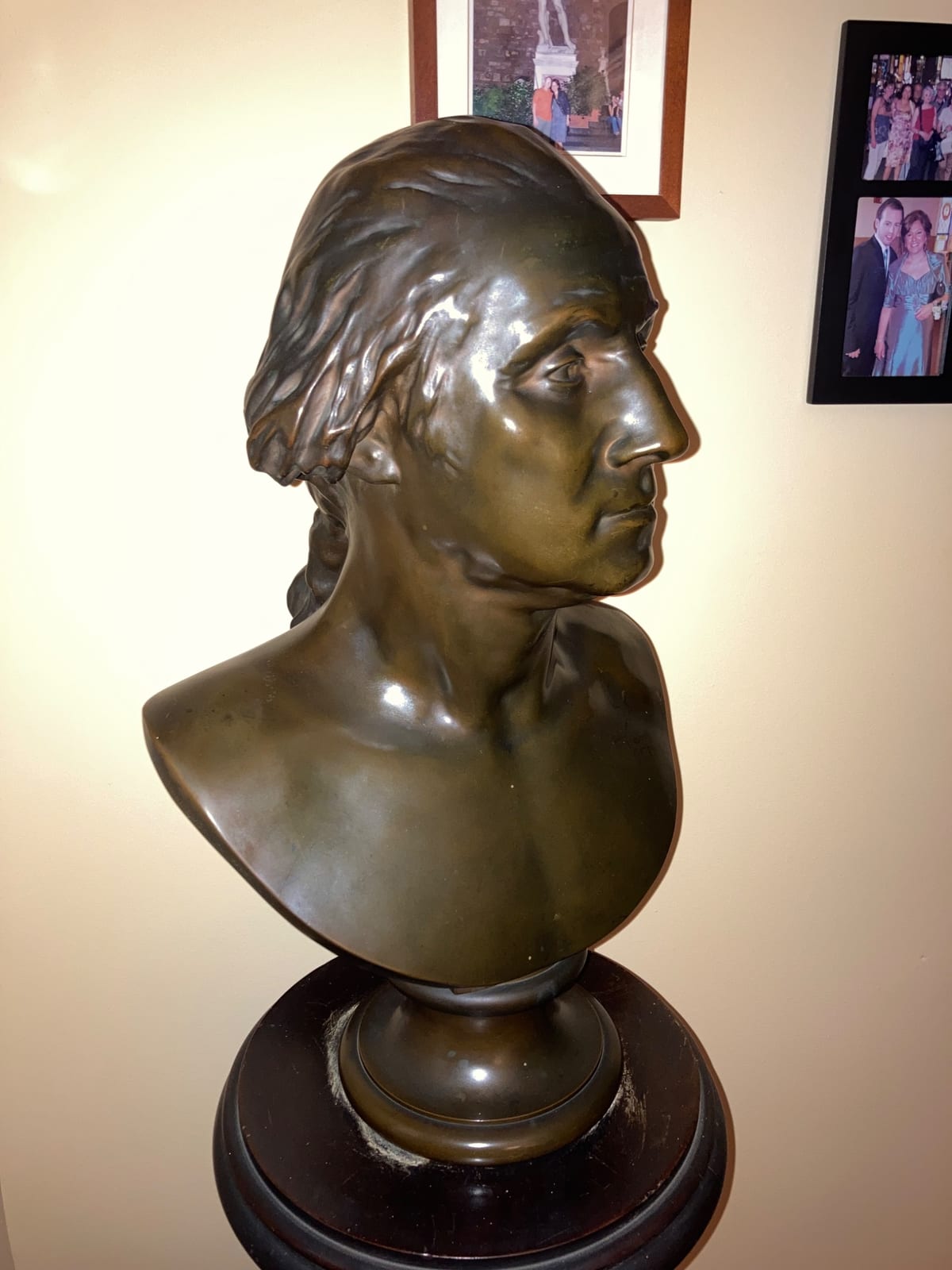
Bronze bust sculpture of a classical male figure
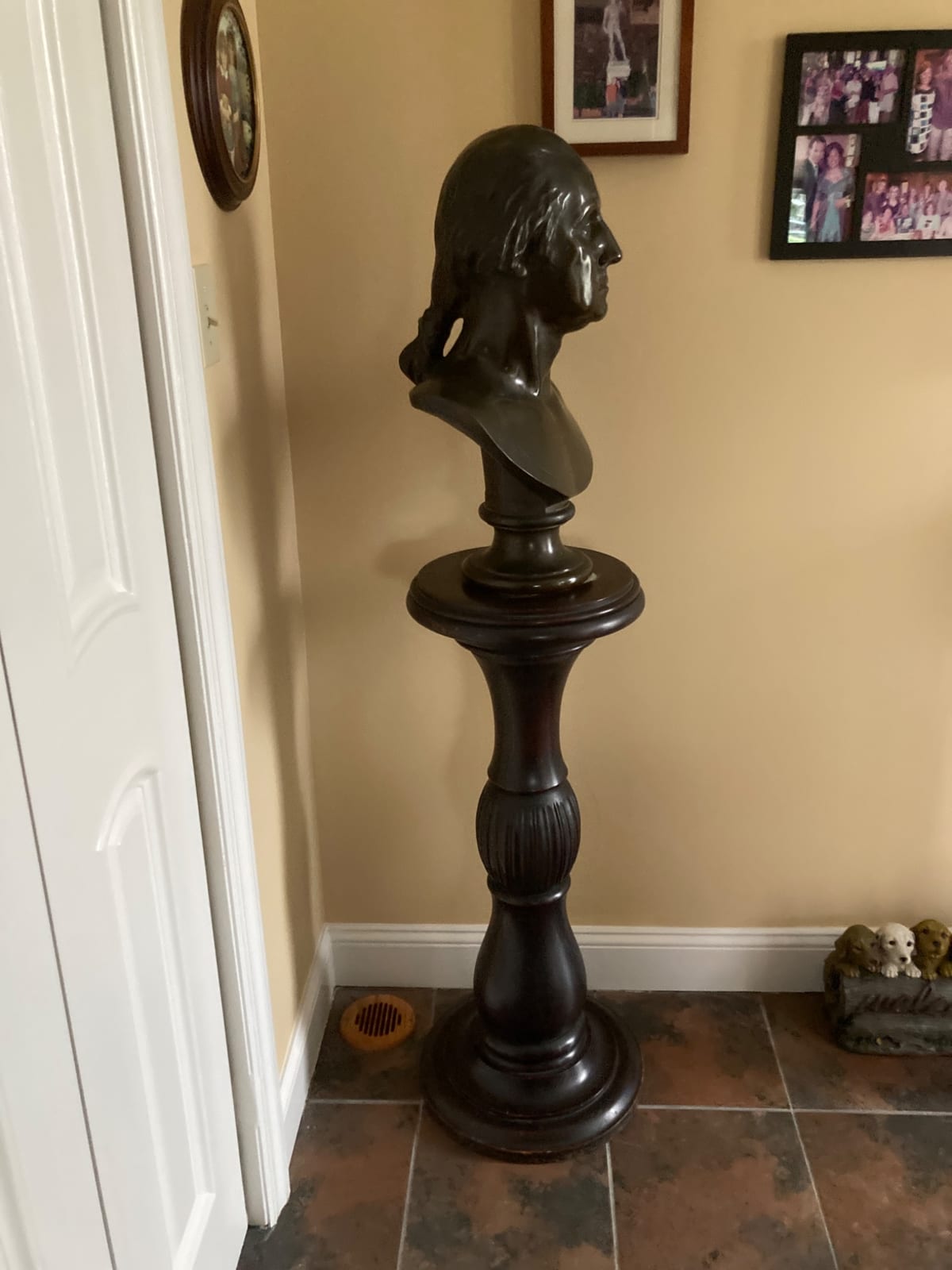
Neoclassical-style bust sculpture on pedestal
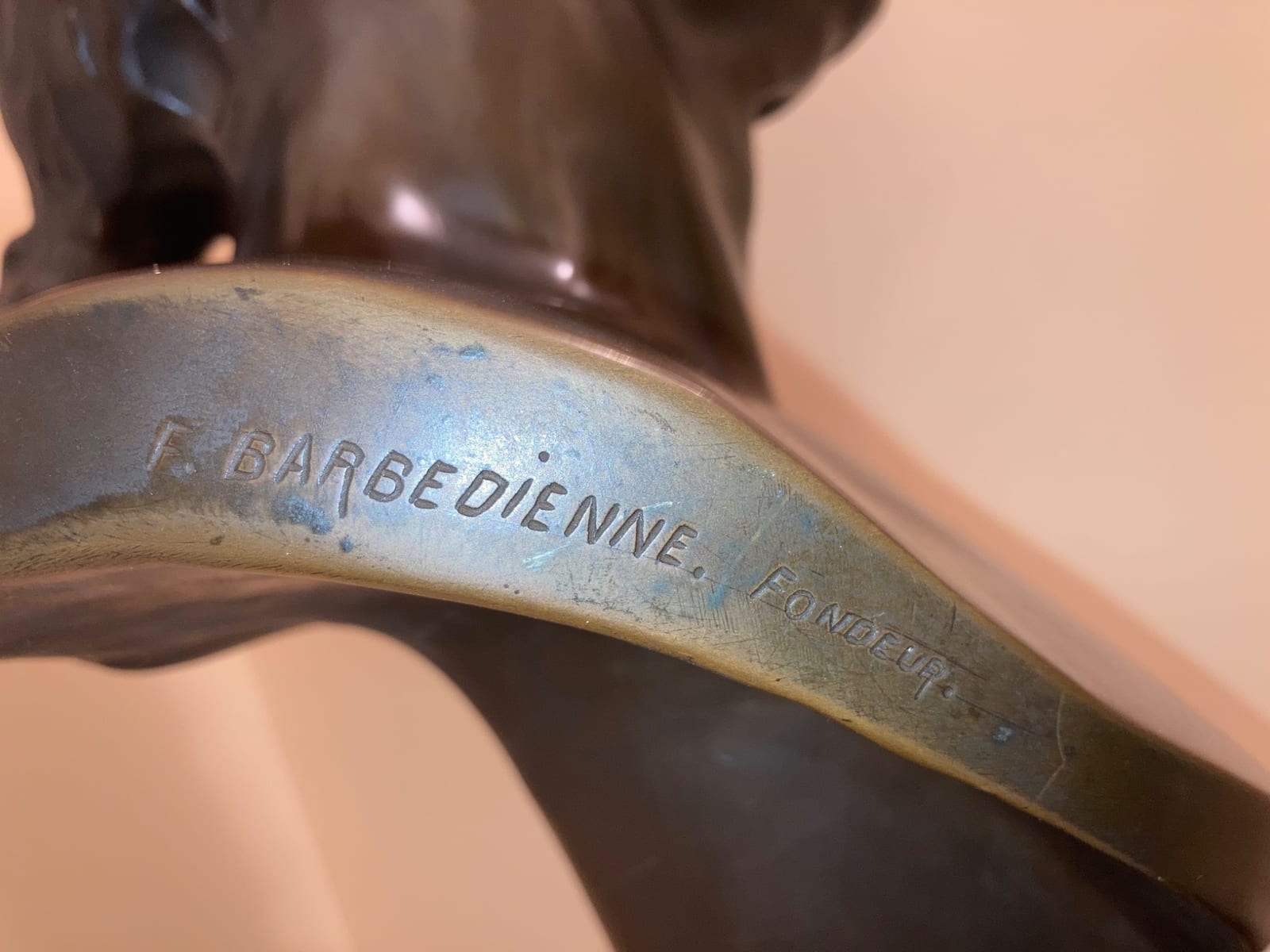
Bronze sculpture or decorative metal figure by E. Barbedienne (Fondeur)
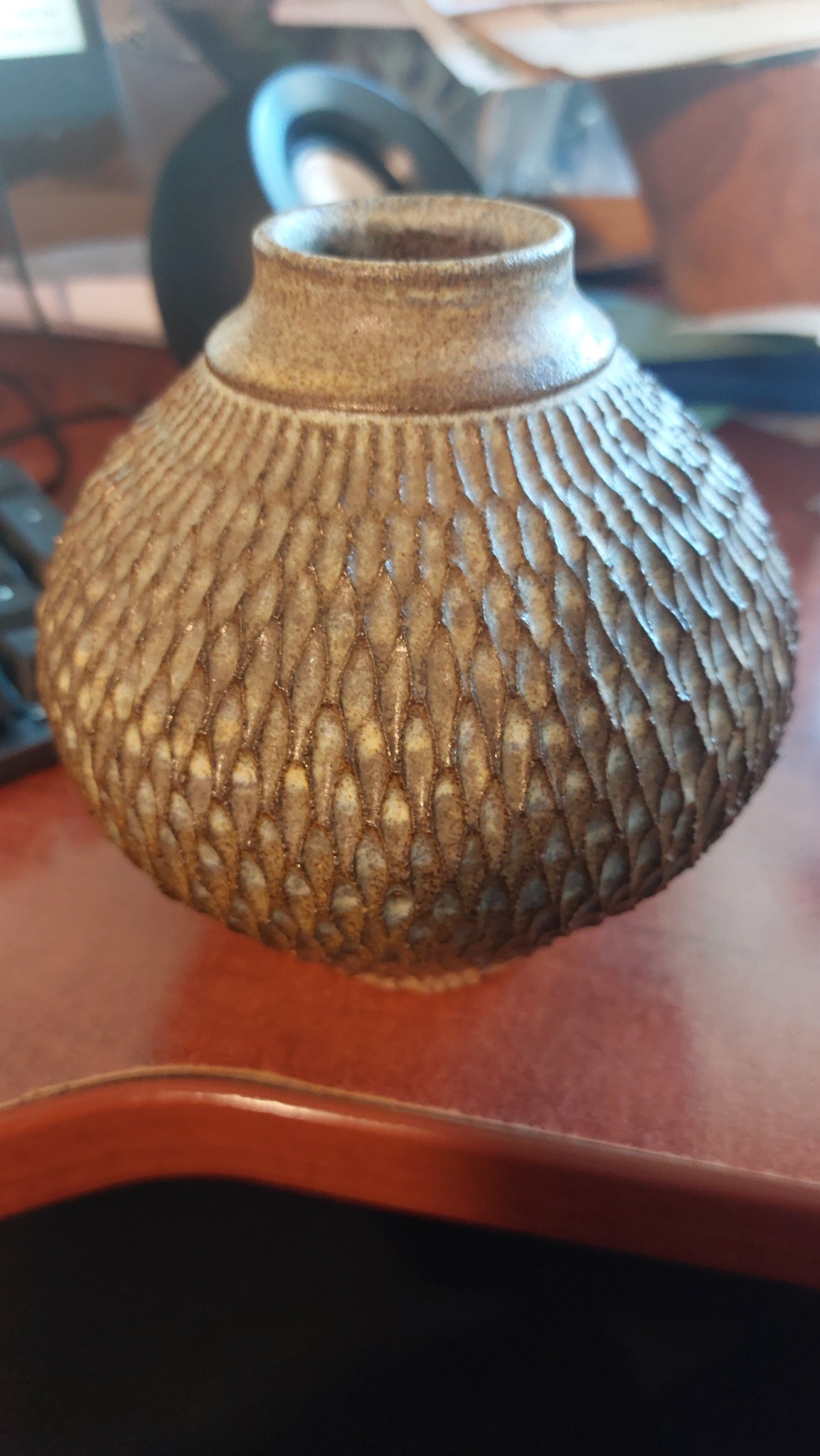
Textured ceramic vase or small vessel
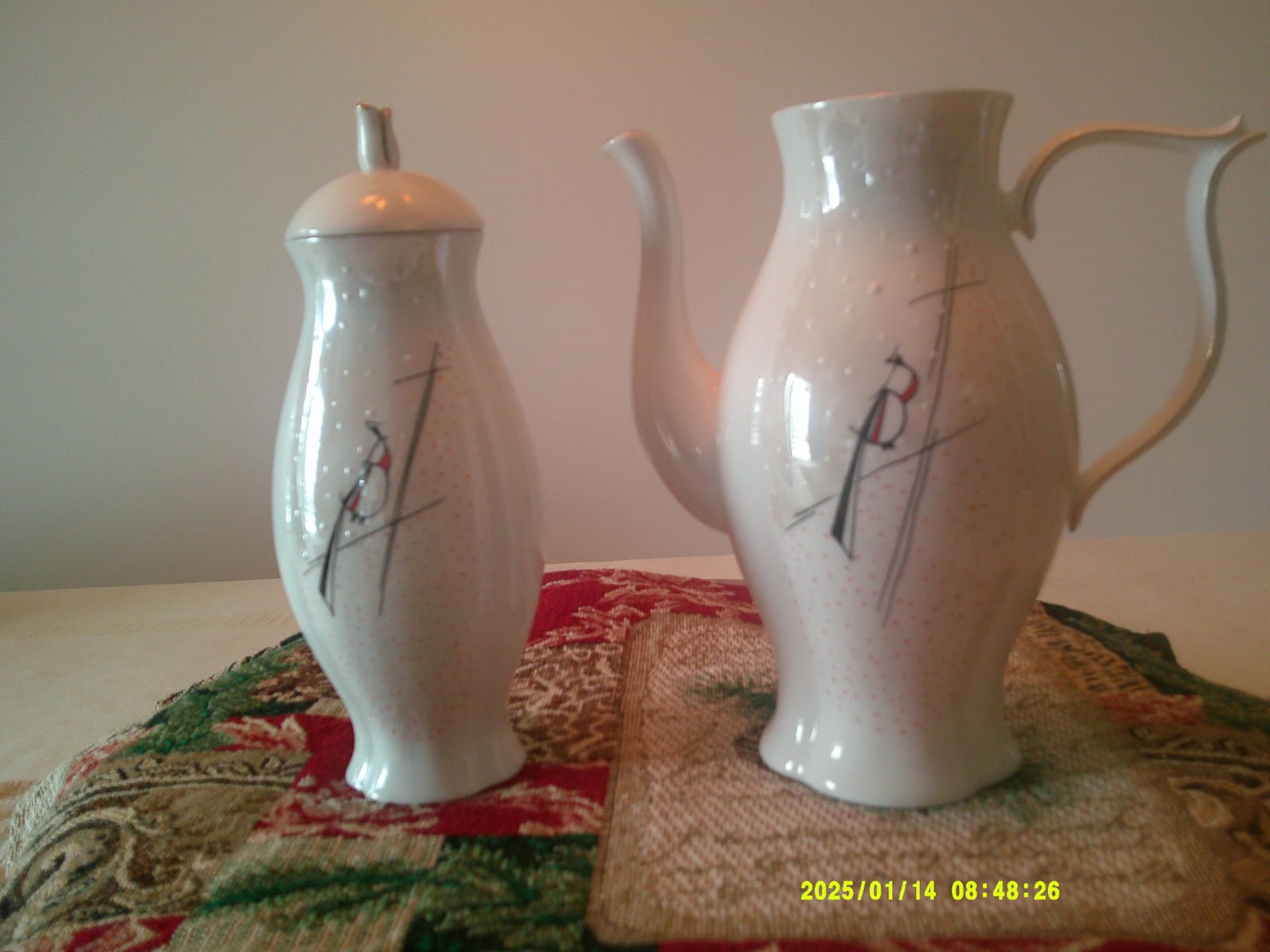
Porcelain coffee/tea service pieces (creamer and covered sugar bowl or lidded pitcher)