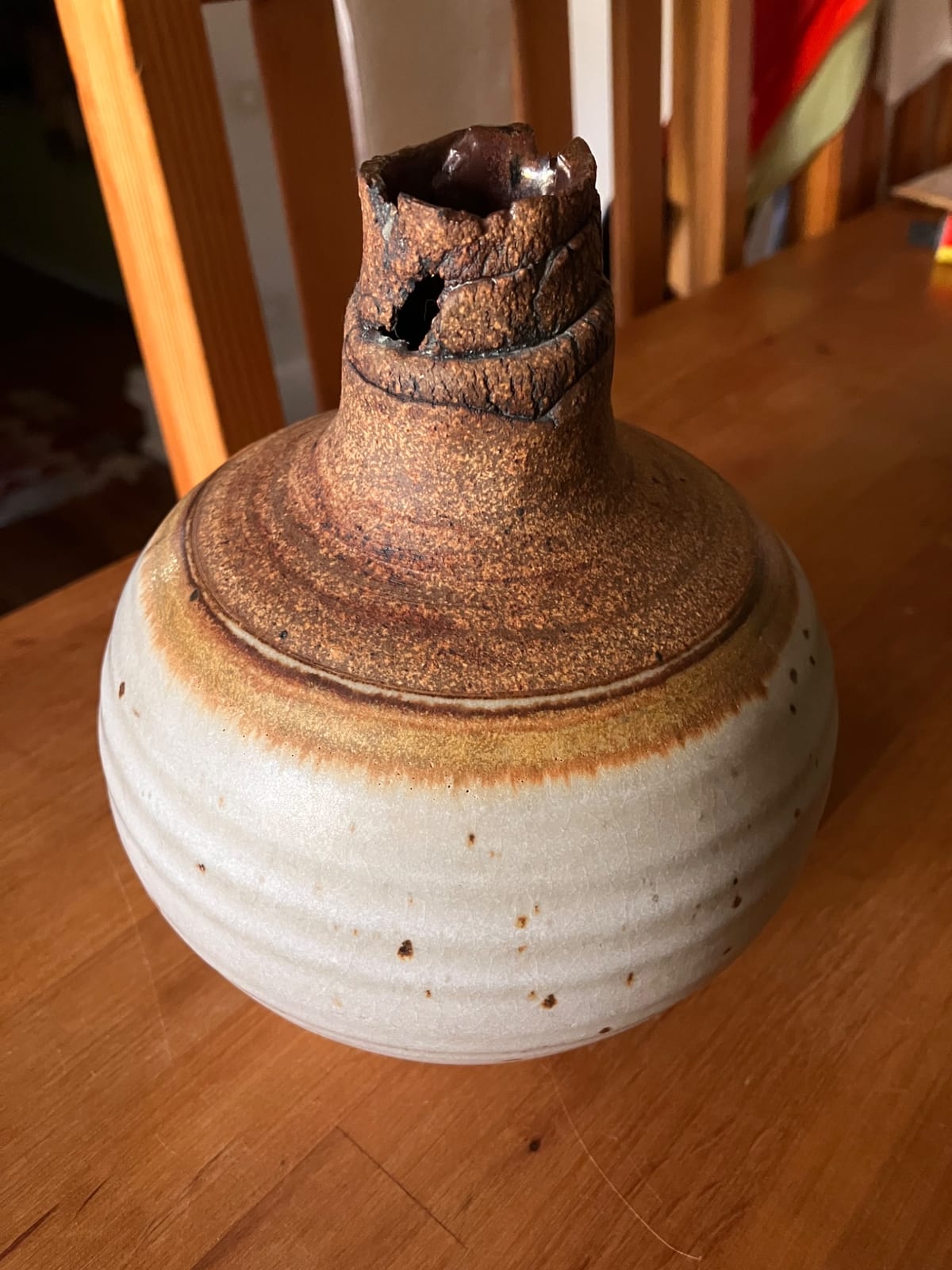
Salt-glazed stoneware bottle or jug
Estimated Value
$20-$80 as-is; potentially higher if a maker, date, or rare origin is identified
A rounded stoneware vessel with a narrow neck and a light gray-white salt-glazed body. The upper shoulder and neck show strong brown iron-oxide discoloration and heavy surface wear. The mouth is irregular and appears broken or heavily chipped, suggesting loss of the original rim. The form is utilitarian and consistent with a storage jug, bottle, or crock-style vessel used for household liquids or dry goods. No visible maker's mark, stamp, or decoration is apparent in the image.
Era
Late 19th century to early 20th century (approximate)
Origin
Likely North America or Europe; exact origin unknown from image alone
Material
Salt-glazed stoneware with ceramic body and iron-oxide staining/accumulation
Condition
Fair to Poor; heavy wear and significant damage to the neck/rim area, with a large chip or break at the mouth and surface staining/abrasion consistent with age and use
Physical Details
Dimensions
Approximately 8-12 inches tall; widest body diameter approximately 7-9 inches
Weight
Medium
Authentication
Authenticity Score
Medium; the material, glaze, and wear are consistent with an old stoneware vessel, but the exact age and origin cannot be confirmed from the image alone
Provenance
Likely a utilitarian household stoneware piece, possibly used for storage or transport of liquids such as milk, vinegar, spirits, or preserves. Exact provenance cannot be determined from the photo.
Historical Significance
Stoneware vessels of this type were widely used in domestic and commercial settings before modern glass and plastic containers became common. They are historically significant as everyday utilitarian ceramics, though this example appears to be a fairly standard form rather than a rare or highly collectible variant.
Restoration Notes
- •No clear evidence of professional restoration visible
- •Mouth/rim appears damaged or missing original material
- •Surface shows age-related staining, wear, and possible mineral deposits
This identification and value range are AI-generated research aids, not authentication, certification, or a formal appraisal. Learn about the limitations and when to consult a qualified professional appraiser.
Research this item further
Related Identifications
Browse all →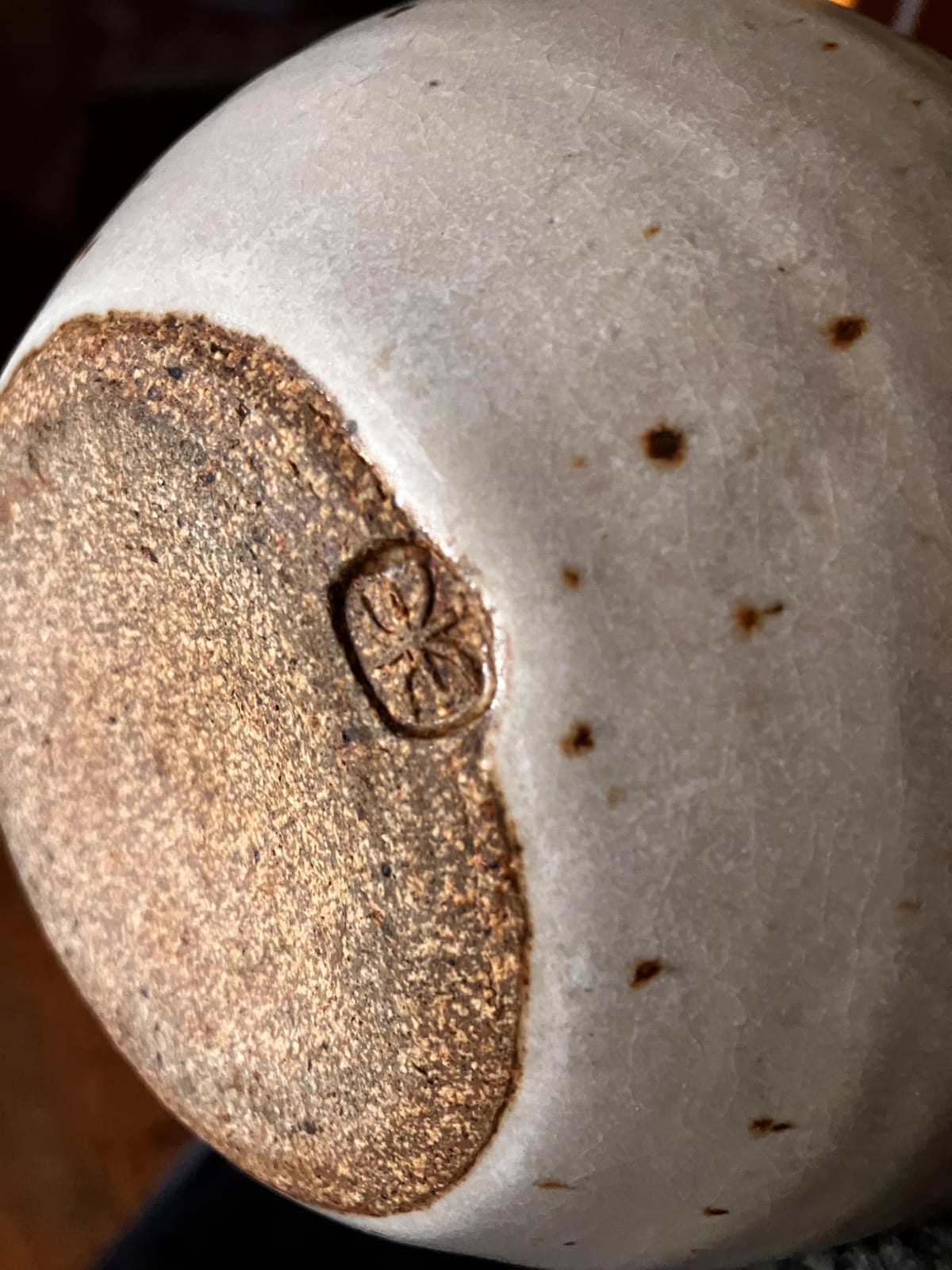
Small ceramic/porcelain vessel or figurine base with maker’s mark
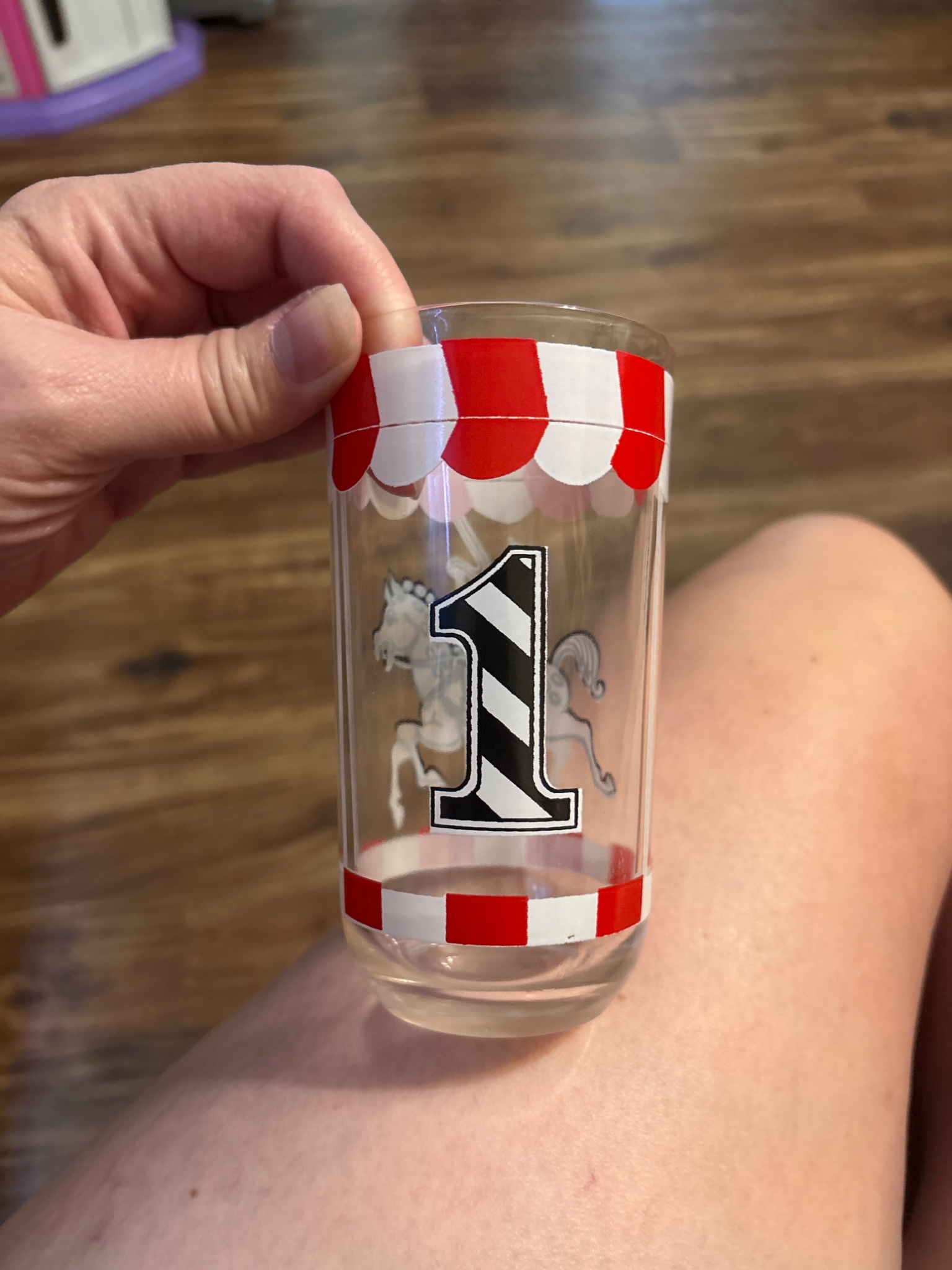
Decorative numbered shot glass
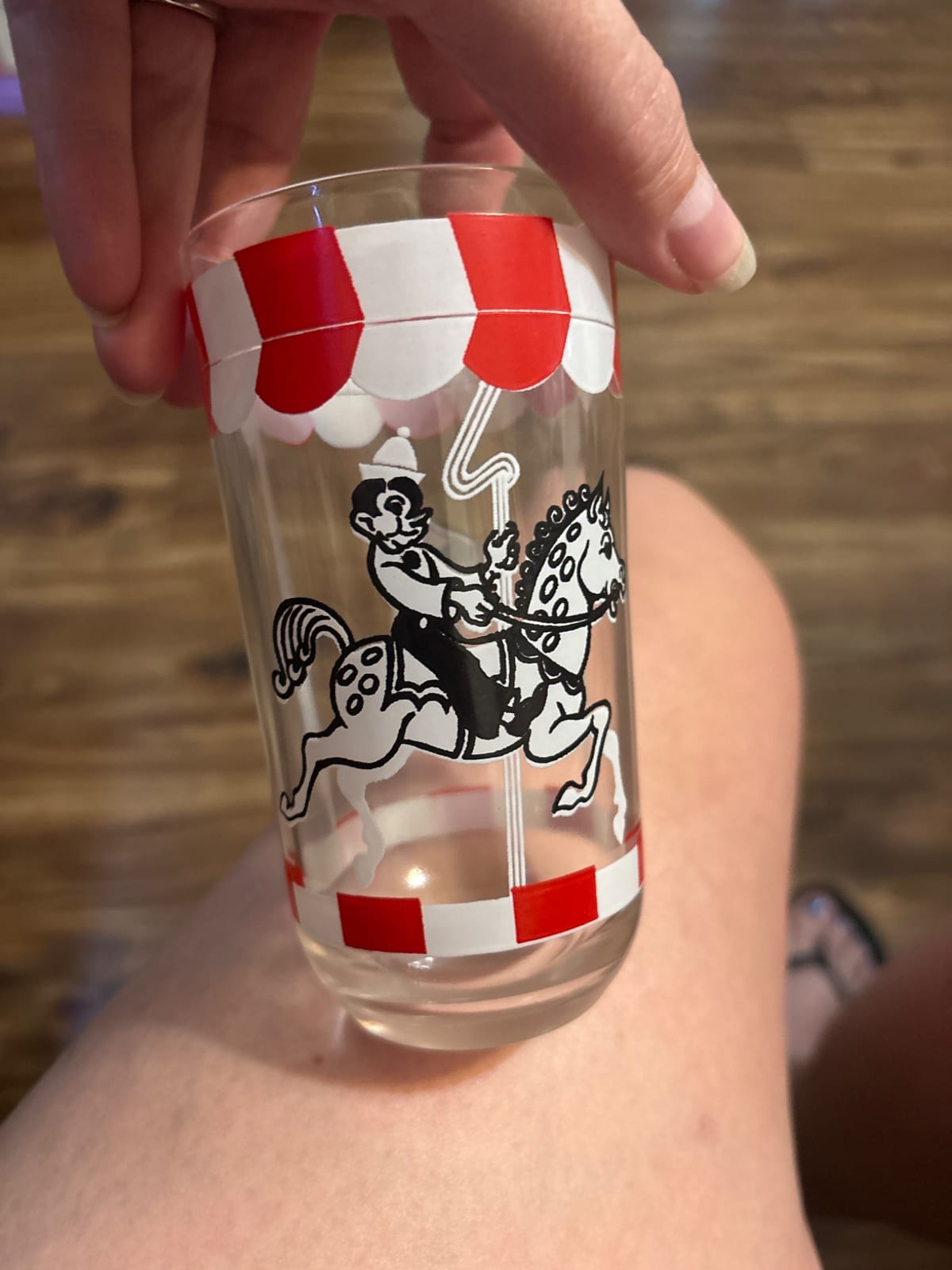
Vintage character-themed drinking glass/tumbler
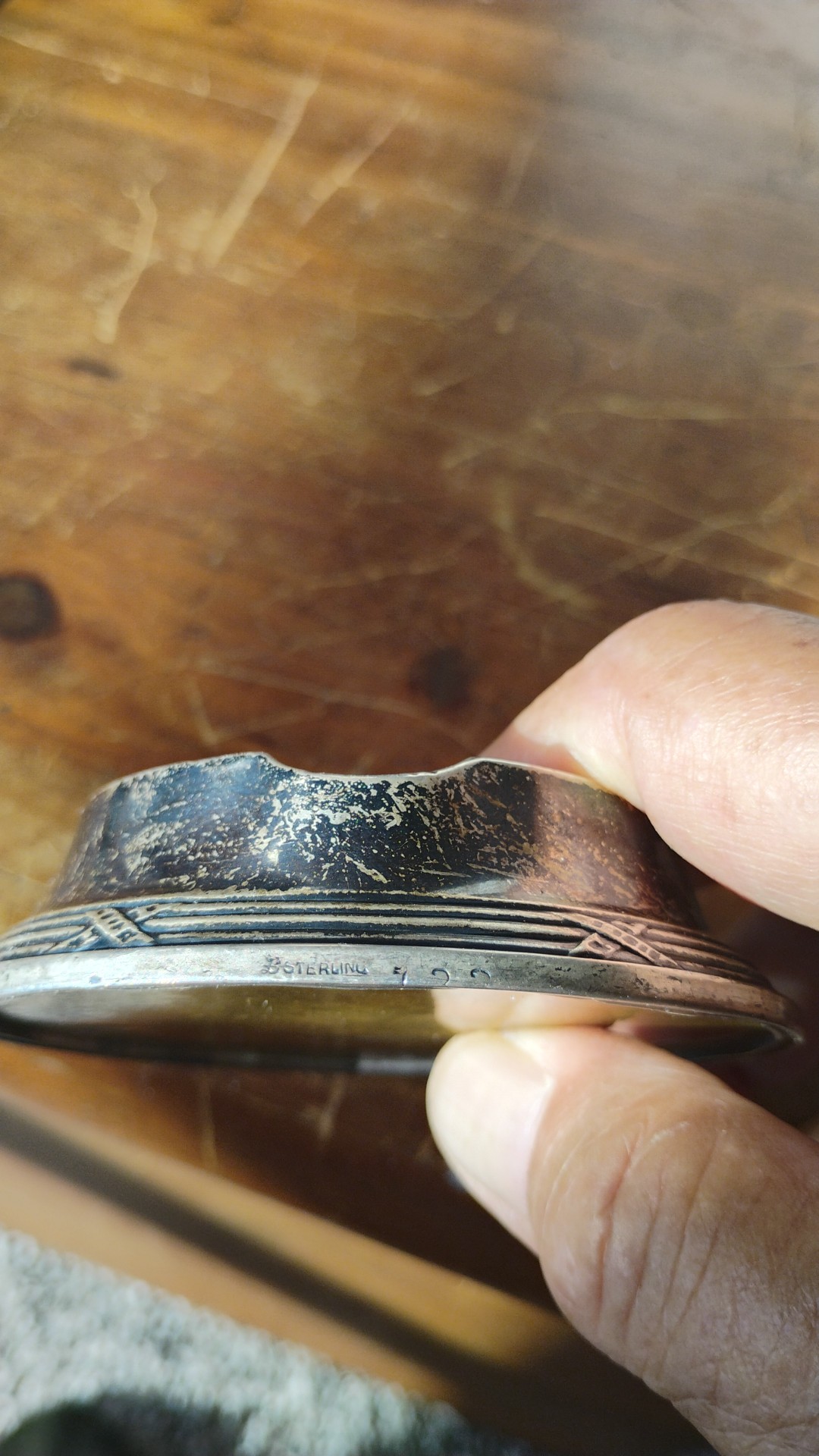
Sterling silver compact or small vanity case lid/base section
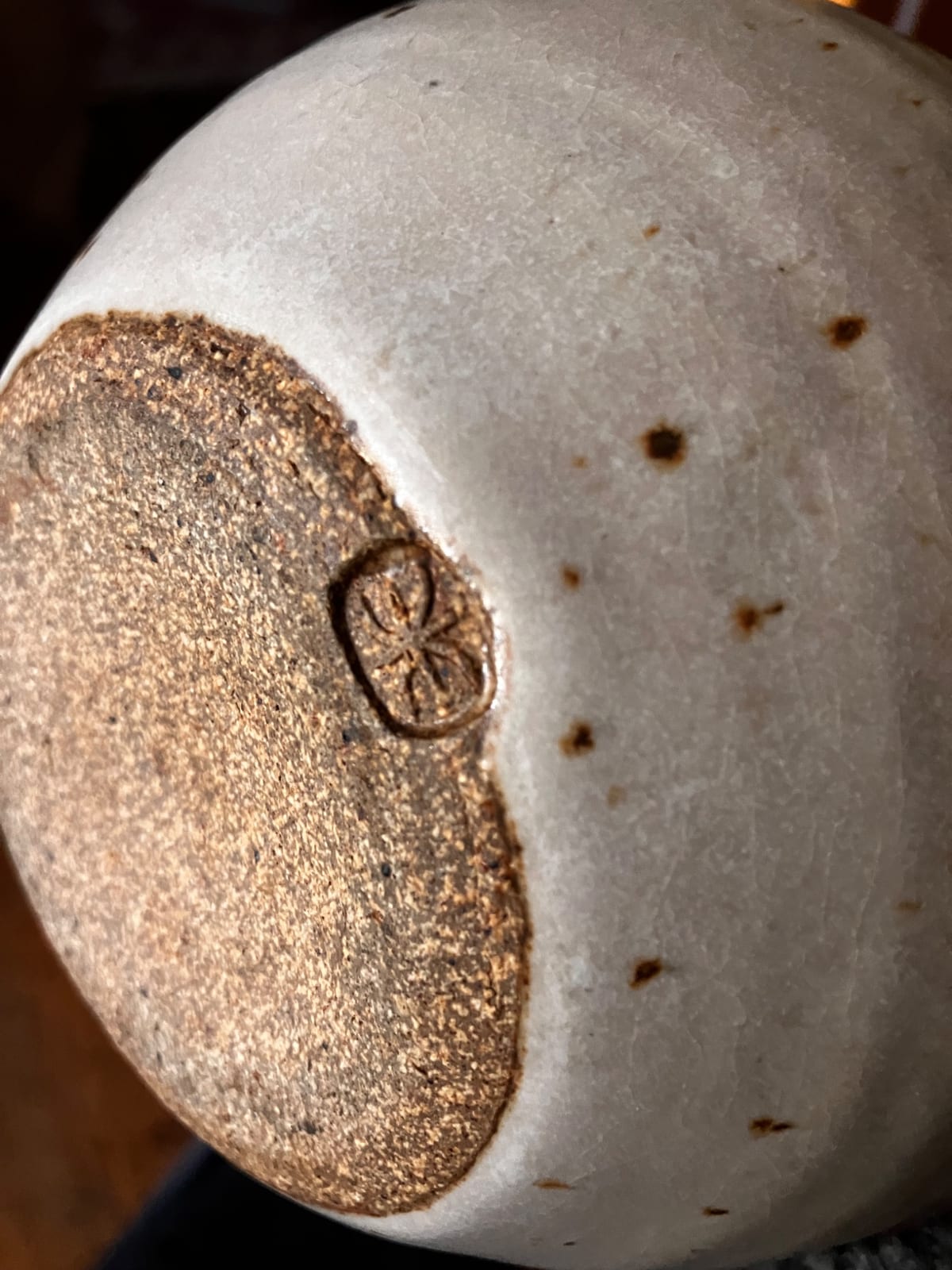
Glazed ceramic or stoneware vessel base with maker’s mark
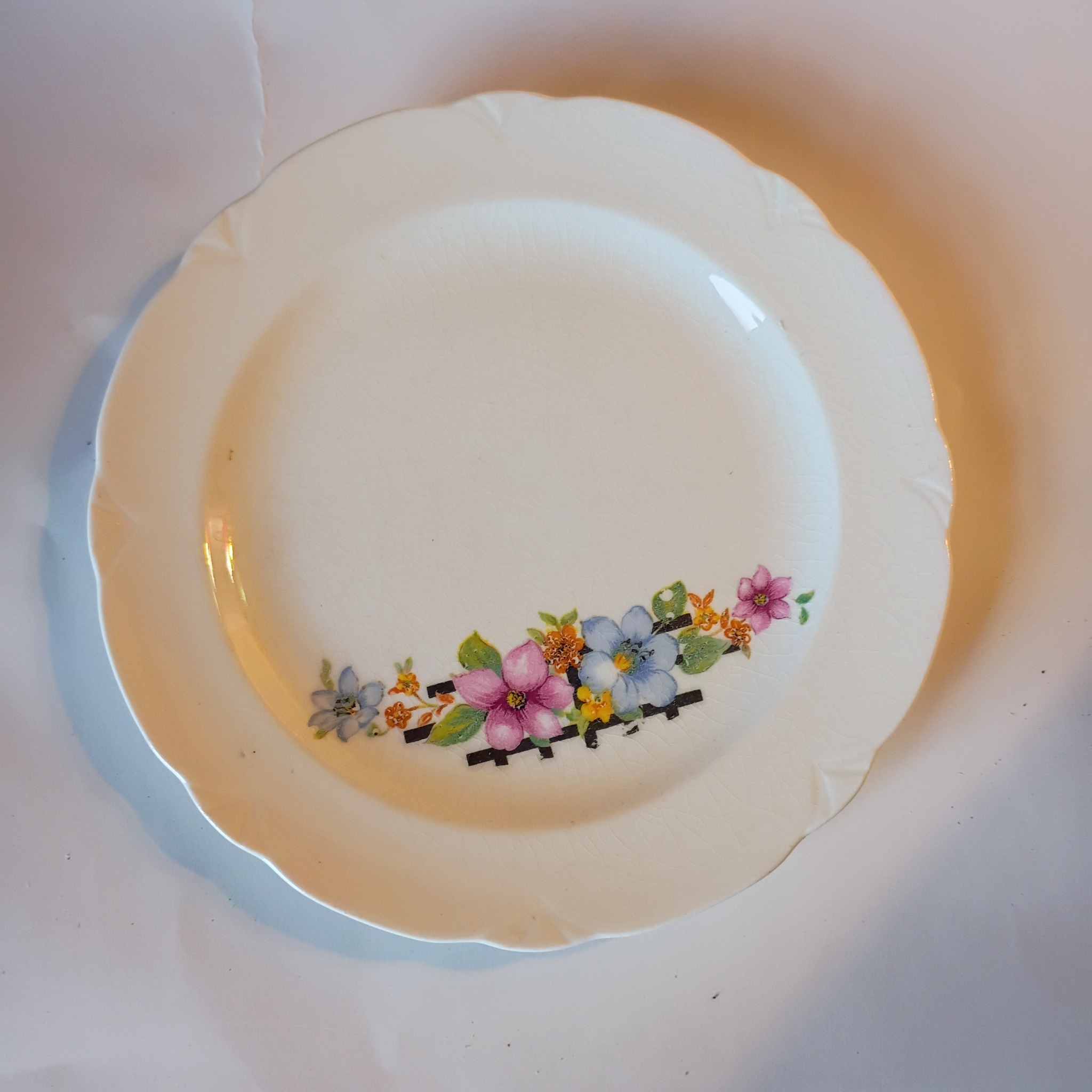
Decorative porcelain dinner plate with floral transfer/hand-painted motif