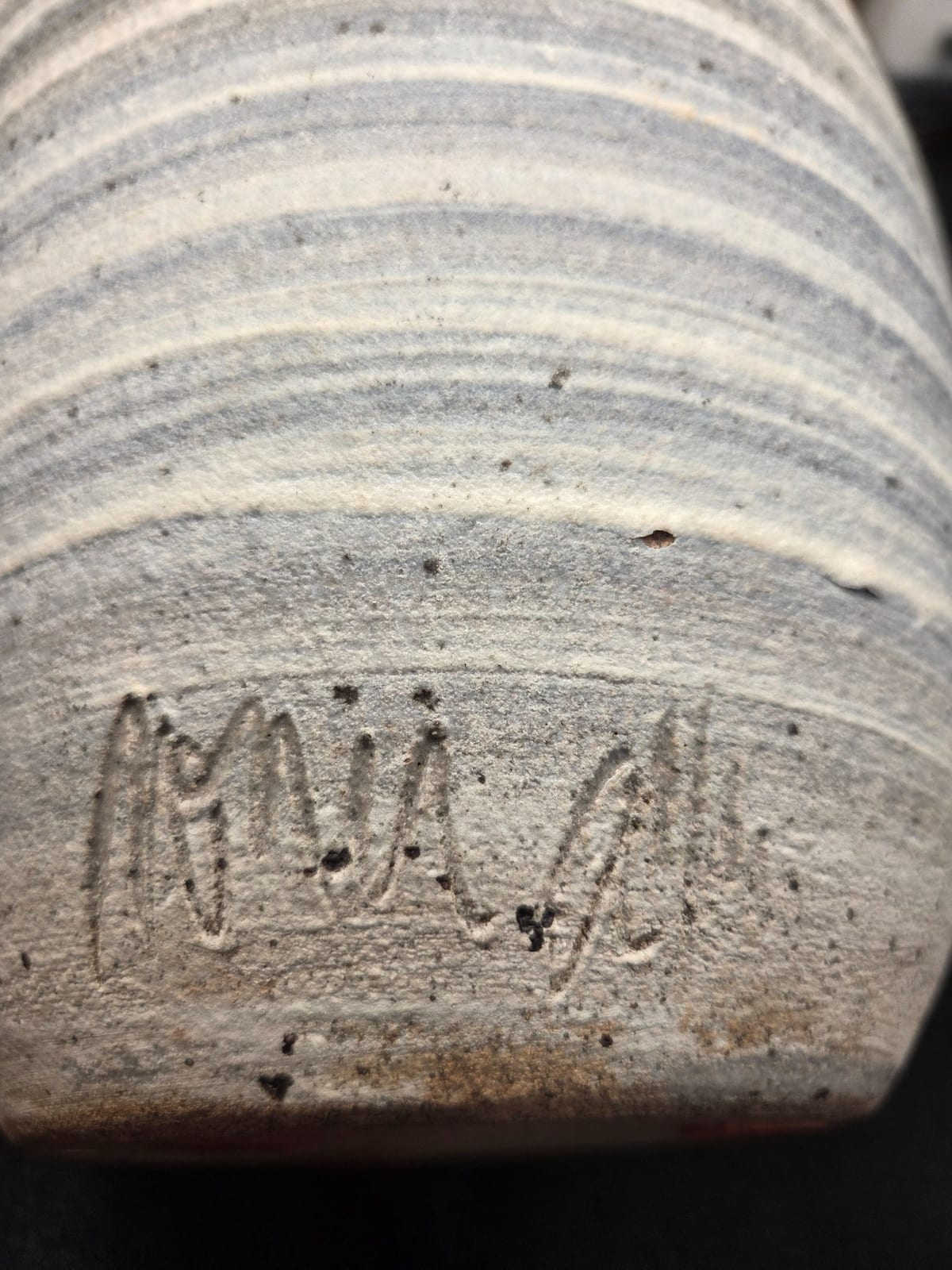
Salt-glazed stoneware vessel fragment with incised/pressed maker's mark
Estimated Value
$20-$80
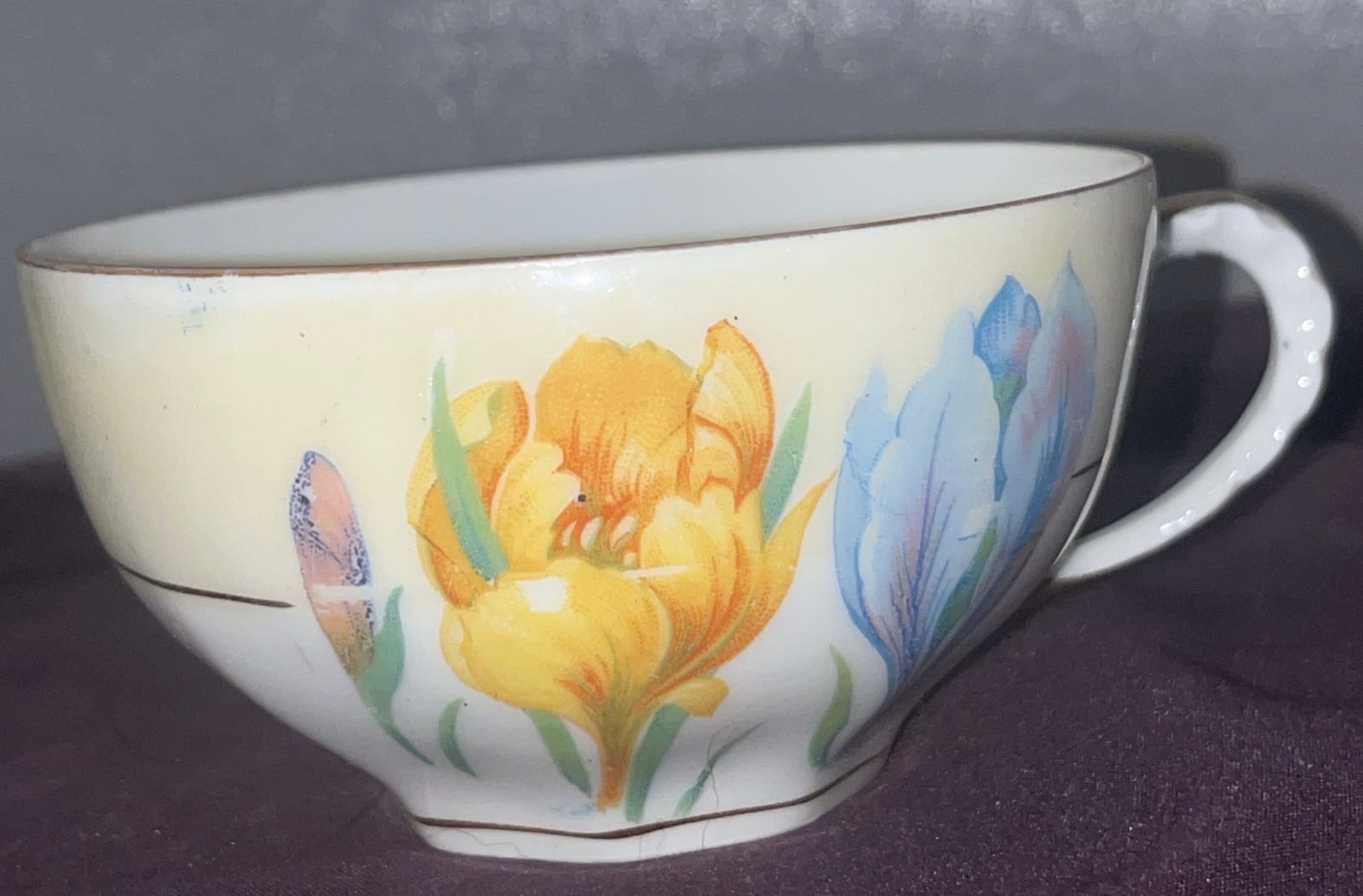
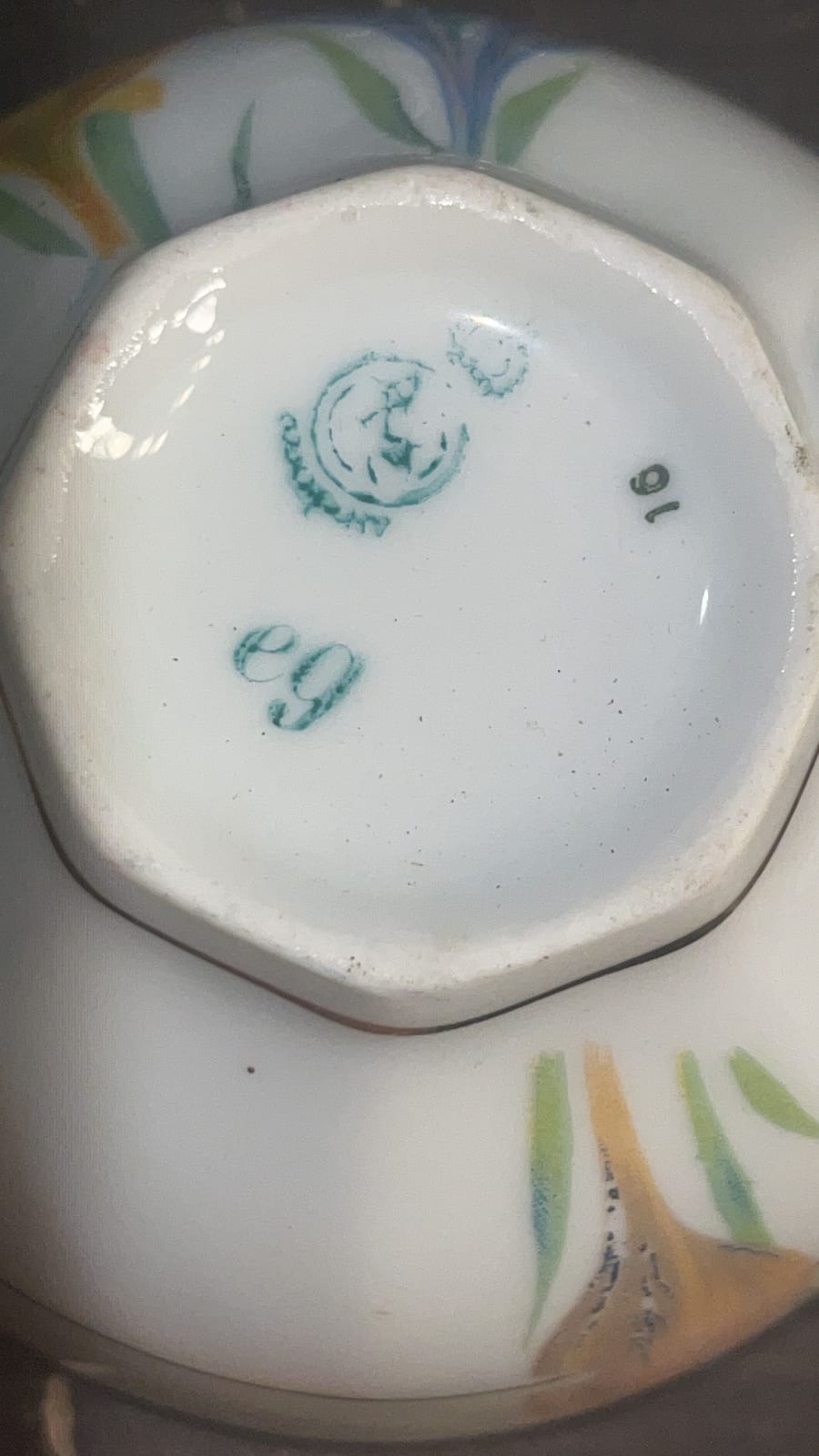
This appears to be a close-up of a ceramic or stoneware vessel body, likely a utilitarian jar, crock, or bottle fragment. The surface has a grayish salt-glazed or weathered finish with concentric throwing rings visible, suggesting wheel-thrown manufacture. Near the lower portion is a partially legible maker's mark or stamp, possibly hand-incised or impressed, but the lettering is too unclear to identify confidently. The object looks handmade or early industrial rather than modern mass-produced decorative ware.
Era
Late 19th century to early 20th century (approximate)
Origin
Likely North America or Europe; exact origin unknown
Material
Salt-glazed stoneware or earthenware with impressed/hand-incised mark
Condition
Fair. Surface shows heavy wear, dirt, staining, minor chipping, and possible edge loss. The visible mark is worn and only partially legible.
Physical Details
Dimensions
Unknown; visible fragment suggests a medium-sized vessel, likely originally approximately 6-14 inches in diameter or height depending on form
Weight
Medium
Authentication
Authenticity Score
Medium. The material, surface wear, and manufacturing characteristics are consistent with an older ceramic/stoneware piece, but the image is too limited to confirm maker, date, or whether it is a complete antique versus a fragment.
Provenance
Likely from a utilitarian household or storage vessel; exact maker and workshop cannot be determined from the image alone. The mark may indicate a potter, kiln, or retailer, but it is not readable enough for firm attribution.
Historical Significance
Utilitarian stoneware and salt-glazed ceramics were widely used for storage and domestic purposes in the 19th and early 20th centuries. Pieces like this are historically interesting for their craftsmanship and maker's marks, though most fragments have modest market value unless tied to a known maker or rare form.
This identification and value range are AI-generated research aids, not authentication, certification, or a formal appraisal. Learn about the limitations and when to consult a qualified professional appraiser.