Set of decorative metal buttons or cufflink-style garment fasteners
Estimated Value
$40-$150 for the group, depending on maker, material, and whether they are confirmed antique cufflinks/buttons rather than later decorative reproductions
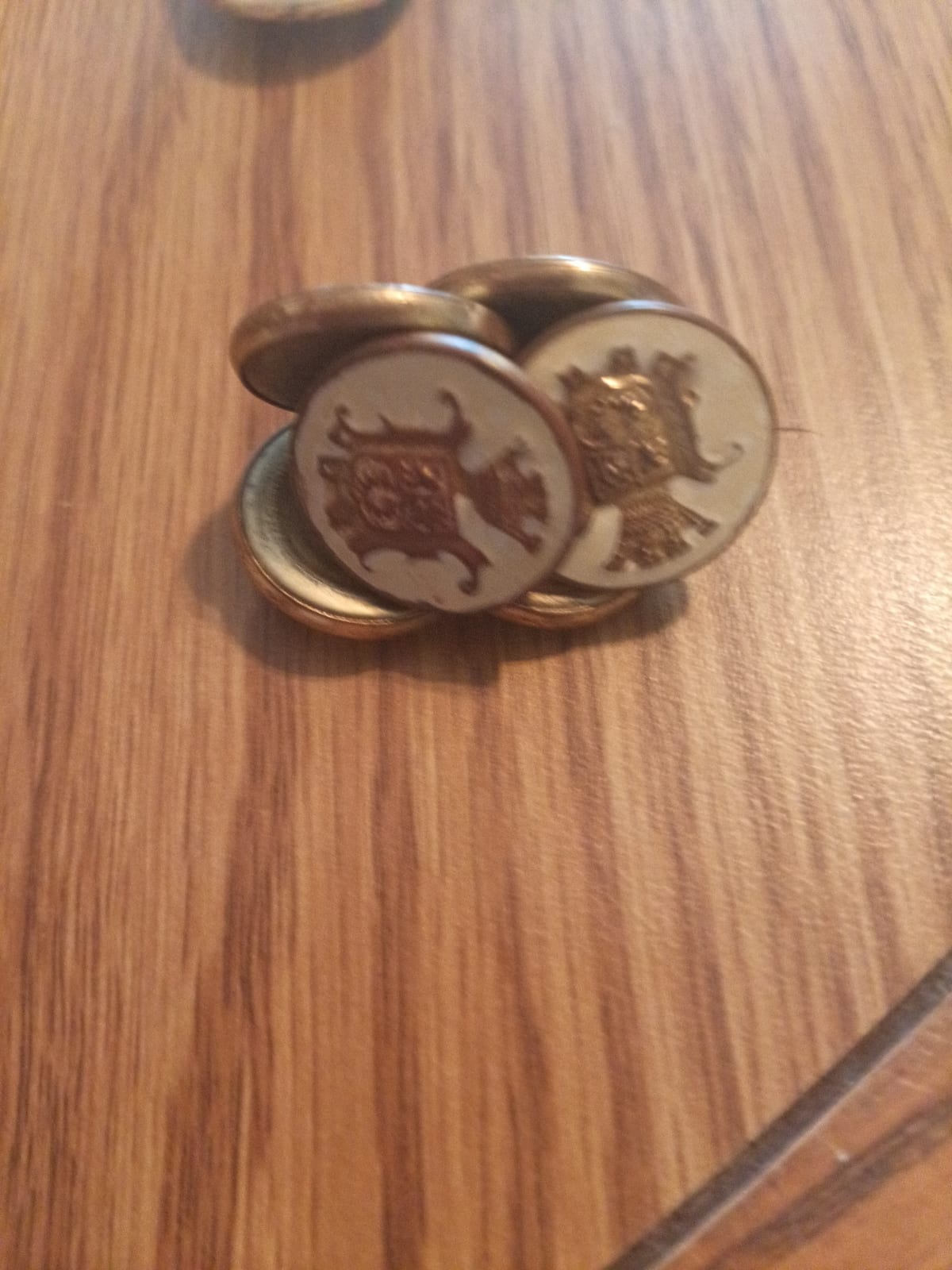
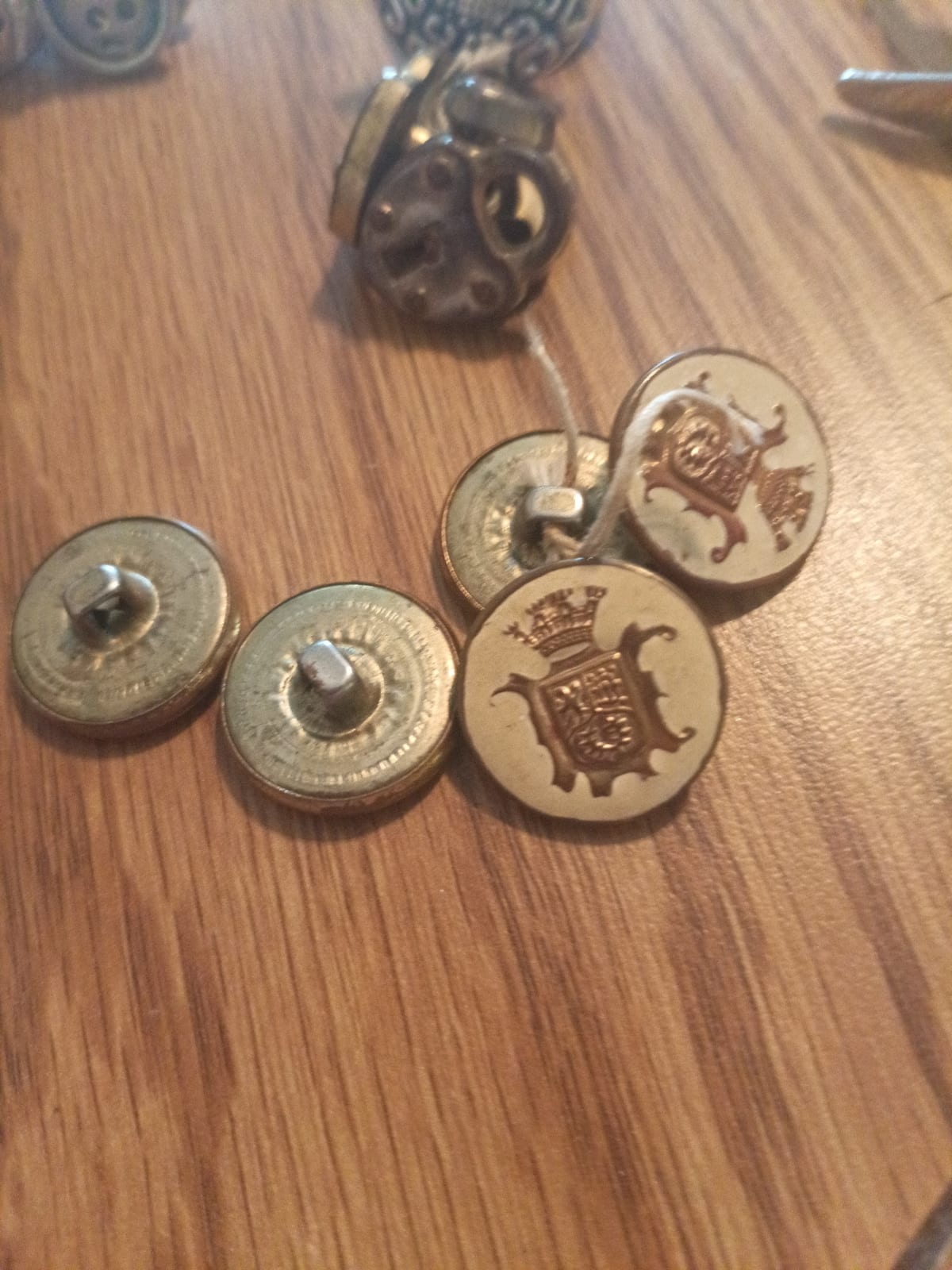
The image shows several round decorative fasteners with domed metal backs and front faces featuring heraldic-style crests and monograms. The pieces resemble antique shirt studs, cufflinks, or dress-set buttons rather than standard sewing buttons, due to their rigid round form and central shank/post construction. Two faces display ornate crest motifs with crowns and shield-like emblems, while others show plain metal backs with central fittings. The overall style suggests formal menswear accessories from the late 19th or early 20th century, likely intended for dress shirts, waistcoats, or formal attire. The craftsmanship appears mass-produced but decorative, with applied or printed heraldic designs.
Era
Late Victorian to Edwardian era, approximately 1890s-1910s (best estimate)
Origin
Likely Europe, possibly England or France
Material
Metal alloy with enamel or celluloid/ivory-colored inserts; possibly brass or gilt metal
Condition
Fair to Good; visible age toning, surface wear, and tarnish. The pieces appear intact, but the image is somewhat blurry, so fine details, maker marks, and any hairline damage cannot be confirmed.
Physical Details
Dimensions
Each piece appears approximately 0.5 to 0.75 inches in diameter
Weight
Light
Authentication
Authenticity Score
Medium; the construction and patina are consistent with antique or early vintage dress accessories, but the image is not sharp enough to confirm age, materials, or maker marks with high confidence
Provenance
Likely from a formal dress accessory set sold through a jeweler or outfitter; exact provenance unknown. The heraldic motifs may indicate a custom or family-associated set, or simply a fashionable decorative pattern used for gentleman's accessories.
Historical Significance
Antique shirt studs, cufflinks, and dress-set accessories reflect the formal dress culture of the Victorian and Edwardian periods, when men’s fashion emphasized highly structured attire and specialized fasteners. Heraldic decoration was especially popular in gentleman’s accessories and could signal status, family identity, or simply fashionable taste.
This identification and value range are AI-generated research aids, not authentication, certification, or a formal appraisal. Learn about the limitations and when to consult a qualified professional appraiser.