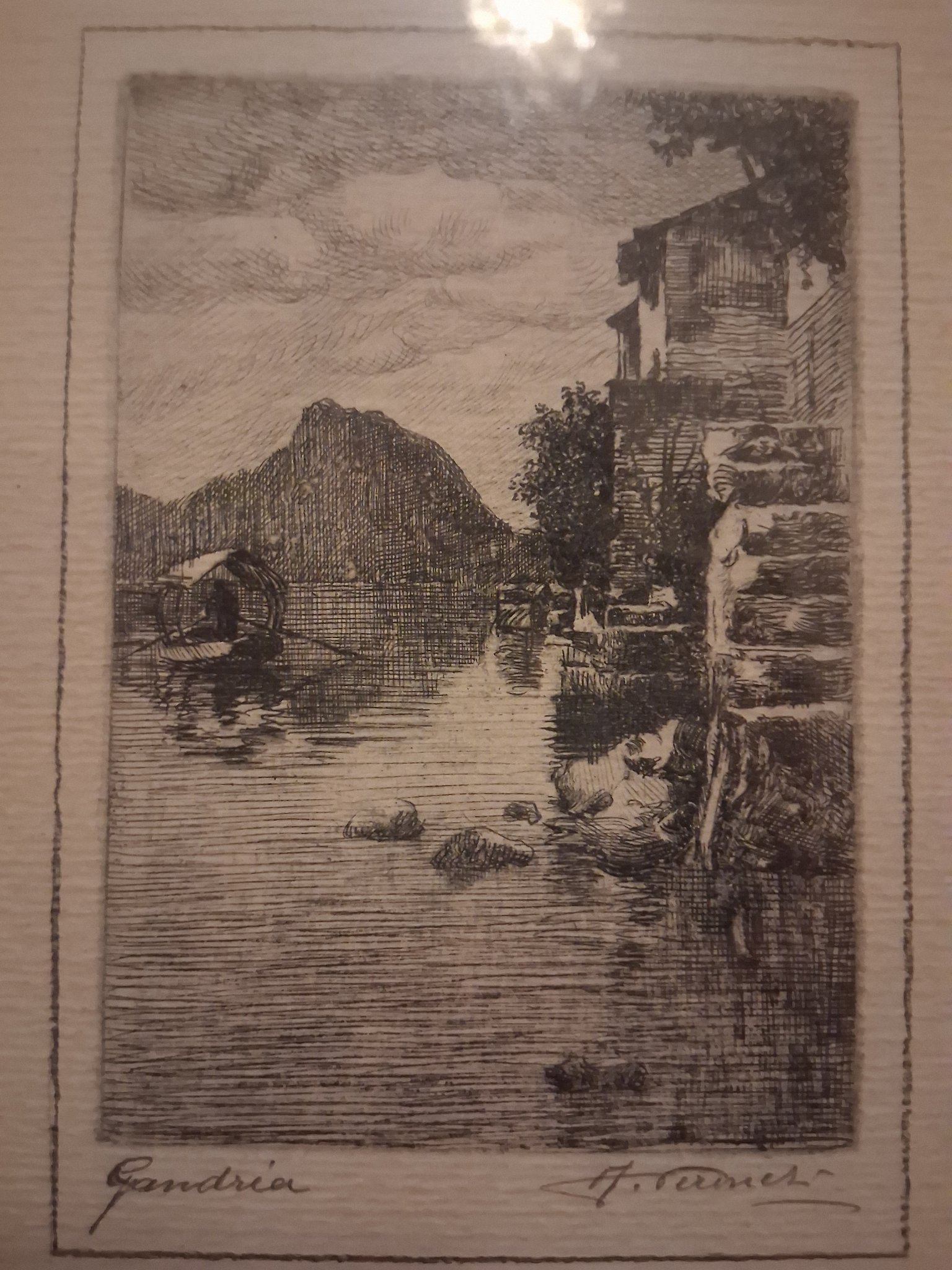
Signed landscape etching or drypoint print titled "Gandria"
Estimated Value
$75-$300
A monochrome landscape print depicting a lakeside village scene identified by the handwritten title "Gandria" at lower left. The composition shows a calm body of water in the foreground, a mountain rising in the distance, and a steep building or cliffside structure on the right. The image is rendered with fine linear hatching and crosshatching consistent with intaglio printmaking, likely etching or drypoint. The lower right bears a handwritten signature that appears to read "F. Pernet" or a similar surname, though the exact artist name is not fully legible from the photograph. The work has a restrained, atmospheric quality typical of European scenic prints.
Era
Early to mid-20th century, likely circa 1920s-1950s
Origin
Switzerland or broader European Alpine region
Material
Ink on paper; likely etching or drypoint print on laid or wove paper
Condition
Good overall condition with visible age toning, light surface wear, and possible mat burn or discoloration around the margins; no obvious major tears visible in the image
Physical Details
Dimensions
Approximately 8 x 12 inches image area, with paper likely around 10 x 14 inches or slightly larger
Weight
Light
Authentication
Authenticity Score
Medium. The work appears consistent with an original signed intaglio print, but the artist signature is not fully legible and the image quality does not allow confirmation of plate marks, paper type, or edition details.
Provenance
Likely a Swiss or Italian-Swiss scenic print depicting Gandria, a village on Lake Lugano in Ticino, Switzerland. The handwritten title suggests the subject was chosen for its picturesque regional character. Exact provenance is unknown without examining the reverse, paper, and any publisher marks.
Historical Significance
Scenic prints of Swiss and Italian lakeside villages were popular among collectors and travelers in the late 19th and early 20th centuries. Gandria is a well-known picturesque subject on Lake Lugano, and works depicting it can be of interest for regional topographic art and printmaking history.
This identification and value range are AI-generated research aids, not authentication, certification, or a formal appraisal. Learn about the limitations and when to consult a qualified professional appraiser.
Research this item further
Related Identifications
Browse all →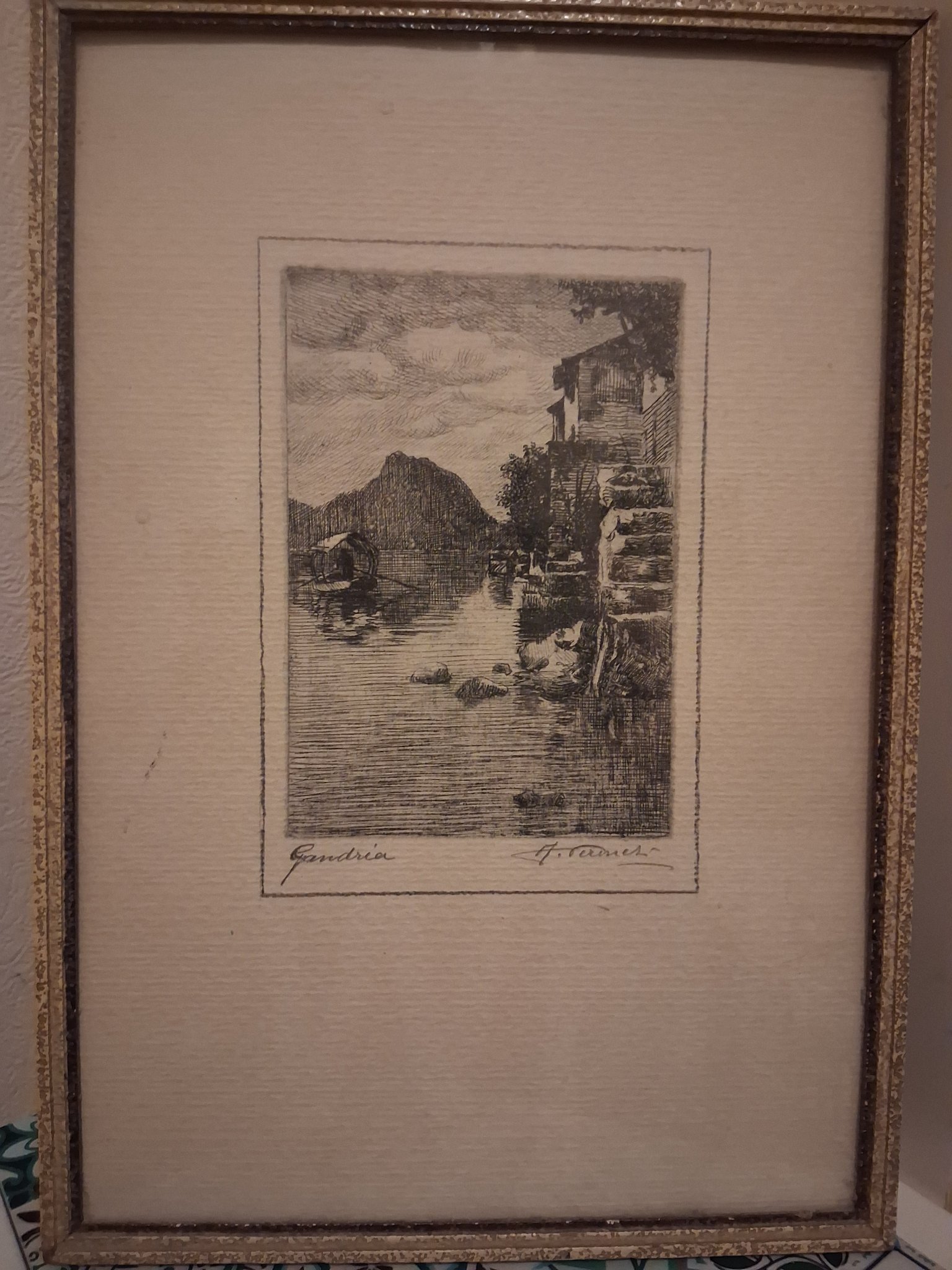
Framed etching or drypoint landscape print, signed by the artist

Decorative Ethiopian-style silver filigree cross pendant
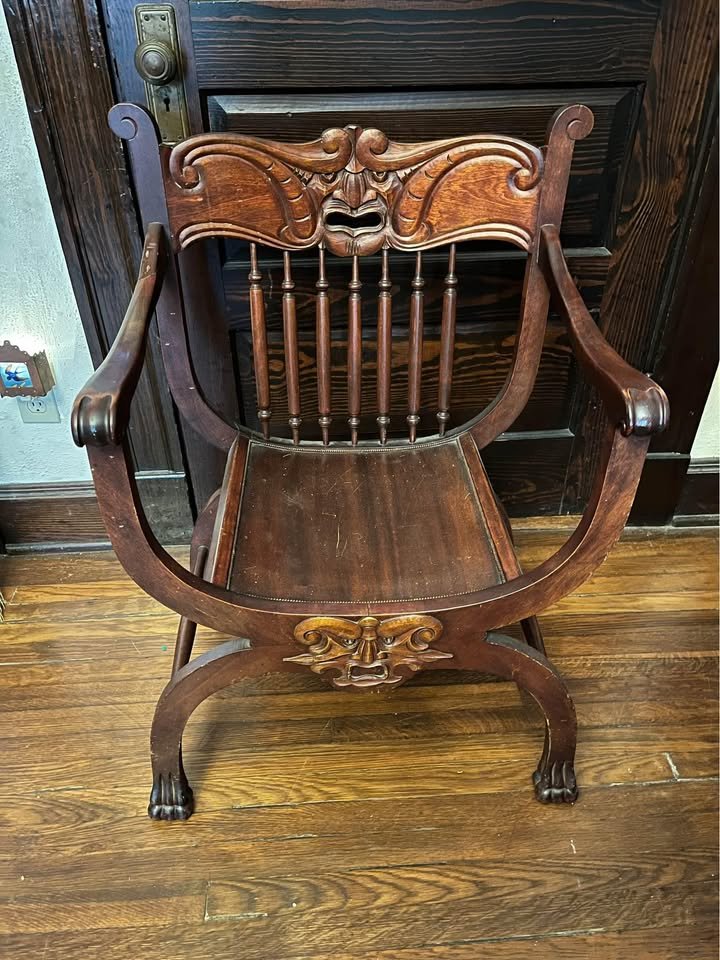
Carved Victorian-style armchair / side chair
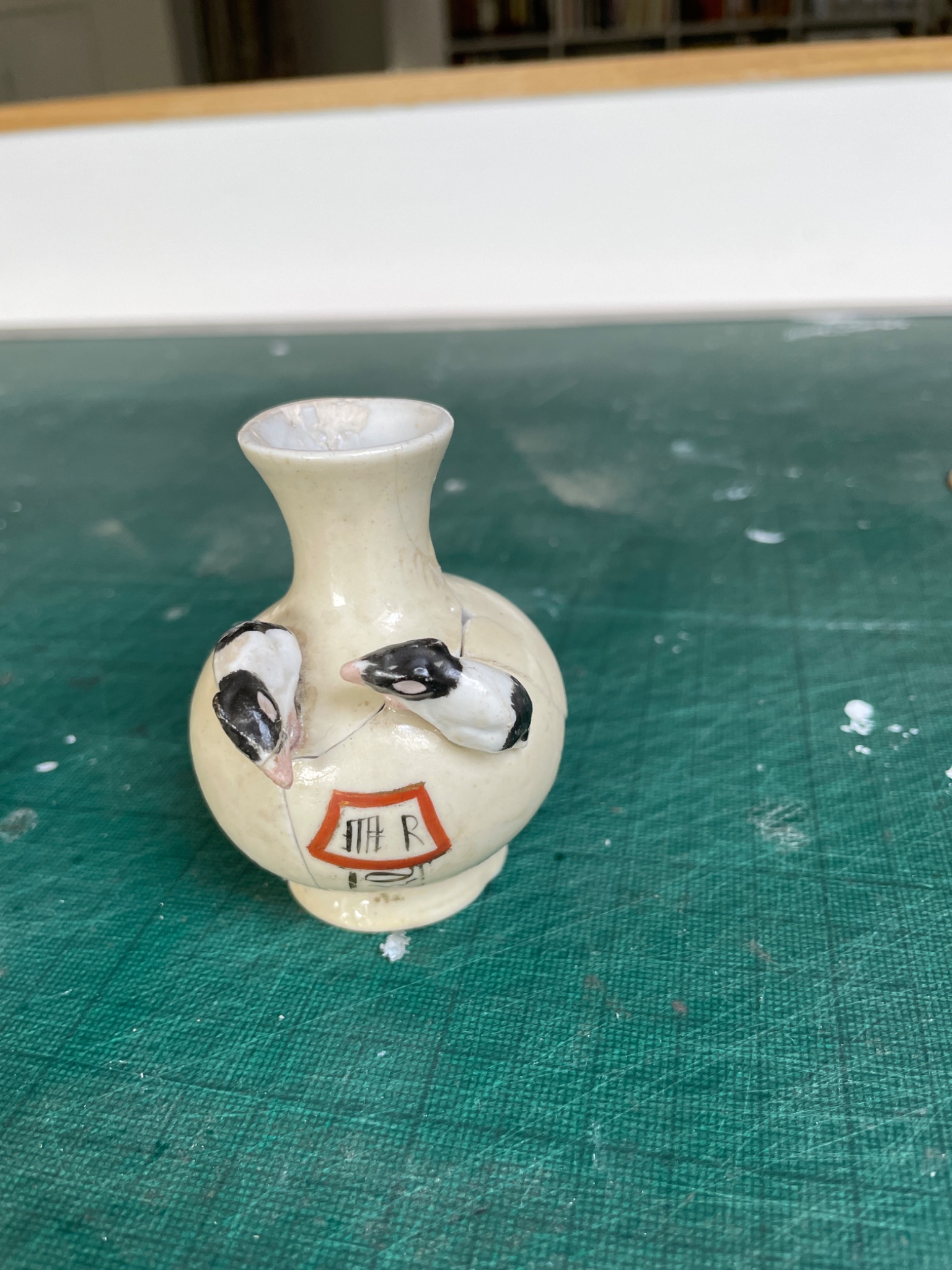
Small porcelain miniature vase with applied bird decoration

Modernist stacked sculptural decorative object / art form
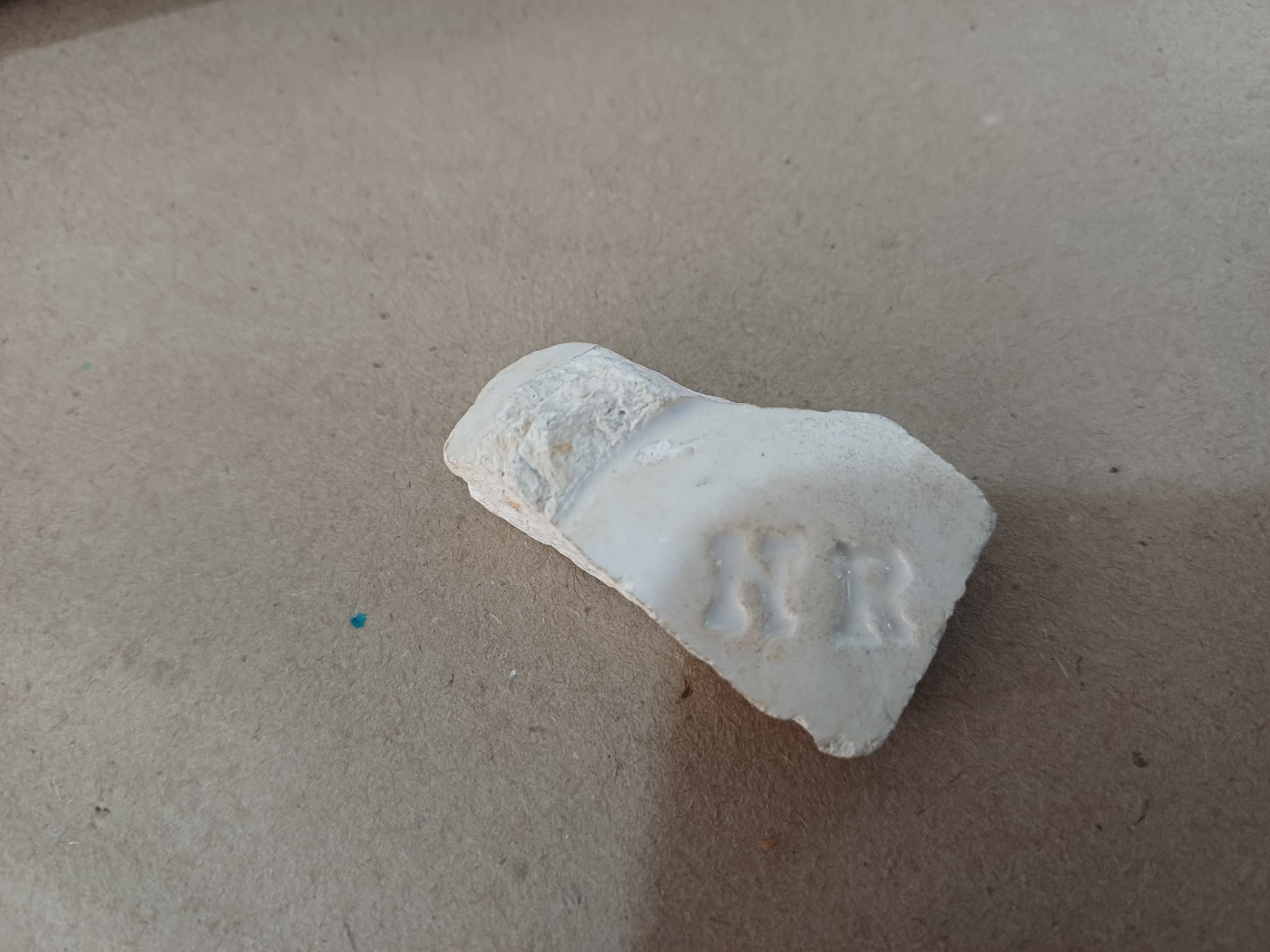
Fragment of a white glazed ceramic or porcelain object with impressed maker's mark
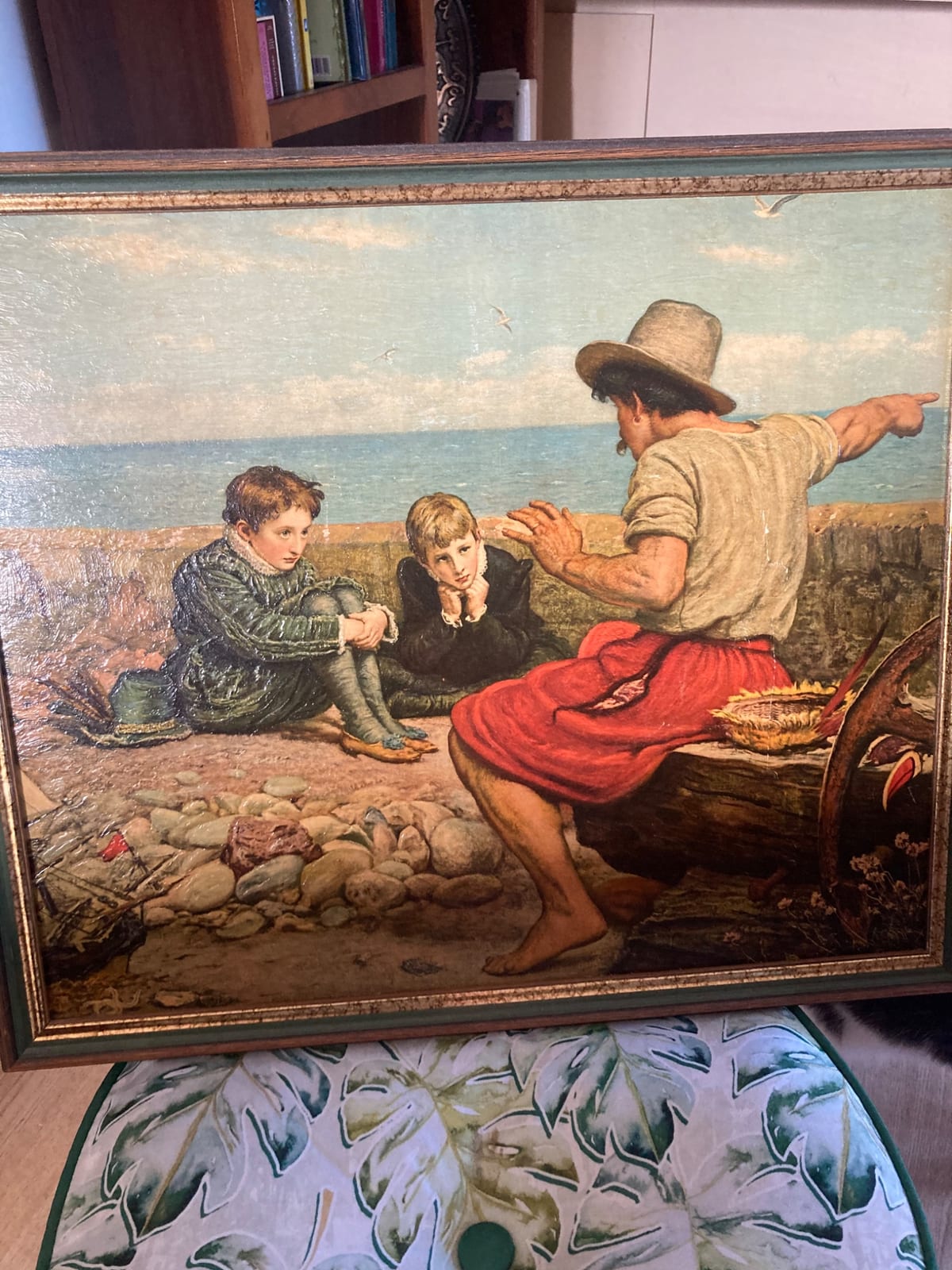
Framed chromolithograph or print after a seaside genre painting
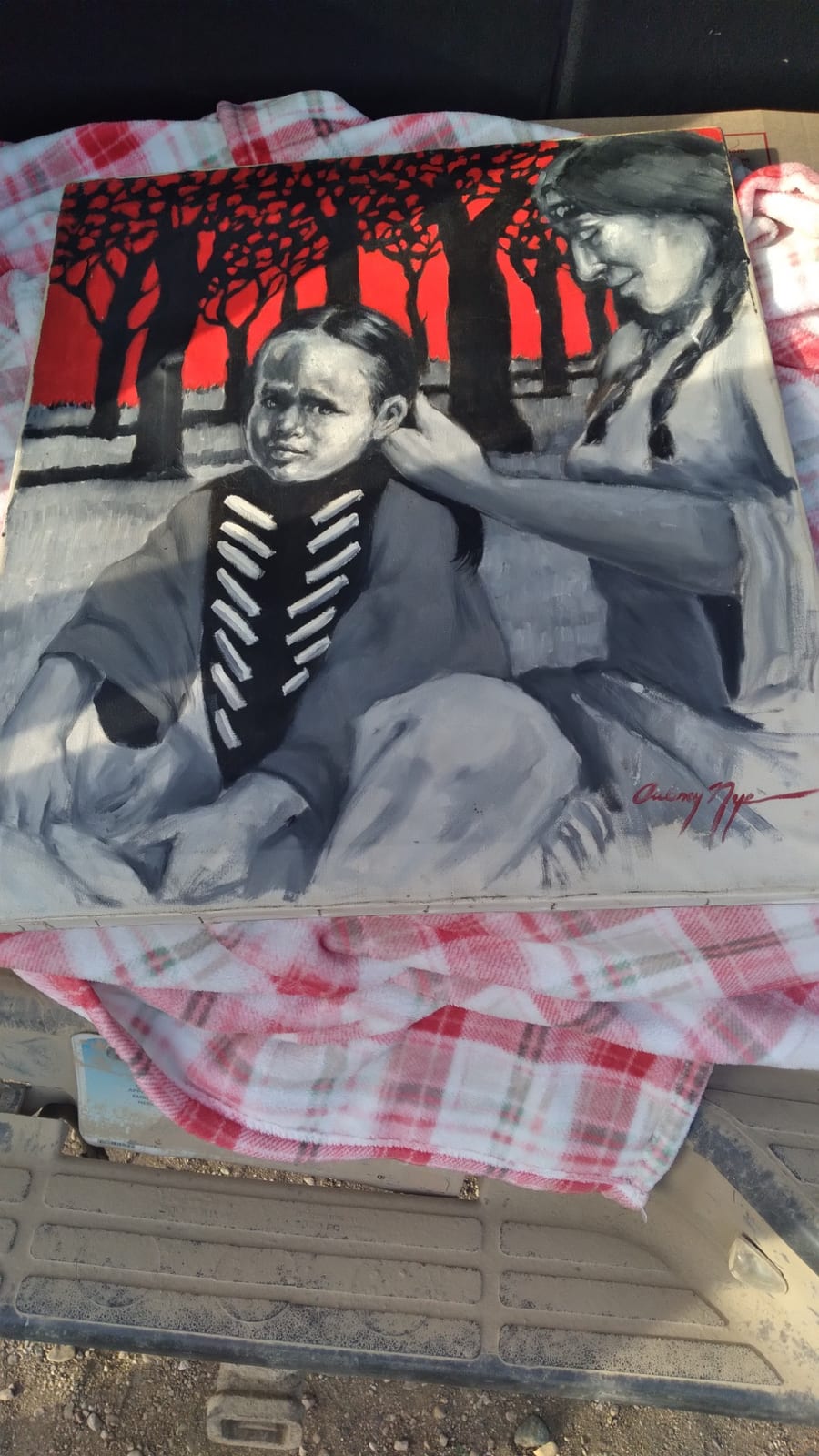
Contemporary figurative acrylic painting on canvas