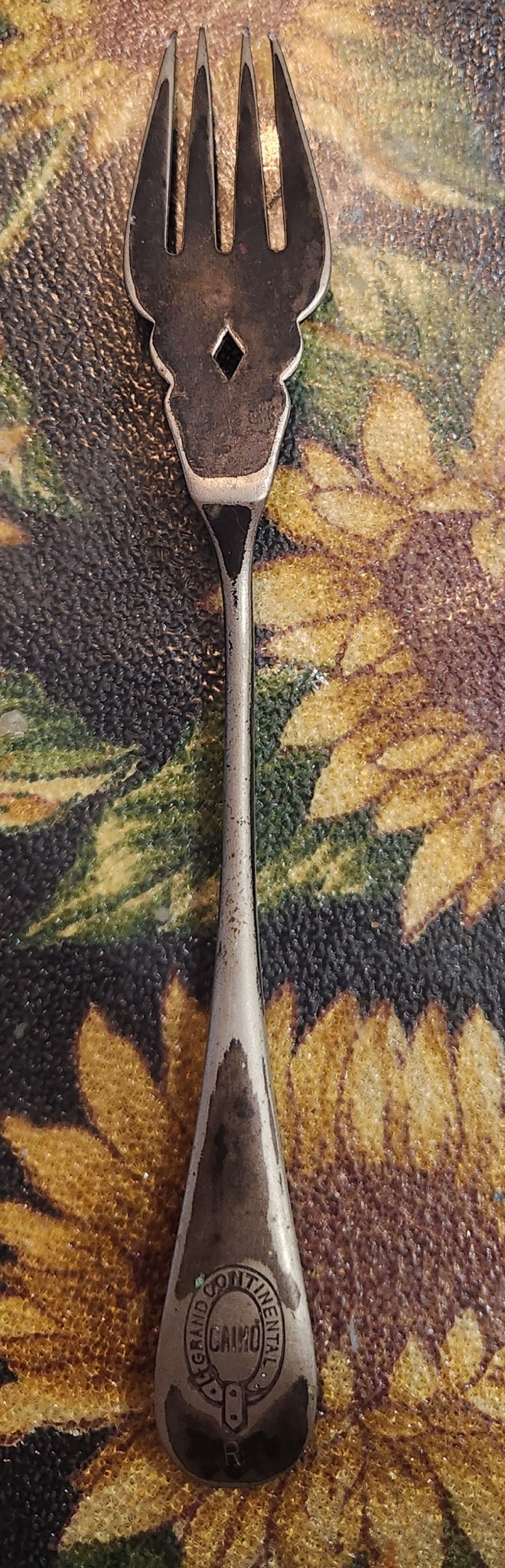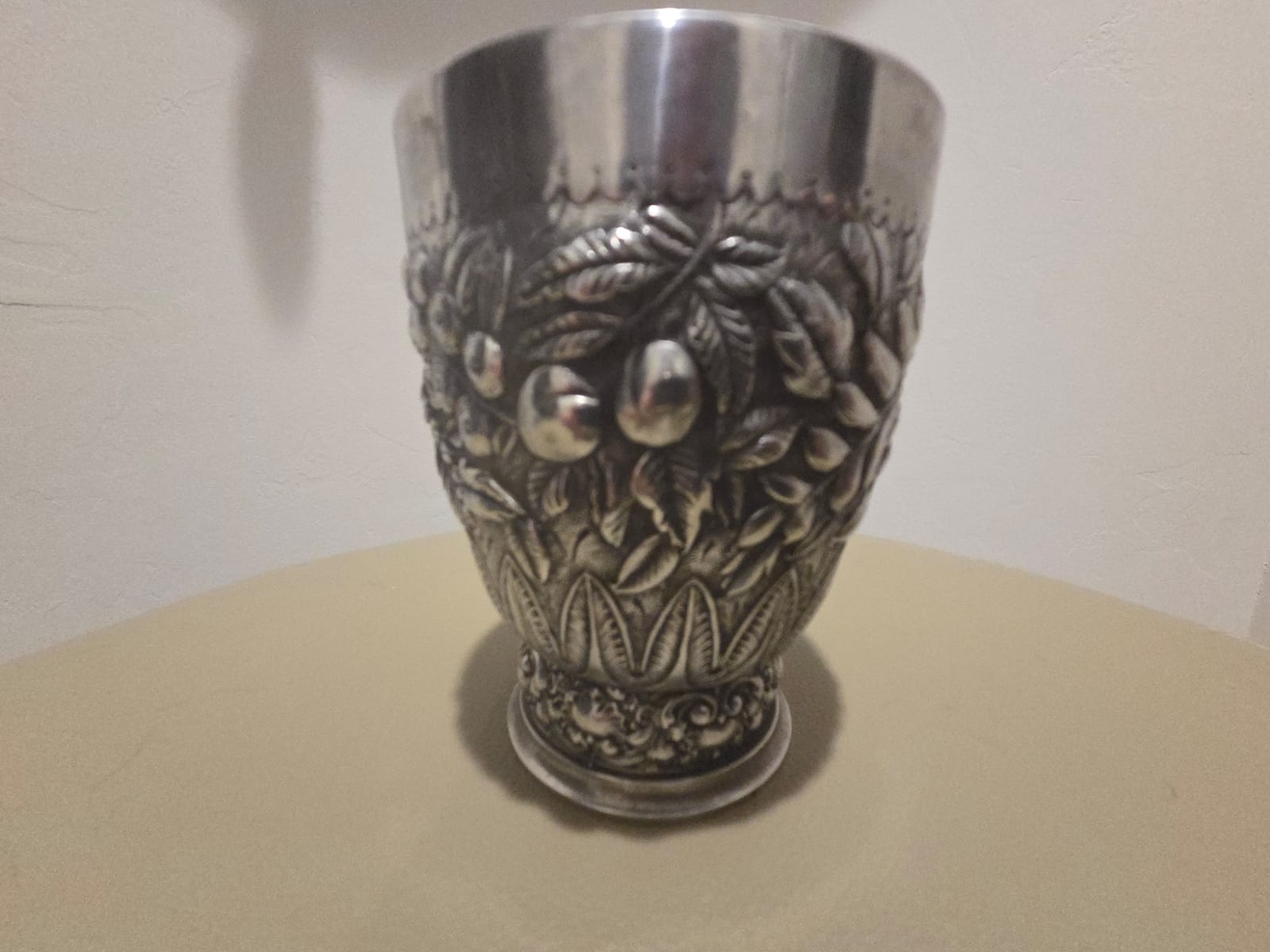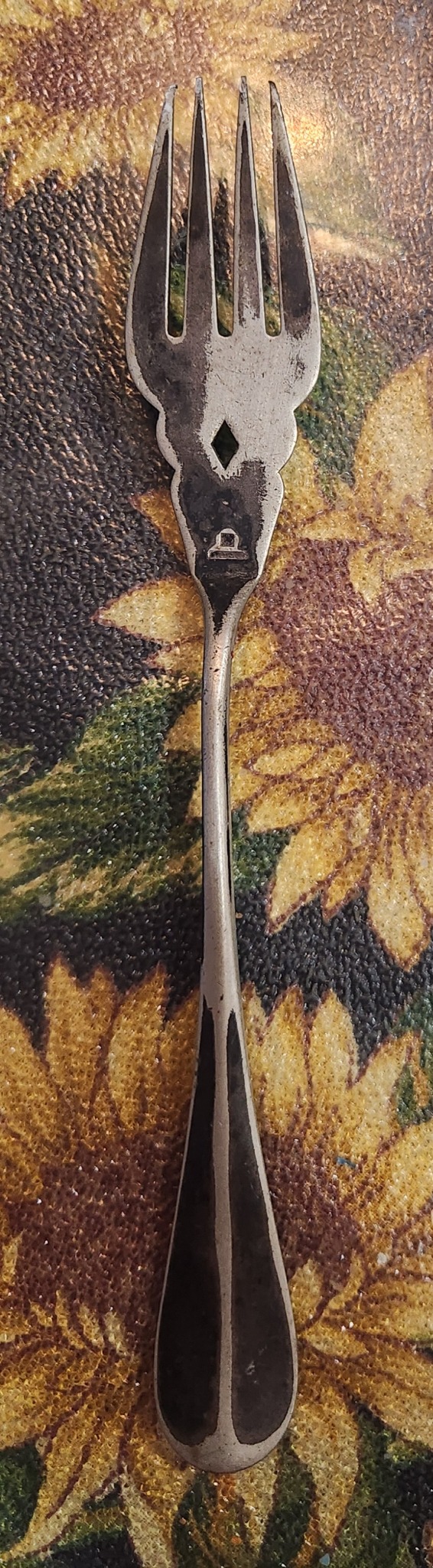
Silver-plated dessert or pastry fork
Estimated Value
$10-$40
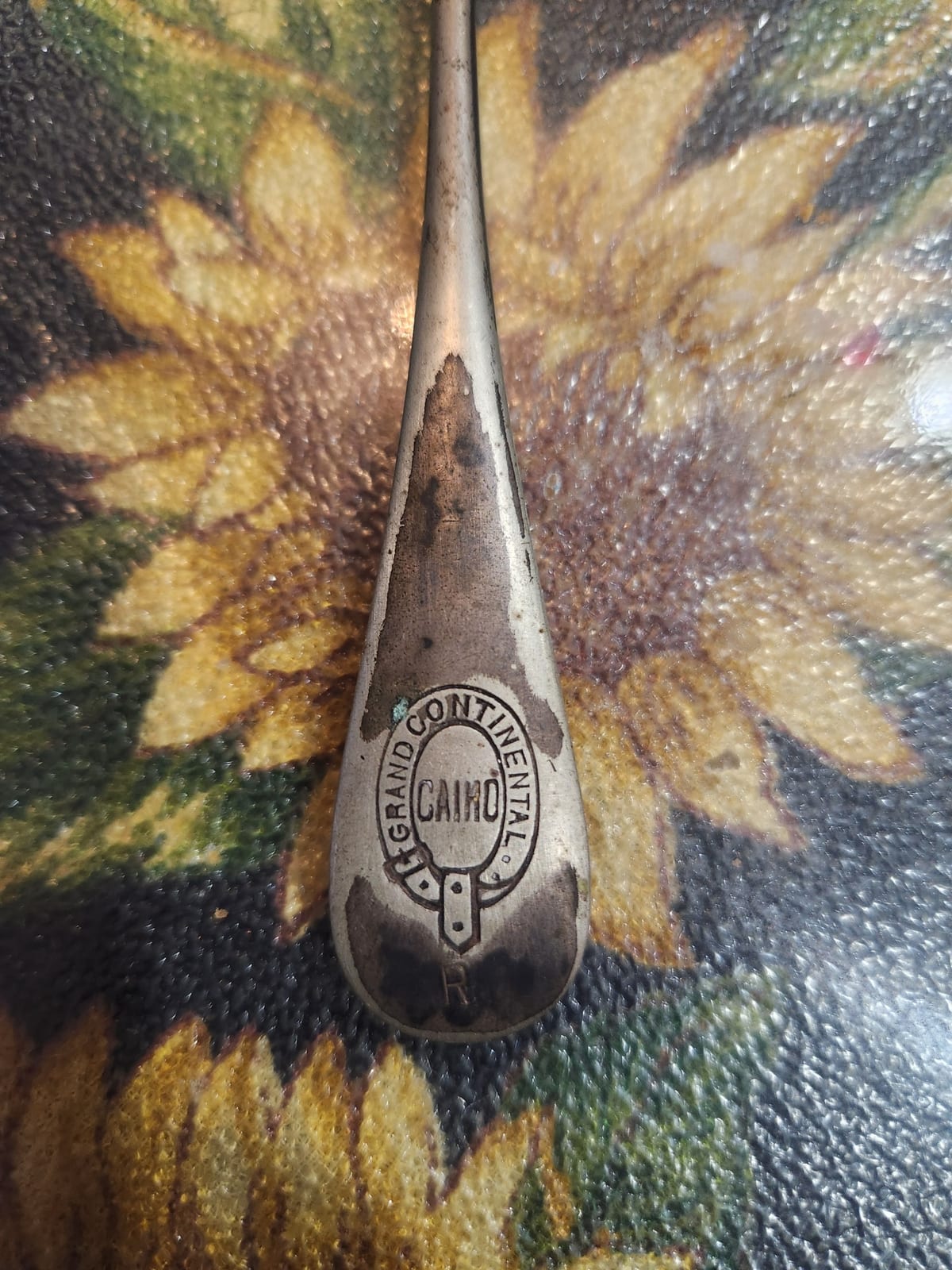
A decorative four-tine fork with an ornate, elongated handle and pierced/diamond-shaped cutout near the neck. The design suggests a formal table or dessert service piece rather than a utilitarian kitchen fork. The handle features darkened recessed decoration, likely originally intended to emphasize the pattern through contrast with the polished raised surfaces. The overall style is consistent with late 19th- to early 20th-century flatware, possibly part of a matched set. No maker's mark is clearly legible from the image, though a small stamped symbol is visible near the lower neck area.
Era
Late Victorian to Edwardian Era, approximately 1890s-1910s
Origin
Likely United Kingdom or Europe
Material
Silver plate over base metal (likely nickel silver or silver-plated steel)
Condition
Fair to Good; visible surface wear, tarnish, and plate loss in high-contact areas, especially on the handle and fork tines. No obvious bends or major structural damage visible.
Physical Details
Dimensions
Approximately 7 to 8 inches long
Weight
Light
Authentication
Authenticity Score
Medium; the construction and wear are consistent with an antique or vintage silver-plated fork, but the maker, exact material, and date cannot be confirmed from the image alone.
Provenance
Likely from a household silver-plated flatware service, possibly produced by a British or European manufacturer for domestic dining use. Exact maker and pattern are unknown without a clearer mark or reverse-side image.
Historical Significance
Decorative silver-plated flatware from the Victorian and Edwardian periods reflects the era's emphasis on formal dining and ornate table presentation. Pieces like this were often part of larger service sets and can be collectible when matched to a known maker or pattern.
Restoration Notes
- •No clear evidence of restoration visible
- •Significant surface wear and possible plate loss consistent with age and use
This identification and value range are AI-generated research aids, not authentication, certification, or a formal appraisal. Learn about the limitations and when to consult a qualified professional appraiser.