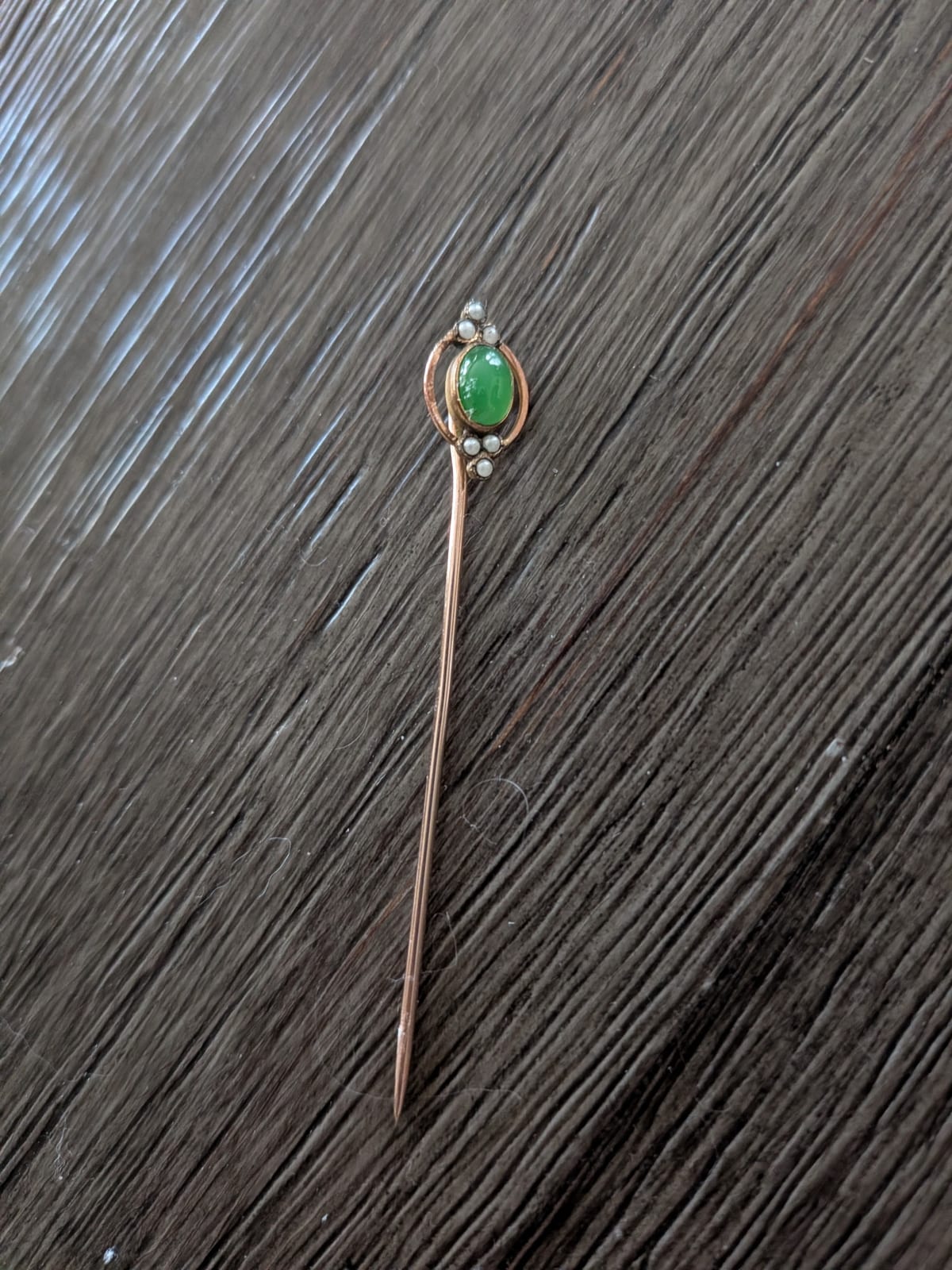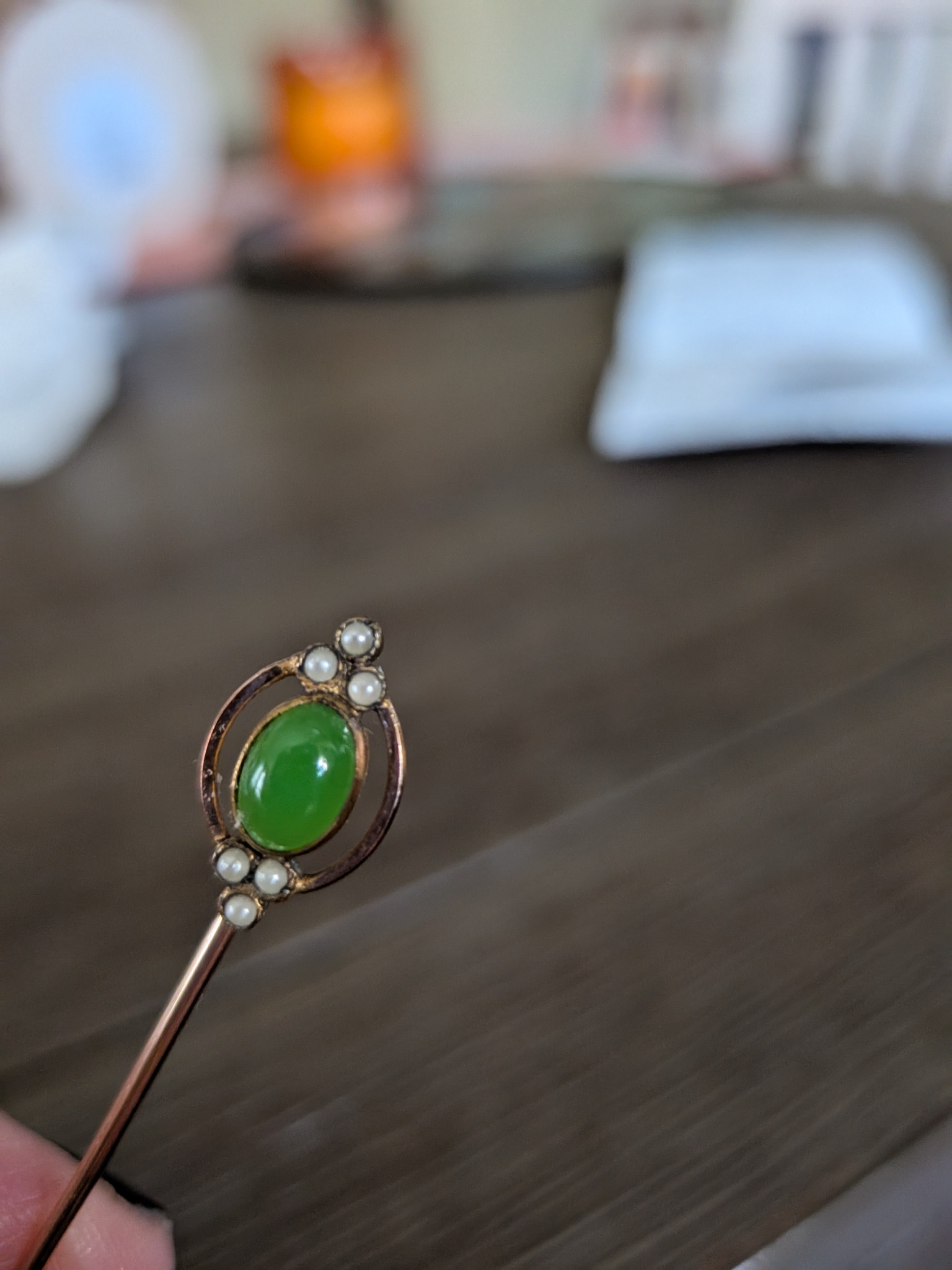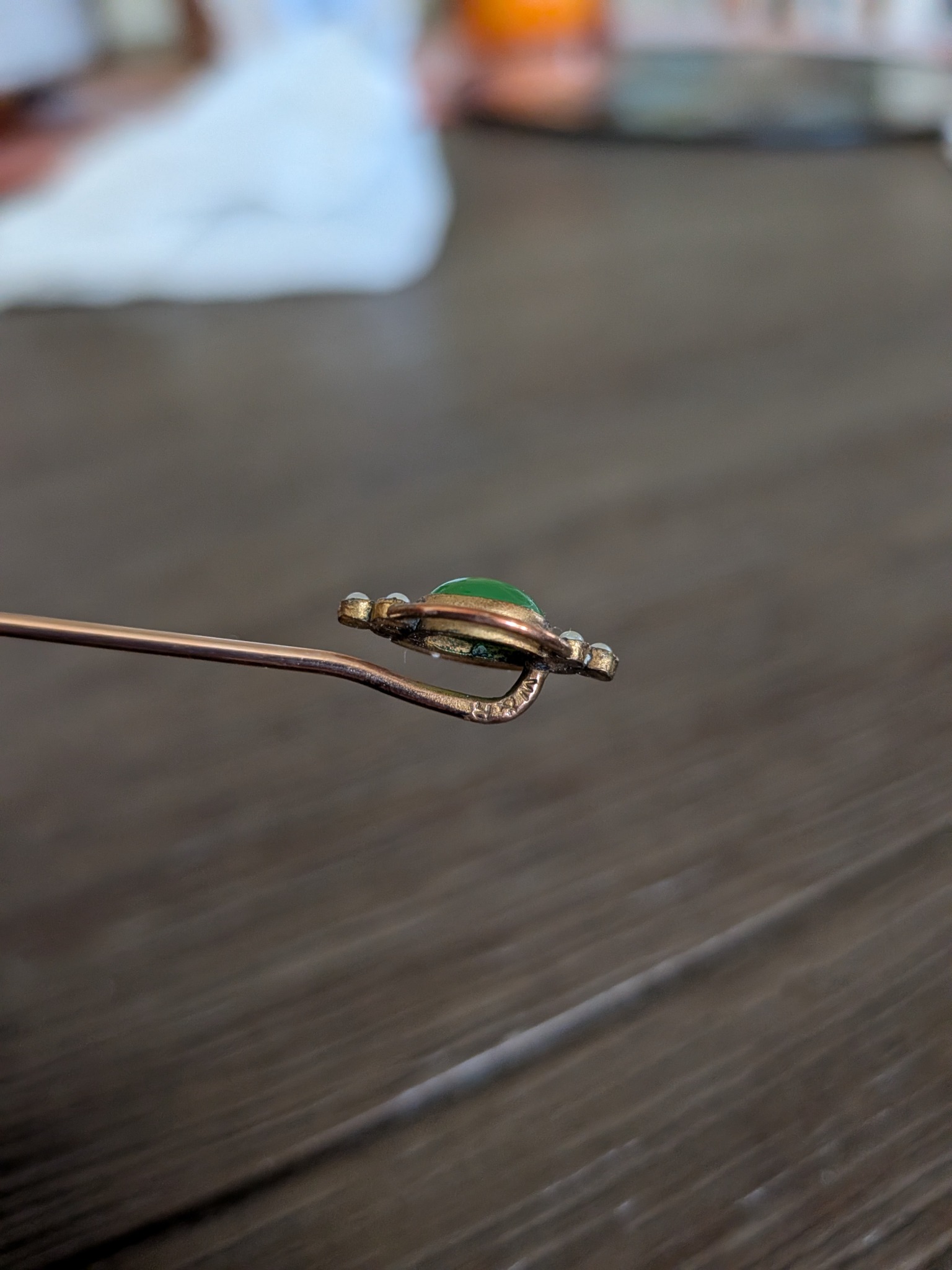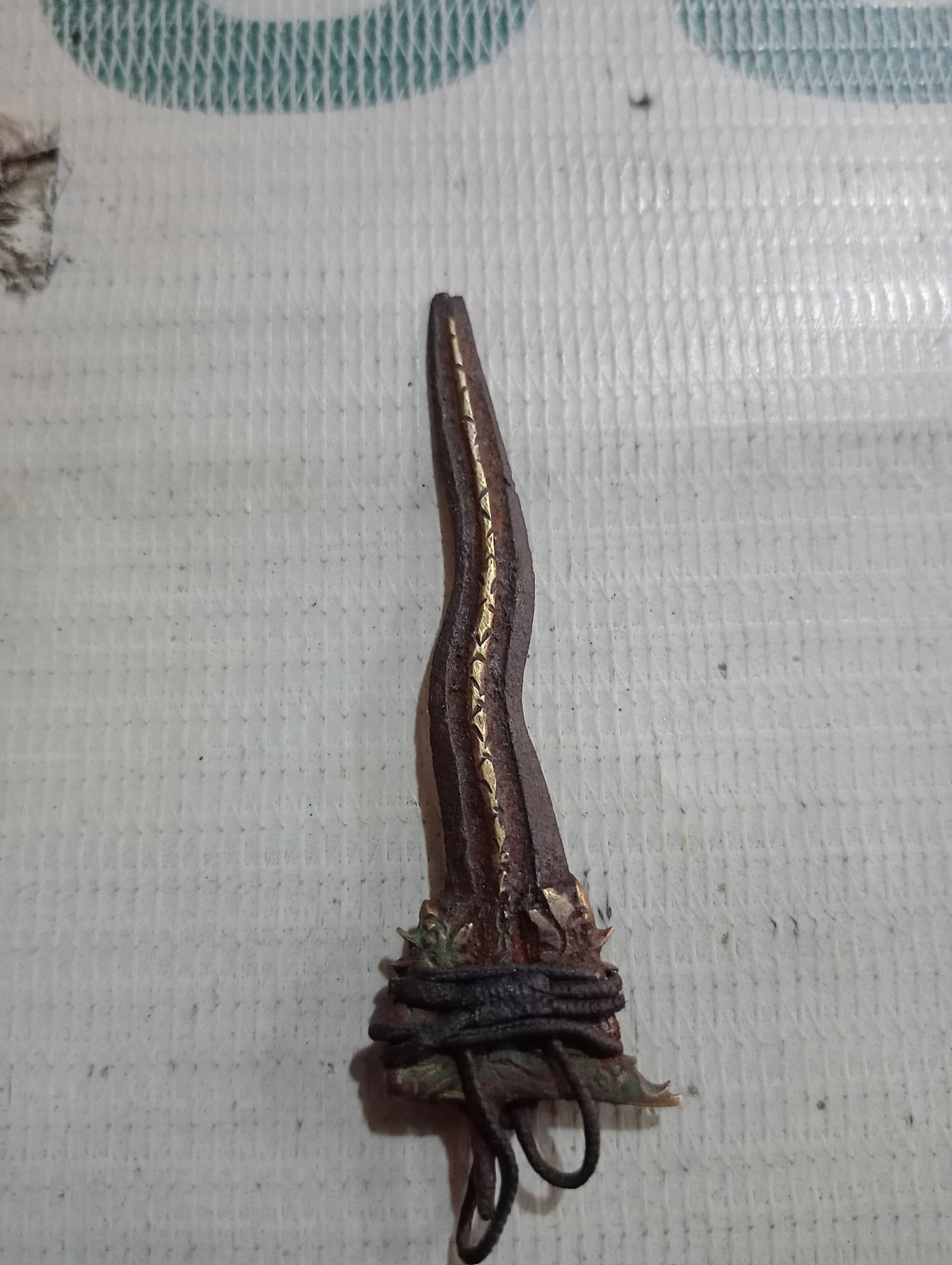
Small ceremonial dagger or ritual blade fragment (possibly Southeast Asian or Indonesian-style)
Estimated Value
$25-$150 USD, depending on age, authenticity, and cultural origin; higher only if verified as an authentic antique ritual blade from a known tradition
The object appears to be a narrow, tapering blade with a pronounced central ridge or decorative inlay running along one side. The form is irregular and somewhat organic, suggesting a hand-forged or ritual-made piece rather than a modern utility knife. The base is wrapped tightly with dark cord or fiber, with remnants of greenish material and looped ties extending below, which may indicate a suspension, binding, or ceremonial mounting. The blade’s surface shows age-related patina and corrosion, and the overall silhouette is reminiscent of a small keris-like dagger blade, spear point, or ritual implement. However, the image does not show the full object clearly enough to confirm exact typology.
Era
Unknown; likely 19th to early 20th century, possibly later reproduction
Origin
Likely Southeast Asia (Indonesia, Malaysia, or nearby region), but exact origin is uncertain
Material
Iron or steel blade with possible brass/gold-colored inlay; wrapped organic fiber or leather at the base; possible remnants of wood or plant material
Condition
Fair to Poor. The blade shows heavy oxidation/corrosion, surface wear, and possible damage or loss to the handle or mounting. The wrapping appears degraded and fragile.
Physical Details
Dimensions
Approximately 4 to 7 inches long visible in the image; exact dimensions unknown
Weight
Light
Authentication
Authenticity Score
Low to Medium. The object may be antique or ethnographic, but the image is limited and the condition is heavily degraded. The form suggests a traditional blade, yet it could also be a damaged decorative or souvenir piece.
Provenance
Not determinable from the image alone. If authentic, it may come from a Southeast Asian ritual or martial tradition, but there is insufficient evidence to assign a specific workshop, culture, or region with confidence.
Historical Significance
If genuine, objects of this type can be associated with ceremonial, status, or protective traditions in Southeast Asian cultures, where blades such as keris or related ritual knives held social and spiritual significance. The significance depends entirely on exact identification, which cannot be confirmed from this image alone.
Restoration Notes
- •No clear evidence of professional restoration visible
- •Possible old binding or re-wrapping at the base, but this may be original construction rather than restoration
This identification and value range are AI-generated research aids, not authentication, certification, or a formal appraisal. Learn about the limitations and when to consult a qualified professional appraiser.