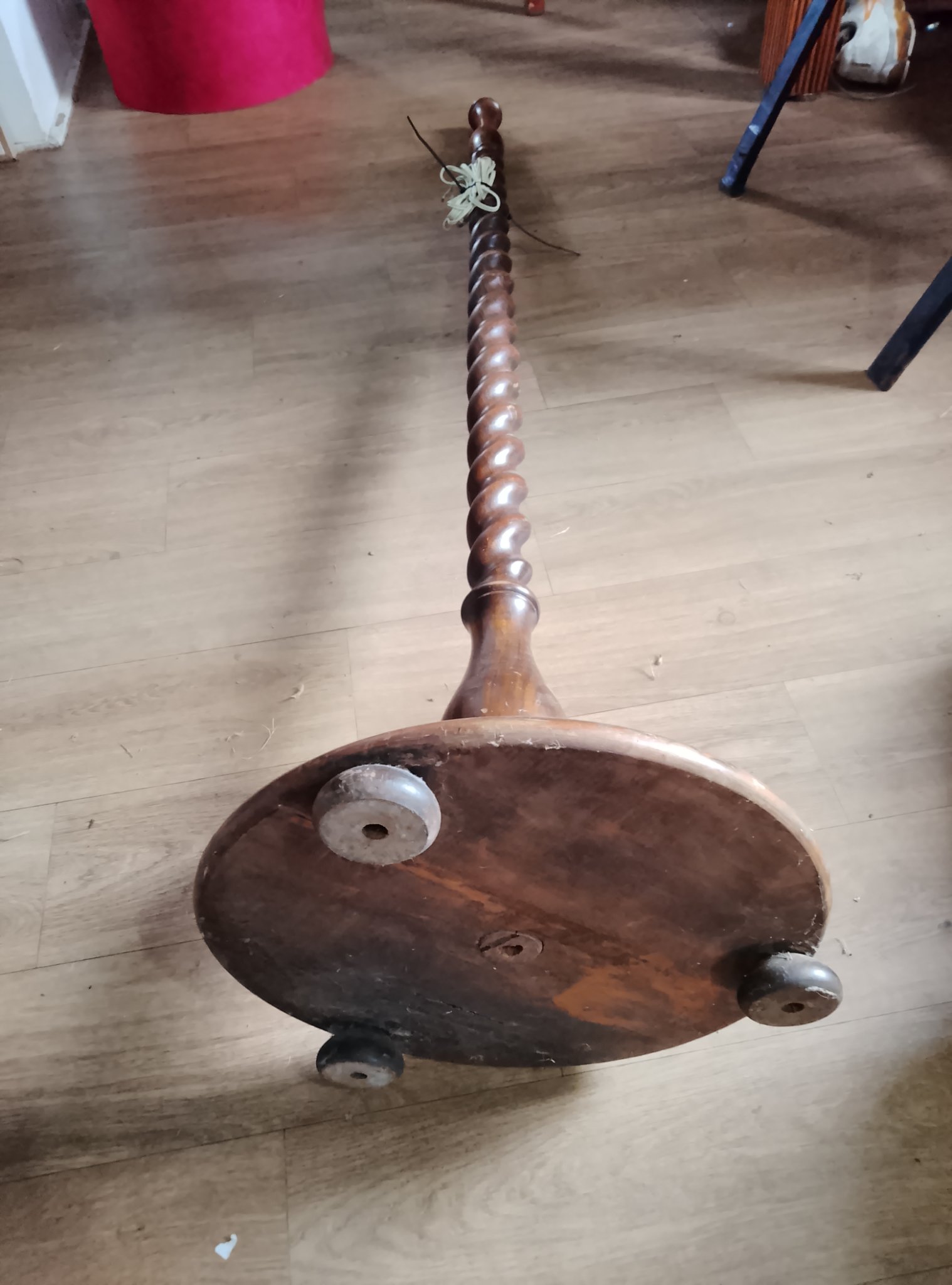
Turned wooden furniture leg or table/stand support
Estimated Value
$50-$200
This appears to be a long, heavily turned wooden furniture component, likely a leg or support from a table, stand, or similar piece of furniture. The shaft features a pronounced spiral/rope-turn design, a decorative form commonly seen in Victorian and Edwardian furniture. The lower end has an oval or circular base board with three small round feet or caster mounts attached, suggesting it may have supported a small table, stand, or pedestal. The wood has a dark stained finish with visible age wear. No maker's mark or label is visible in the image.
Era
Late 19th century to early 20th century (Victorian/Edwardian style), exact date unknown
Origin
Likely United Kingdom or Europe; possibly North American reproduction of European turned furniture
Material
Turned hardwood, likely oak or mahogany; with metal or felt floor protectors/casters
Condition
Fair. Visible surface wear, scuffs, finish loss, and age-related abrasion. The piece appears structurally intact in the visible areas, but the base shows wear and possible old repairs or replaced fittings.
Physical Details
Dimensions
Approximately 30-40 inches long overall; base approximately 12-16 inches across, based on visual scale
Weight
Medium
Authentication
Authenticity Score
Medium. The turned craftsmanship and wear suggest an older piece, but the image does not show enough context to confirm whether it is an original antique component or a later reproduction.
Provenance
Likely from a decorative household furniture piece, such as a side table, plant stand, pedestal, or occasional table. Exact provenance cannot be determined from the image alone.
Historical Significance
Turned spiral or rope-twist woodwork was popular in 19th-century decorative furniture, especially in Victorian-era domestic interiors. Pieces like this reflect the period's interest in ornamental woodworking and mass-produced yet stylish furniture forms.
Restoration Notes
- •Possible replacement or added floor protectors/casters on the base
- •Surface finish appears worn and may have been refinished at some point, though this is not certain
This identification and value range are AI-generated research aids, not authentication, certification, or a formal appraisal. Learn about the limitations and when to consult a qualified professional appraiser.
Research this item further
Related Identifications
Browse all →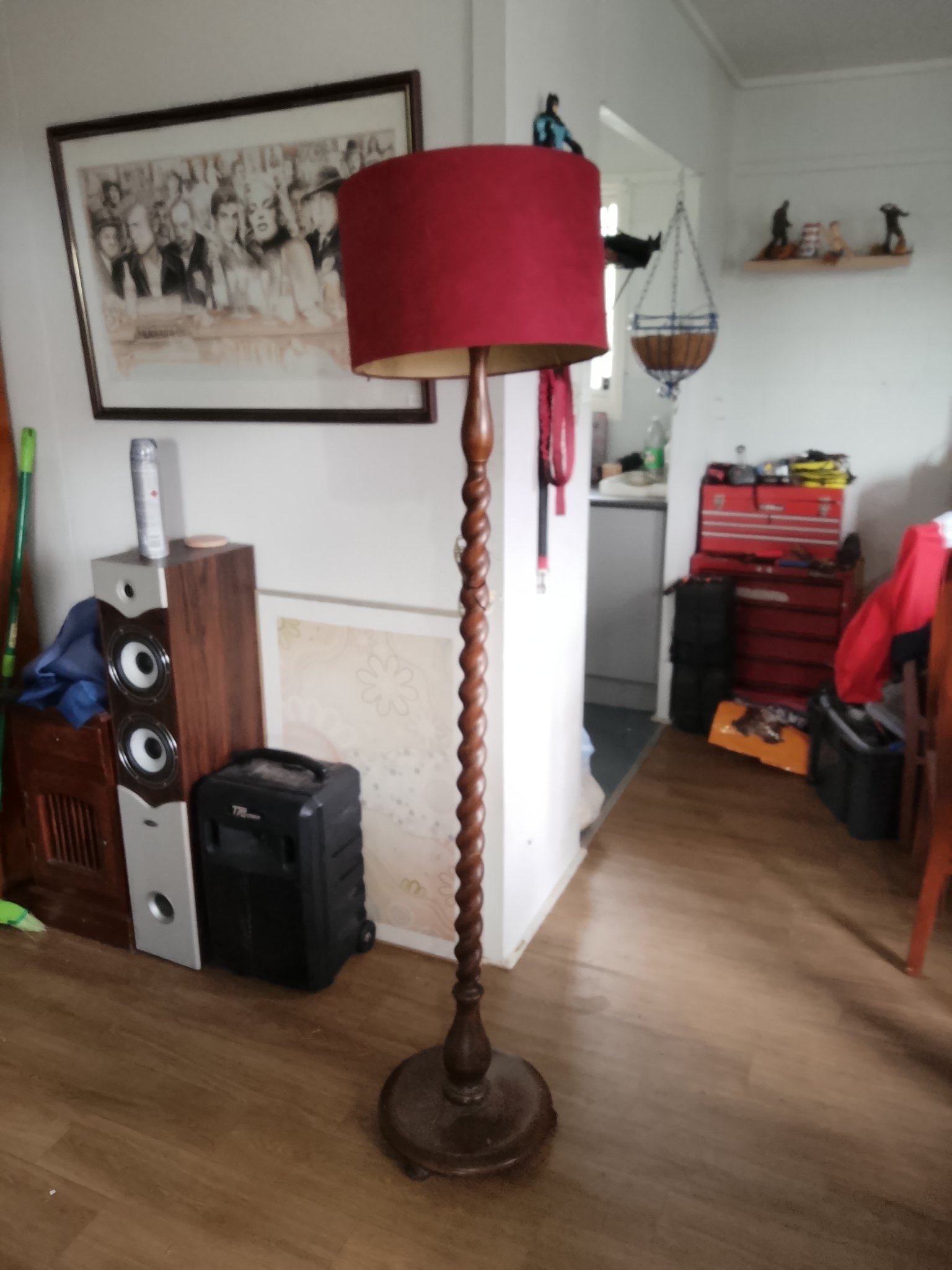
Turned wooden floor lamp with fabric shade
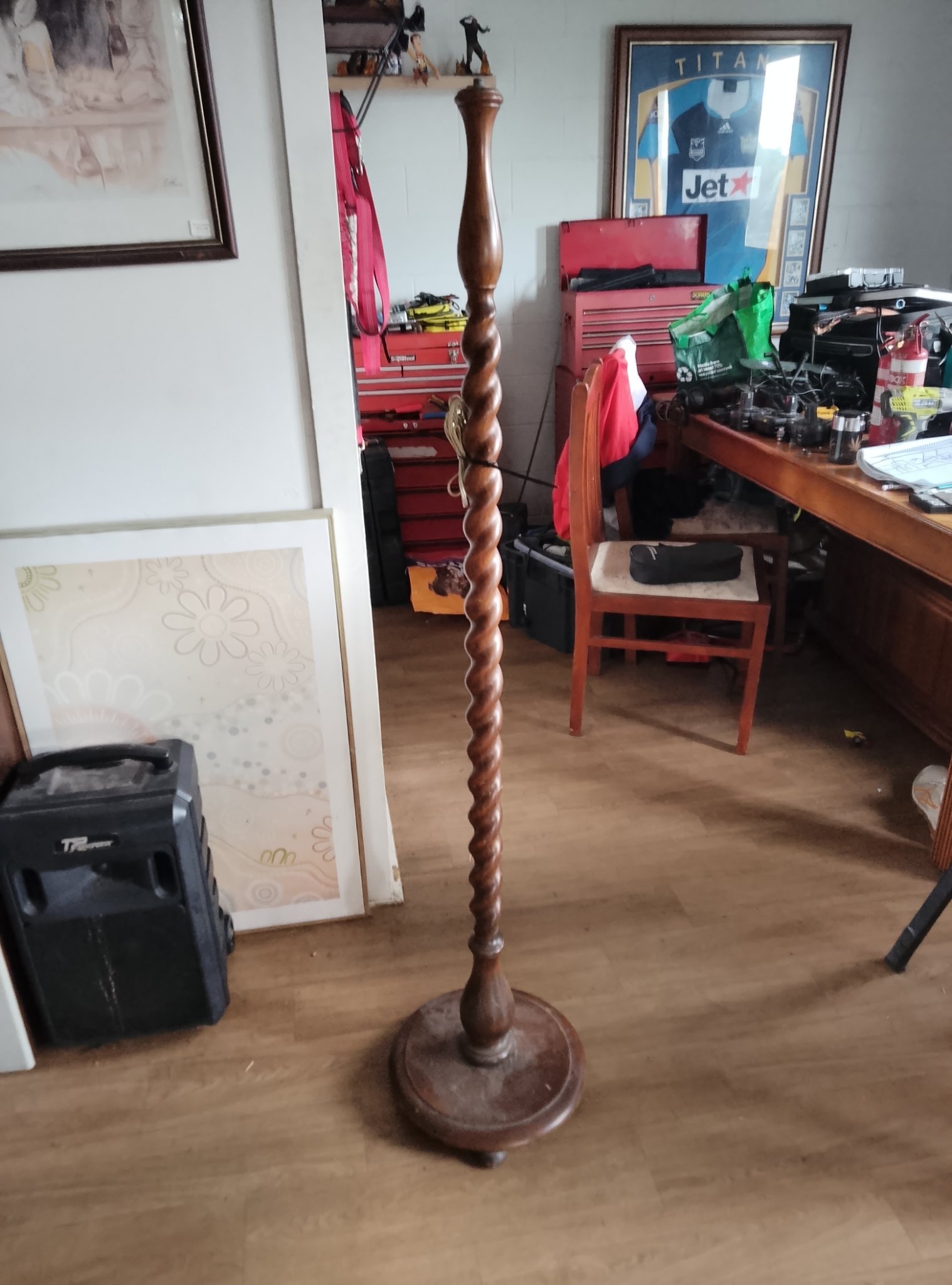
Turned wooden floor-standing torchère or stand
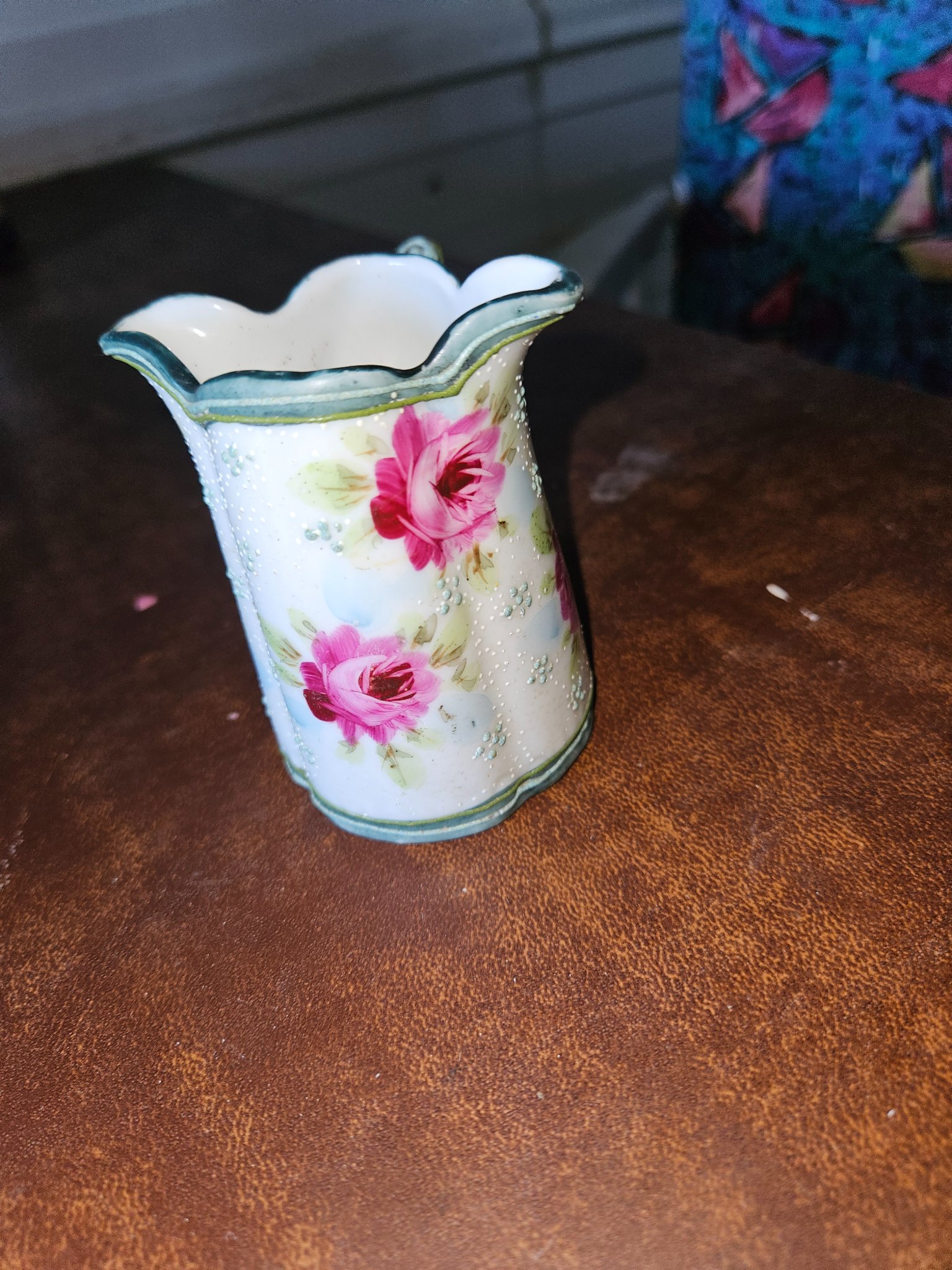
Small porcelain bud vase / decorative toothpick or posy vase
Decorative pocket watch
Charcoal or lithographic portrait drawing of a woman
Seagram's branded etched pilsner beer glass
Vintage leather-covered trunk or storage chest
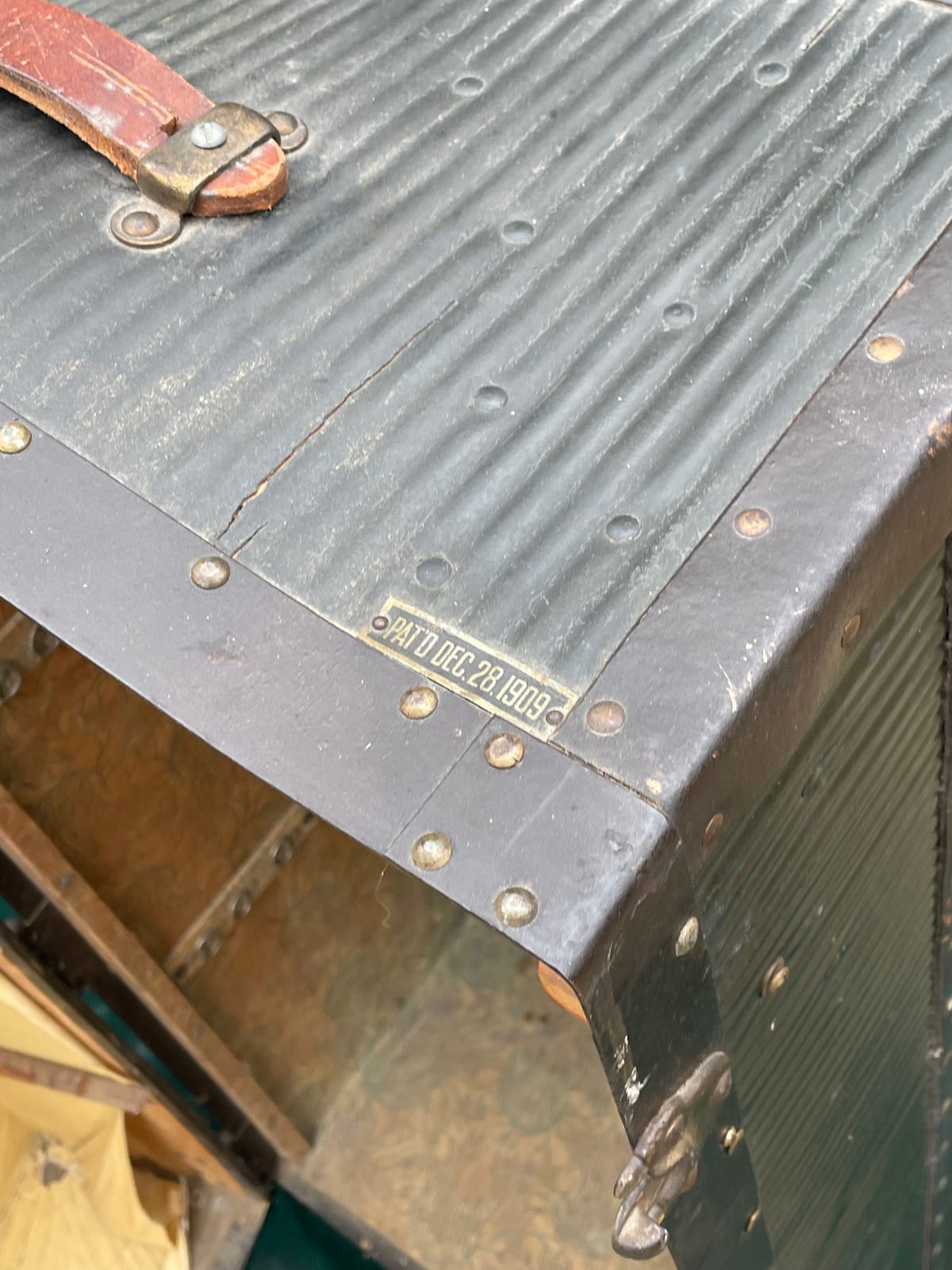
Victorian-style steamer trunk / travel chest