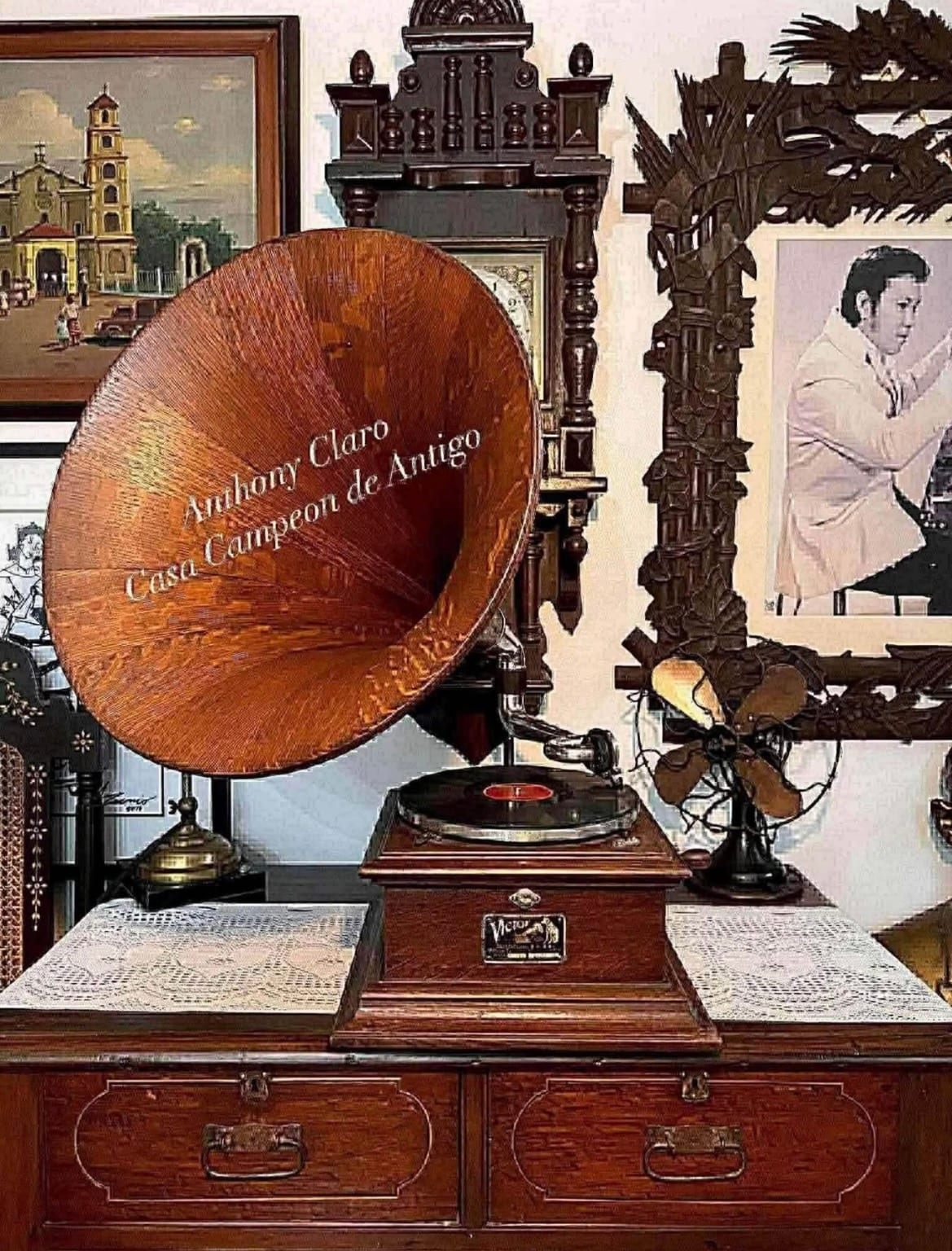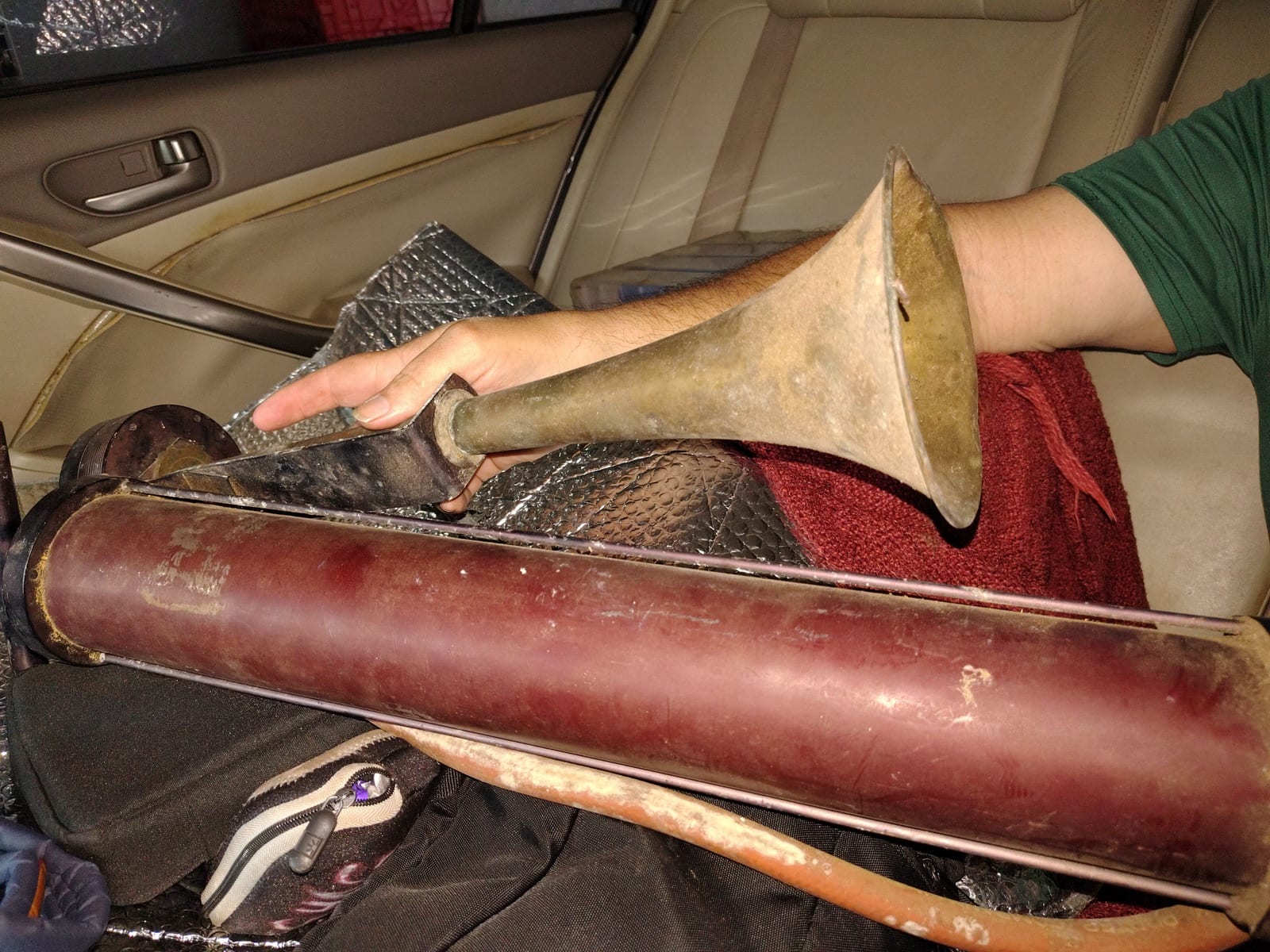
Vintage brass horn assembly (likely phonograph or gramophone horn component)
Estimated Value
$100-$400
The object appears to be a large flared brass horn attached to a cylindrical red-brown resonator or housing, with mounting brackets and metal hardware. Its form is consistent with an antique acoustic sound amplifier or horn used on an early phonograph, gramophone, or similar audio device. The horn shows a wide bell mouth and a tapered neck leading into a mounting collar. The cylindrical section has a lacquered or painted surface with visible age wear. No maker's mark or label is visible in the image, so precise identification is uncertain.
Era
Early 20th century (c. 1900s-1920s), possibly later reproduction
Origin
Unknown; likely United States or Europe
Material
Brass or brass-plated metal, painted/enameled metal housing, possibly steel mounting hardware
Condition
Fair to Good; visible tarnish, surface wear, oxidation, scratches, and age-related discoloration. No obvious major structural breaks visible, but the finish is heavily worn and the exact completeness of the assembly is uncertain.
Physical Details
Dimensions
Approximately 24-30 inches long overall; horn bell approximately 8-12 inches across at the mouth
Weight
Medium
Authentication
Authenticity Score
Medium; the construction and patina suggest an older audio component, but the image does not show enough detail to confirm maker, model, or whether it is an original antique part versus a later replacement or reproduction.
Provenance
Likely from an early mechanical sound reproduction device, such as a tabletop or floor phonograph/gramophone. Exact maker and model cannot be determined from the image alone.
Historical Significance
Horn-based acoustic amplification was central to early sound recording and playback before widespread electric amplification. Components like this are associated with the phonograph and gramophone era and represent an important stage in the history of consumer audio technology.
Restoration Notes
- •Possible surface refinishing or repainting on the cylindrical housing
- •General wear, oxidation, and tarnish consistent with age
- •No clear evidence of structural repair visible from the image
This identification and value range are AI-generated research aids, not authentication, certification, or a formal appraisal. Learn about the limitations and when to consult a qualified professional appraiser.