Vintage treadle sewing machine (likely domestic cast-iron machine, possibly Japanese or American-made)
Estimated Value
$25-$150 as-is; $150-$400 if complete, identified, and mechanically functional; higher only if a desirable maker/model is confirmed
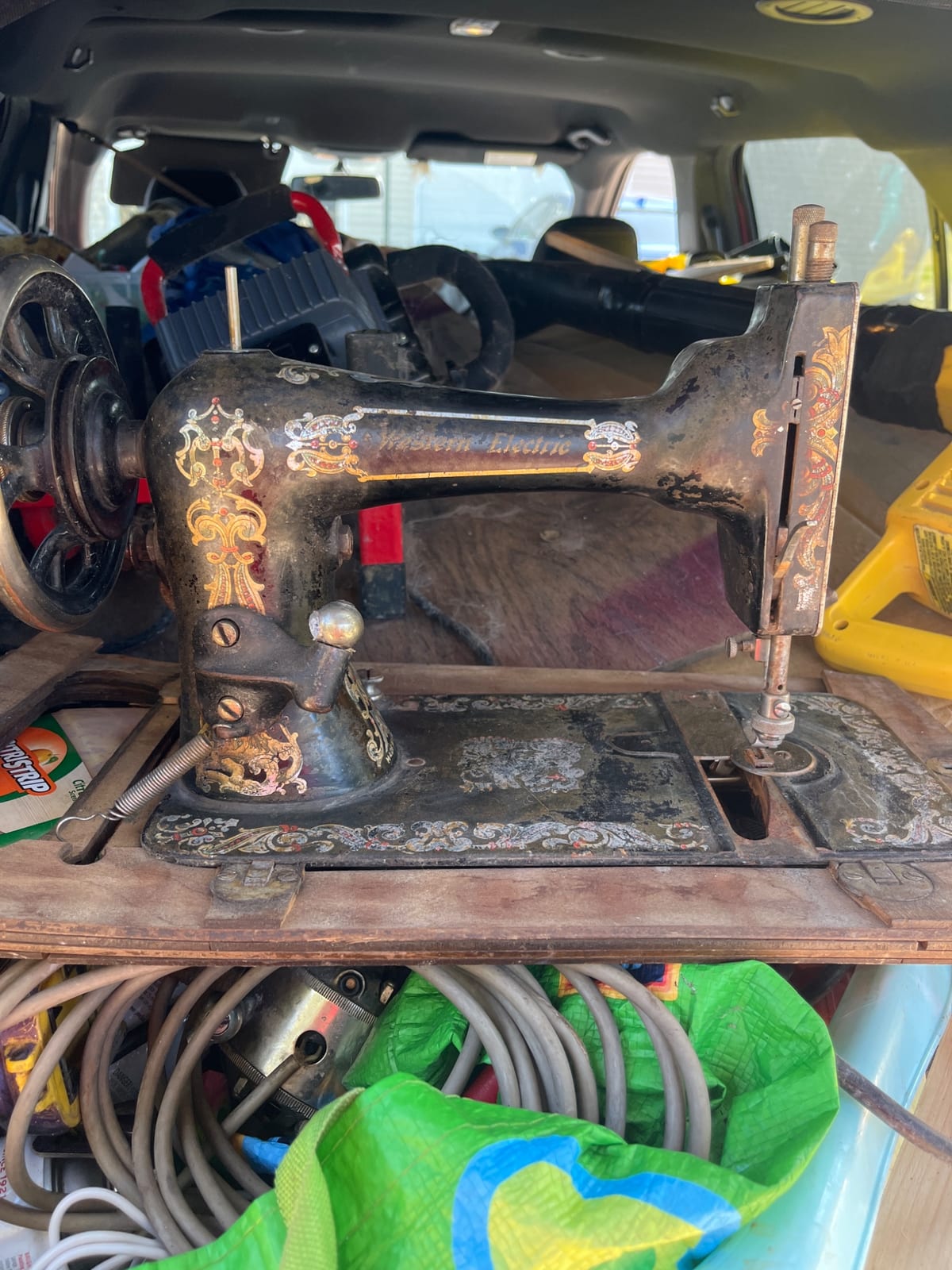
This appears to be a vintage domestic sewing machine mounted in a treadle-style cabinet base. The machine has ornate gold and floral decals typical of early 20th-century household sewing machines. The side arm bears the text 'Western Electric,' though this may refer to a later motor/accessory association, a retailer label, or an added marking rather than the original manufacturer. The machine is black japanned cast iron with decorative transfer decals, a handwheel on the left, and a needle/pressure assembly on the right. The overall style suggests an older mechanical sewing machine intended for household use, likely operated by treadle or hand crank and possibly later adapted for electric use.
Era
Late 19th century to early 20th century (approximately 1890s-1920s)
Origin
Likely United States or Japan; exact maker unknown from visible image
Material
Cast iron body and base, steel mechanical components, painted/enamel decorative decals, wooden treadle cabinet base
Condition
Fair to Poor; heavy surface wear, dust, oxidation/rust, decal loss, and visible age-related finish deterioration. Appears incomplete or stored loosely, with no clear evidence of recent restoration.
Physical Details
Dimensions
Approximately 14-18 inches long for the machine head; with base/cabinet section likely around 24-30 inches wide overall
Weight
Heavy
Authentication
Authenticity Score
Medium; the machine itself appears authentic period hardware, but the exact maker, model, and the significance of the 'Western Electric' marking cannot be confirmed from the image alone
Provenance
No firm provenance visible. Likely a mass-produced household sewing machine sold through general hardware, department, or mail-order channels in the early 20th century. The 'Western Electric' marking suggests possible later electrical conversion, accessory branding, or ownership association rather than original factory provenance.
Historical Significance
Domestic sewing machines were central to home production and repair of clothing in the late 19th and early 20th centuries. While many examples survive, they are historically important as everyday industrial-age household technology. Value and significance increase substantially if tied to a known maker such as Singer, White, Davis, New Home, or a documented electric conversion history.
Restoration Notes
- •Visible finish wear and decal loss
- •Possible oxidation/corrosion on metal surfaces
- •No clear evidence of professional restoration
- •May have been stored in a non-ideal environment, contributing to grime and deterioration
This identification and value range are AI-generated research aids, not authentication, certification, or a formal appraisal. Learn about the limitations and when to consult a qualified professional appraiser.