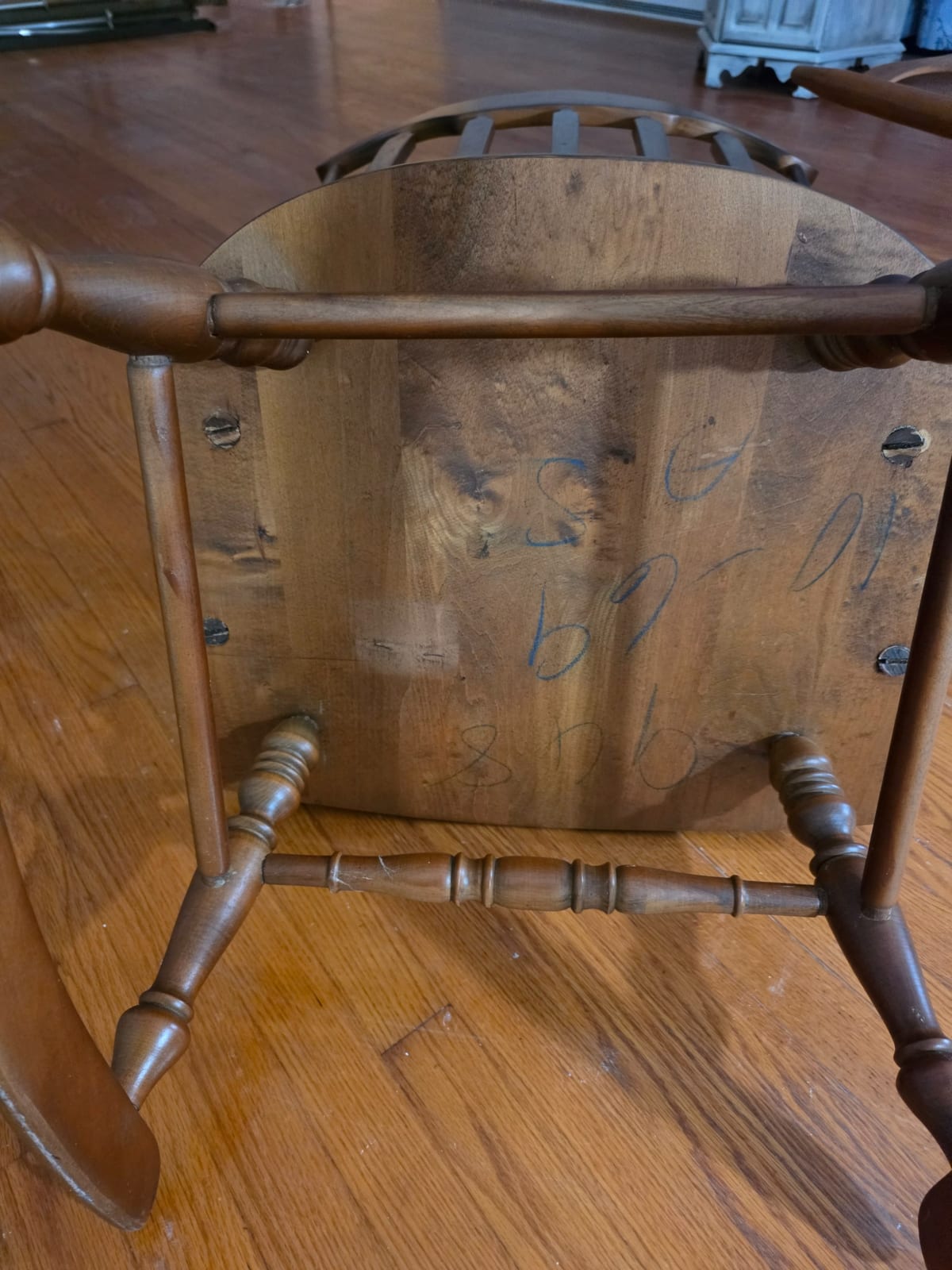
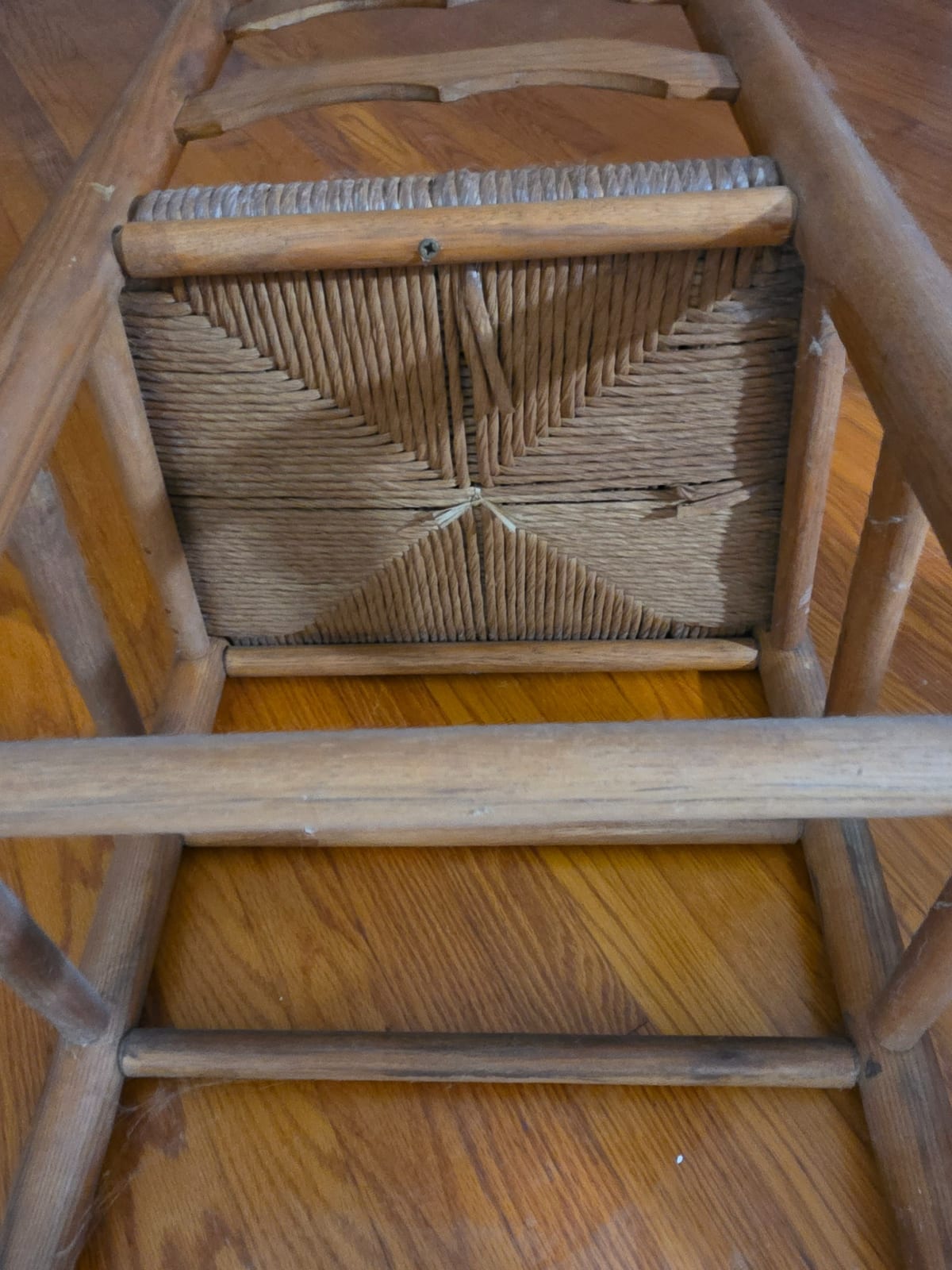
Wooden Windsor-style chair (viewed from underside)
Estimated Value
$75-$250
This appears to be the underside of a Windsor-style wooden chair with turned stretchers and legs, characteristic spindle construction, and a shaped solid seat. The chair shows traditional lathe-turned components and a simple utilitarian form associated with country furniture and mass-produced or workshop-made chairs. The underside reveals old fasteners, wear consistent with age and use, and later inventory or identification markings in blue pencil/marker. The finish appears aged and somewhat uneven, suggesting either original patina or later refinishing.
Era
Late 19th century to early 20th century, likely reproduction or revival piece
Origin
Likely United States or United Kingdom
Material
Turned hardwood (possibly maple, birch, or beech) with a solid wood seat
Condition
Fair to Good; visible wear, surface scratches, dark staining/discoloration on the seat underside, and handwritten inventory/chalk markings. No obvious major structural break is visible from this view, but full condition cannot be confirmed from one image.
Physical Details
Dimensions
Approximately 34-40 inches tall overall; seat width likely 16-18 inches; exact dimensions unknown from image
Weight
Medium
Authentication
Authenticity Score
Medium; the construction is consistent with a genuine Windsor-style chair, but the exact age is uncertain and the visible underside markings suggest it may be a later production piece or a chair that has been handled in an inventory context
Provenance
Likely a domestic household chair from a furniture workshop or factory production line; exact maker and provenance are not identifiable from the image. The chalk/marker numbers suggest it may have been cataloged for sale, estate handling, or storage.
Historical Significance
Windsor-style chairs are historically significant as one of the most enduring forms of vernacular seating in British and American furniture history. They were widely made from the 18th century onward and became especially common in the 19th and early 20th centuries due to their durability and practical design.
Restoration Notes
- •Possible later refinishing or touch-up to the underside/seat area
- •Visible inventory or chalk markings on underside
- •No clear evidence of structural repair visible in this image
This identification and value range are AI-generated research aids, not authentication, certification, or a formal appraisal. Learn about the limitations and when to consult a qualified professional appraiser.
Research this item further
Related Identifications
Browse all →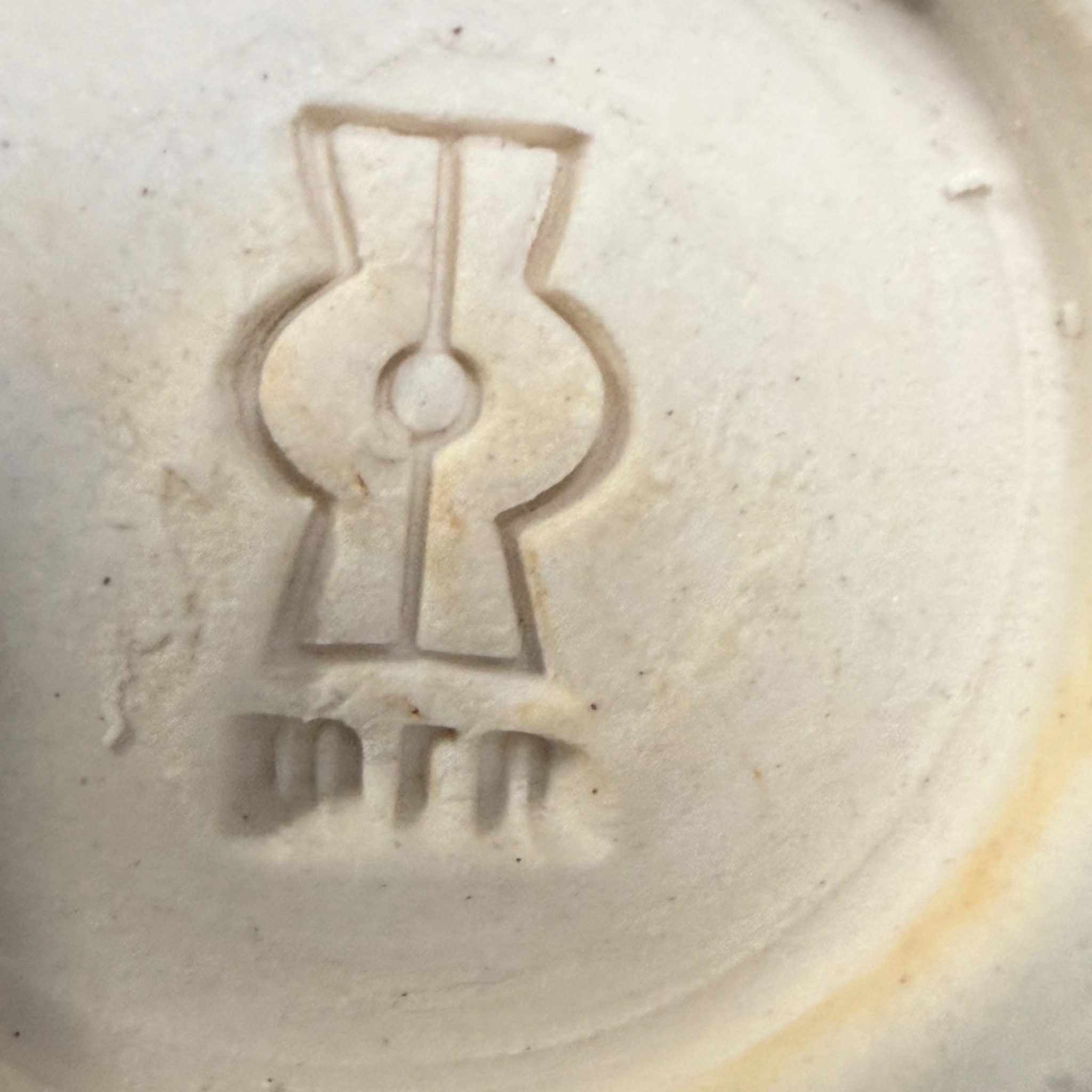
Unidentified maker's mark / impressed pottery or porcelain stamp
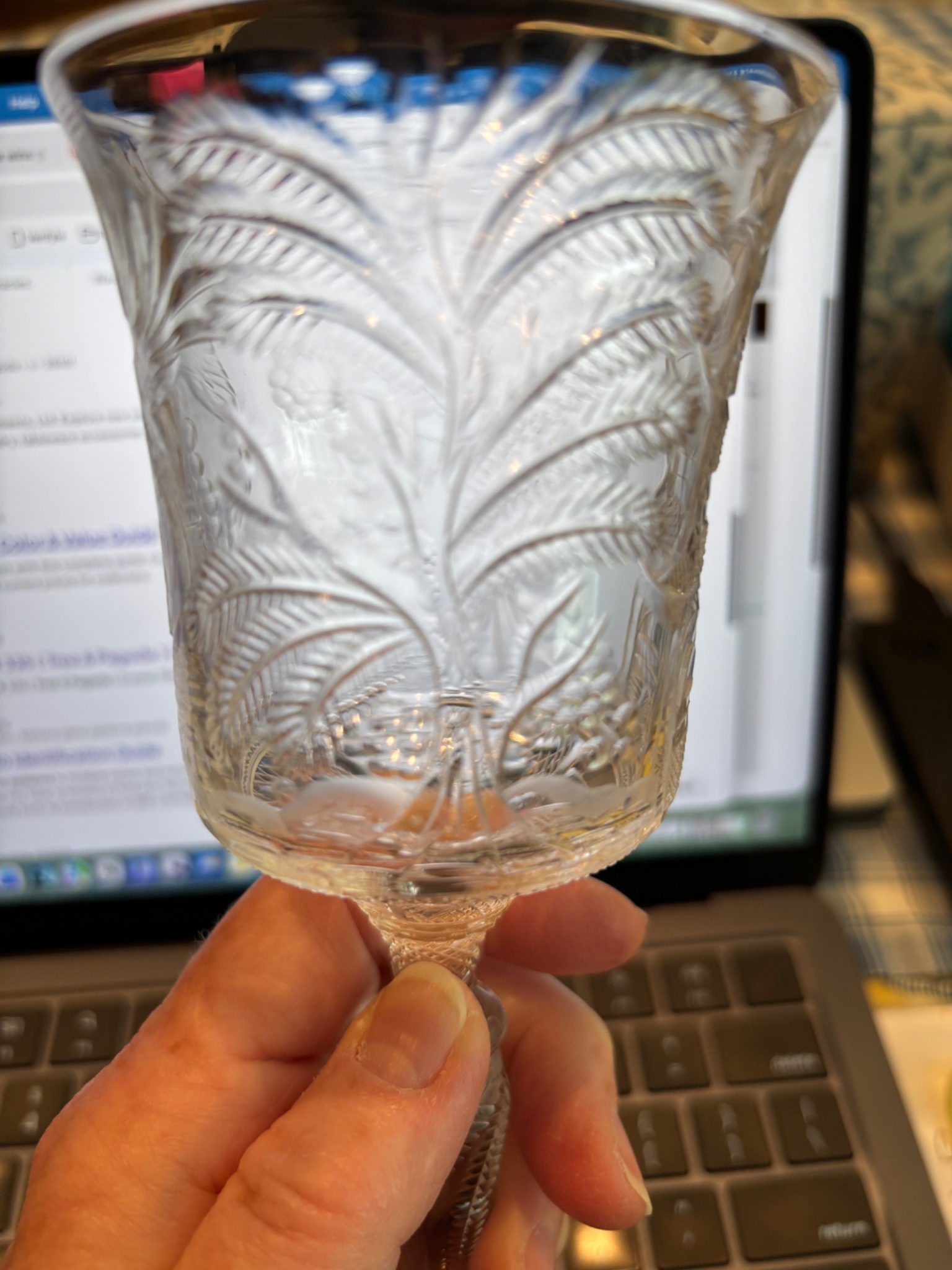
Cut glass stemmed goblet or wine glass with palm/fern motif
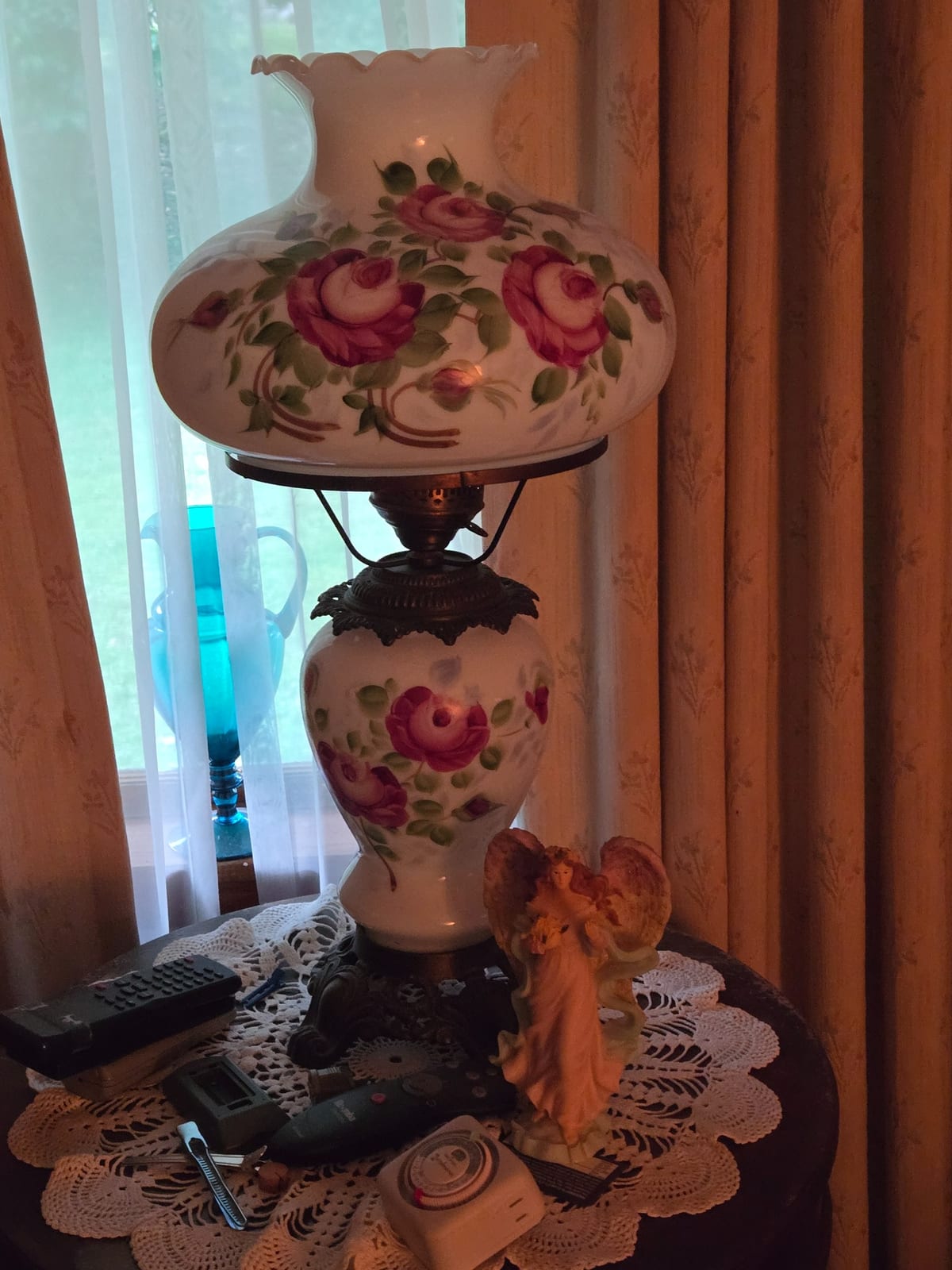
Victorian-style porcelain oil lamp with hand-painted floral decoration
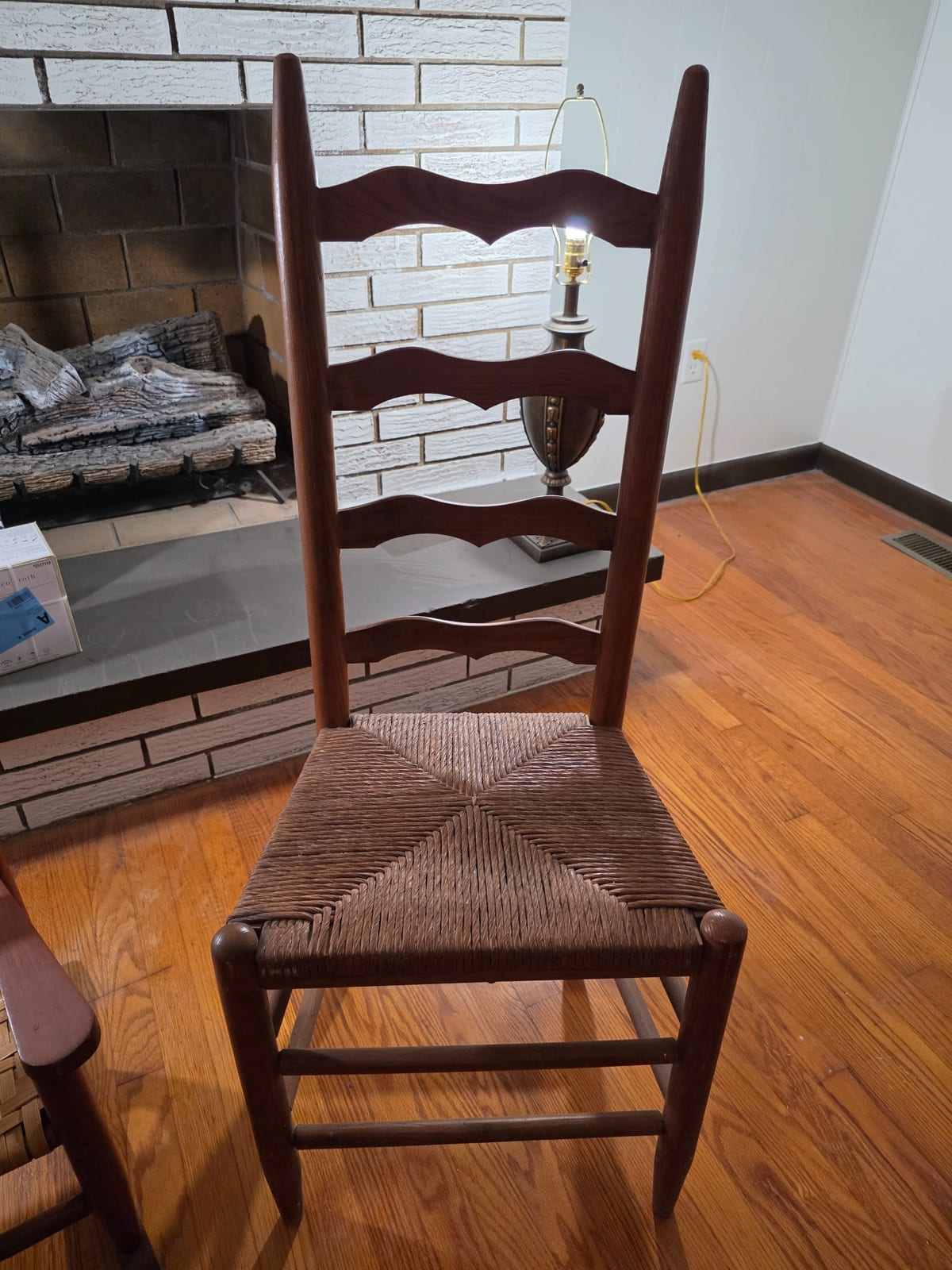
Rush-seat ladder-back dining chair
Woven rush-seat wooden stool or chair base
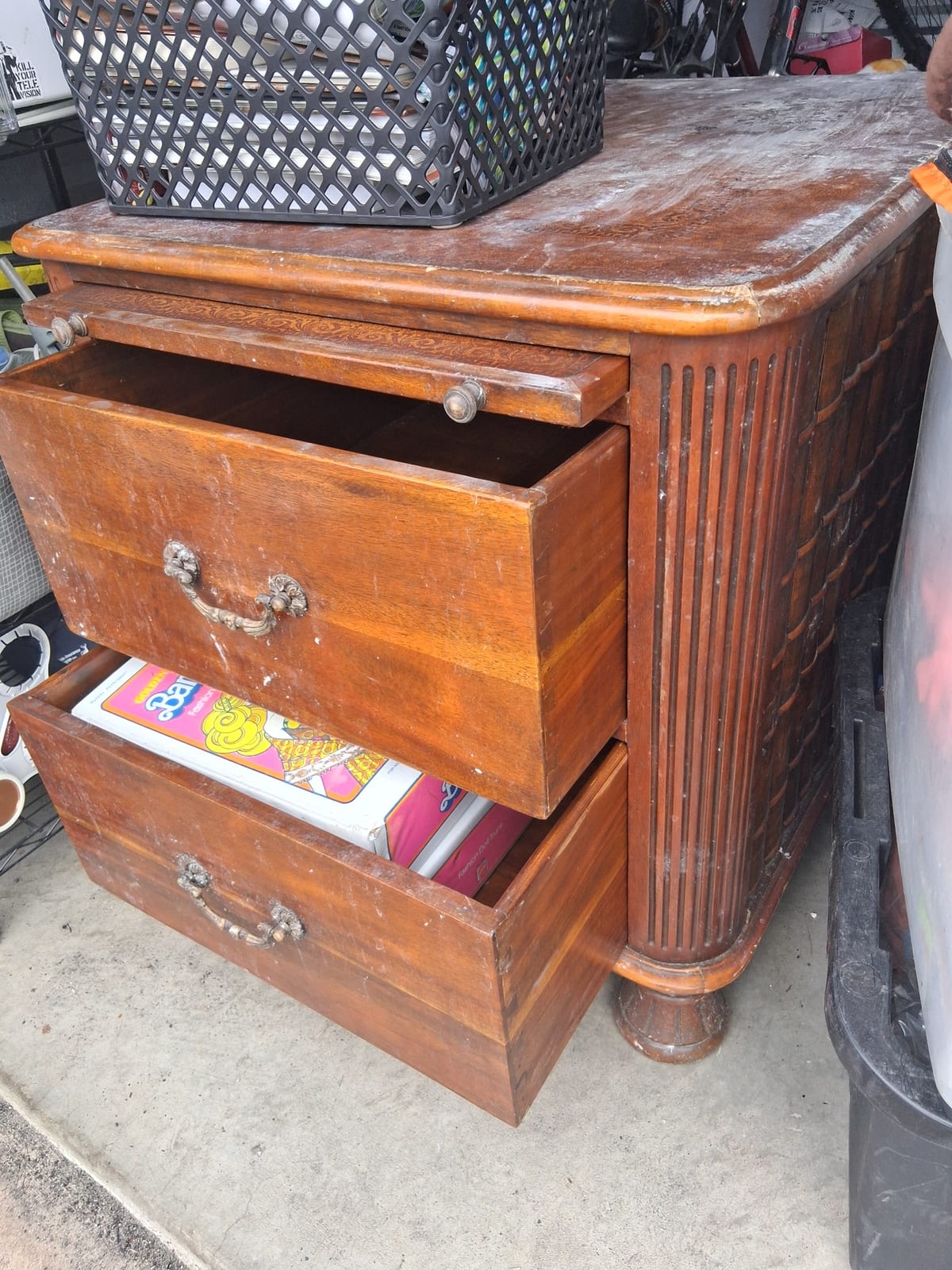
Victorian-style wooden chest of drawers / commode