Brass samovar or large brass tea urn with Russian imperial-style commemorative engravings
Estimated Value
$75-$250 USD
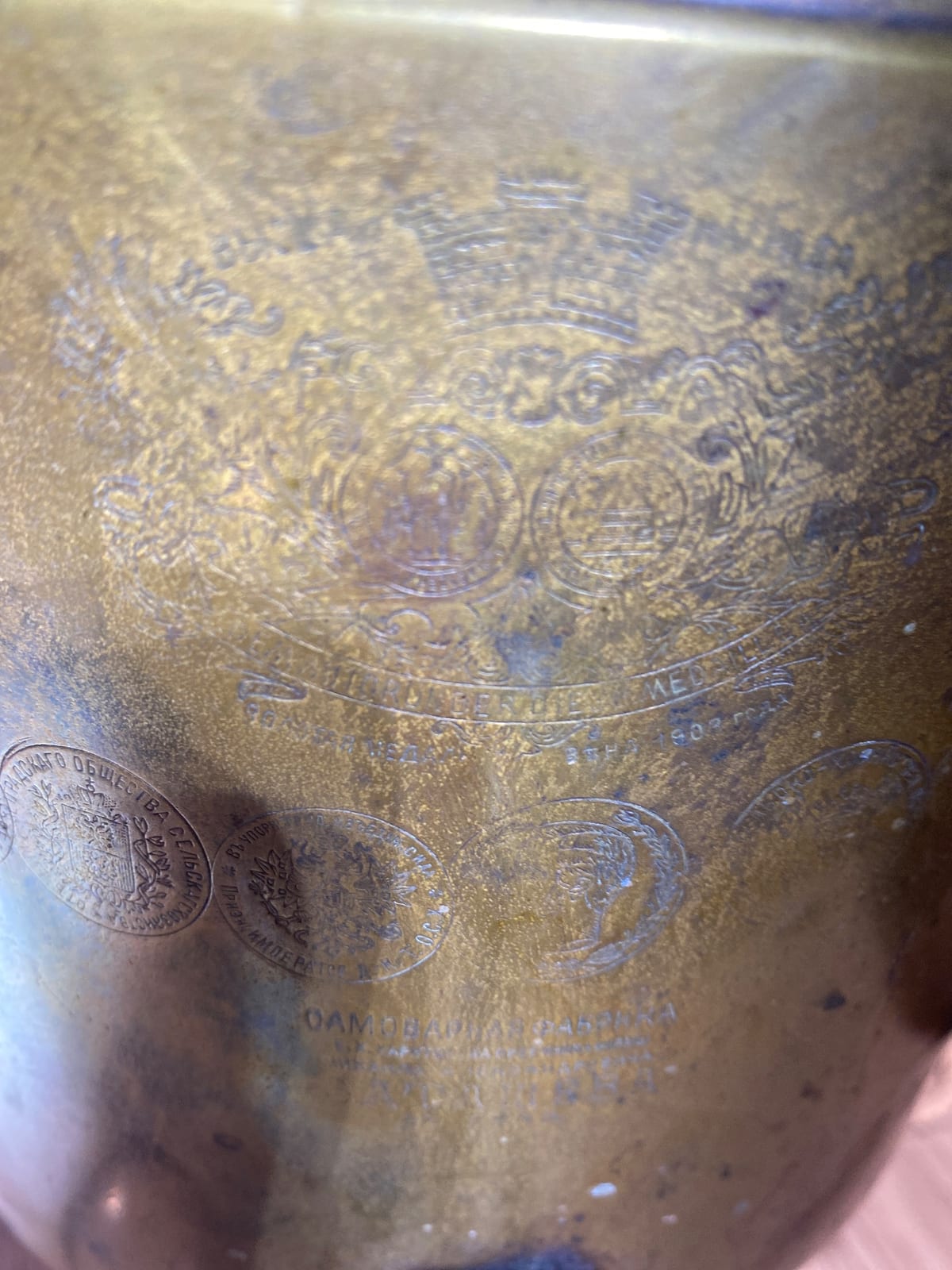
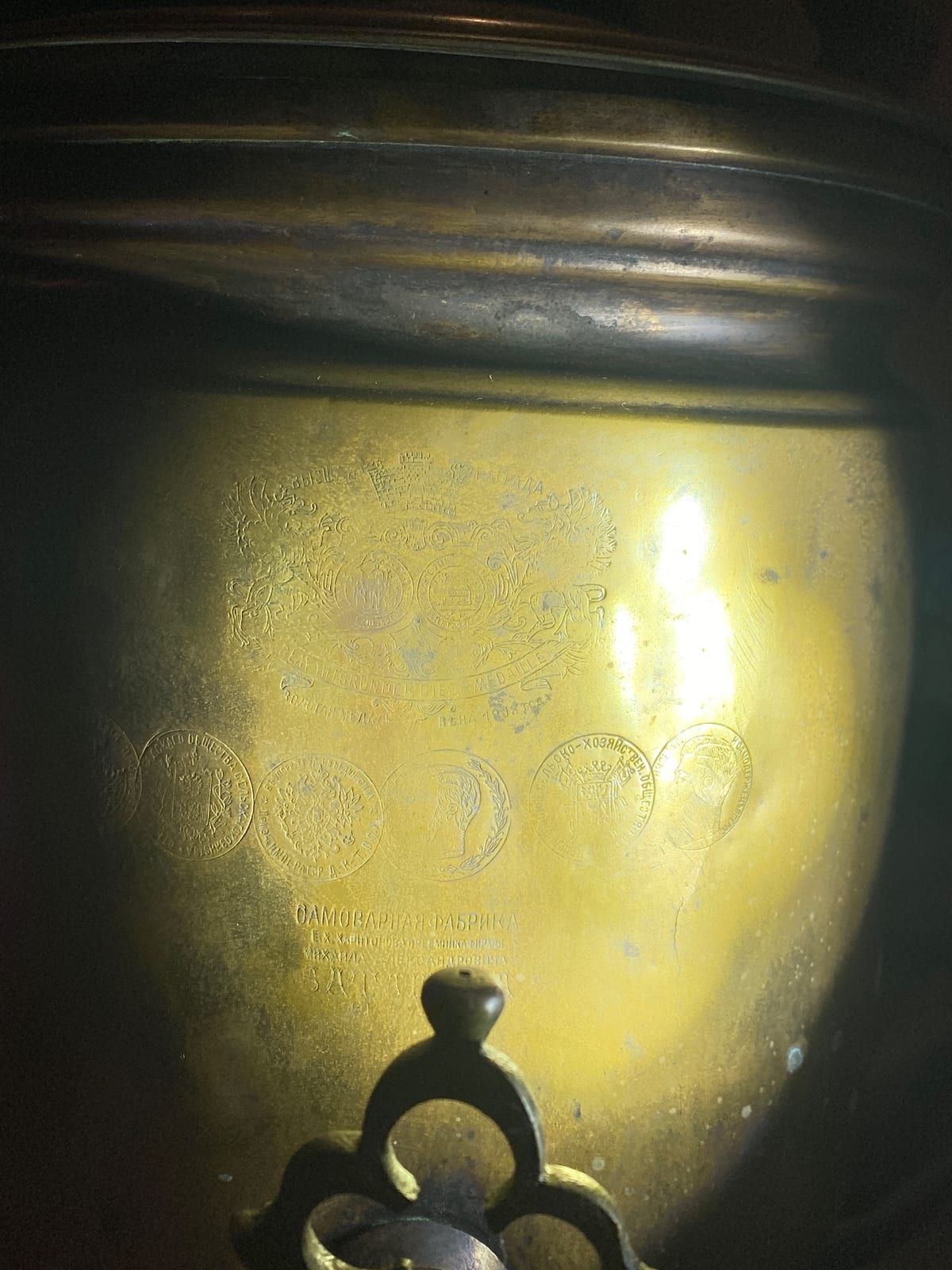
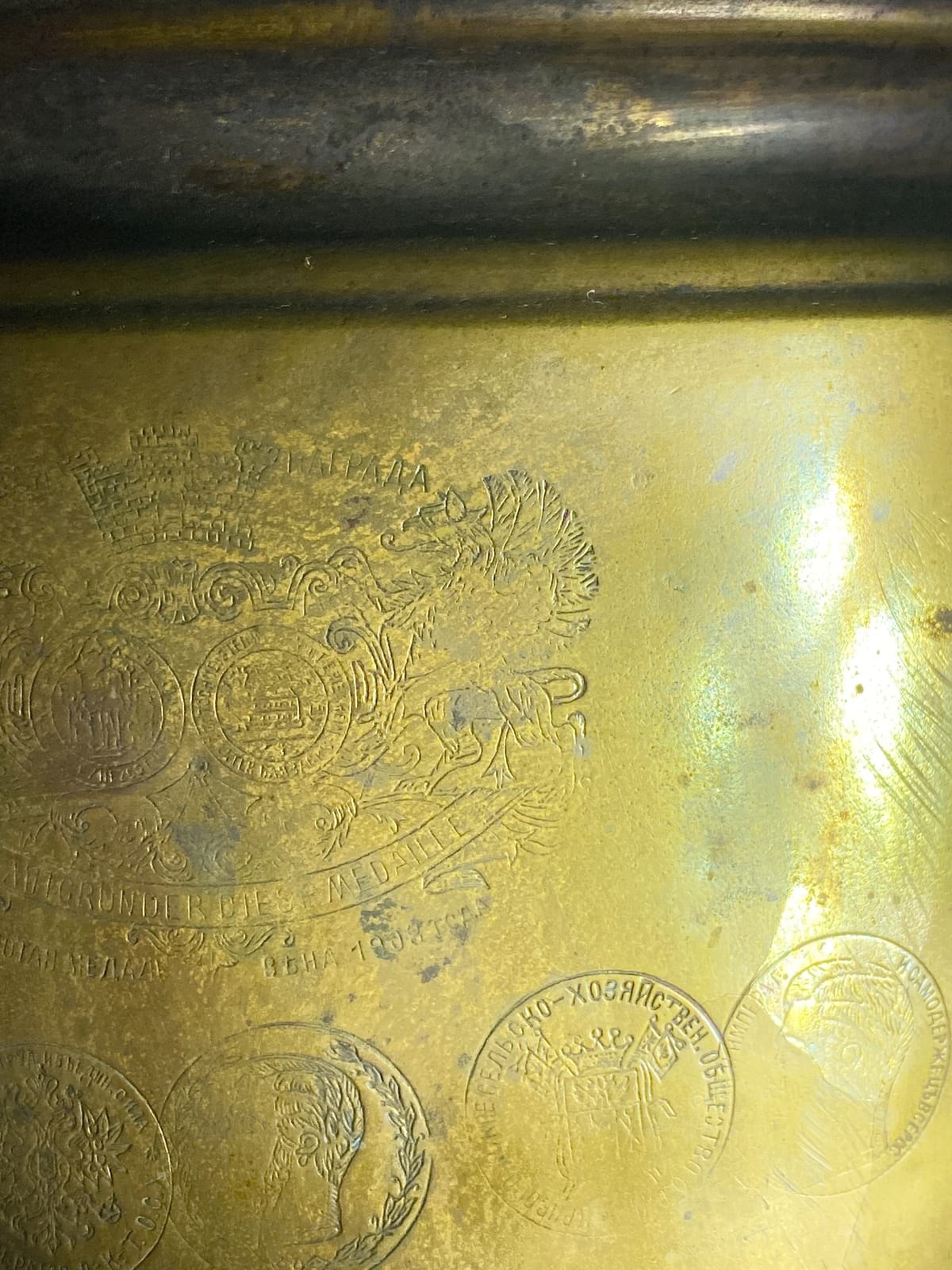
The image shows a close-up of a brass vessel with a broad cylindrical body and a darkened upper rim, consistent with a samovar or large tea urn. The body is decorated with multiple engraved or stamped medallions, wreaths, and ornamental scrollwork. Several circular emblems contain Cyrillic text and heraldic imagery, suggesting Russian or Slavic commemorative or patriotic decoration. One visible inscription appears to include 'ВЕНА 1897' (Vienna 1897), which may indicate an exhibition, award, or commemorative reference. The overall style is ornate but utilitarian, typical of late imperial Russian brass household or presentation wares.
Era
Late 19th century to early 20th century (c. 1880s-1910s), possibly later commemorative production
Origin
Russia or Russian Empire region; possibly made for the Russian market or as a commemorative export piece
Material
Brass or brass-plated metal
Condition
Fair. Surface shows heavy tarnish, oxidation, spotting, and wear to the engraved decoration. No obvious structural damage visible in this close-up, but the finish is significantly aged and dulled.
Physical Details
Dimensions
Unknown exact size; based on the curvature and scale of the body, likely approximately 12-20 inches tall if a samovar, or larger if a tea urn.
Weight
Heavy
Authentication
Authenticity Score
Medium. The engraved Cyrillic motifs and aged brass surface appear consistent with an authentic antique Russian metal vessel, but the close-up view does not show the full form, maker's marks, or construction details needed for firm authentication.
Provenance
Likely Russian Empire or early Soviet-era Russian-made decorative metalware. The engraved medallions suggest it may have been produced for commemorative, exhibition, or award purposes, though exact provenance cannot be confirmed from this image alone.
Historical Significance
Russian samovars and brass tea vessels are culturally significant as symbols of domestic tea service and social ritual in the Russian Empire. Commemorative or exhibition-marked examples can be of added historical interest, especially if tied to a specific event, city, or award.
Restoration Notes
- •No clear evidence of restoration visible in this image
- •Surface wear, oxidation, and possible polishing residue present
This identification and value range are AI-generated research aids, not authentication, certification, or a formal appraisal. Learn about the limitations and when to consult a qualified professional appraiser.