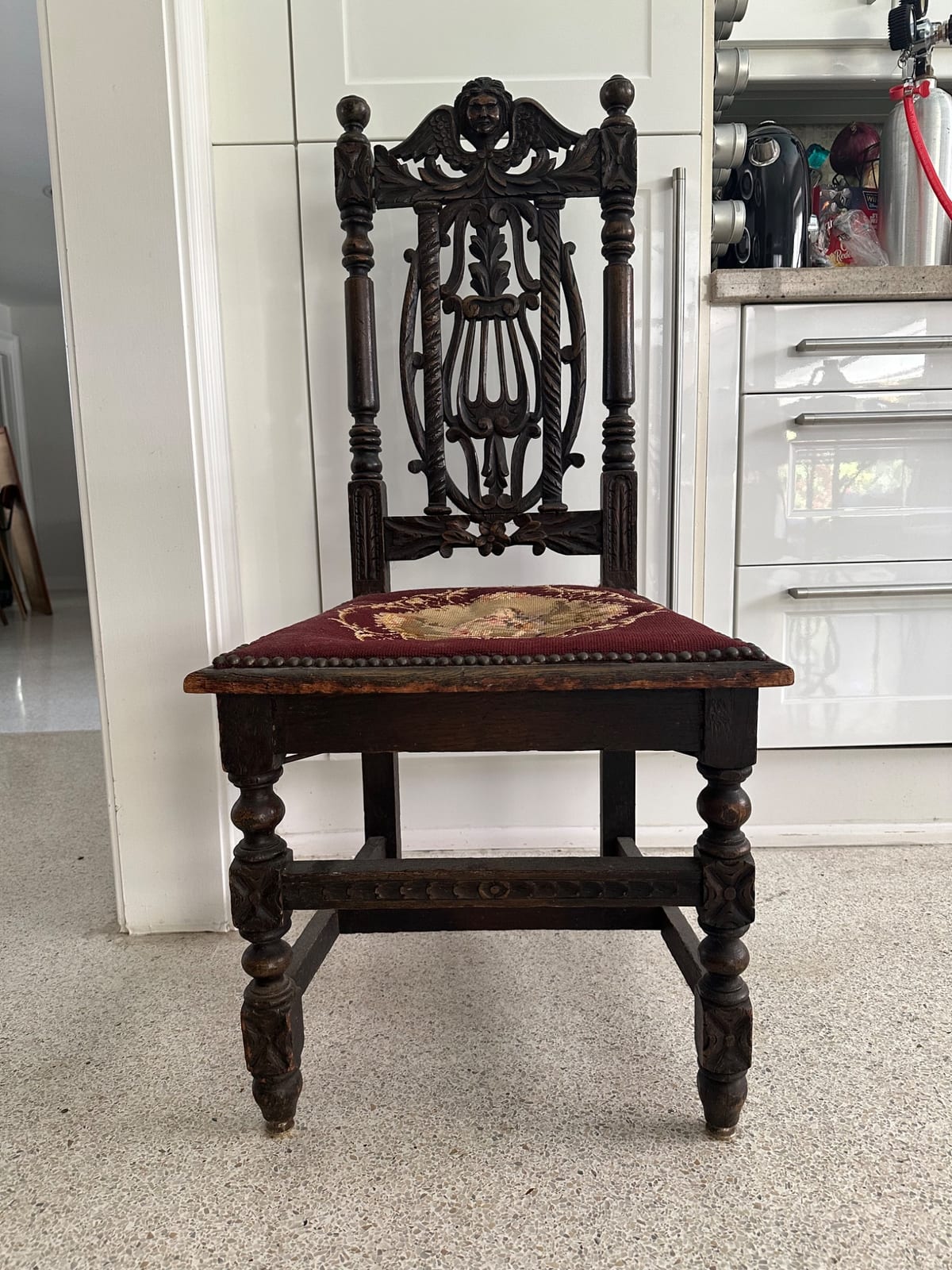
Carved oak side chair with upholstered seat and figural crest
Estimated Value
$150-$500
An ornate high-back wooden side chair featuring elaborate hand-carved decoration throughout. The crest rail is topped with a carved figural face or mask flanked by wing-like scrollwork, and the back splat has an openwork foliate design with twisted side supports. The chair has turned front and rear legs, stretchers, and a rectangular seat upholstered in a burgundy textile with decorative nailhead trim. The overall style suggests a revival or eclectic historicist piece, likely intended as a decorative accent chair rather than a formal dining chair. The dark finish and carving indicate substantial craftsmanship, though the exact maker is not visible from the image.
Era
Late Victorian to Edwardian period, approximately 1880s-1910s
Origin
Likely United Kingdom or Continental Europe; possibly English or Anglo-European in style
Material
Carved dark-stained oak, textile upholstery, metal nailhead trim
Condition
Good overall condition with visible age-related wear, surface scuffs, finish loss, and possible minor looseness in joints; upholstery appears later or replaced and shows fading/wear
Physical Details
Dimensions
Approximately 40-44 inches tall, 18-20 inches wide, 16-18 inches deep
Weight
Medium
Authentication
Authenticity Score
Medium - The chair appears genuinely old based on wear, construction, and carving style, but the image does not show joinery, underside, or marks needed for firm dating or attribution
Provenance
Likely from a late 19th or early 20th century domestic interior; exact maker and provenance unknown. The design suggests either English revival furniture or a European export piece made in a historicist style.
Historical Significance
This type of chair reflects the late Victorian/Edwardian fascination with revival styles, decorative carving, and eclectic historic motifs. Chairs with figural crests and openwork backs were often made as statement pieces for parlors, halls, or dining rooms.
Restoration Notes
- •Upholstery appears newer than the wood frame or at least later than the original construction
- •Visible finish wear and edge abrasion suggest prior refinishing or long-term use
- •Possible minor repairs or tightening may have occurred, though no clear structural repairs are visible
This identification and value range are AI-generated research aids, not authentication, certification, or a formal appraisal. Learn about the limitations and when to consult a qualified professional appraiser.
Research this item further
Related Identifications
Browse all →
Antique-style single-shot long gun (likely a muzzleloading rifle or shotgun, exact type unknown)

Pokémon Trading Card Game Charizard (Base Set, Holo Rare)

Oil painting reproduction of Eugène Delacroix's 'Liberty Leading the People'
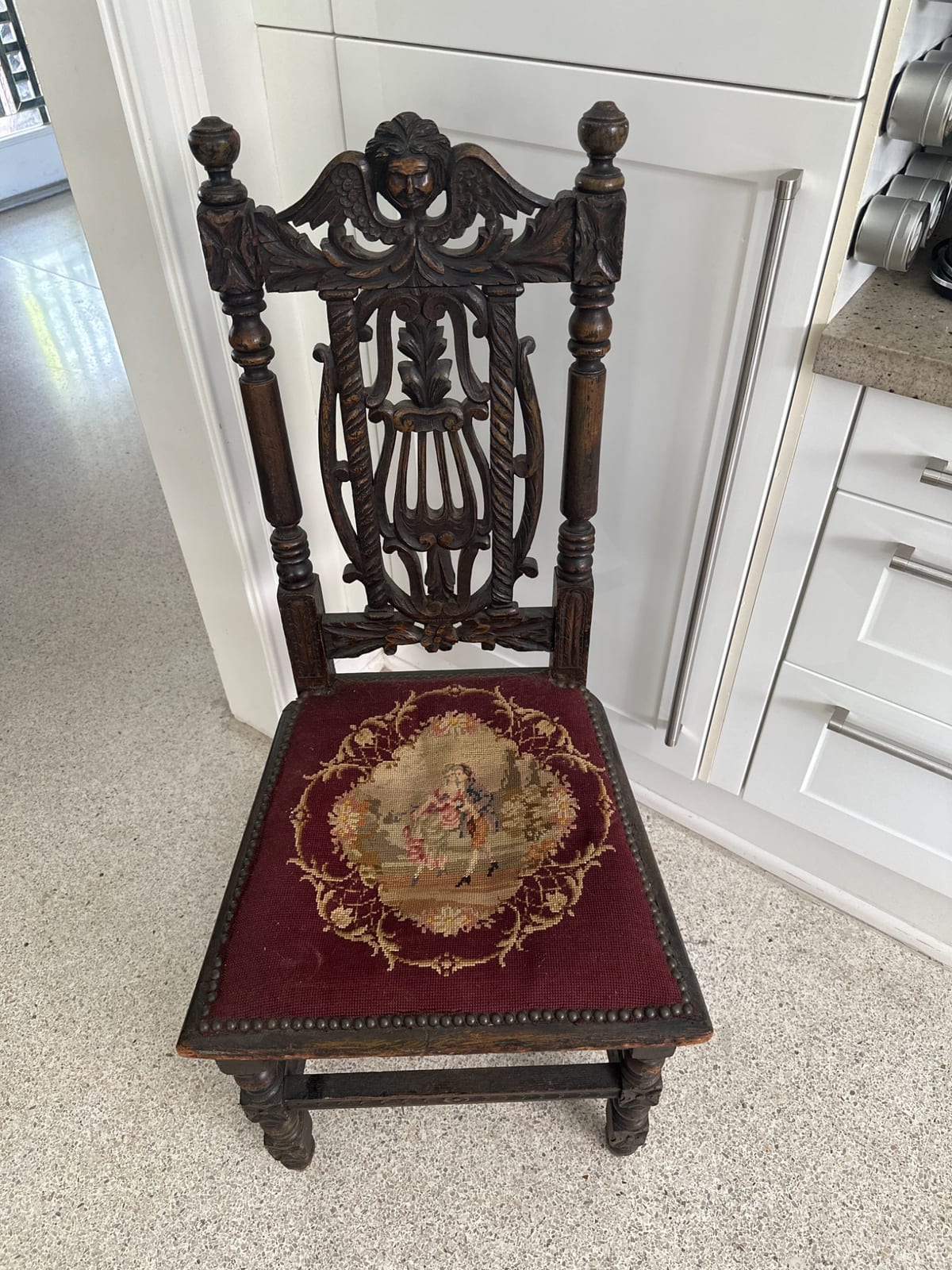
Carved wooden side chair with needlepoint seat
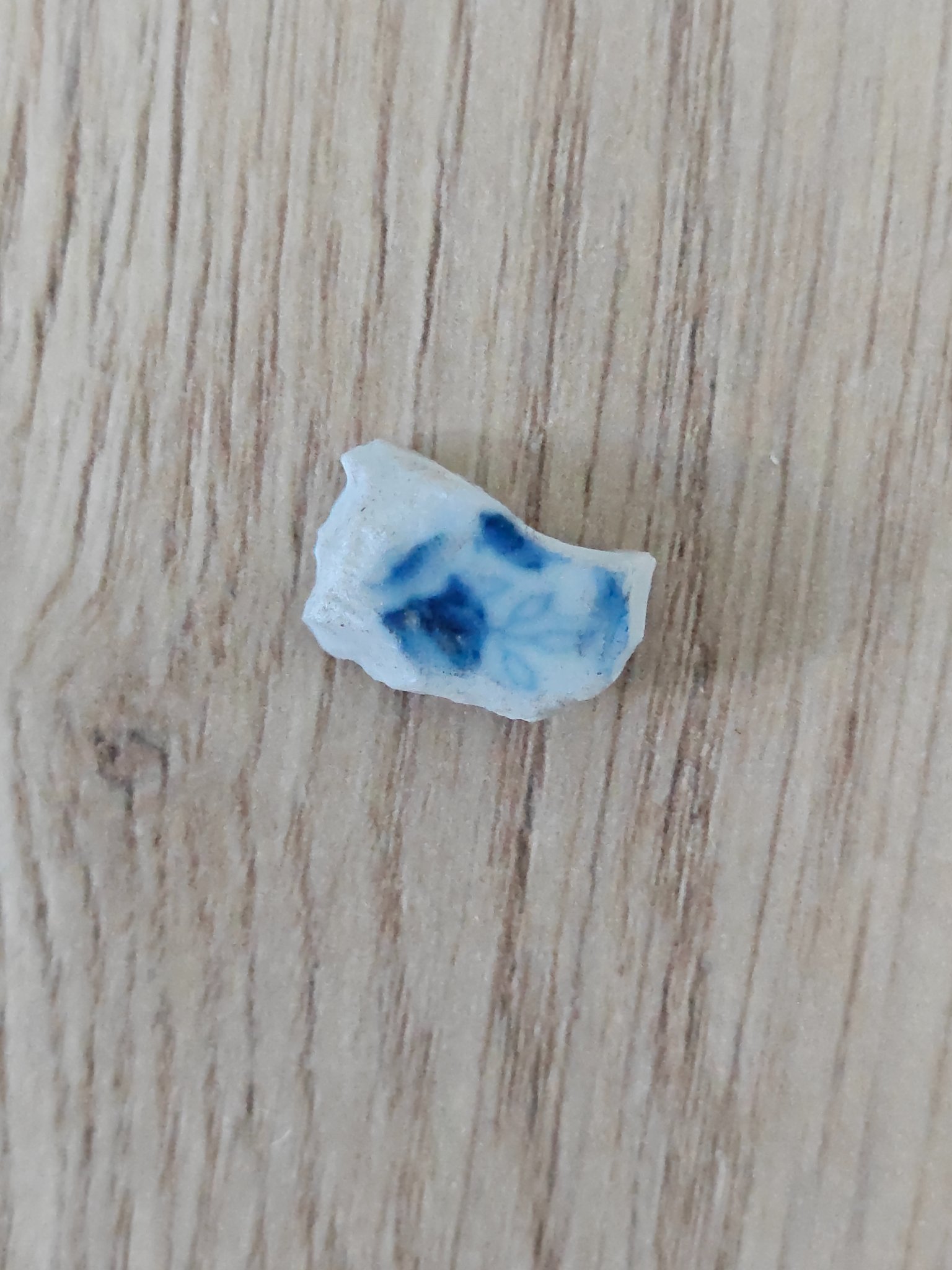
Small blue-and-white ceramic shard or porcelain fragment
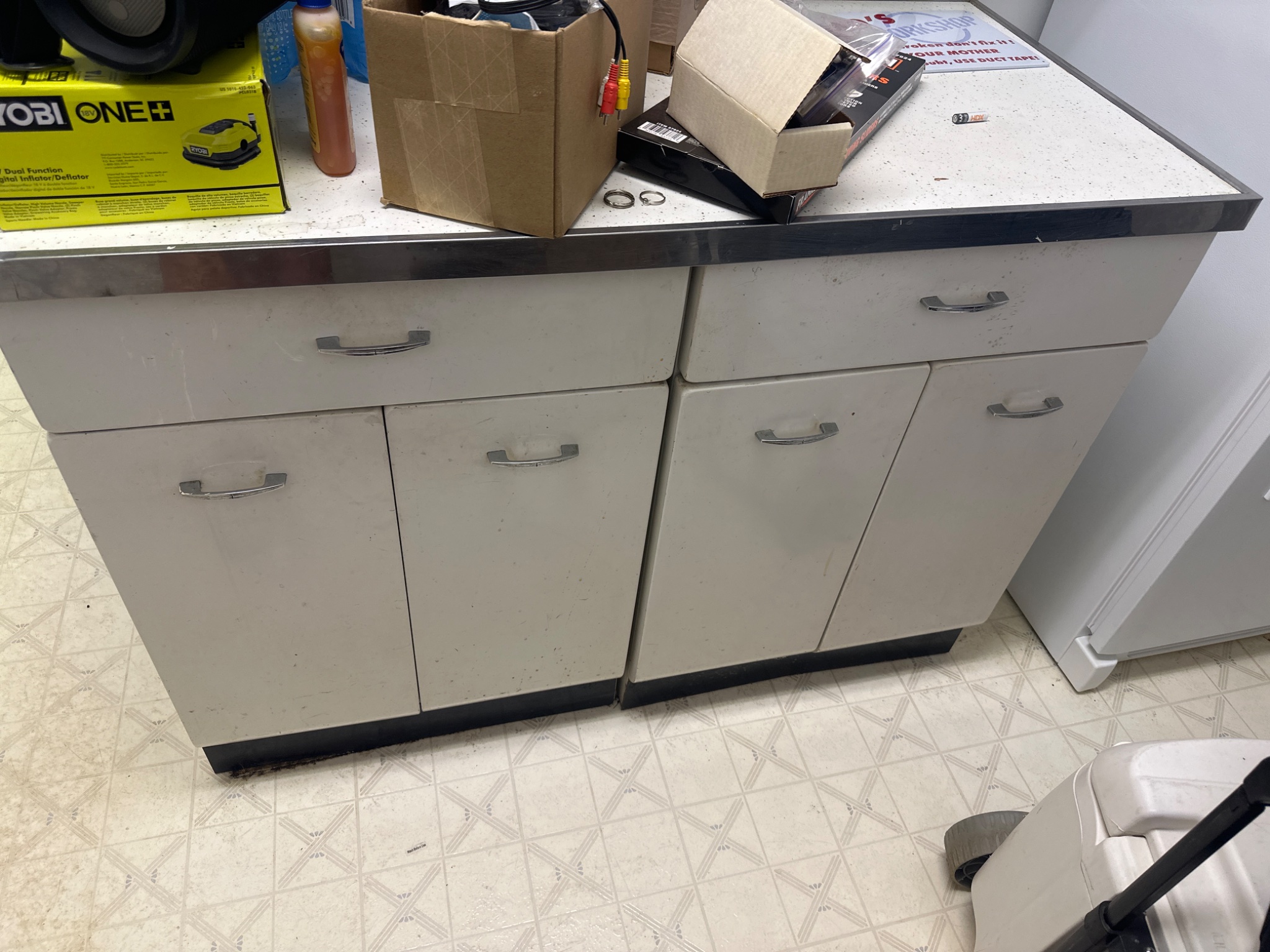
Mid-century kitchen base cabinet / utility cabinet

Unknown black-painted carved wooden vessel or pedestal fragment

Tall narrow wooden corner/display cabinet or étagère