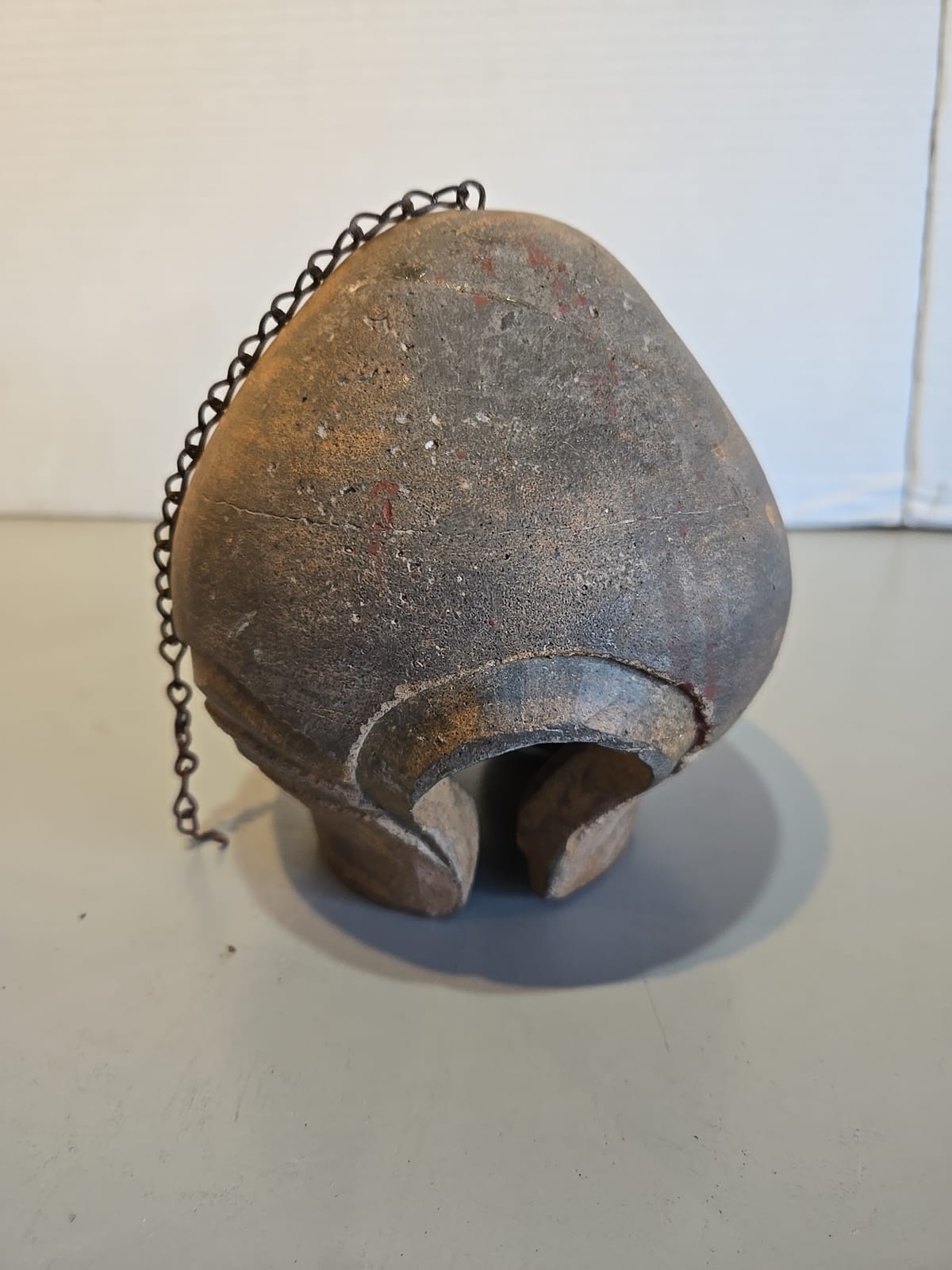
Cast metal bell or clapper housing fragment
Estimated Value
$20-$100
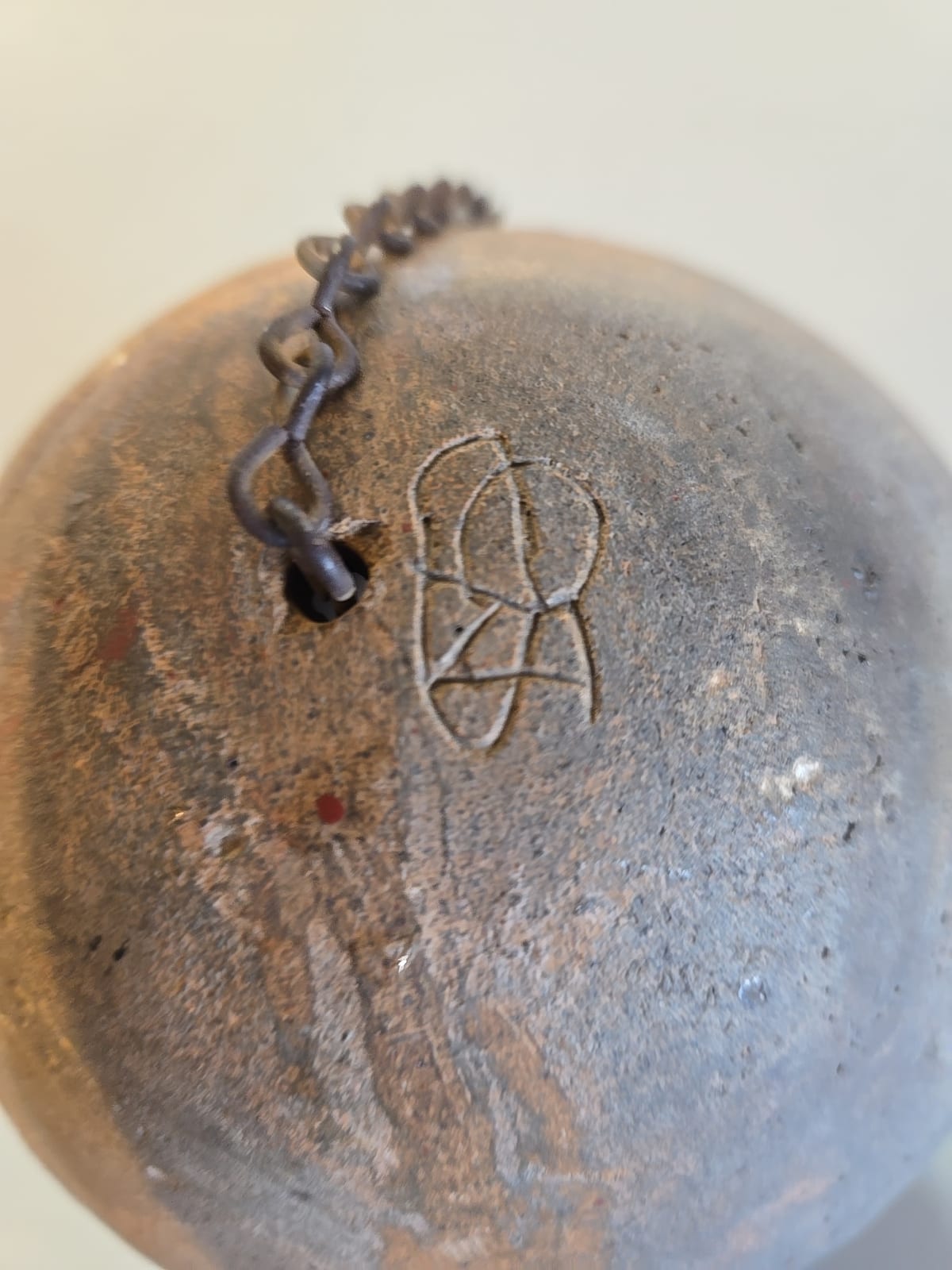
The object appears to be a small cast-metal bell-like or clapper-housing component with an oval, domed body and an open lower mouth. The form suggests it may have been part of a hand bell, cowbell, or mechanical bell assembly rather than a standalone decorative object. The surface is rough and oxidized, with visible wear consistent with age and prolonged exposure. A small linked chain is attached along one side, possibly serving as a suspension or internal clapper chain, though its exact function is unclear from the image alone. No maker's mark or inscription is visible.
Era
Late 19th century to early 20th century (approximate)
Origin
Unknown; possibly European or North American
Material
Cast metal, likely iron or bronze with surface oxidation and remnants of paint
Condition
Poor to Fair; heavily worn, corroded, and possibly incomplete or broken. Surface shows oxidation, pitting, scratches, and paint loss. Chain attachment is present but appears aged and possibly not original to the piece.
Physical Details
Dimensions
Approximately 4 to 6 inches tall
Weight
Medium
Authentication
Authenticity Score
Low to Medium; the object appears genuinely old, but the exact identification is uncertain due to limited view and lack of markings.
Provenance
Likely utilitarian origin, possibly from farm, household, or industrial use. Exact provenance cannot be determined from the image alone.
Historical Significance
Objects of this type were commonly used in domestic, agricultural, or industrial settings for signaling, livestock, or mechanical purposes. If it is a bell component, it reflects practical metalworking traditions of the late 19th and early 20th centuries.
Restoration Notes
- •No clear evidence of professional restoration visible
- •Possible surface repainting or residual paint traces
- •Possible breakage or loss at the lower opening
This identification and value range are AI-generated research aids, not authentication, certification, or a formal appraisal. Learn about the limitations and when to consult a qualified professional appraiser.