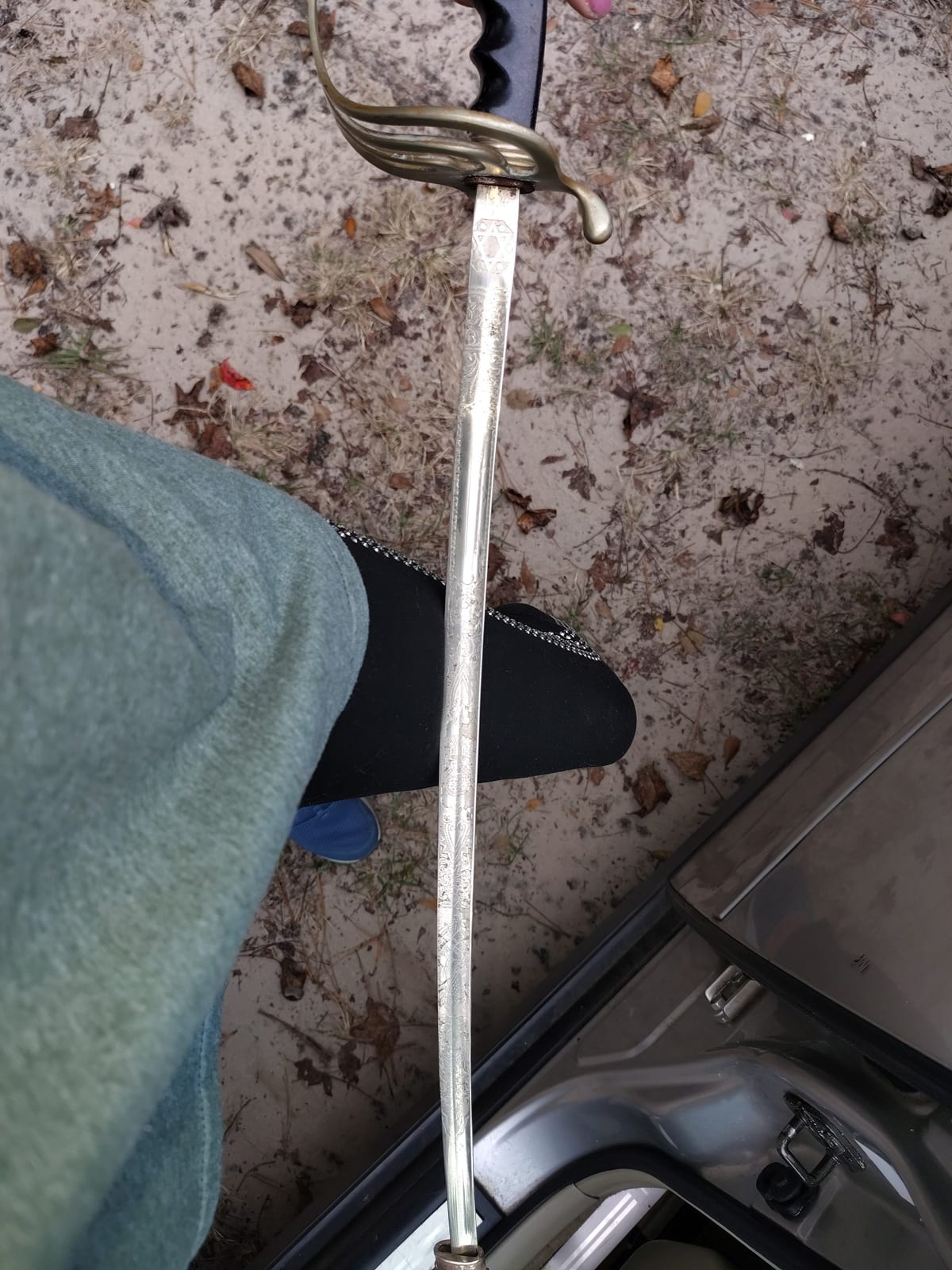
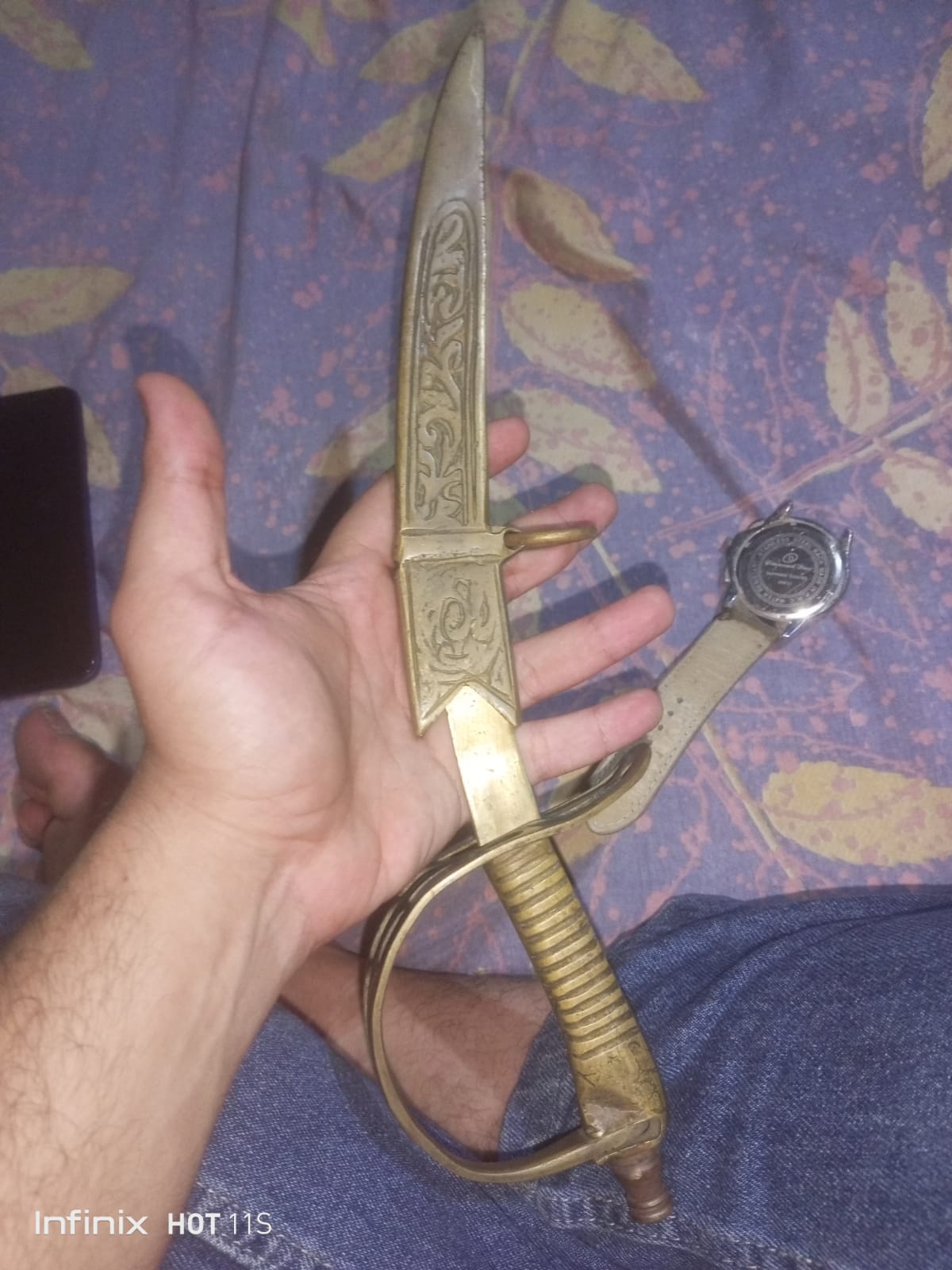
Decorative dress sword or ceremonial saber
Estimated Value
$75-$250
This appears to be a decorative or ceremonial sword, likely a dress saber or presentation-style sidearm rather than a combat weapon. The hilt features a brass-toned guard with a flowing, stylized form and a black grip. The blade is straight and slender with engraved or etched decoration along much of its length, suggesting ornamental rather than utilitarian use. The overall design is elegant and likely intended for formal wear, fraternal use, military dress, or ceremonial display. The visible geometric and floral-style etching near the ricasso and along the blade supports a late 19th or early 20th century decorative production style.
Era
Late 19th century to early 20th century (Victorian to Edwardian period), exact date unknown
Origin
Likely Europe or the United States; exact origin unknown
Material
Metal blade and guard, likely brass or gilt brass guard, steel blade, black composite or wood grip
Condition
Fair. Visible tarnish, surface wear, and age-related oxidation on the guard and blade. The blade appears intact, but the finish is worn and there may be minor pitting or discoloration. No obvious major breaks visible in the photo.
Physical Details
Dimensions
Approximately 30-36 inches long overall; blade likely around 24-30 inches
Weight
Light to Medium
Authentication
Authenticity Score
Medium. The construction and etched blade are consistent with an antique ceremonial sword, but the exact age, maker, and authenticity cannot be confirmed from this single image. It could also be a later decorative reproduction.
Provenance
Likely from a military, fraternal, or ceremonial context. The exact maker, regiment, or organization cannot be determined from the image alone because no clear maker's mark or inscription is visible.
Historical Significance
Ceremonial and dress swords were commonly used by military officers, fraternal organizations, and civic groups in the 19th and early 20th centuries. While not usually rare as a category, examples with identifiable makers, regiment marks, or presentation inscriptions can be historically important and more valuable.
This identification and value range are AI-generated research aids, not authentication, certification, or a formal appraisal. Learn about the limitations and when to consult a qualified professional appraiser.
Research this item further
Related Identifications
Browse all →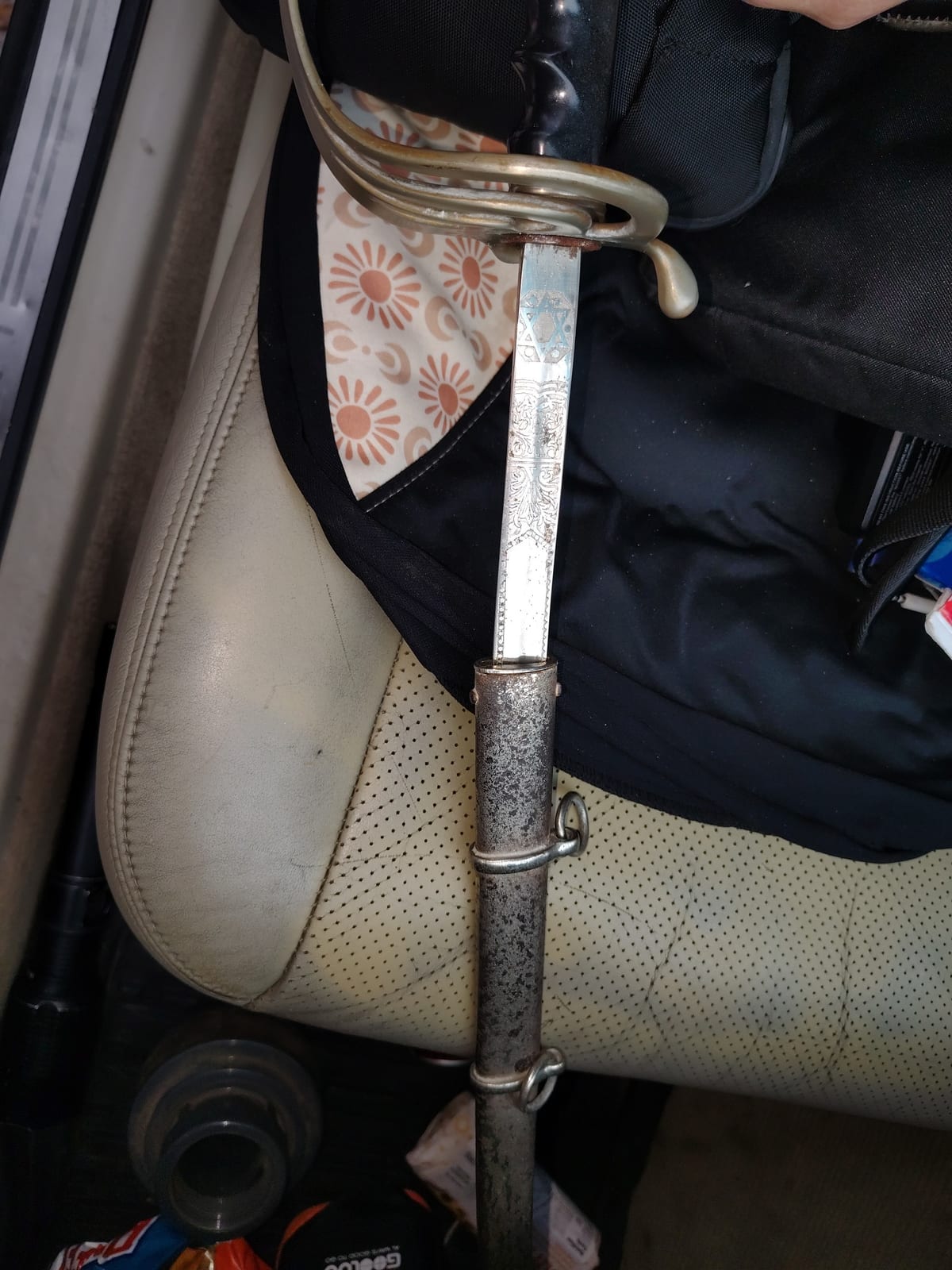
Decorative sword or saber with scabbard
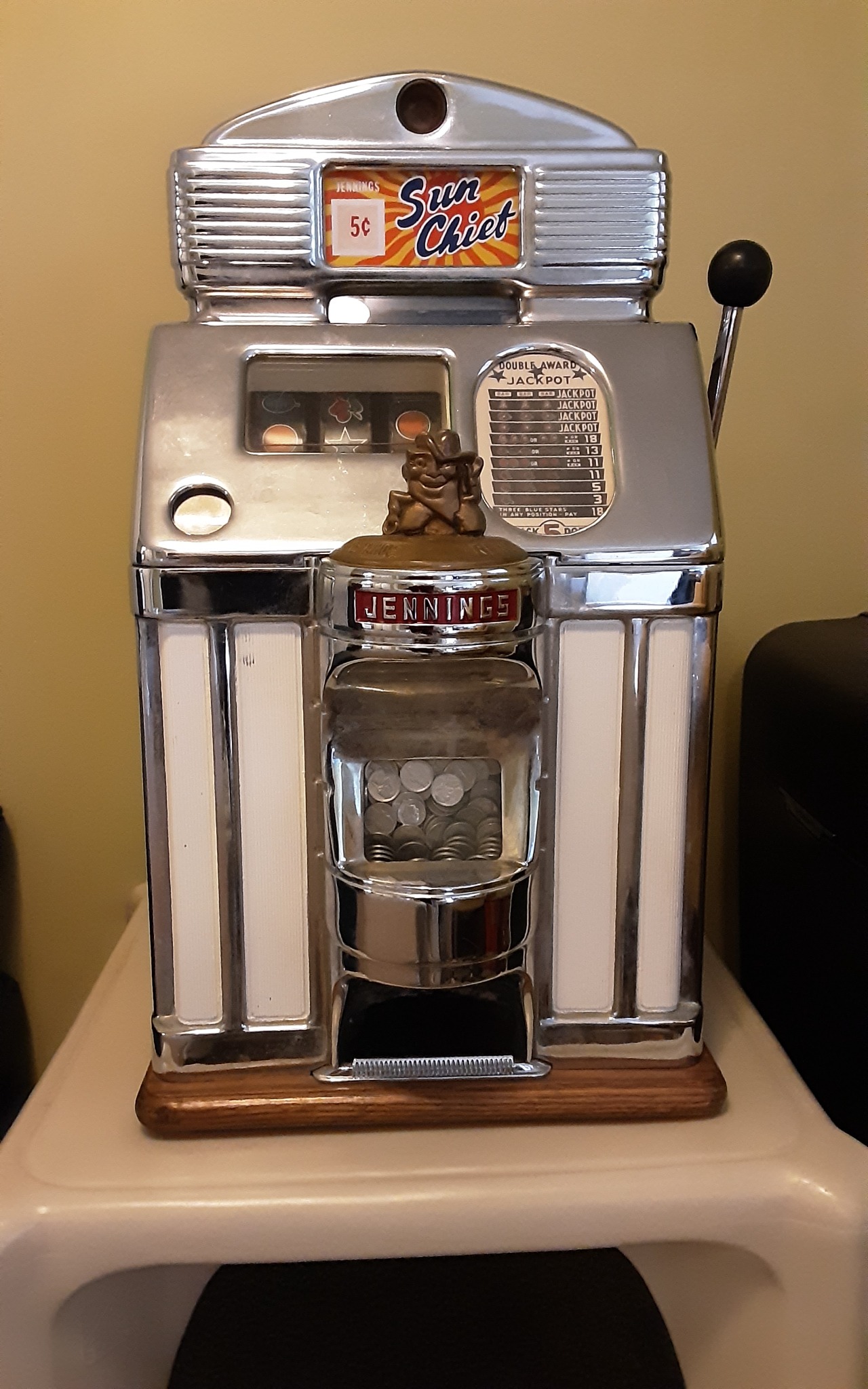
Jennings Sun Chief 5¢ slot machine
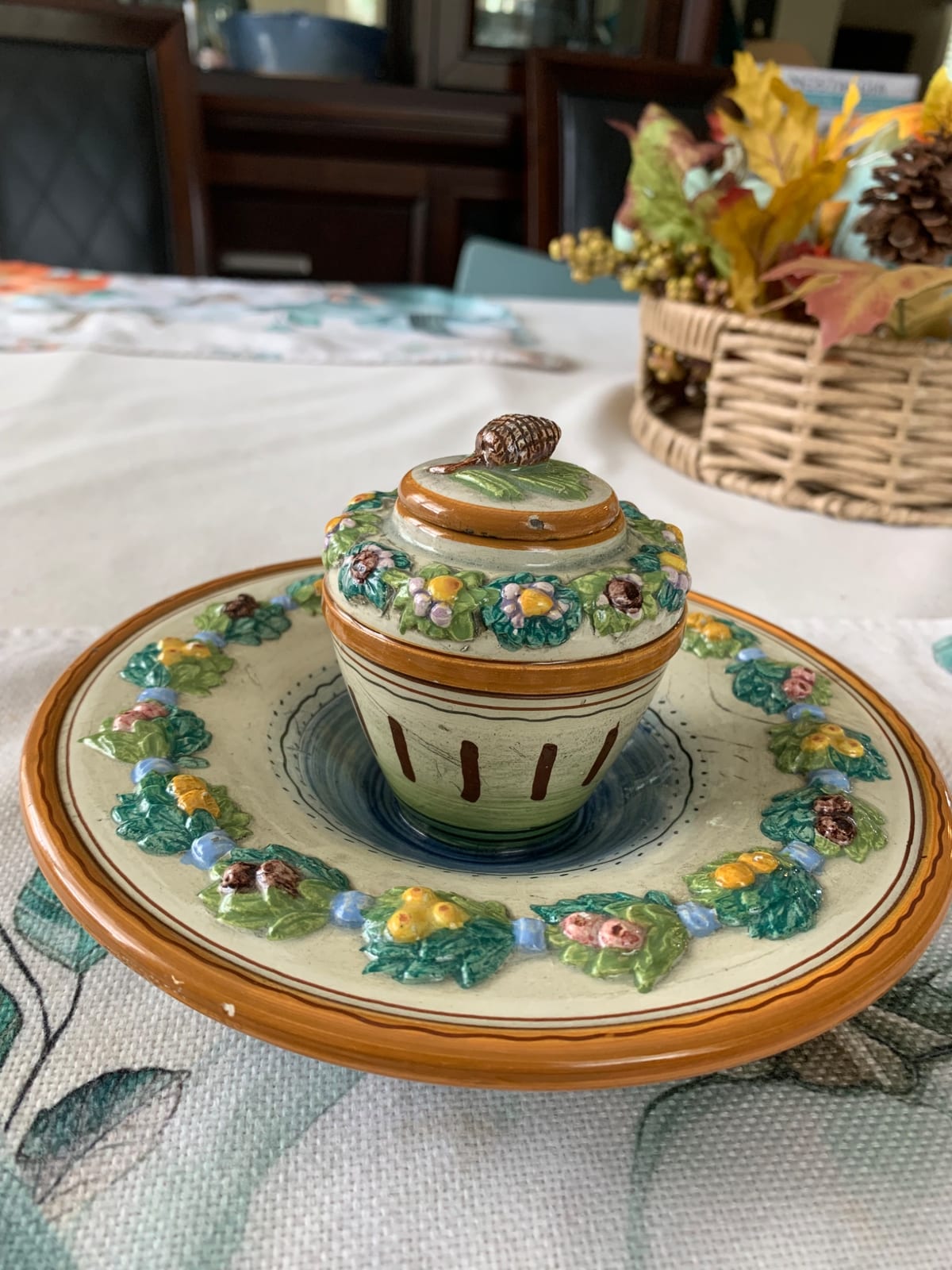
Decorative ceramic covered dish with matching underplate and pinecone finial
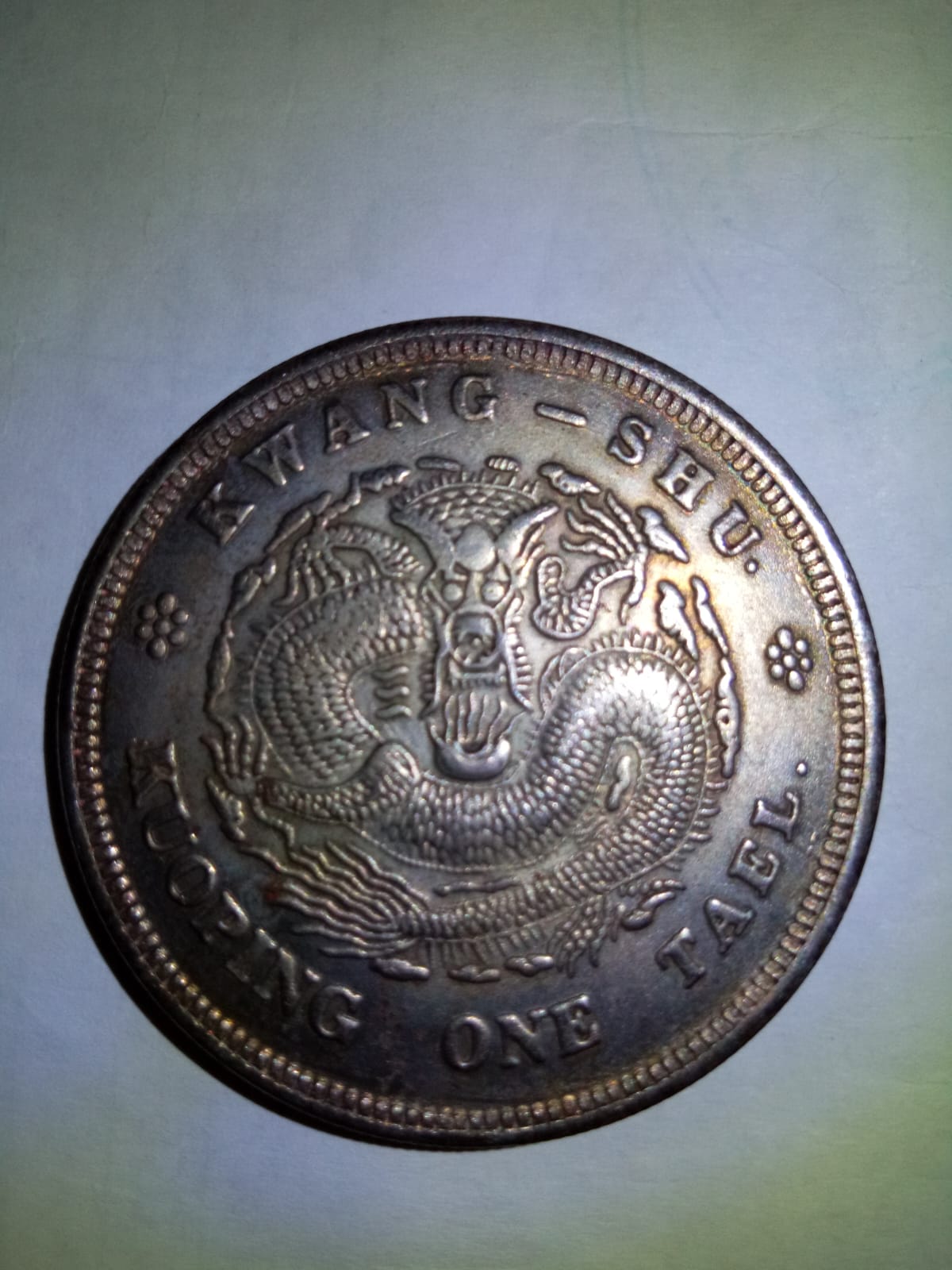
Kwang-Su One Tael coin/token with dragon motif
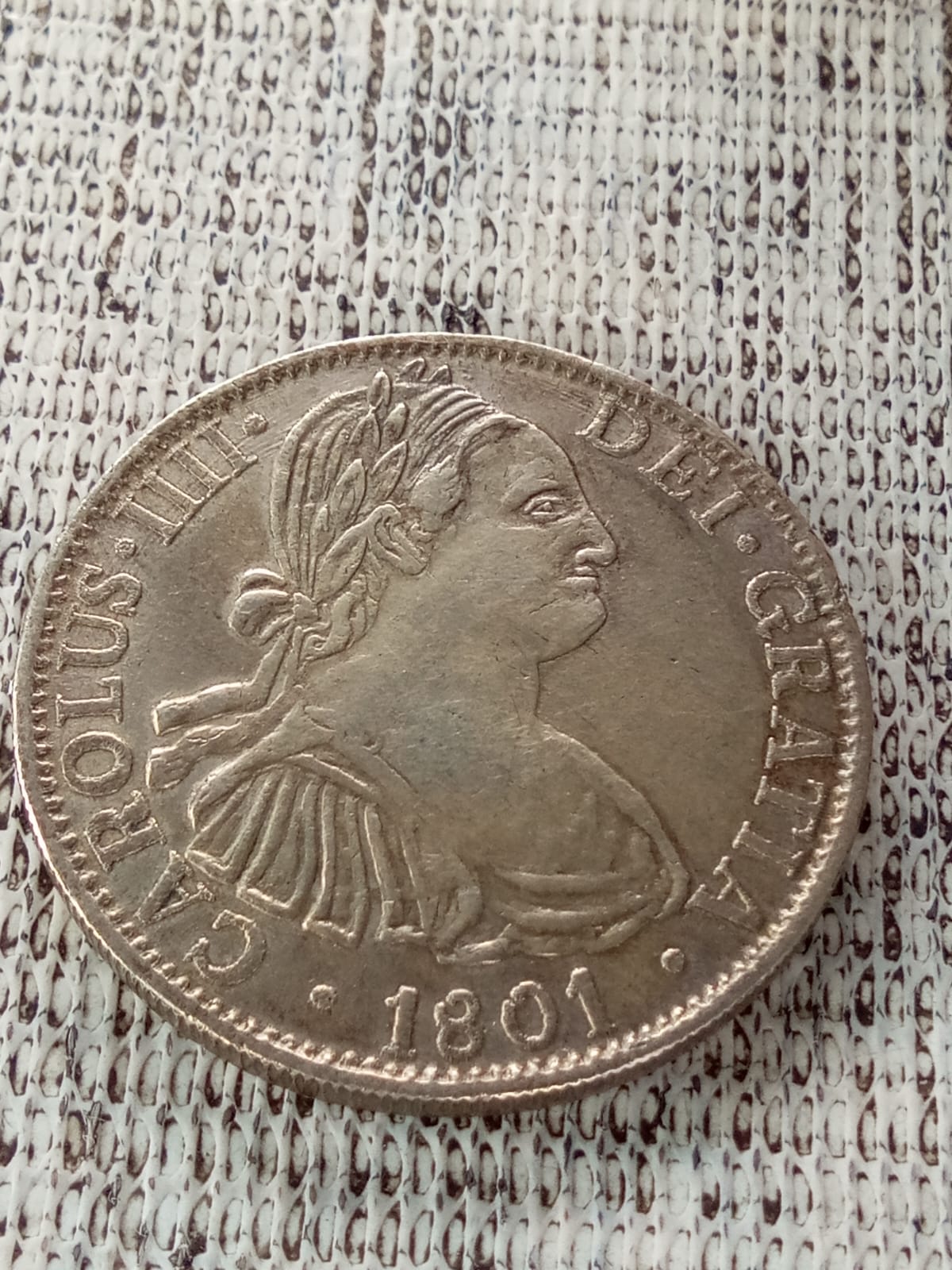
French 5 Francs coin, Napoleon I portrait type
Metal button or fastener
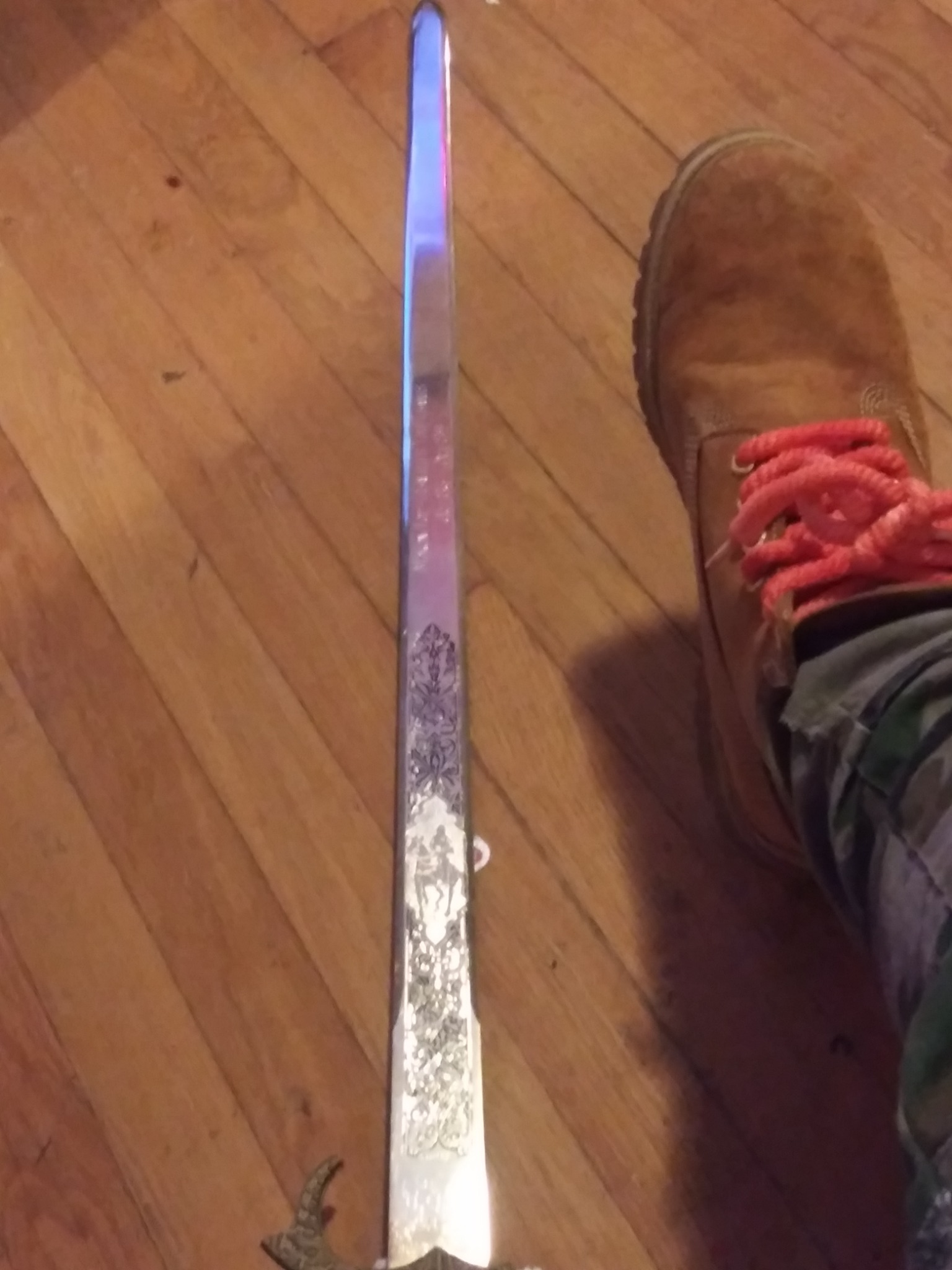
Decorative long-bladed sword or saber (possibly a dress sword or ceremonial blade)
Decorative brass dress dagger or ceremonial dagger