Decorative porcelain tea/coffee service set
Estimated Value
$75-$250 for the set, depending on maker, completeness, and condition
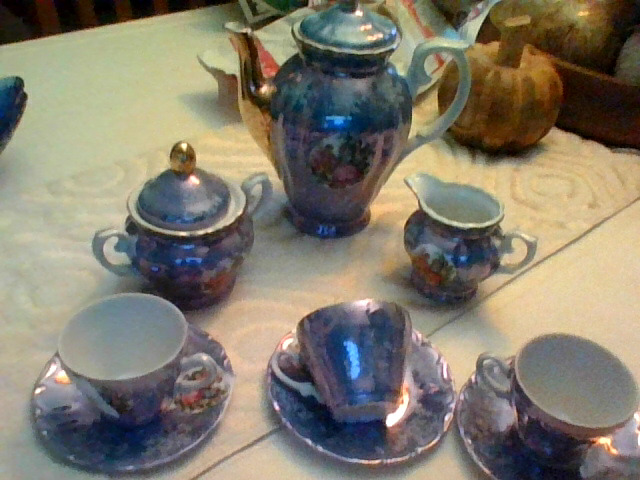
A matching decorative porcelain tea or coffee service consisting of a tall lidded pot, a lidded sugar bowl, a creamer, and several cups with saucers. The pieces appear to feature a deep blue ground with floral cartouche decoration and pale interior glazing, along with curved handles and gilt or metallic trim. The form and ornament suggest a formal table service intended more for display or occasional use than everyday utility. The set has a refined, coordinated aesthetic typical of late 19th- or early 20th-century decorative porcelain.
Era
Late 19th to early 20th century, likely Victorian/Edwardian revival style
Origin
Likely Europe, possibly England or continental Europe; exact origin unknown from image alone
Material
Porcelain or fine china with hand-painted floral decoration and gilt accents
Condition
Good overall condition with visible surface wear and possible age-related crazing; no obvious major chips or cracks visible in the image, though the photo is somewhat blurry and detailed inspection is limited
Physical Details
Dimensions
Teapot/coffee pot approximately 8-10 inches tall; cups approximately 2-3 inches tall; saucers approximately 5-6 inches in diameter
Weight
Light to Medium
Authentication
Authenticity Score
Medium - The set appears period-style and consistent with antique porcelain, but the image is not clear enough to confirm maker, age, or whether it is a later reproduction
Provenance
Likely part of a household tea or coffee service produced for domestic use or as a decorative set; no maker's mark is visible in the image, so precise provenance cannot be determined
Historical Significance
Such porcelain tea and coffee services reflect the popularity of formal tea and coffee culture in the 19th and early 20th centuries, when matching table services were common status items and often decorated with floral motifs and rich colored grounds
This identification and value range are AI-generated research aids, not authentication, certification, or a formal appraisal. Learn about the limitations and when to consult a qualified professional appraiser.