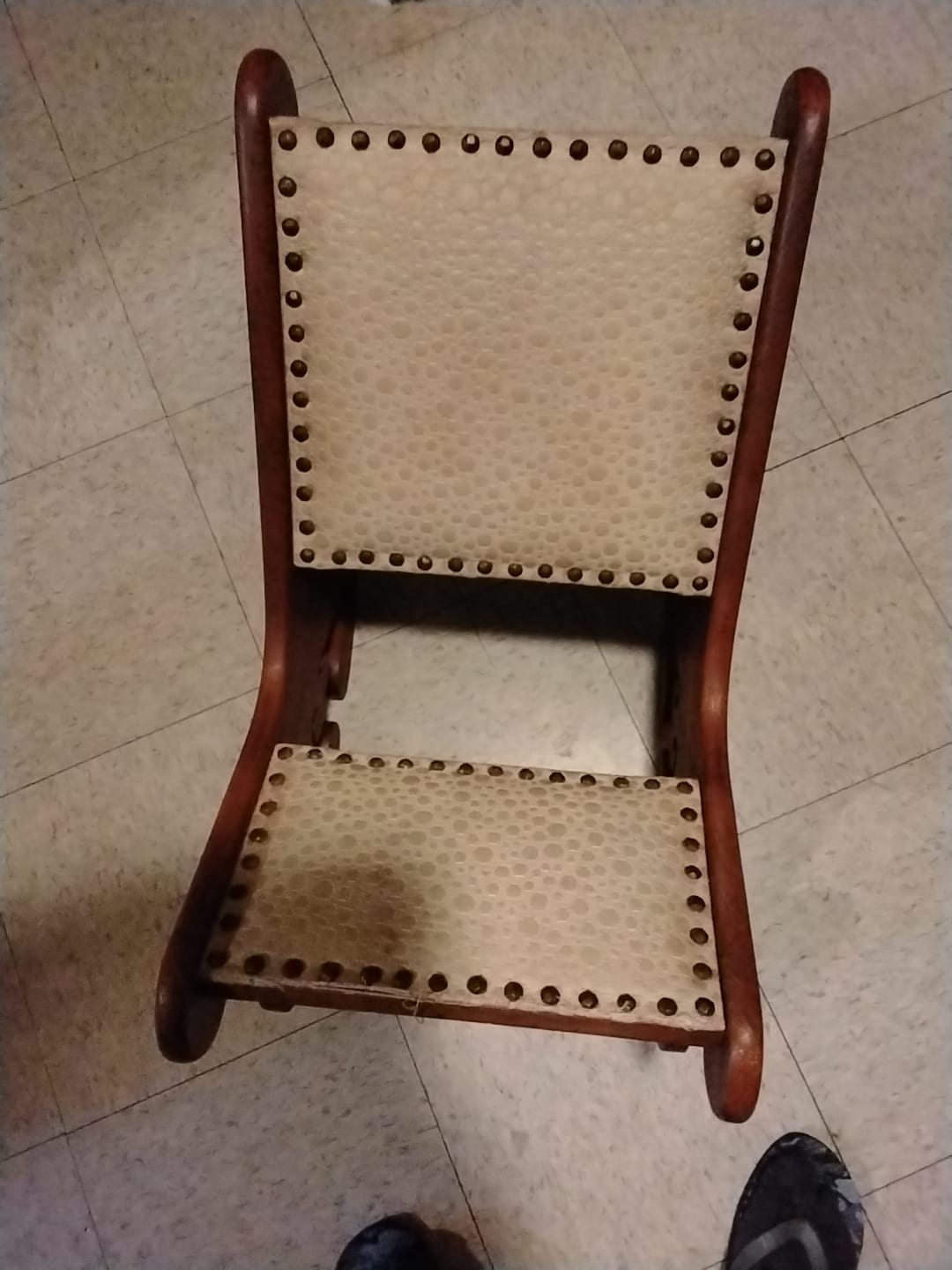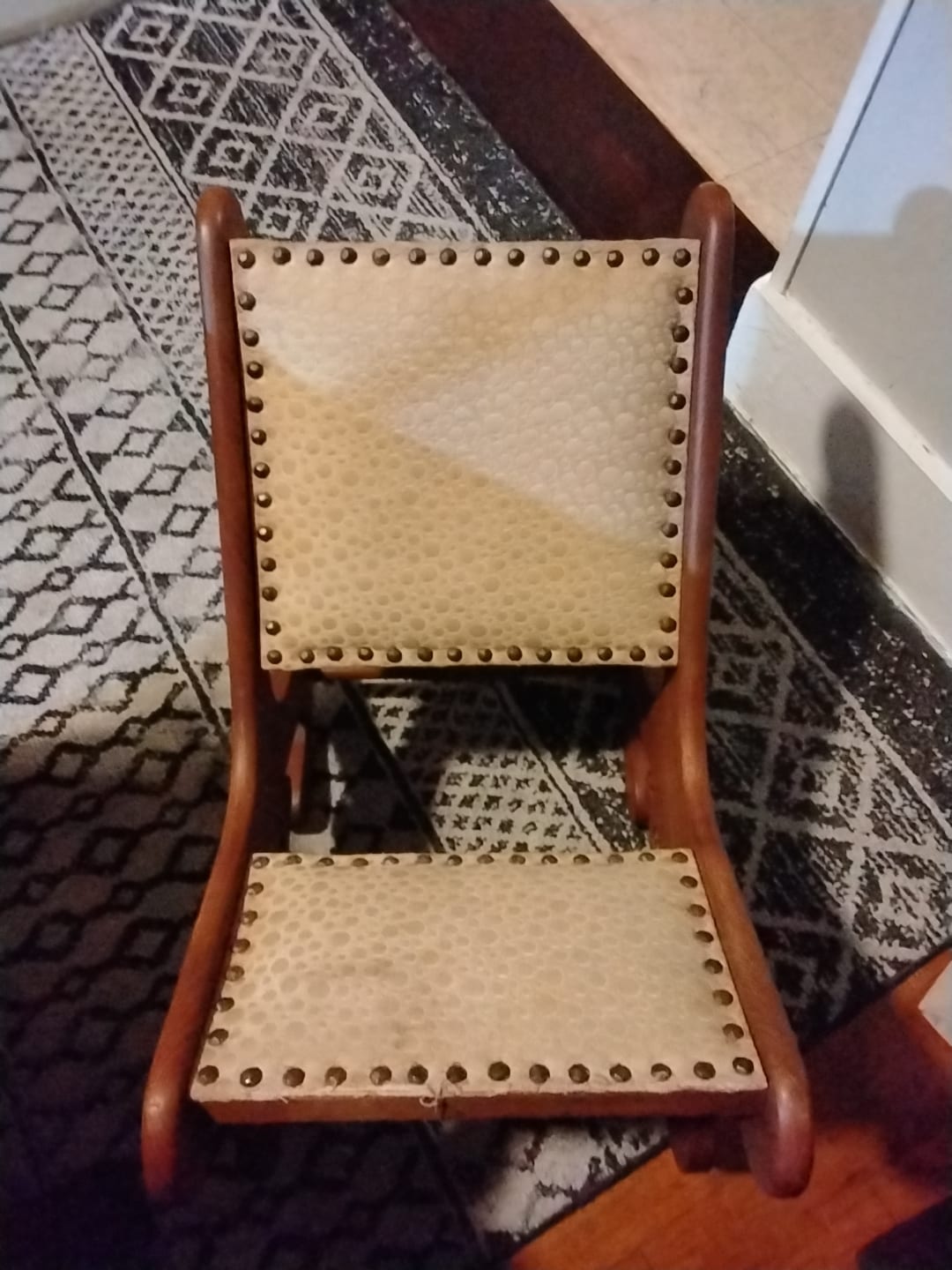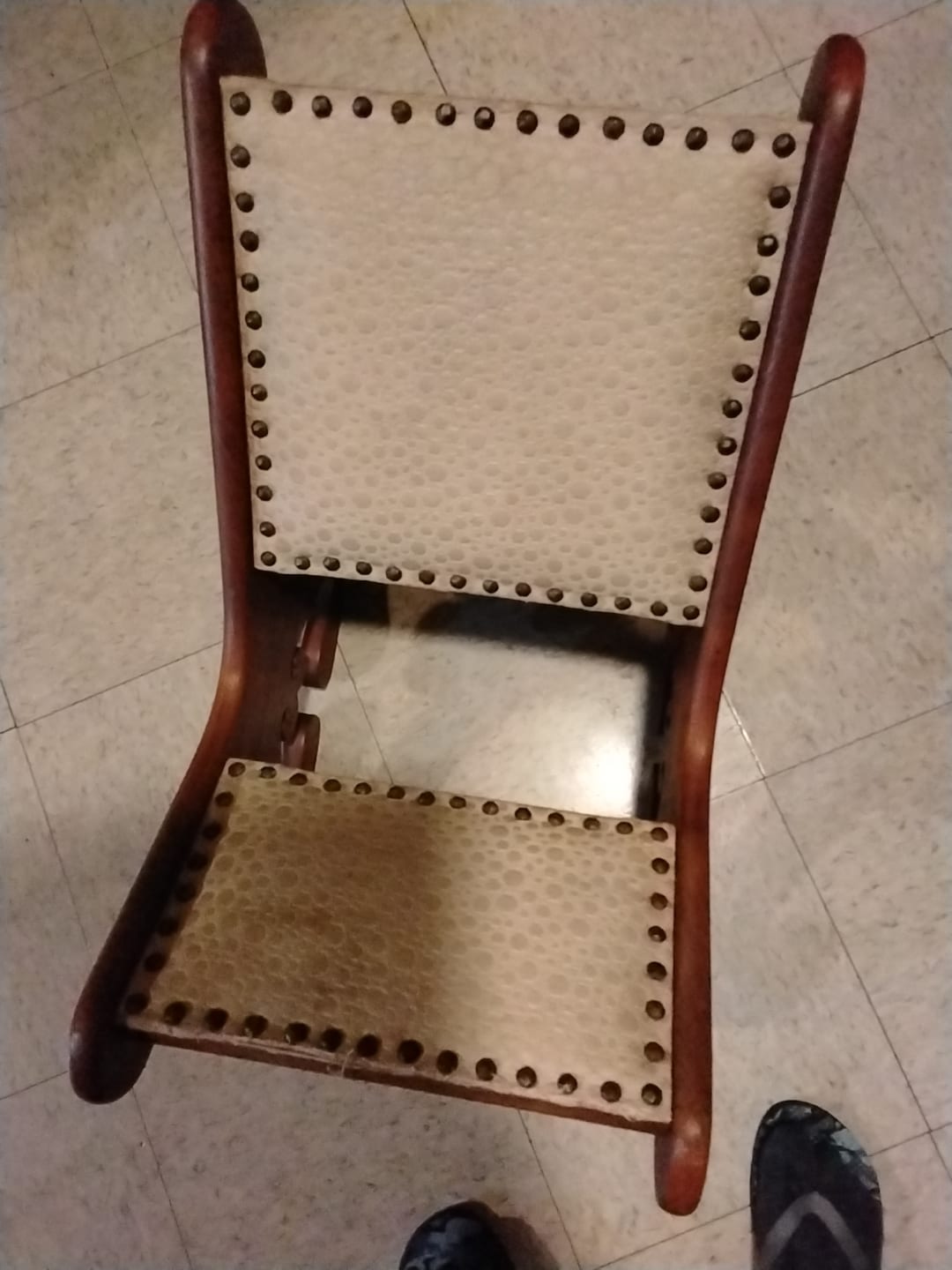
Folding campaign-style or safari chair with cane/rattan seat and back
Estimated Value
$150-$450
This appears to be a folding chair in a campaign or safari style, characterized by a curved hardwood frame and woven cane or rattan seat and back panels secured with decorative nailheads. The form is practical and portable, suggesting it may have been designed for travel, military, or colonial household use. The reddish-brown wood frame has a graceful, slightly curved profile, and the upholstery-free woven panels give it a lightweight, utilitarian appearance. The visible hardware and construction are consistent with early 20th-century furniture influenced by campaign furniture traditions.
Era
Late 19th century to early 20th century, likely Colonial Revival / campaign style revival (c. 1890s-1930s)
Origin
Likely British or American, possibly made for colonial/campaign use
Material
Stained hardwood frame with cane or rattan seat and back panels; brass or brass-colored nailheads/tacks
Condition
Fair to Good. The chair appears structurally intact, but the cane/rattan panels show visible discoloration, wear, and possible age-related sagging or staining. Finish on the wood shows surface wear consistent with use and age. No obvious major breaks are visible from the image, but a full inspection would be needed to confirm stability.
Physical Details
Dimensions
Approximately 30-36 inches tall, 16-20 inches wide, and 18-24 inches deep when open
Weight
Light to Medium
Authentication
Authenticity Score
Medium. The construction and materials are consistent with an antique or vintage folding cane chair, but the image does not show maker's marks, joinery details, or underside construction needed for firm dating.
Provenance
Likely from a colonial-era inspired furniture line, possibly used in a domestic, veranda, or travel setting. Exact provenance cannot be determined from the image alone.
Historical Significance
Campaign and safari-style furniture reflects portable furnishings associated with military officers, colonial administrators, and travelers in the 19th and early 20th centuries. Even later revival examples are valued for their elegant practicality and historical associations.
Restoration Notes
- •Possible re-caning or replacement of woven panels cannot be ruled out
- •Surface wear and discoloration suggest age and use; no clear evidence of recent refinishing visible
This identification and value range are AI-generated research aids, not authentication, certification, or a formal appraisal. Learn about the limitations and when to consult a qualified professional appraiser.