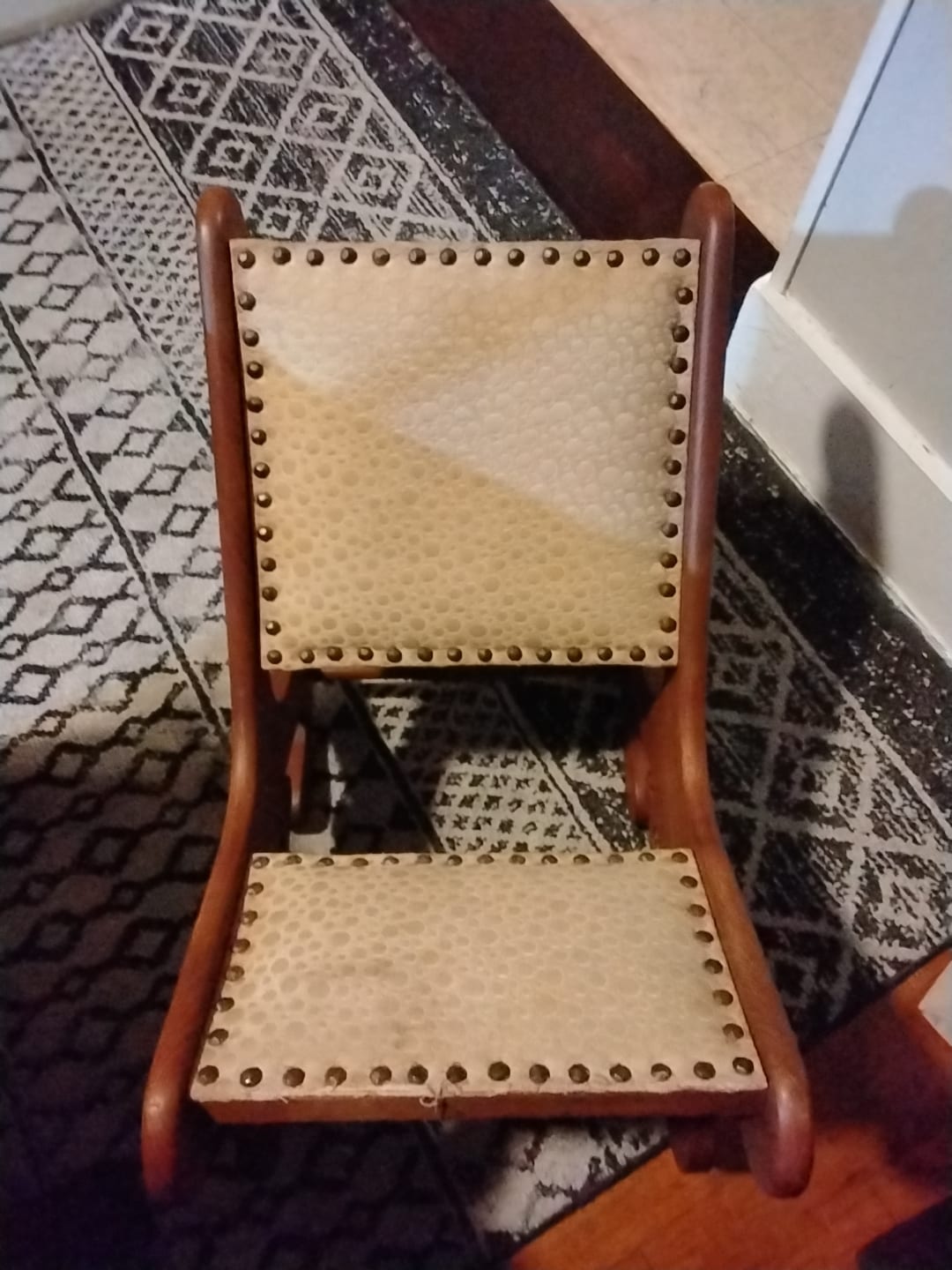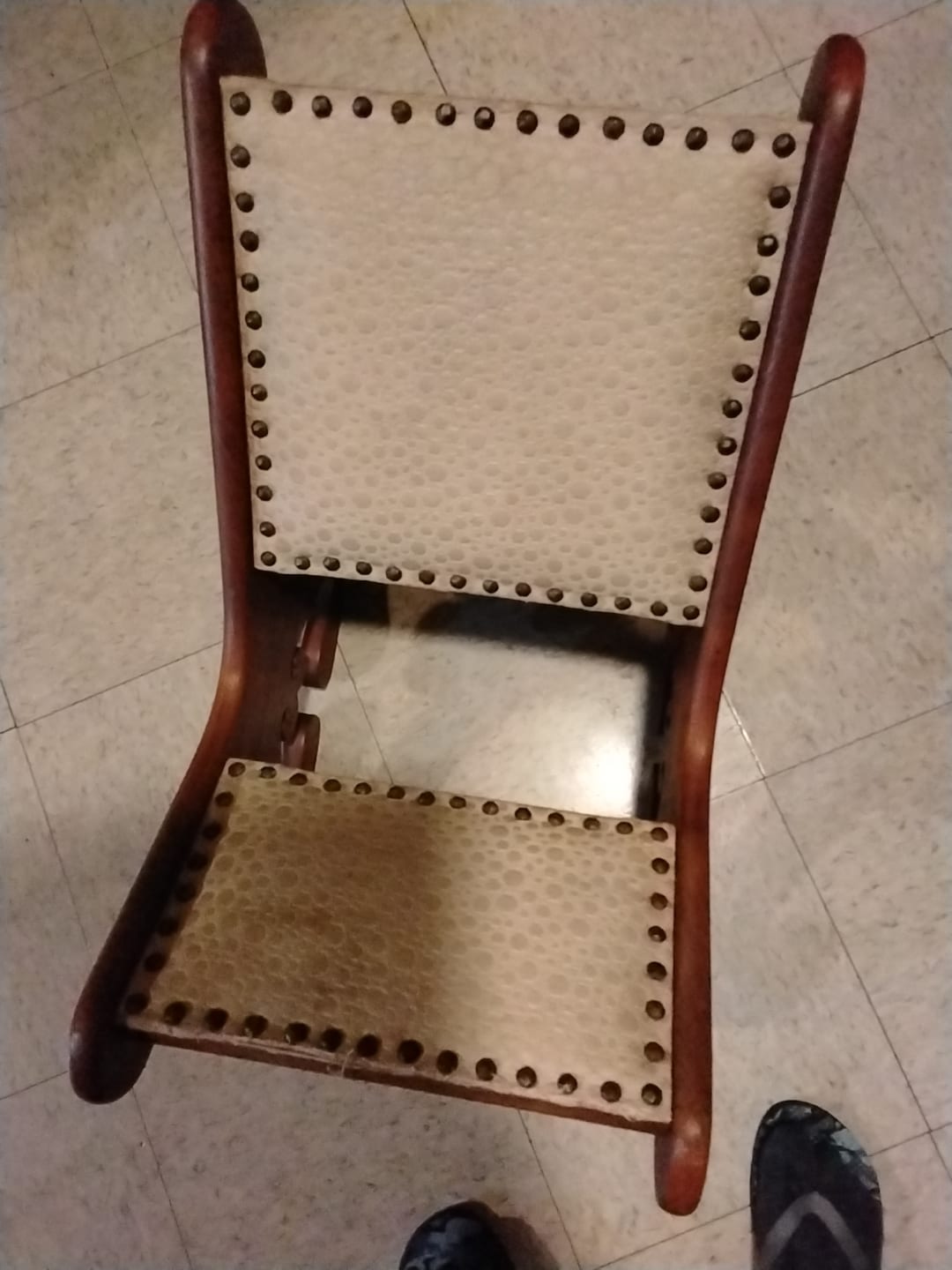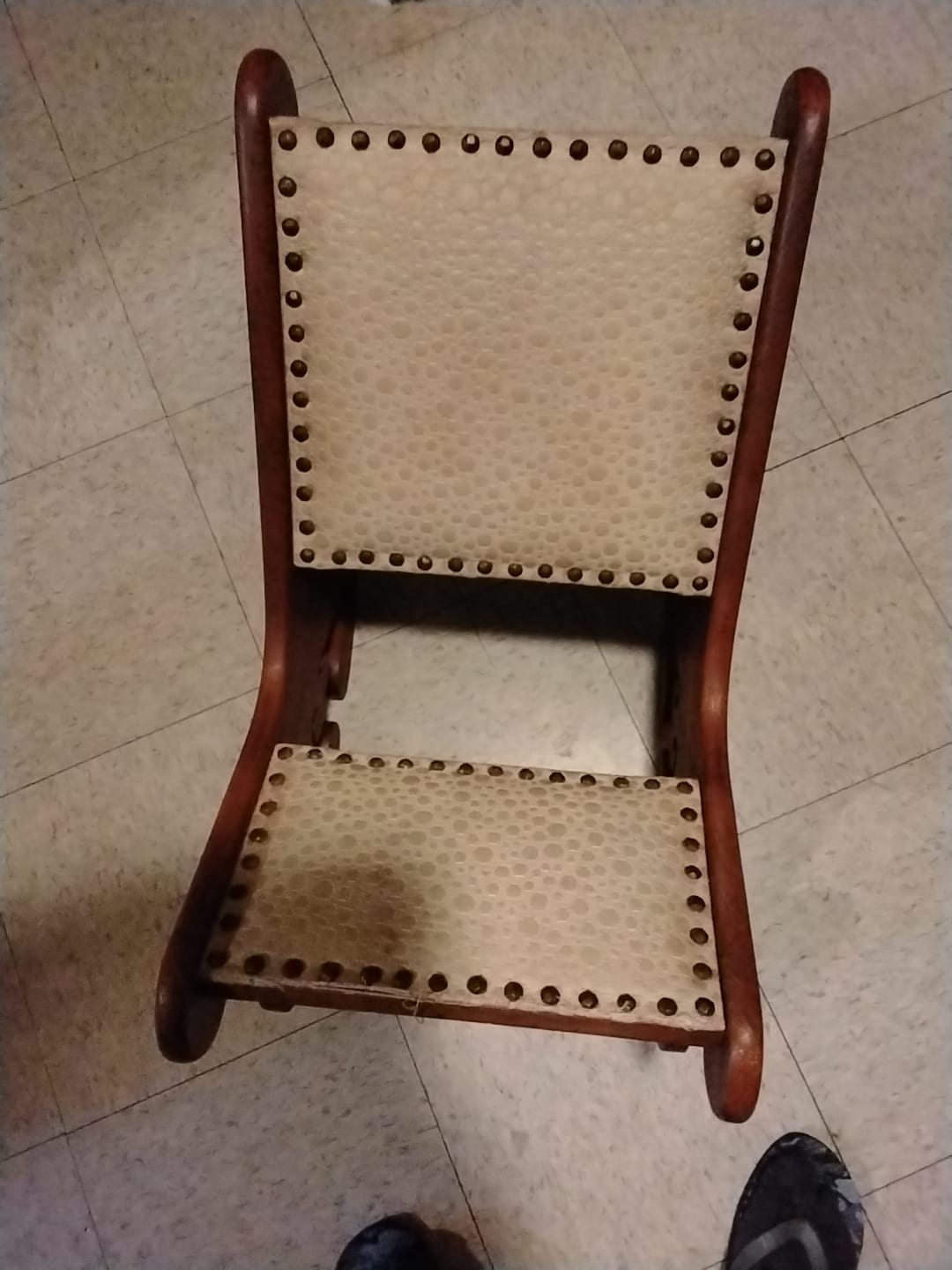
Vintage folding cane-seat chair
Estimated Value
$75-$250
A folding chair with a curved wooden frame and woven cane or pressed cane seat and back panels secured with decorative nailhead tacks. The design is utilitarian yet decorative, with rounded side supports and a compact folding mechanism. The chair appears to be a vintage accent or occasional chair, possibly intended for porch, nursery, or light household use. The cane shows age-related discoloration and spotting, which is common in older examples.
Era
Early to Mid-20th Century, likely 1920s-1950s
Origin
Likely United States or Europe; exact origin unknown
Material
Stained hardwood frame with cane/rattan seat and back panels; metal fasteners/tacks
Condition
Fair to Good. Visible wear and staining on the cane seat, surface age wear to the wood, and possible looseness at the folding joints. No obvious major breaks visible from the image.
Physical Details
Dimensions
Approximately 30-36 inches tall, 16-18 inches wide, 16-18 inches deep
Weight
Light to Medium
Authentication
Authenticity Score
Medium. The construction and materials are consistent with an authentic vintage folding cane chair, but the exact maker, date, and origin cannot be confirmed from the image alone.
Provenance
Likely a mass-produced domestic chair from the early-to-mid 20th century. It may have been used as a folding side chair, nursery chair, or occasional chair in a home setting. No maker's mark is visible in the image.
Historical Significance
Folding cane chairs were popular in the late 19th and early 20th centuries for their portability, light weight, and airy construction. They reflect practical domestic furniture trends and the continued popularity of cane/rattan seating in traditional interiors.
Restoration Notes
- •No clear evidence of restoration visible
- •Possible age-related wear, staining, and minor surface scuffs
- •Folding joints may have been tightened or repaired at some point, but this is not visible with certainty
This identification and value range are AI-generated research aids, not authentication, certification, or a formal appraisal. Learn about the limitations and when to consult a qualified professional appraiser.