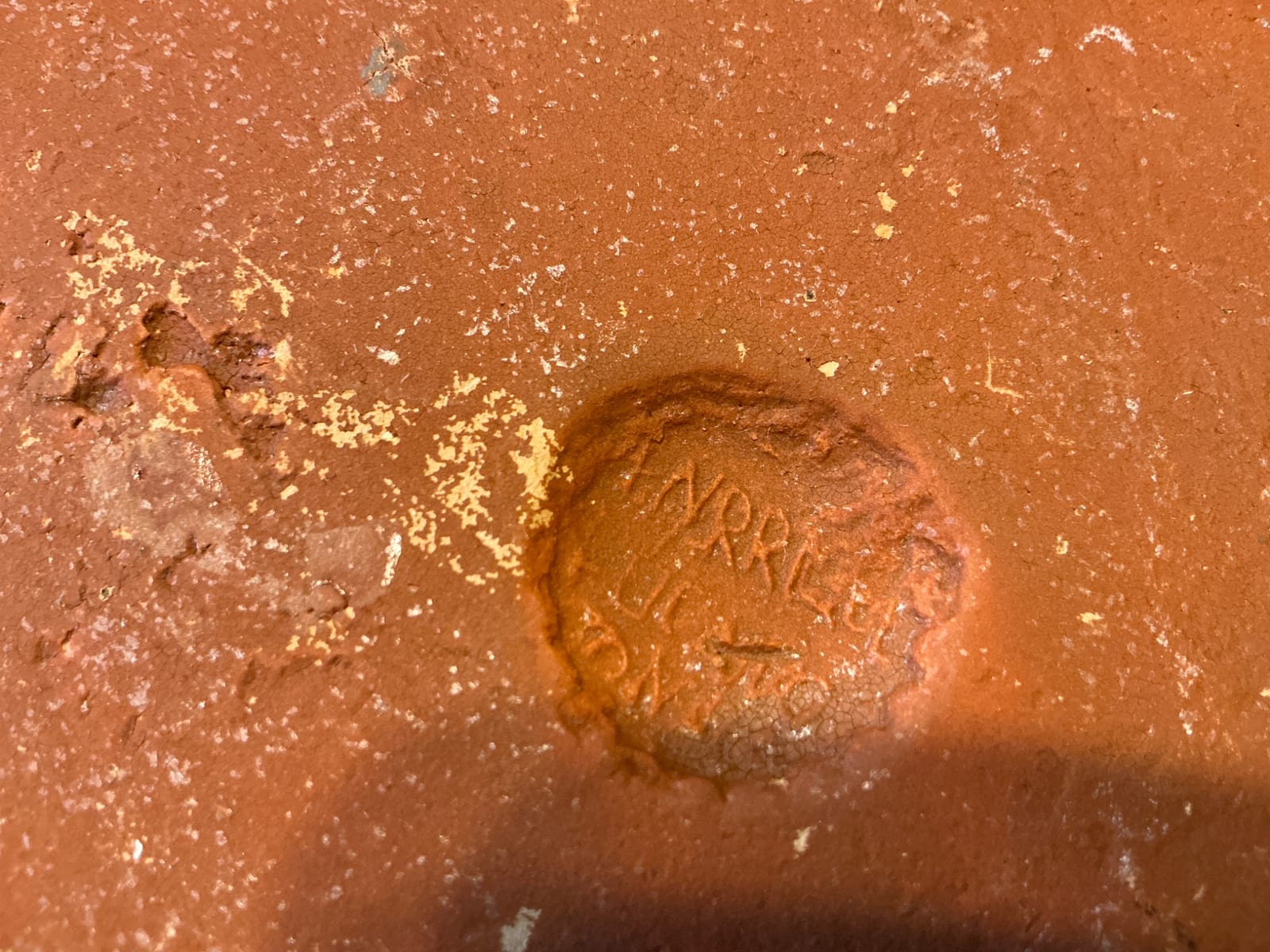
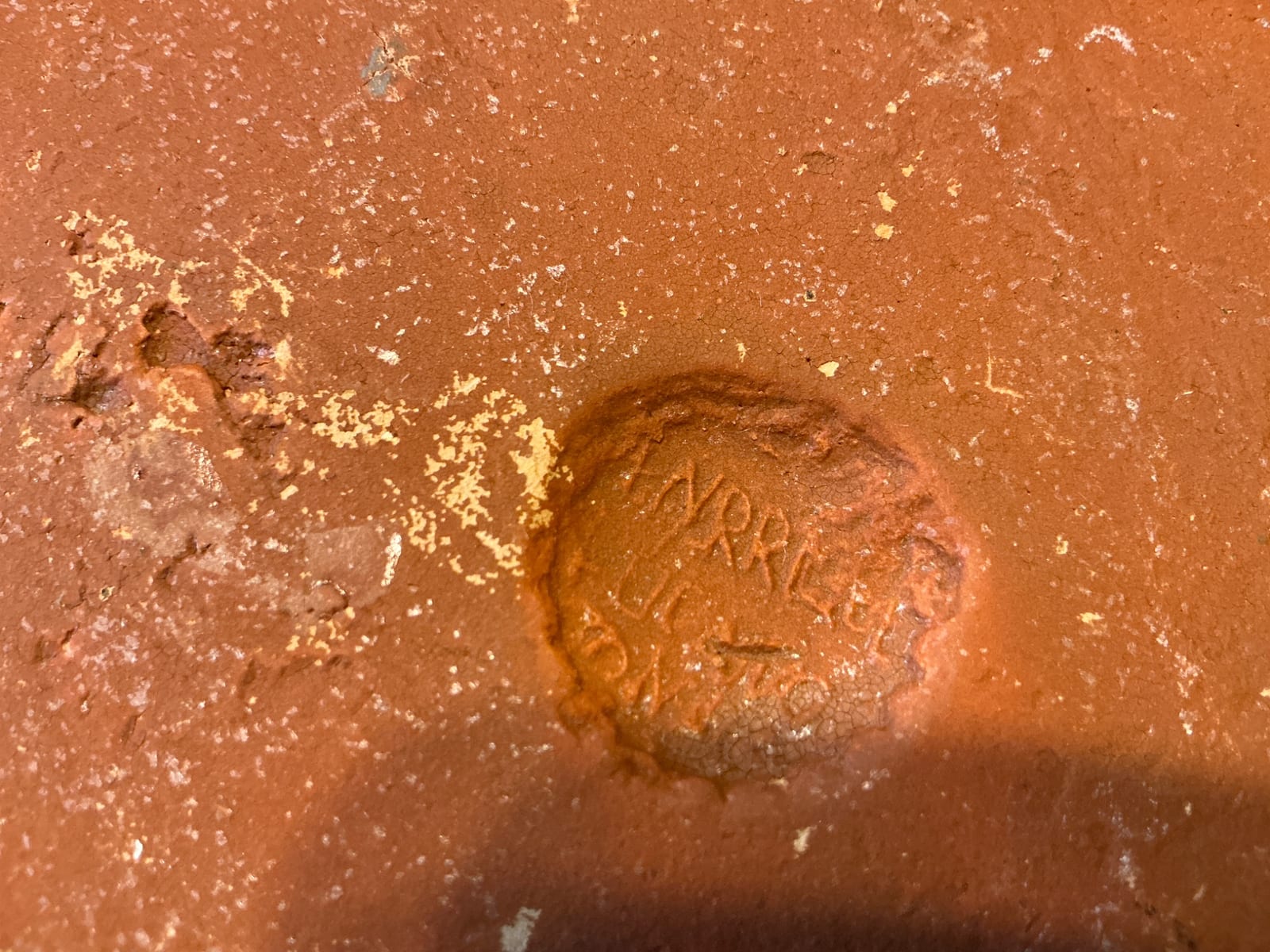
Glazed earthenware or terracotta vessel base with impressed maker's mark
Estimated Value
$20-$100
This appears to be the underside or base of a ceramic vessel, likely a utilitarian pot, planter, crock, or similar earthenware object. The surface is covered in a reddish-brown glaze with extensive crazing and wear. A circular impressed maker's mark is visible, but the text is too degraded to read confidently. The mark suggests factory production rather than hand-built folk pottery. The overall appearance is consistent with an older glazed earthenware piece, though the exact form cannot be determined from this close-up alone.
Era
Late 19th century to early 20th century (approximate)
Origin
Likely Europe or the United States; exact origin unknown from this image alone
Material
Earthenware or terracotta with a reddish-brown glaze
Condition
Fair to Poor; heavy surface wear, glaze loss, crazing, and visible chips/abrasion. The base shows significant age-related deterioration and possible encrustation or residue.
Physical Details
Dimensions
Unknown; only a close-up of the base is visible. Likely a medium-sized vessel based on the curvature and base scale.
Weight
Medium
Authentication
Authenticity Score
Medium; the material, glaze wear, and impressed mark are consistent with an older ceramic object, but the exact maker and date cannot be confirmed from the image.
Provenance
Unknown; likely mass-produced ceramic ware from a regional pottery or factory. The impressed mark may indicate a maker, but it is not legible enough to attribute securely.
Historical Significance
Older glazed earthenware vessels were widely used for storage, cooking, and domestic utility. If the maker's mark can be identified, the piece could have regional or industrial history value, but in its current state it appears more utilitarian than rare.
Restoration Notes
- •No clear evidence of professional restoration visible
- •Possible surface residue, encrustation, or old wear obscuring the mark
- •Significant glaze loss and crazing consistent with age and use
This identification and value range are AI-generated research aids, not authentication, certification, or a formal appraisal. Learn about the limitations and when to consult a qualified professional appraiser.
Research this item further
Related Identifications
Browse all →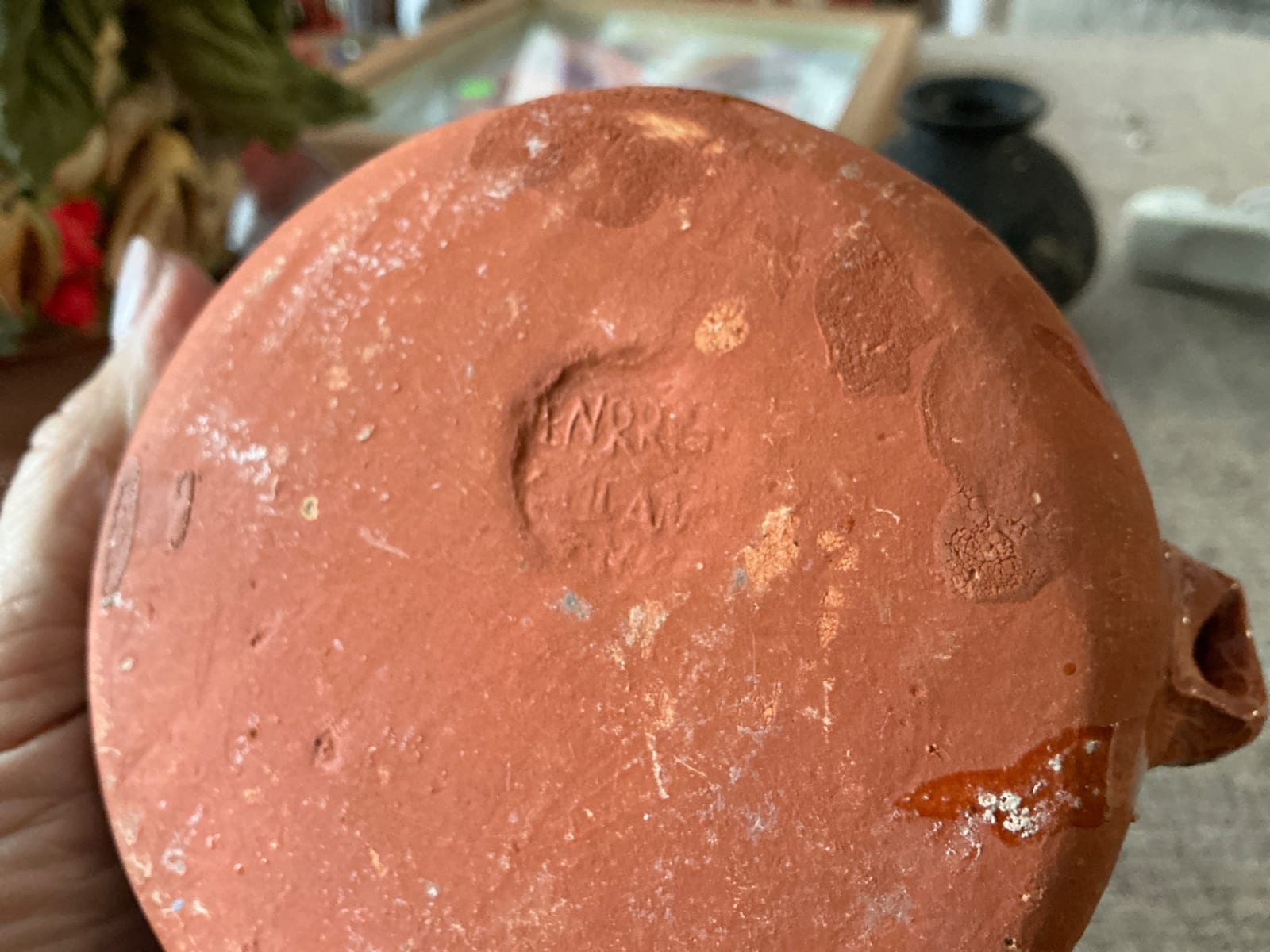
Terracotta pottery vessel or jar base
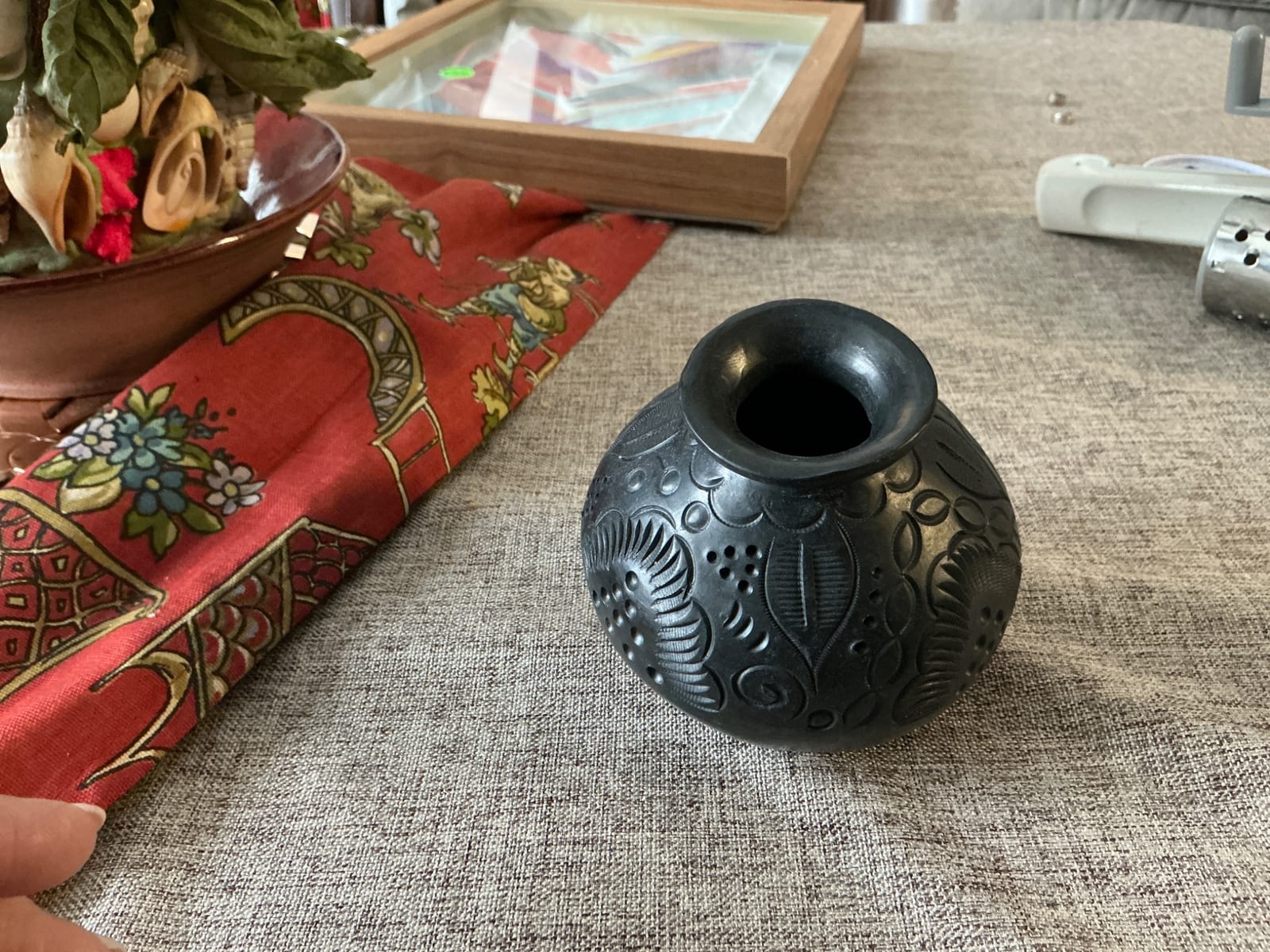
Small carved black stone or wood vessel / decorative vase
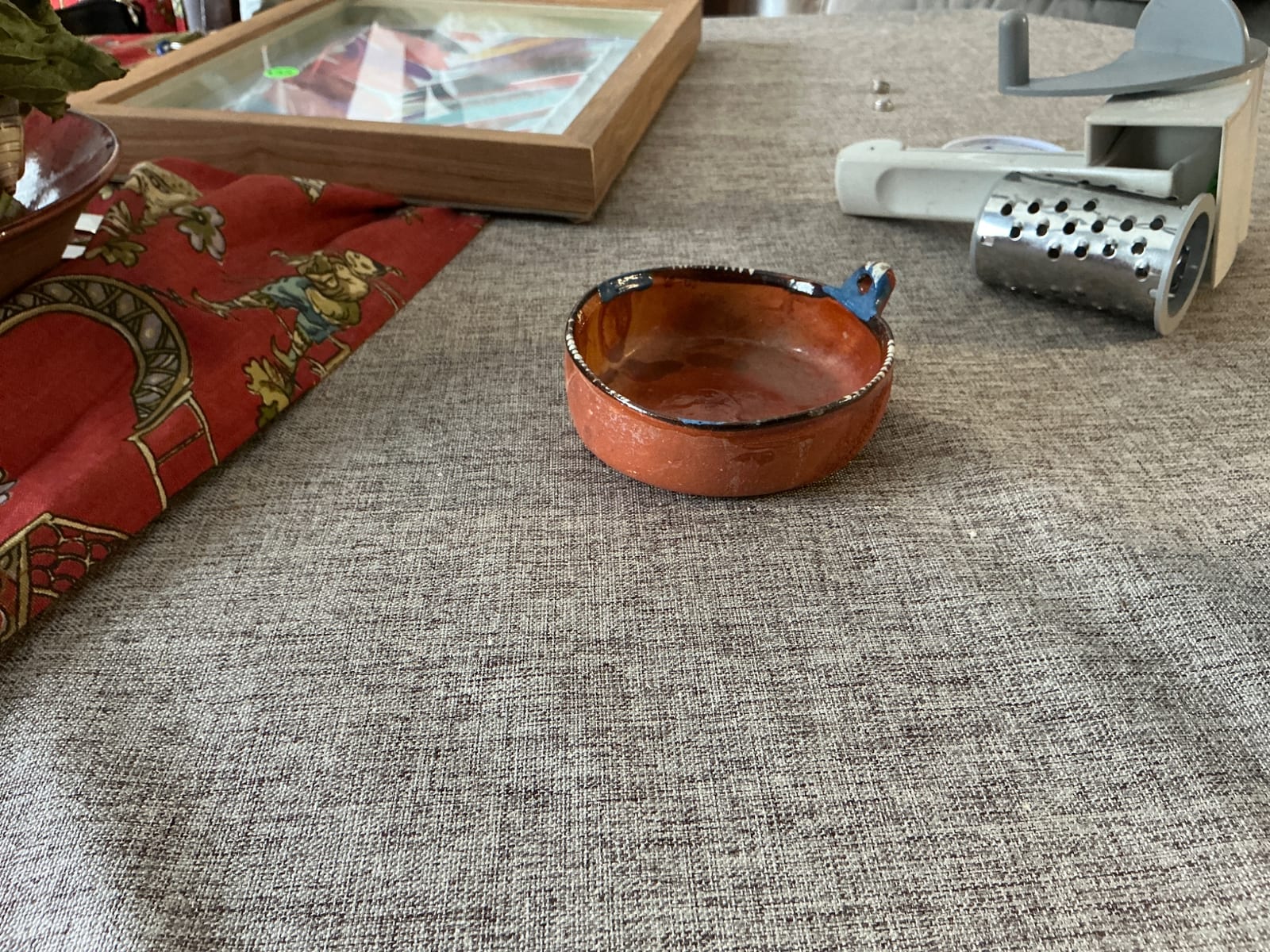
Small glazed ceramic bowl or ashtray
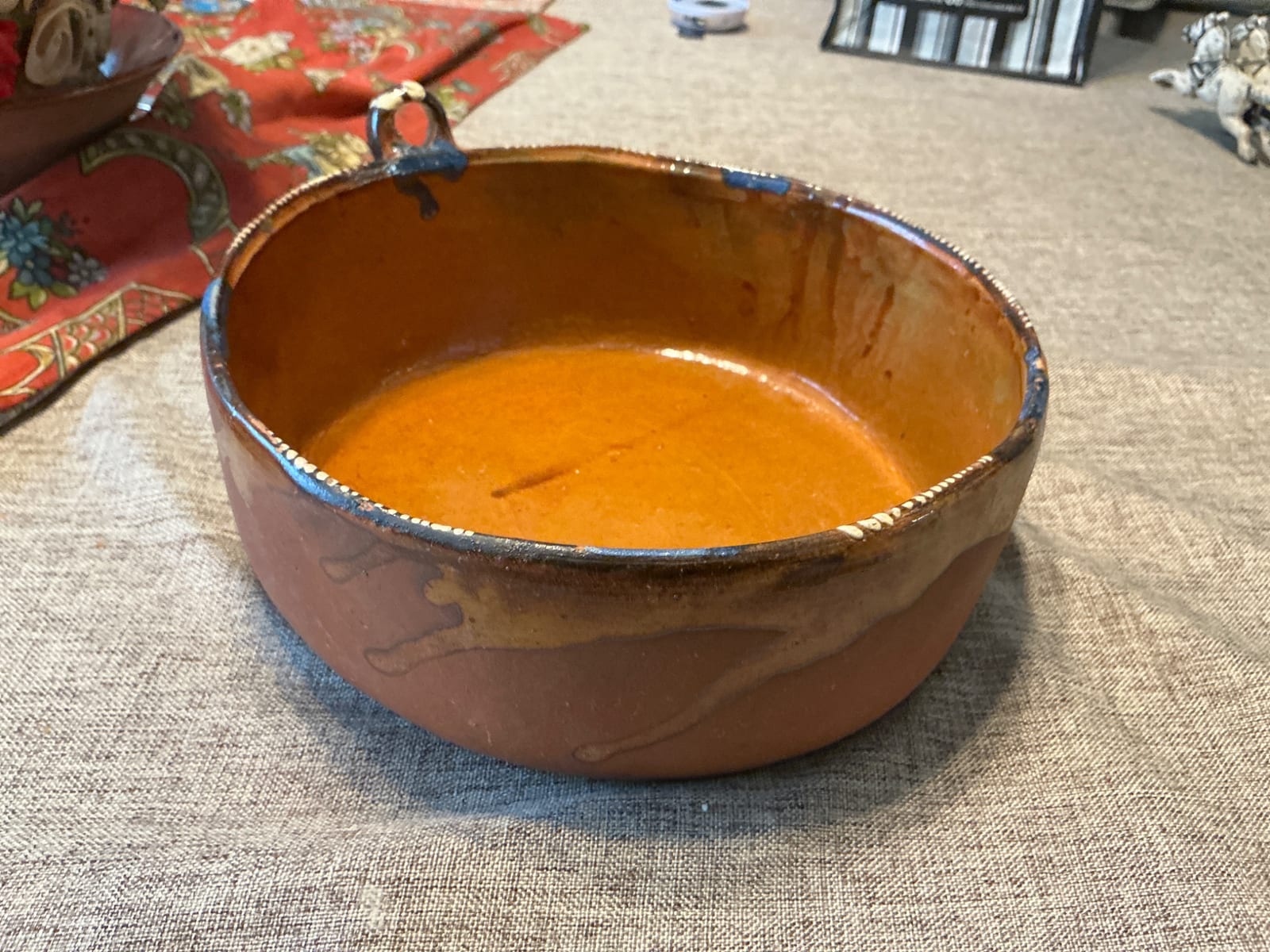
Glazed earthenware bowl or small serving vessel with loop handle
Salt-glazed stoneware or earthenware vessel base with impressed maker's mark
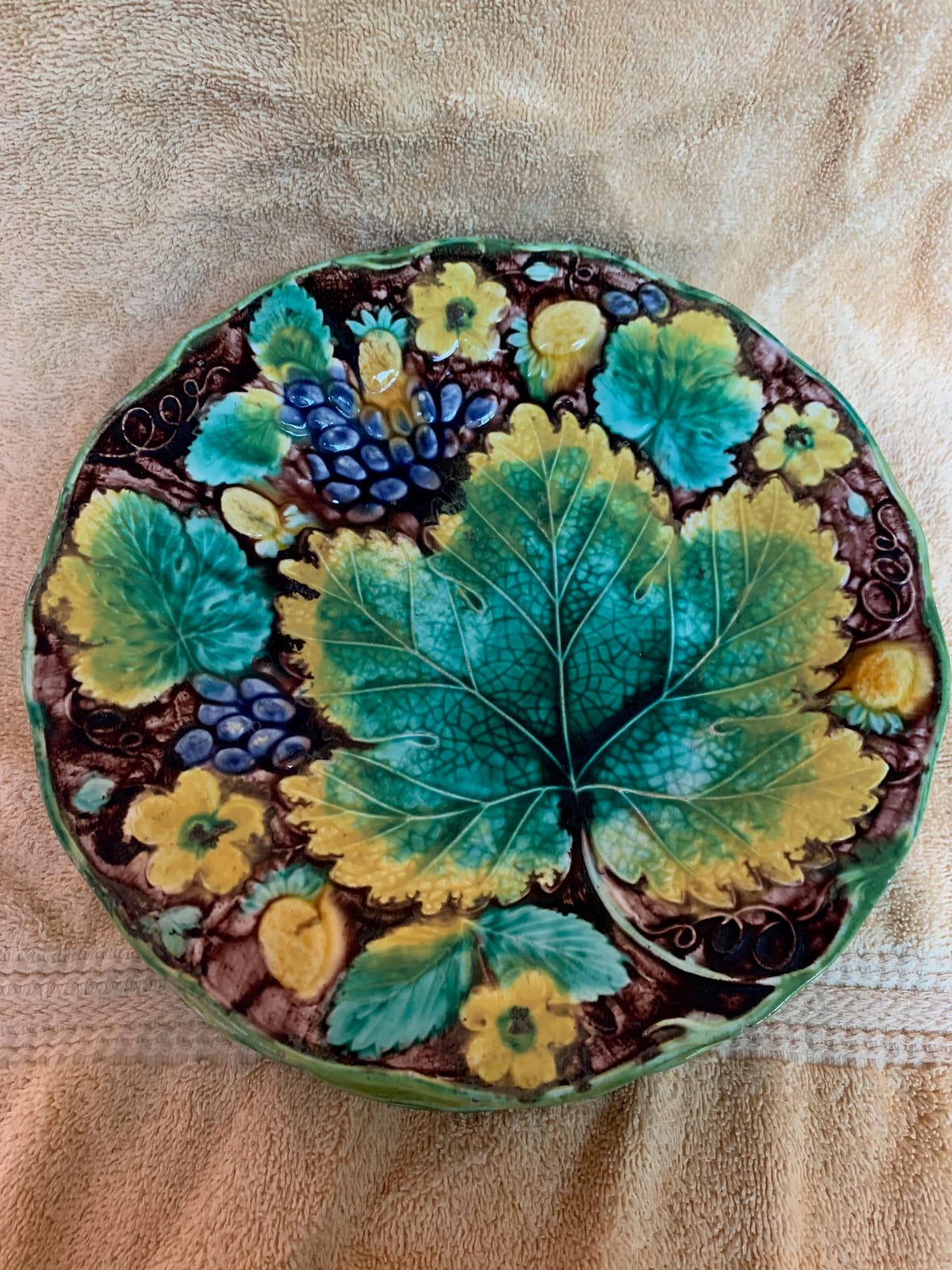
Majolica-style decorative ceramic plate or charger with grape and vine motif