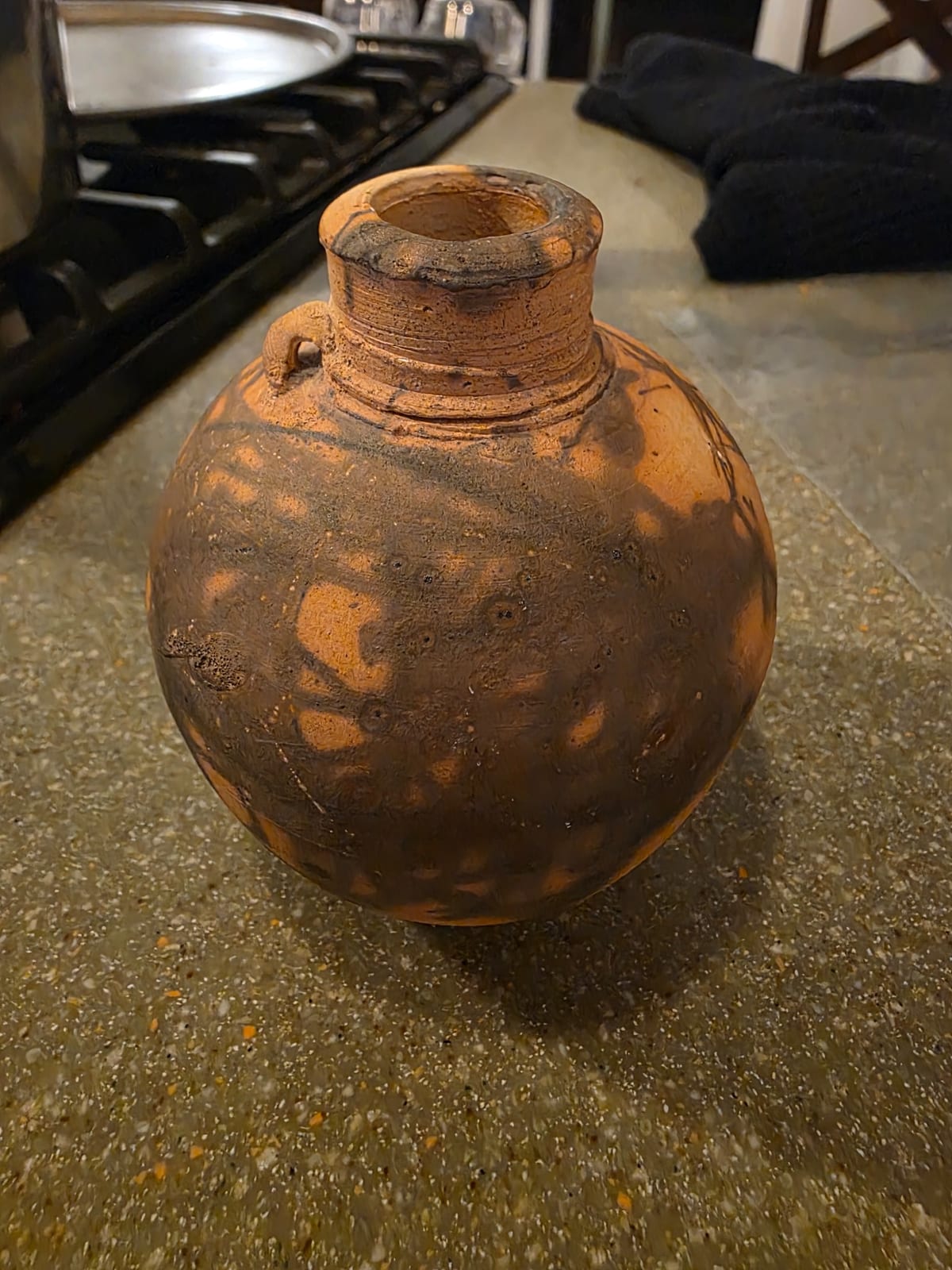
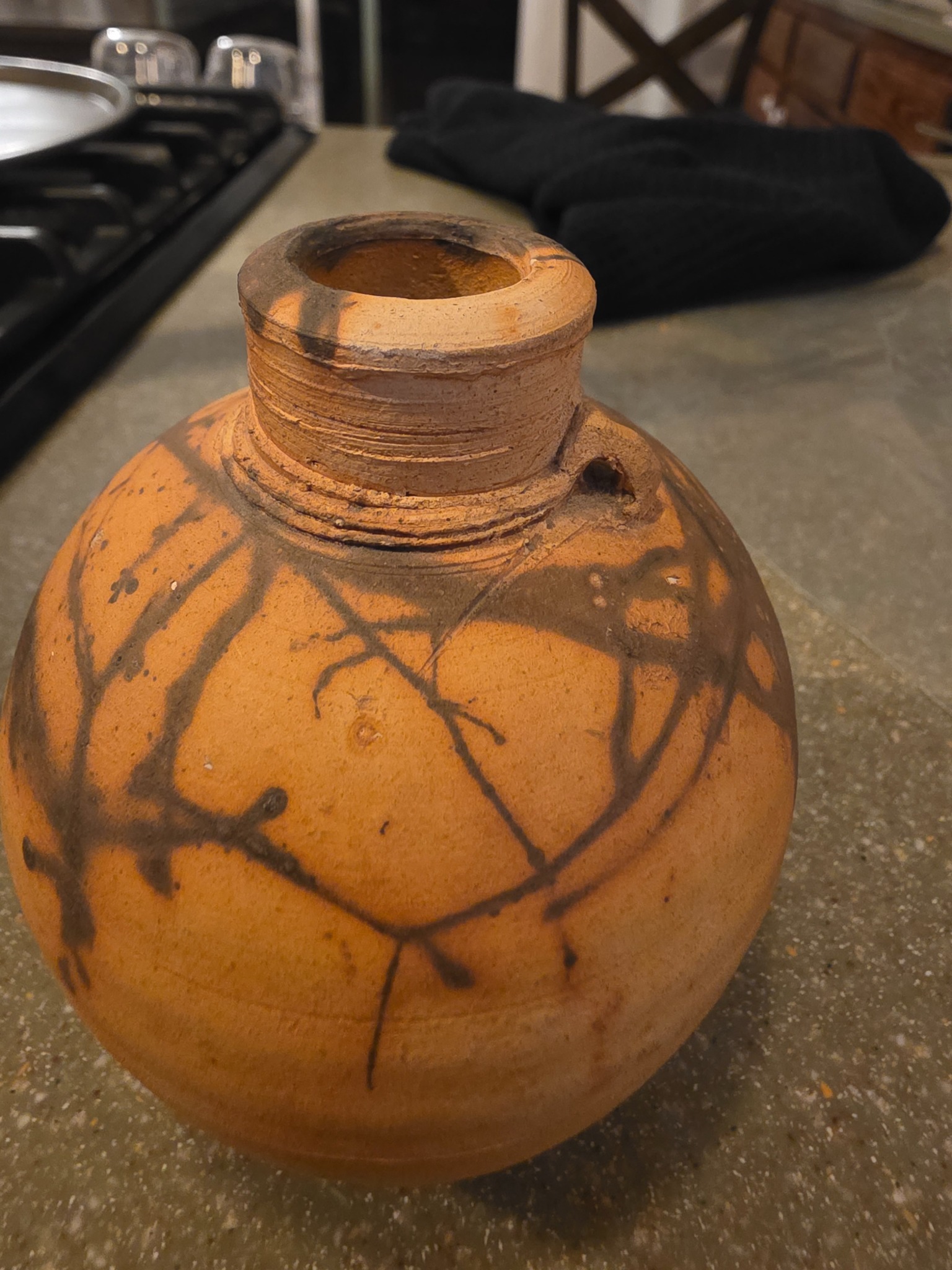
Hand-blown glass bottle or flask with applied neck ring
Estimated Value
$50-$200
A small spherical hand-blown glass vessel in amber-brown glass with a narrow cylindrical neck and a pronounced applied collar/ring near the mouth. The body shows irregularities consistent with hand production, including bubbles, uneven thickness, and surface texture. The exterior is heavily weathered or encrusted, which obscures finer details. The form suggests it may have been a utility bottle, flask, or possibly a small chemical/pharmaceutical container rather than a decorative object.
Era
Likely 18th to early 19th century, possibly later reproduction or utilitarian hand-blown vessel
Origin
Unknown; possibly European or American utilitarian glass production
Material
Hand-blown amber/brown glass
Condition
Fair to Poor; heavy surface wear, encrustation, clouding, and possible residue or burial/heat damage. The neck appears chipped or irregular, and the rim shows significant wear.
Physical Details
Dimensions
Approximately 4 to 6 inches tall and 3 to 4 inches in diameter
Weight
Light
Authentication
Authenticity Score
Medium; the hand-blown characteristics appear consistent with an older glass vessel, but the heavy surface condition and lack of diagnostic marks make precise dating uncertain.
Provenance
Exact provenance is unknown. The form and hand-blown construction suggest old utilitarian glass, but without a visible maker's mark, pontil detail, or excavation context, the origin cannot be determined confidently.
Historical Significance
Hand-blown utilitarian glass vessels are historically significant as examples of pre-industrial or early industrial glassmaking. Amber glass was often used for storage bottles because it helped protect contents from light. If genuinely old, it may represent domestic, apothecary, or laboratory use.
Restoration Notes
- •No clear evidence of professional restoration visible
- •Surface appears heavily weathered or encrusted, which may be original aging or residue
- •Rim/neck may have chips or losses
This identification and value range are AI-generated research aids, not authentication, certification, or a formal appraisal. Learn about the limitations and when to consult a qualified professional appraiser.
Research this item further
Related Identifications
Browse all →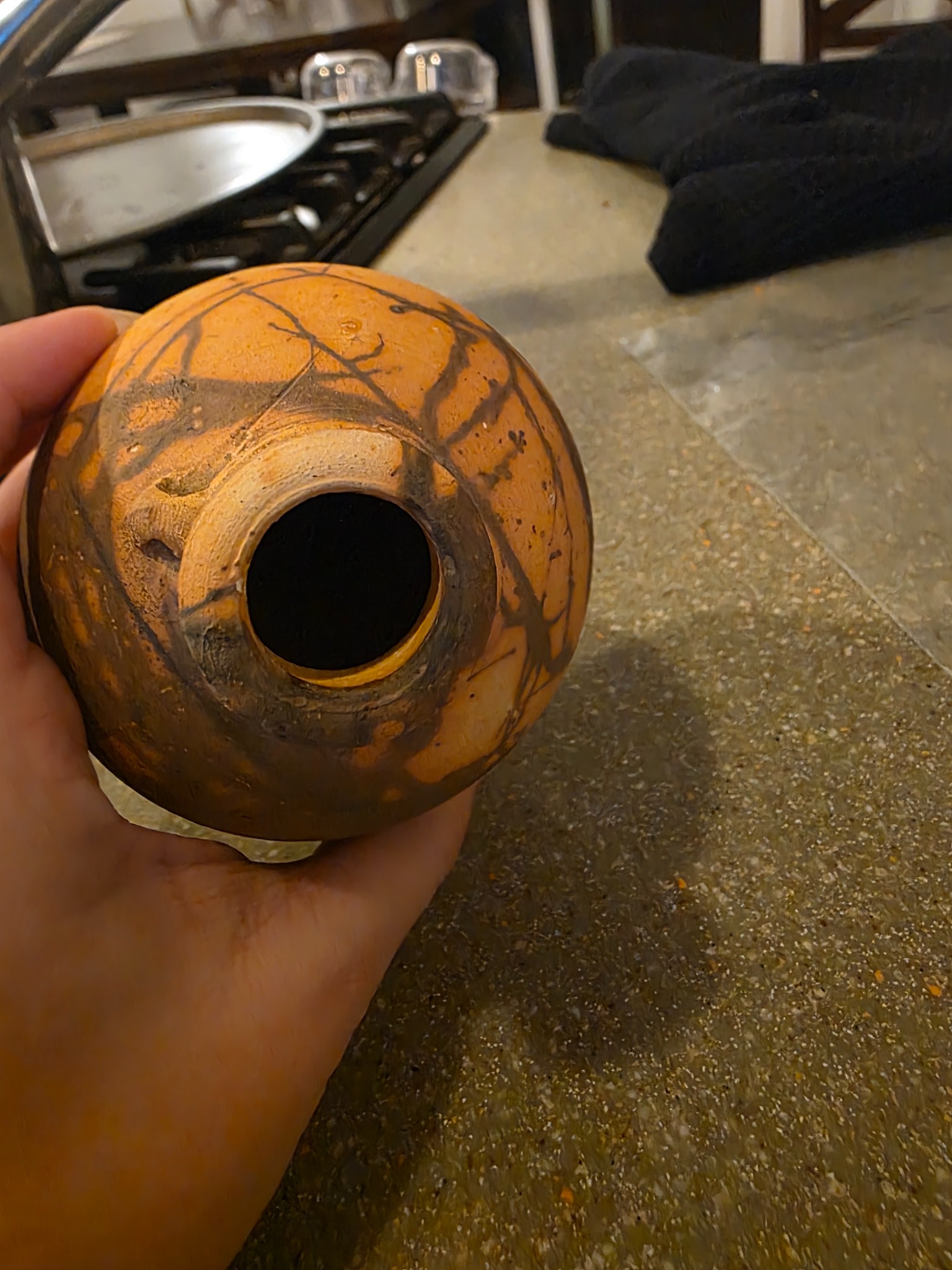
Small turned wooden vessel or spindle-whorl-like object
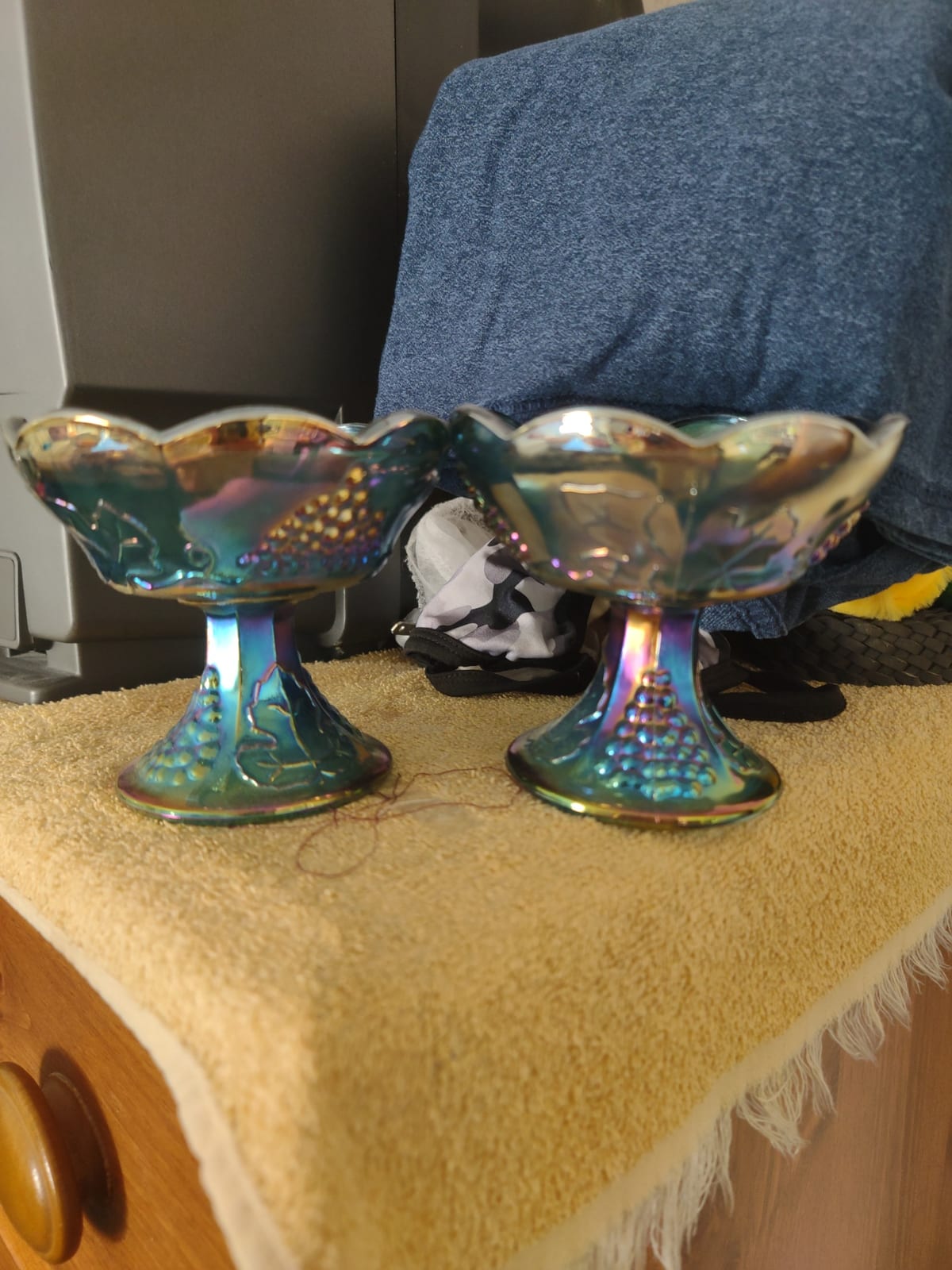
Pair of iridescent carnival glass pedestal compotes / dessert dishes
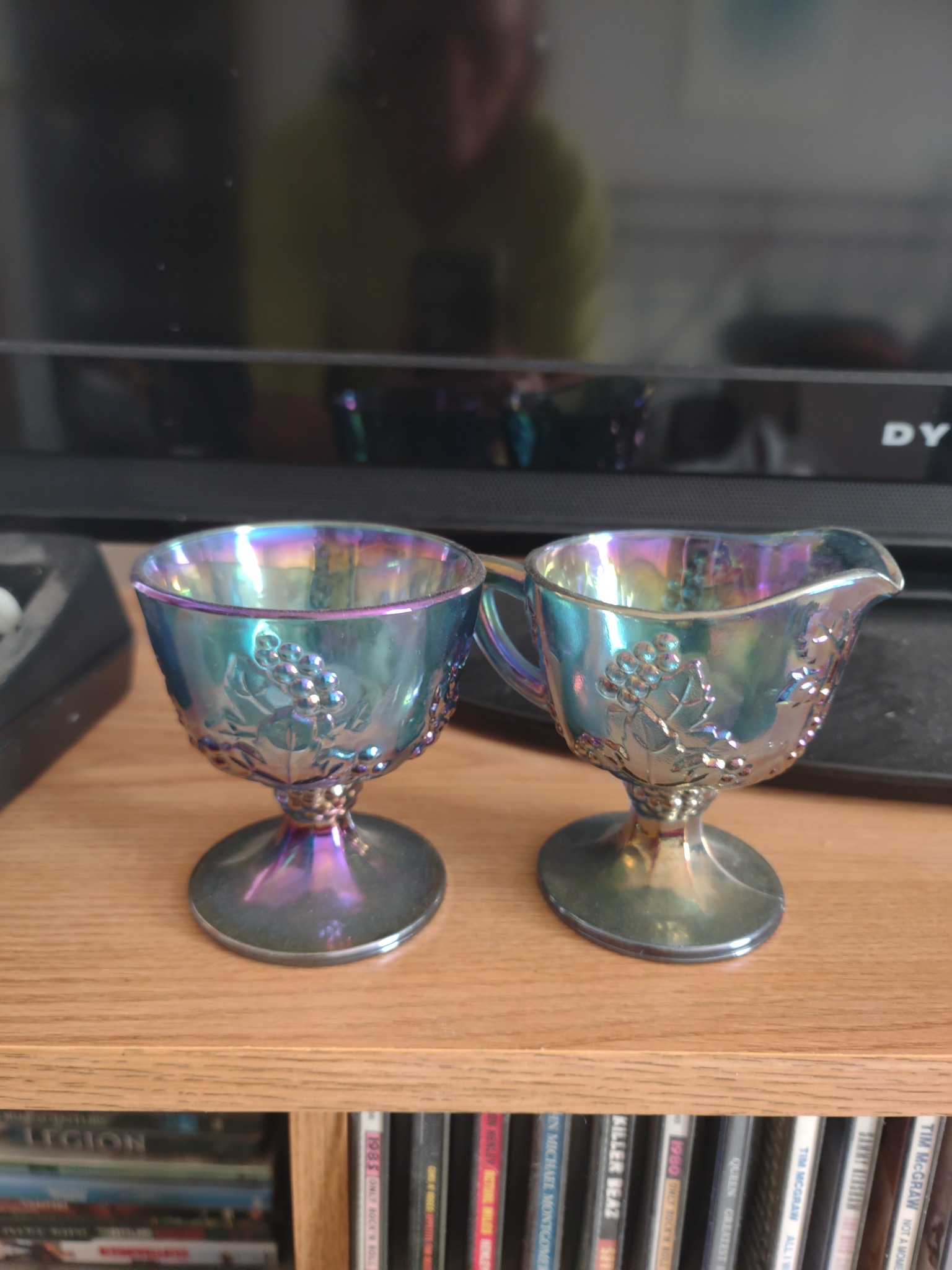
Pair of iridescent pressed-glass pedestal egg cups or small sherbet cups
Small hand-thrown ceramic vessel or jar
Iridescent pressed glass condiment set with tray and covered sugar bowl/creamer