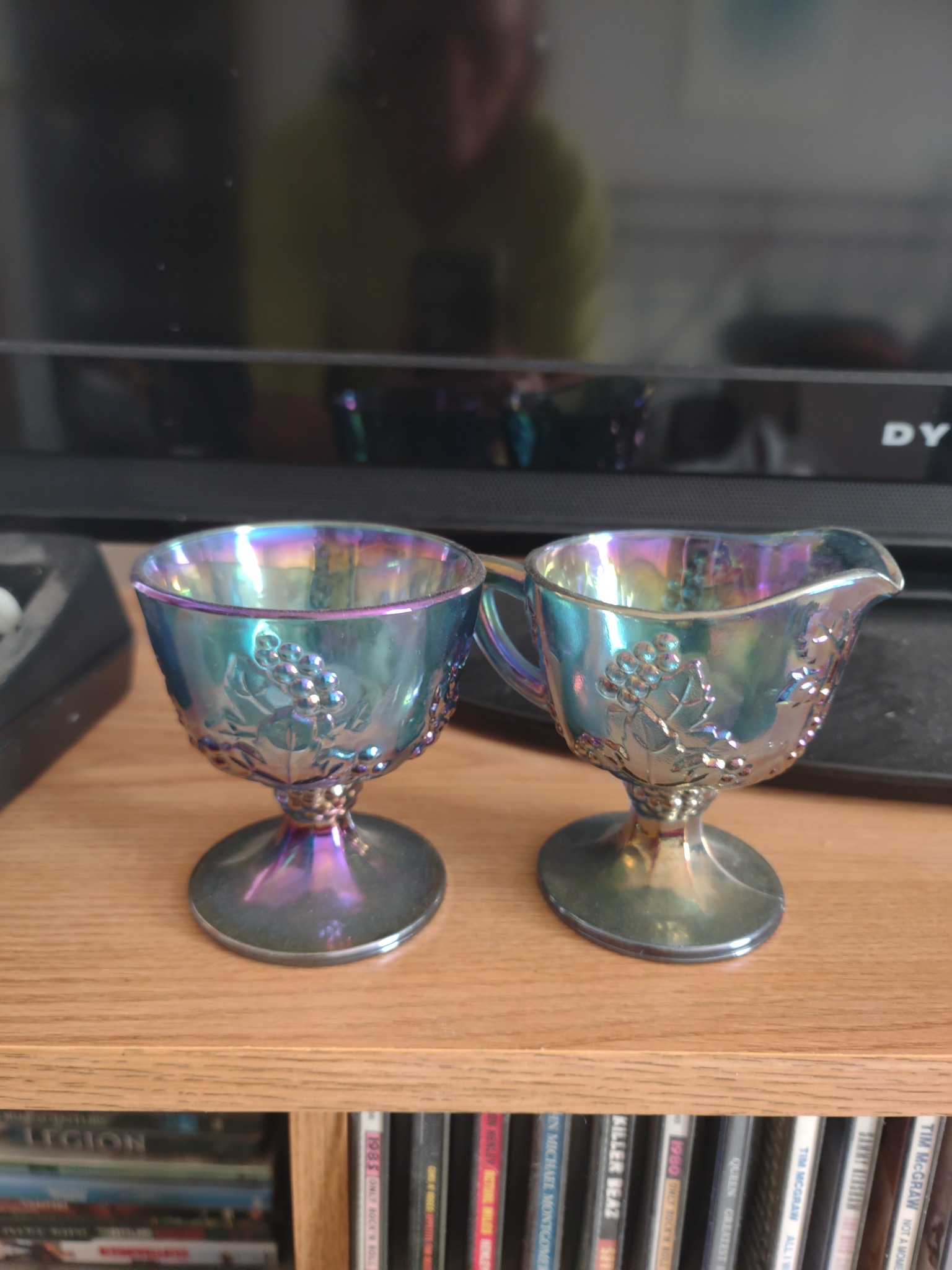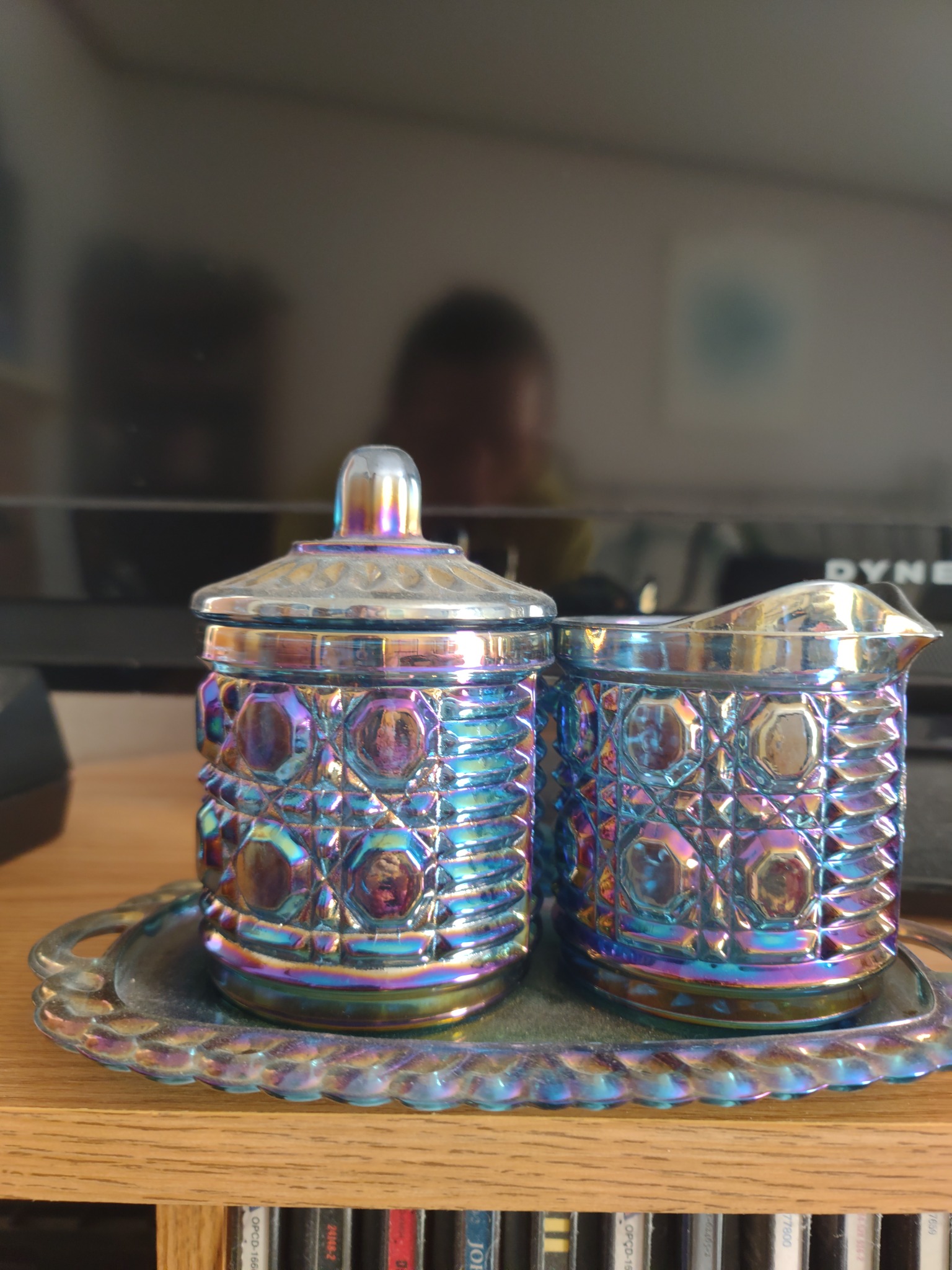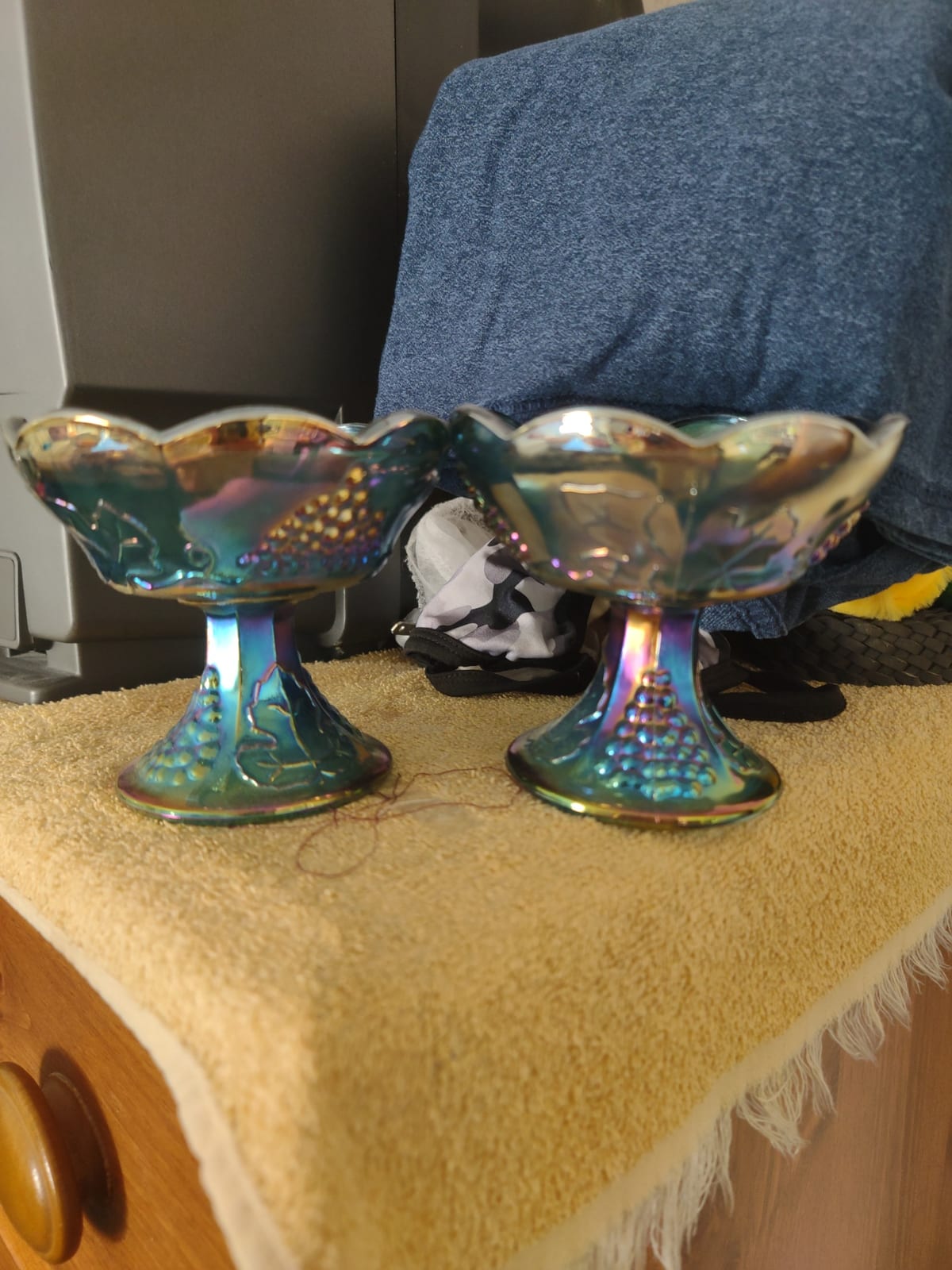
Pair of iridescent carnival glass pedestal compotes / dessert dishes
Estimated Value
$40-$120 for the pair, depending on maker, size, pattern, and condition
A matched pair of footed compotes or dessert dishes in iridescent carnival glass, featuring scalloped bowl rims, pedestal bases, and molded decorative motifs including grape clusters and vine/foliate elements. The multicolor oil-slick sheen is characteristic of carnival glass, produced by applying metallic salts to pressed glass during manufacture. The pieces appear to be decorative rather than utilitarian, and the matching form suggests they were sold as a pair or assembled later as a set. No maker’s mark is visible in the image, so attribution remains uncertain.
Era
Early 20th century, likely 1900s-1920s (Carnival glass period)
Origin
United States, likely made by an American glass manufacturer
Material
Pressed glass with iridescent metallic carnival finish
Condition
Good overall condition; visible wear is minimal from this view. No obvious chips or cracks are visible, though surface wear, haze, or minor manufacturing imperfections cannot be ruled out from the image alone.
Physical Details
Dimensions
Approximately 5 to 7 inches tall each; bowl diameter approximately 6 to 8 inches
Weight
Light to Medium
Authentication
Authenticity Score
Medium — the form, pressed decoration, and iridescent finish are consistent with authentic carnival glass, but maker and exact age cannot be confirmed from the photo alone.
Provenance
Likely from a mass-produced American carnival glass line sold through department stores or mail-order catalogs in the early 20th century; exact maker unknown without base marks or pattern identification.
Historical Significance
Carnival glass became popular in the early 1900s as an affordable decorative alternative to more expensive art glass. It is historically notable for its wide distribution, colorful finish, and association with domestic display ware of the period.
Restoration Notes
- •No visible restoration or repair detected in the image
This identification and value range are AI-generated research aids, not authentication, certification, or a formal appraisal. Learn about the limitations and when to consult a qualified professional appraiser.