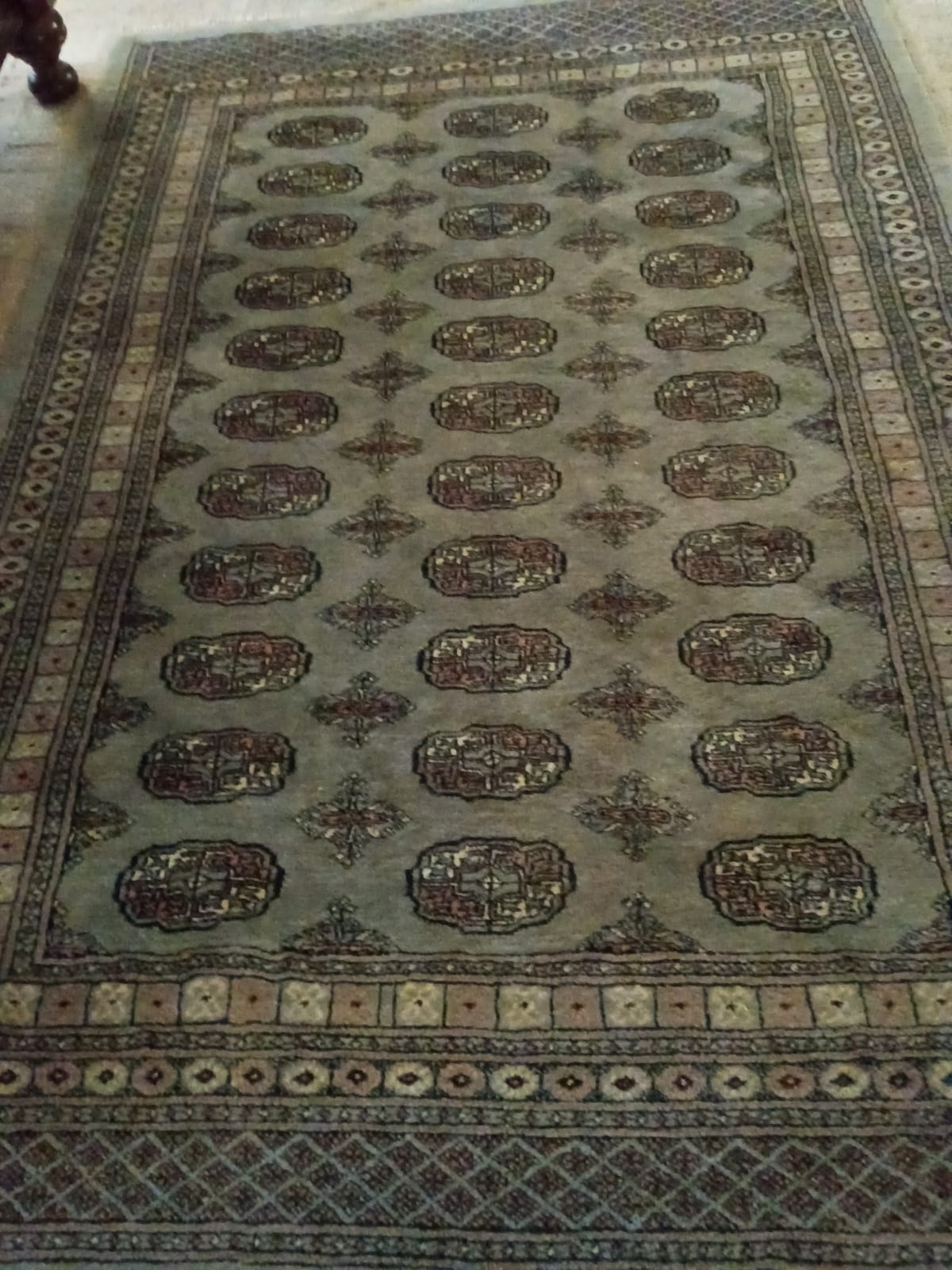
Hand-knotted decorative area rug
Estimated Value
$100-$500
A rectangular decorative rug with a repeating geometric medallion pattern in muted earth tones, including beige, olive, rust, brown, and dark accents. The rug has a broad multi-band border with small repeating motifs and a central field arranged in orderly rows of oval and star-like elements. The design suggests a traditional or tribal-inspired aesthetic, likely intended as a floor covering rather than a wall hanging. The craftsmanship appears machine-made or possibly hand-knotted with a dense pattern, though the image resolution and lighting make definitive construction identification difficult.
Era
Late 20th century to early 21st century (possibly vintage; exact age unknown)
Origin
Likely Middle Eastern, Central Asian, or South Asian-inspired production; exact origin unknown from image alone
Material
Wool pile on a woven foundation; possibly cotton warp/weft
Condition
Fair to Good. Visible overall wear, muted colors, and possible pile flattening/soiling consistent with age or heavy use. No obvious major tears visible in the image, but condition cannot be fully verified from one photo.
Physical Details
Dimensions
Approximately 5 x 8 feet to 6 x 9 feet, based on proportions visible in the room
Weight
Medium
Authentication
Authenticity Score
Low to Medium. The item appears genuine as a rug, but whether it is antique, vintage, or modern cannot be confirmed from the image. No maker's label, knot detail, or back view is visible.
Provenance
Likely from a commercial rug-producing region influenced by Persian, Turkish, Caucasian, or Central Asian design traditions. Specific workshop, maker, or country of origin cannot be determined from the image alone.
Historical Significance
Rugs of this general style reflect long-standing textile traditions in the Middle East and Asia, where geometric and medallion motifs have been used for centuries. If hand-knotted and older, it could represent a continuation of regional weaving traditions, though this example does not appear especially rare or museum-grade from the photo.
This identification and value range are AI-generated research aids, not authentication, certification, or a formal appraisal. Learn about the limitations and when to consult a qualified professional appraiser.
Research this item further
Related Identifications
Browse all →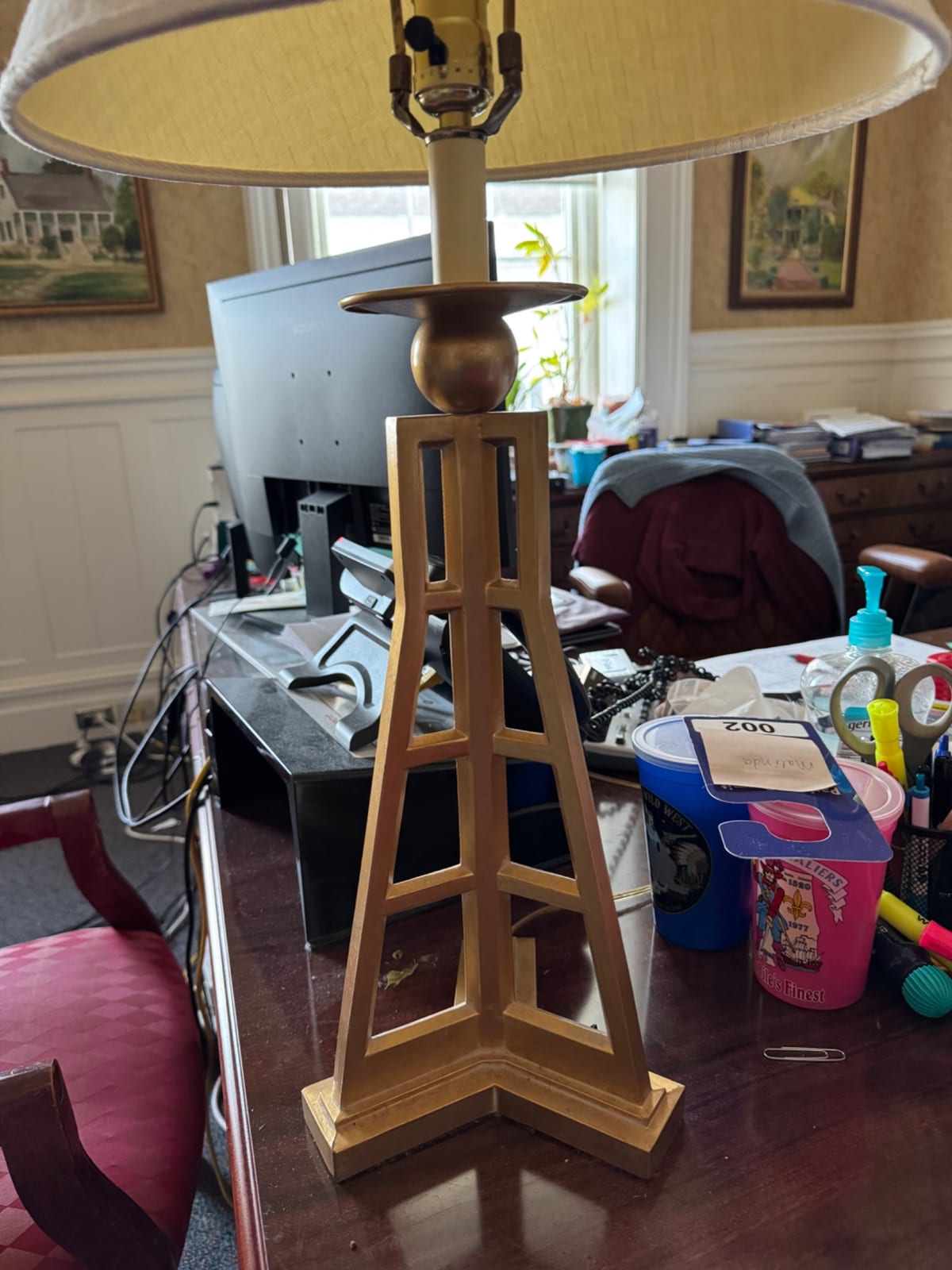
Table lamp base with geometric Art Deco-inspired design
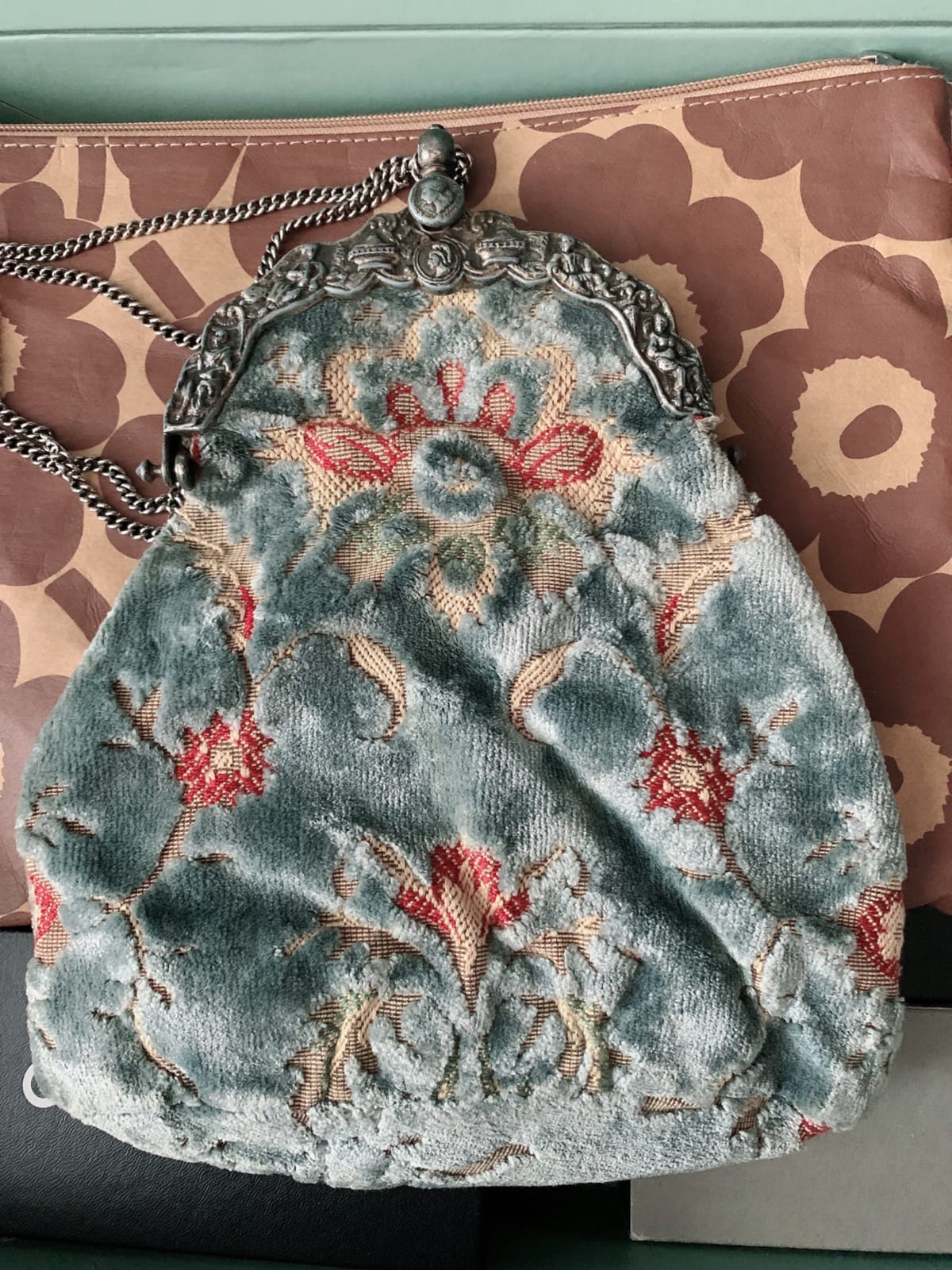
Ornate velvet evening purse / reticule with metal frame and chain

Worn gold-colored coin or token, possibly a small denomination coin
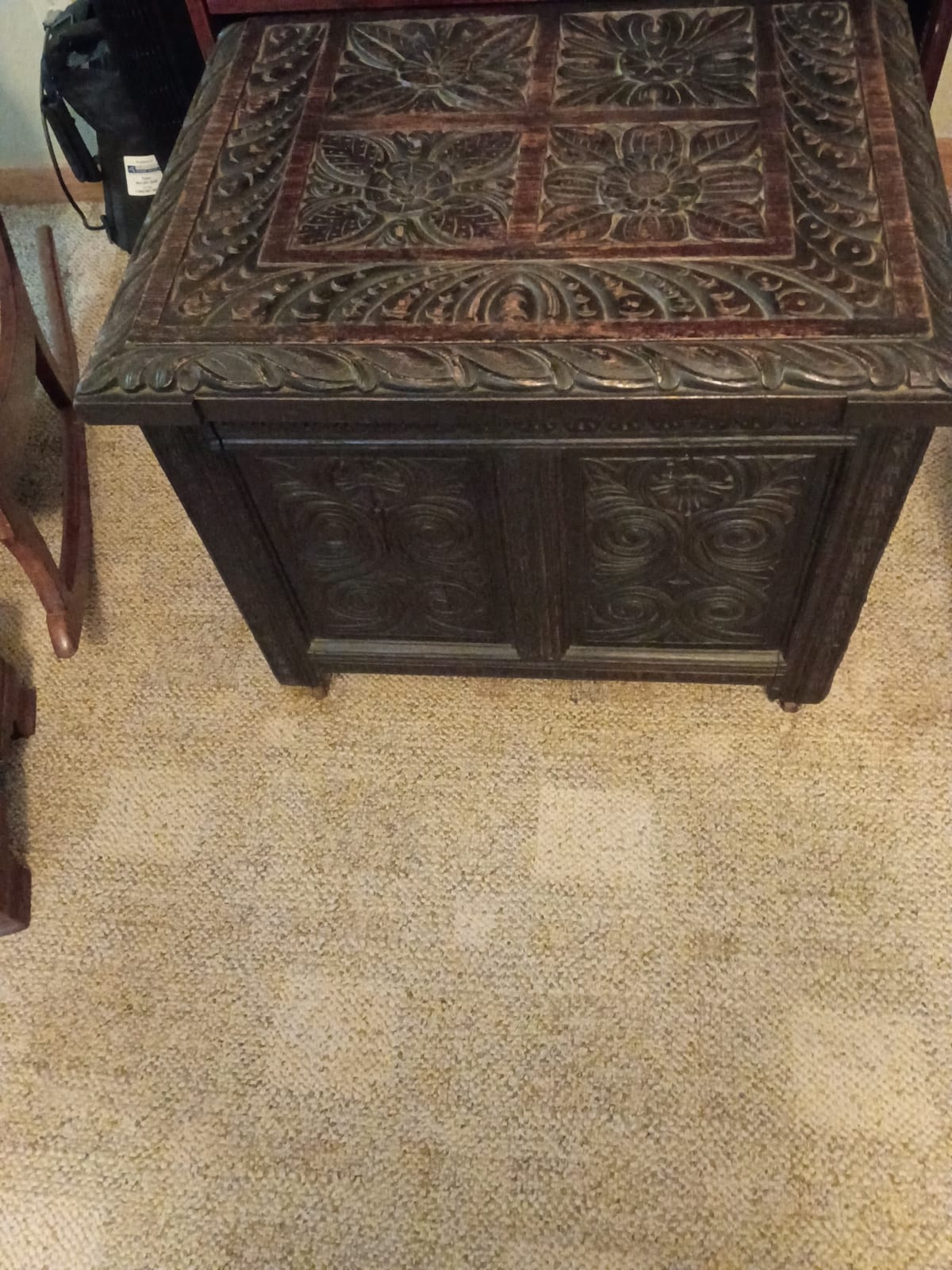
Carved wooden chest or trunk with decorative floral panels
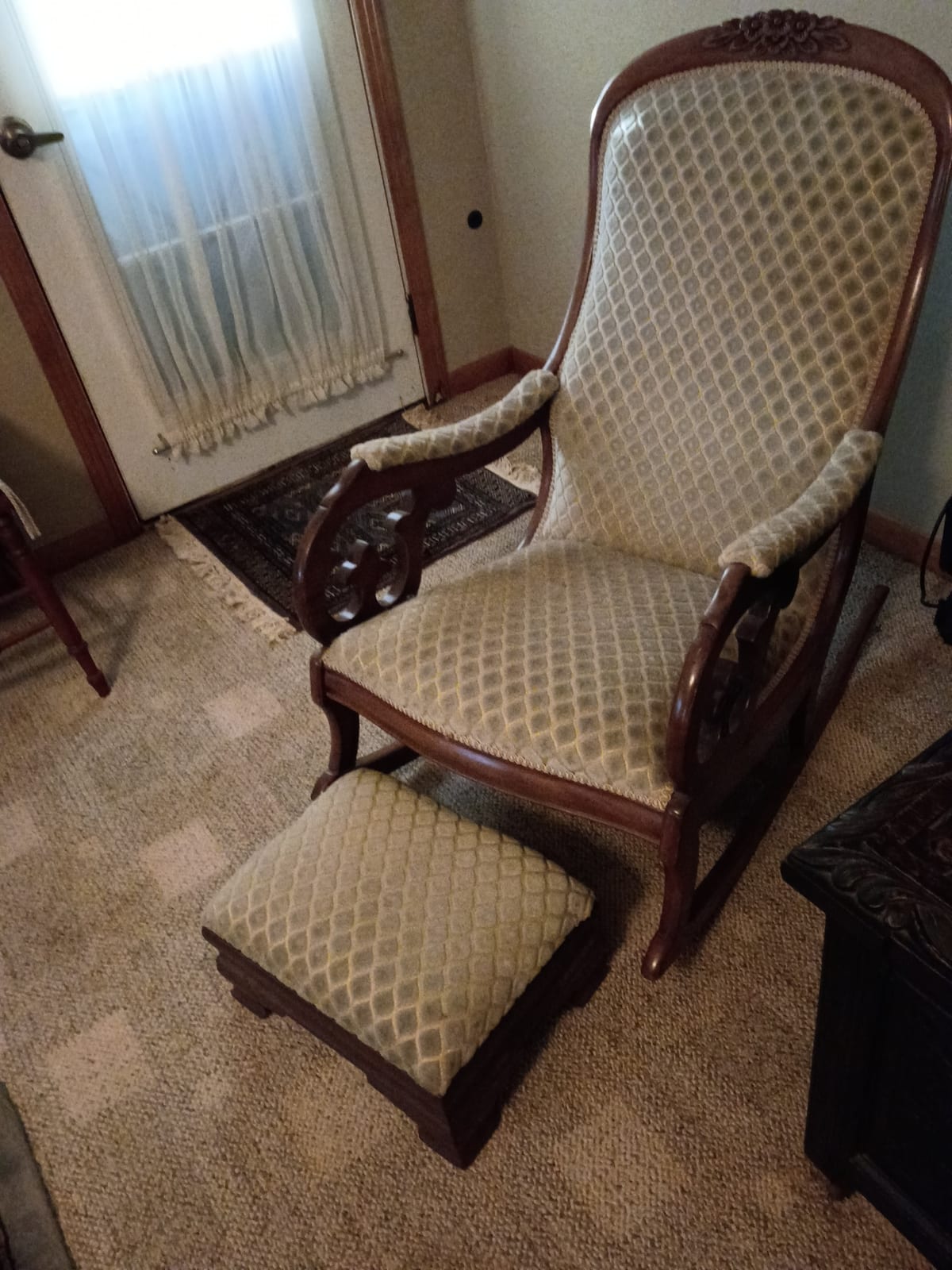
Upholstered Victorian-style rocking chair with ottoman
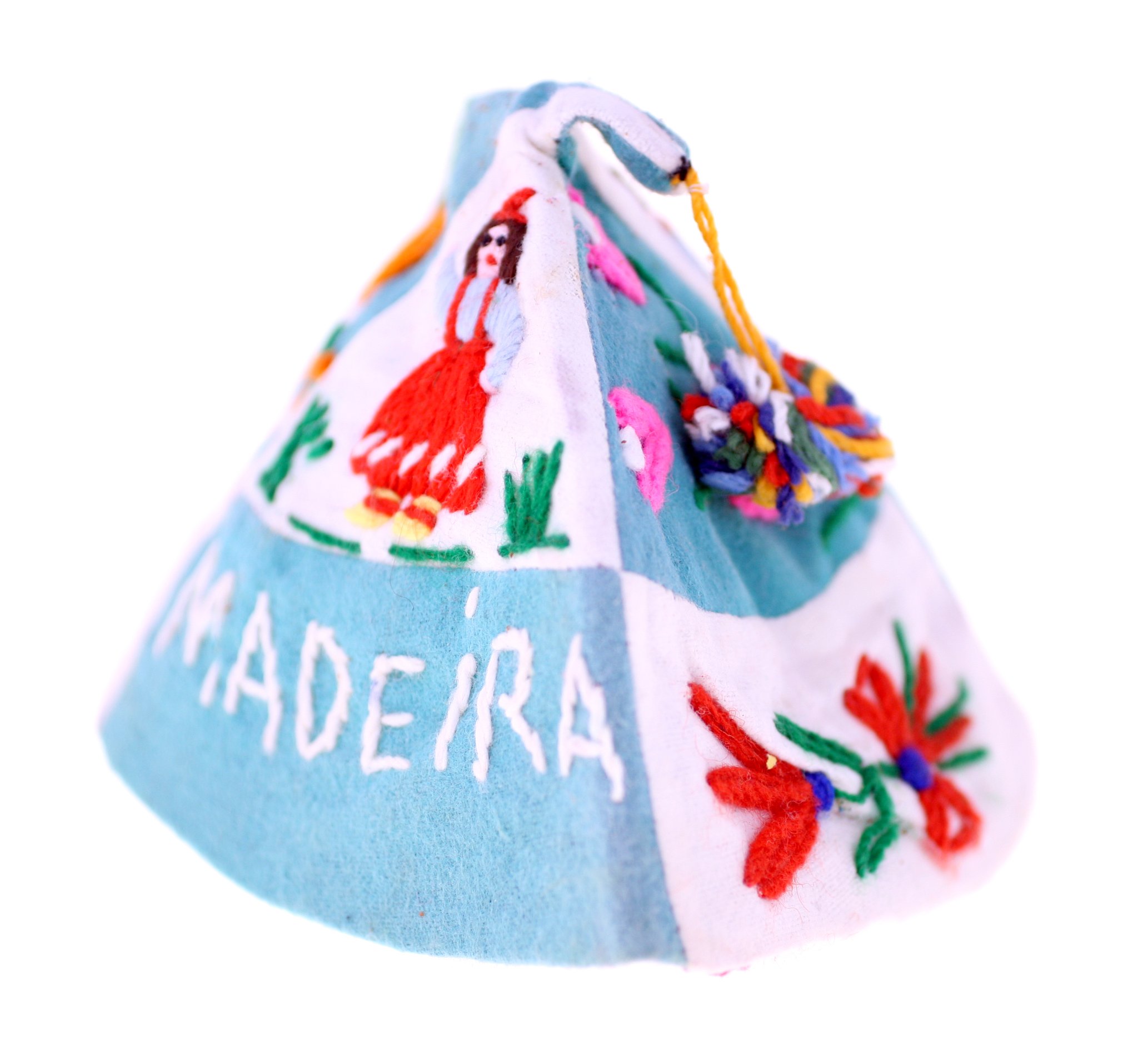
Embroidered textile souvenir pouch or small drawstring bag