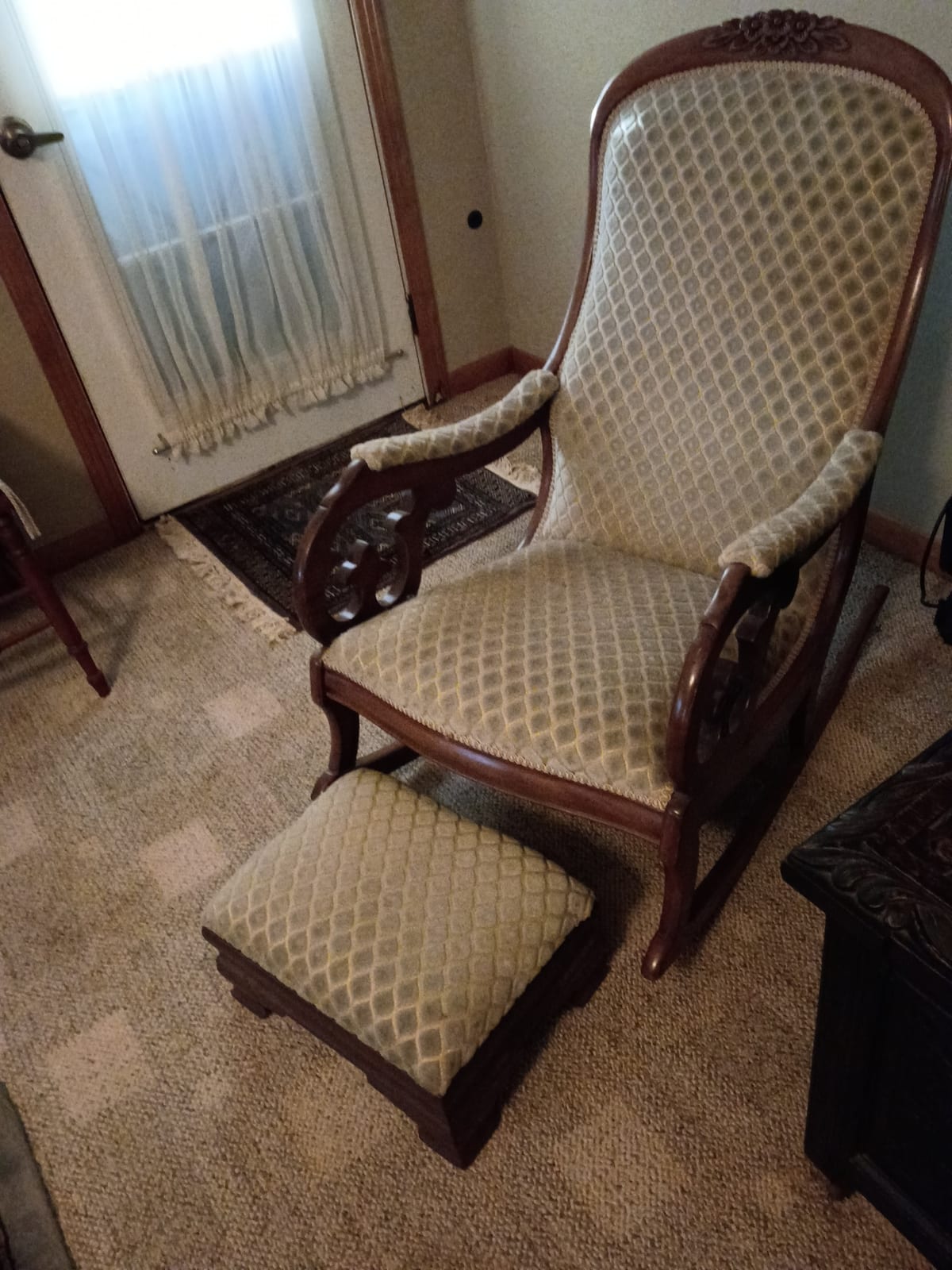
Upholstered Victorian-style rocking chair with ottoman
Estimated Value
$150-$500
A tall upholstered rocking chair with a matching footstool/ottoman, featuring a high arched back, carved crest rail, curved arms, and decorative openwork side supports. The chair has a formal parlor-chair silhouette typical of late Victorian or revival furniture. The wood frame is dark and polished, with turned and carved details, while the seat, back, arm pads, and ottoman are covered in a light patterned fabric. The overall design suggests a comfortable parlor or reading chair rather than a mass-market modern rocker. The ottoman appears to be a companion piece, likely intended to support the feet while seated in the chair.
Era
Late 19th century to early 20th century; likely Victorian Revival / Edwardian period style
Origin
Likely United States or Western Europe
Material
Wood frame (appears to be mahogany or mahogany-stained hardwood), upholstered fabric, likely horsehair or foam padding, possibly webbing/springs beneath upholstery
Condition
Good overall condition with visible age and use; upholstery appears intact but likely later replacement or re-covering, wood finish shows light wear consistent with age, no obvious major structural damage visible from the image
Physical Details
Dimensions
Chair approximately 42-48 inches tall, 24-30 inches wide, 28-34 inches deep; ottoman approximately 16-20 inches wide
Weight
Medium
Authentication
Authenticity Score
Medium; the chair appears period-style and possibly antique, but the upholstery looks newer than the frame and no maker's marks are visible, so exact age and originality cannot be confirmed from the image alone
Provenance
Likely from a domestic parlor or sitting room setting; exact maker and provenance are not determinable from the image alone. The style suggests a commercially produced period-revival chair rather than a one-off custom piece.
Historical Significance
High-back upholstered rocking chairs were popular in Victorian and Edwardian interiors, reflecting the era's emphasis on comfort, formality, and decorative woodwork. Companion ottomans were often used in parlors and reading rooms. While not rare as a type, well-preserved examples with original upholstery and documented maker can be desirable.
Restoration Notes
- •Upholstery appears to have been replaced or refreshed at some point
- •Possible re-padding of armrests and seat cushions
- •Wood finish may have been cleaned or refinished, though this cannot be confirmed
This identification and value range are AI-generated research aids, not authentication, certification, or a formal appraisal. Learn about the limitations and when to consult a qualified professional appraiser.