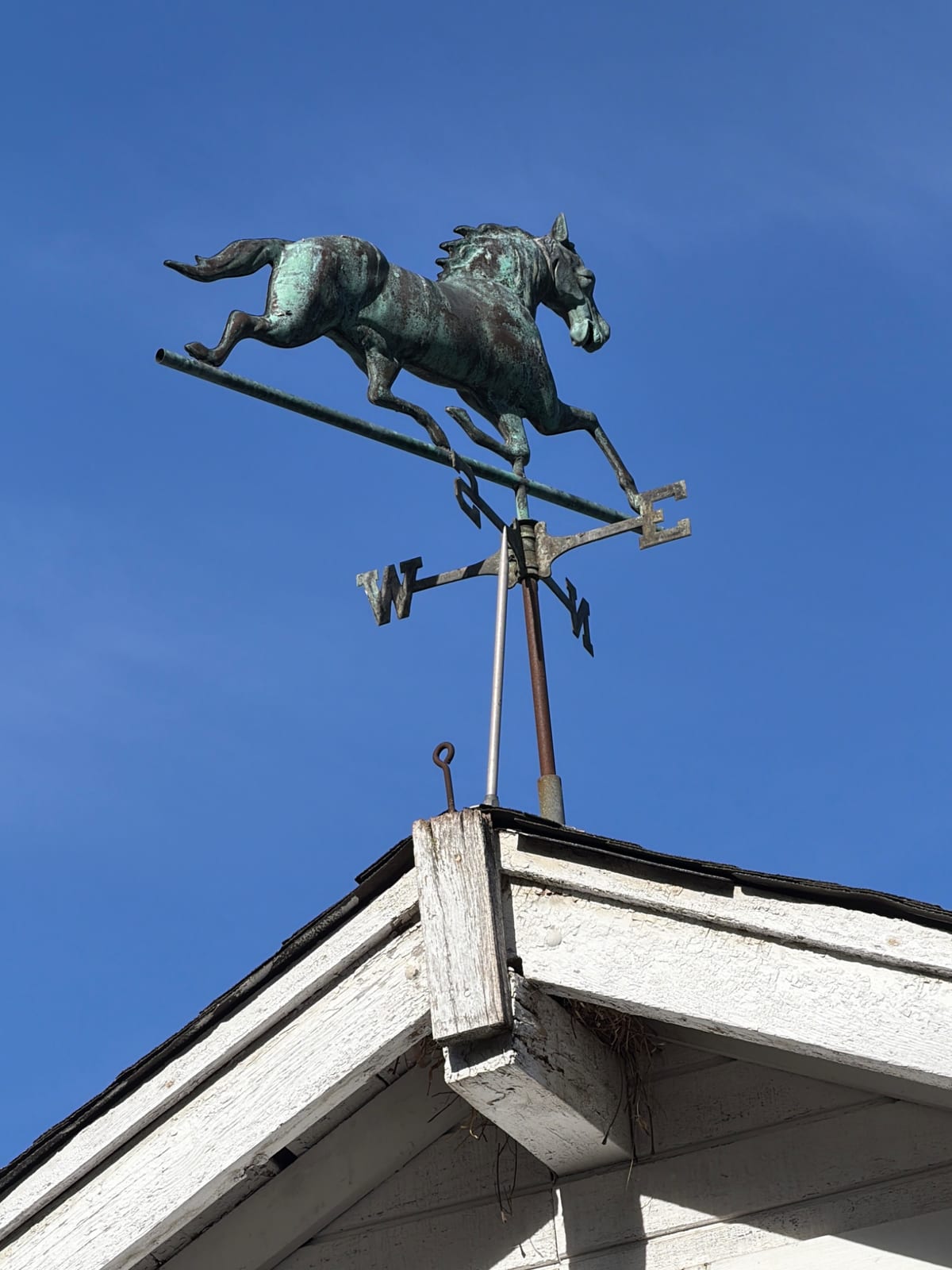
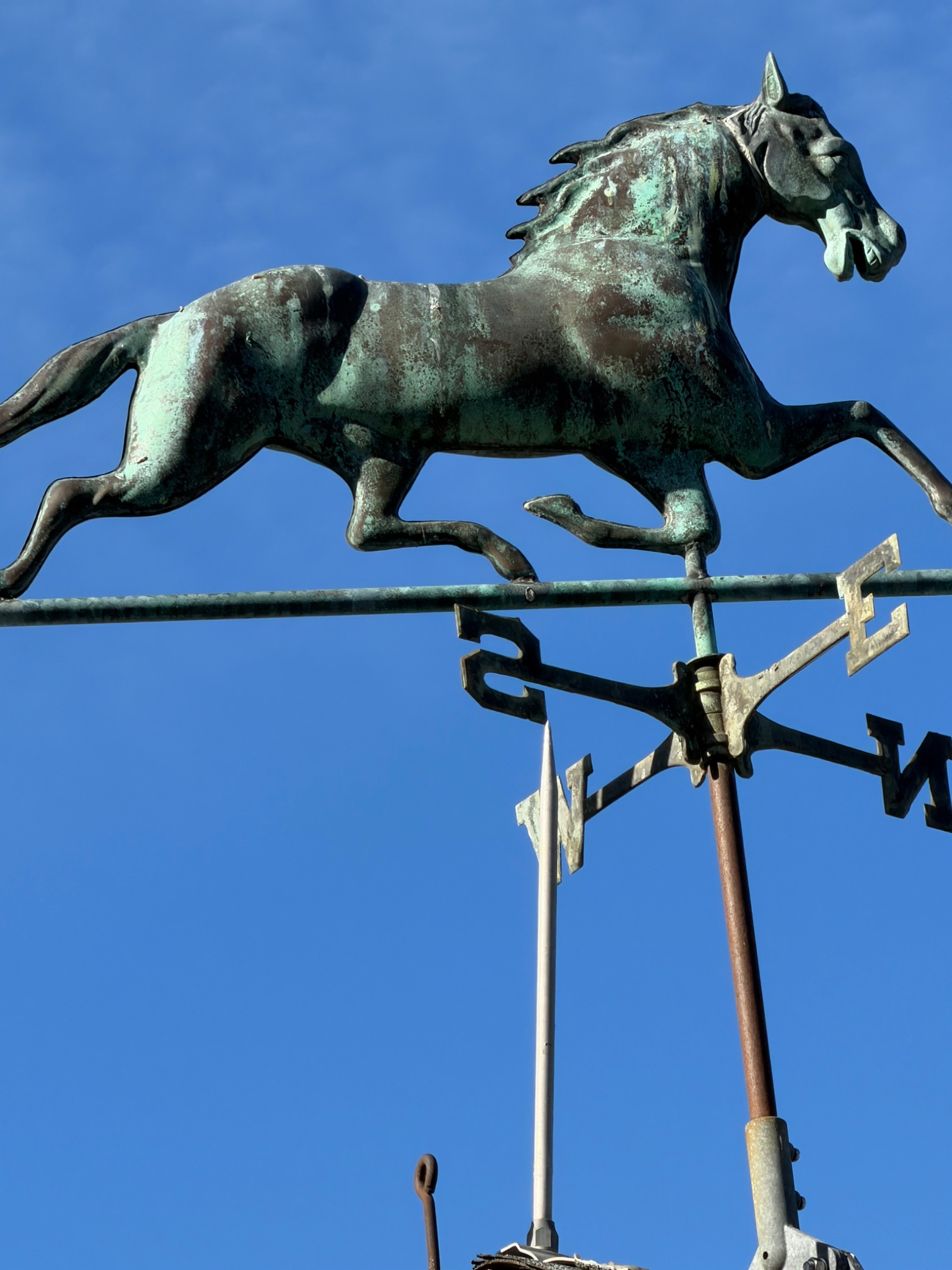
Horse weather vane
Estimated Value
$800-$3,500
A mounted horse weather vane featuring a dynamic galloping horse silhouette with a directional compass assembly marked with cardinal letters. The figure appears to be crafted in metal, likely copper or a copper alloy, and has developed a green-brown patina from age and exposure. The horse is stylized but detailed enough to show mane, tail, legs, and head in motion. The vane is installed on a roof peak, suggesting functional use as a weather instrument as well as decorative architectural ornament. The compass letters and support rods appear to be mixed metals, with some later-looking components possibly added or replaced over time.
Era
Late 19th century to early 20th century (likely), with possible later replacement parts
Origin
United States or Northern Europe (likely), exact origin unknown
Material
Copper or copper-alloy figure with iron/steel support and directional arms
Condition
Fair to Good; visible oxidation/patina, weathering, and surface wear consistent with long outdoor exposure. No obvious major structural breakage visible from this angle, though some components may be bent or replaced.
Physical Details
Dimensions
Approximately 24-36 inches long for the horse figure; overall mounted height likely 4-6 feet including support and directional assembly
Weight
Medium
Authentication
Authenticity Score
Medium; the piece appears period-appropriate and genuinely aged, but the image does not allow verification of maker marks, construction details, or whether all parts are original
Provenance
Likely from a farmhouse, barn, or rural building; weather vanes of this type were commonly used on American and European buildings as both practical and symbolic roof ornaments. Specific maker or provenance cannot be determined from the image alone.
Historical Significance
Horse weather vanes are a classic form of architectural folk art and practical meteorological device, especially associated with farms, barns, and civic buildings in the 19th and early 20th centuries. They often reflect regional craftsmanship and the symbolic importance of horses in transportation and agriculture.
Restoration Notes
- •Possible replacement or later-added support rods and directional components
- •Visible oxidation and wear; no clear evidence of recent refinishing
- •Potential minor bending or alignment changes in the vane assembly
This identification and value range are AI-generated research aids, not authentication, certification, or a formal appraisal. Learn about the limitations and when to consult a qualified professional appraiser.
Research this item further
Related Identifications
Browse all →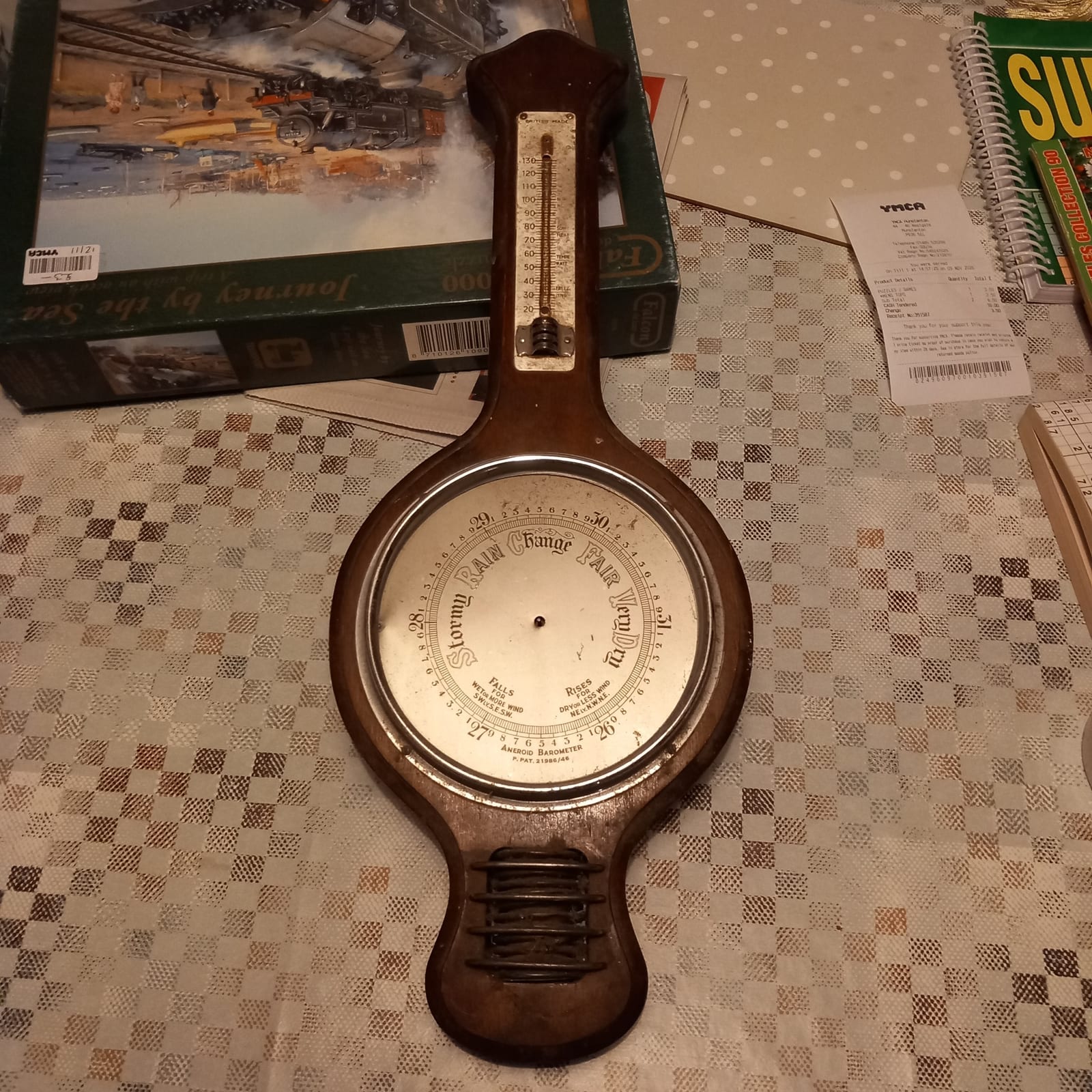
Wall-mounted aneroid barometer with thermometer
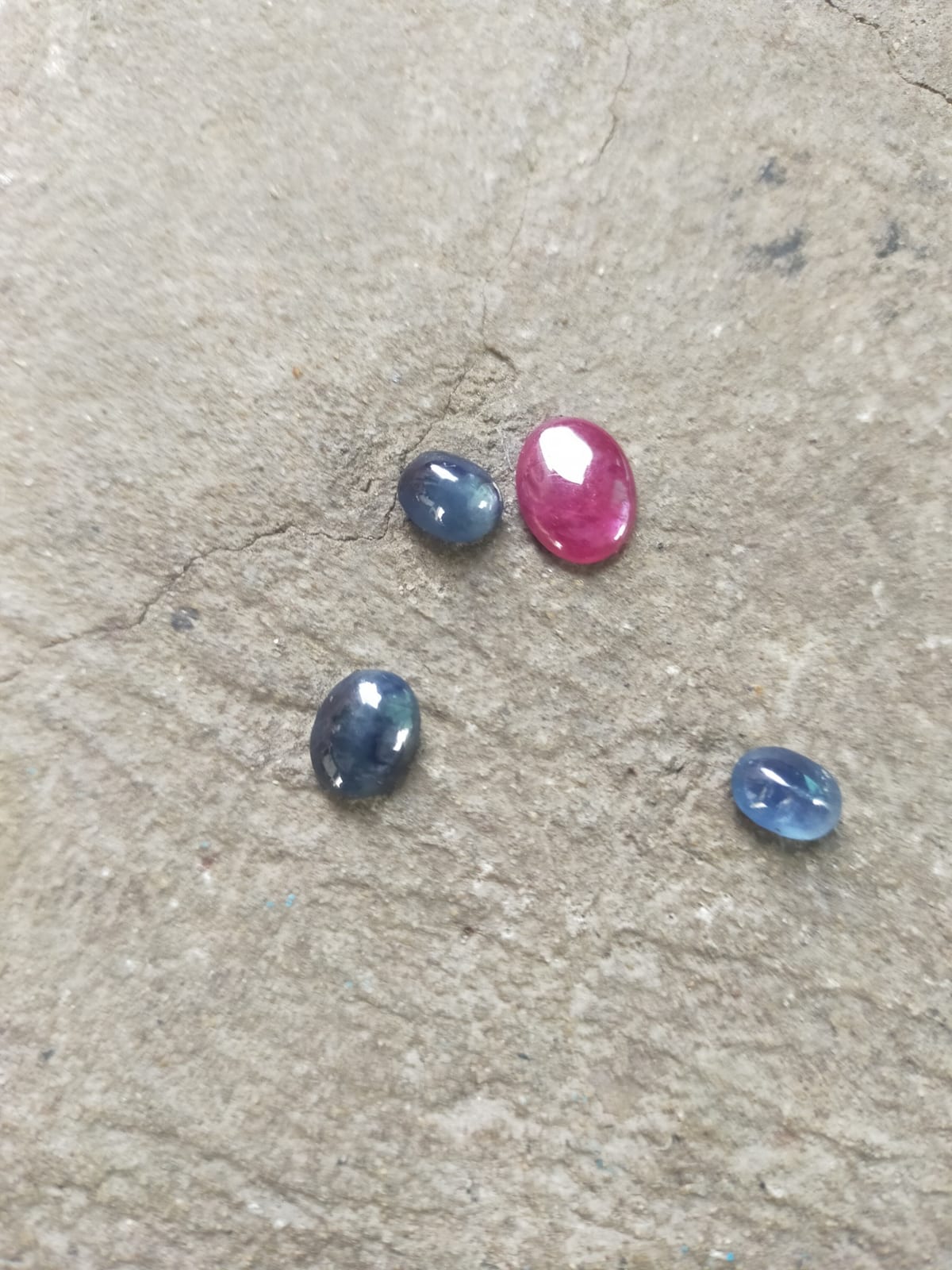
Loose polished cabochon gemstones (likely synthetic or low-grade natural stones)
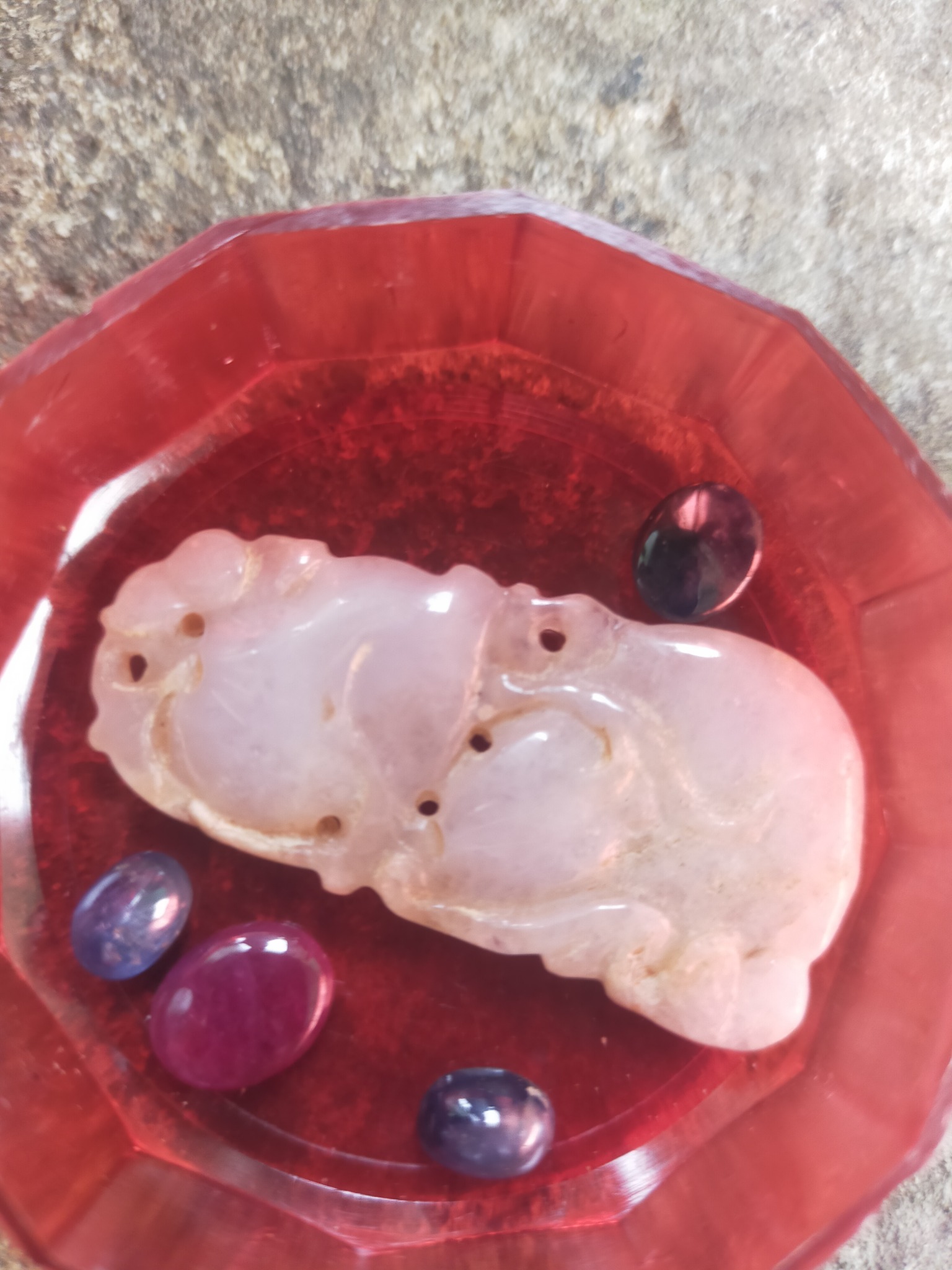
Carved hardstone pendant or plaque with cabochon stones
Horse weather vane
Vintage rhinestone pendant or brooch component
Small rhinestone jewelry component or broken decorative clasp