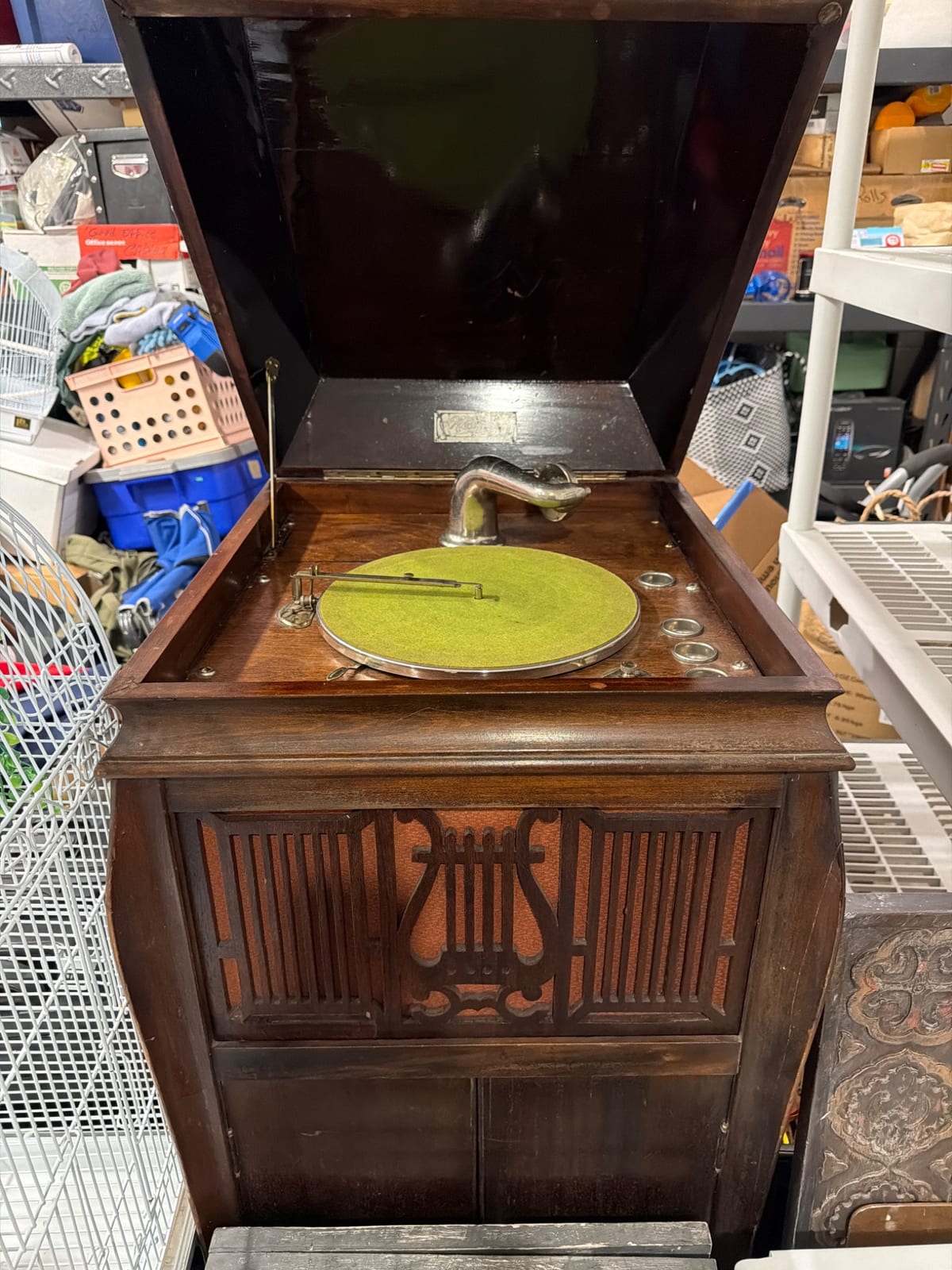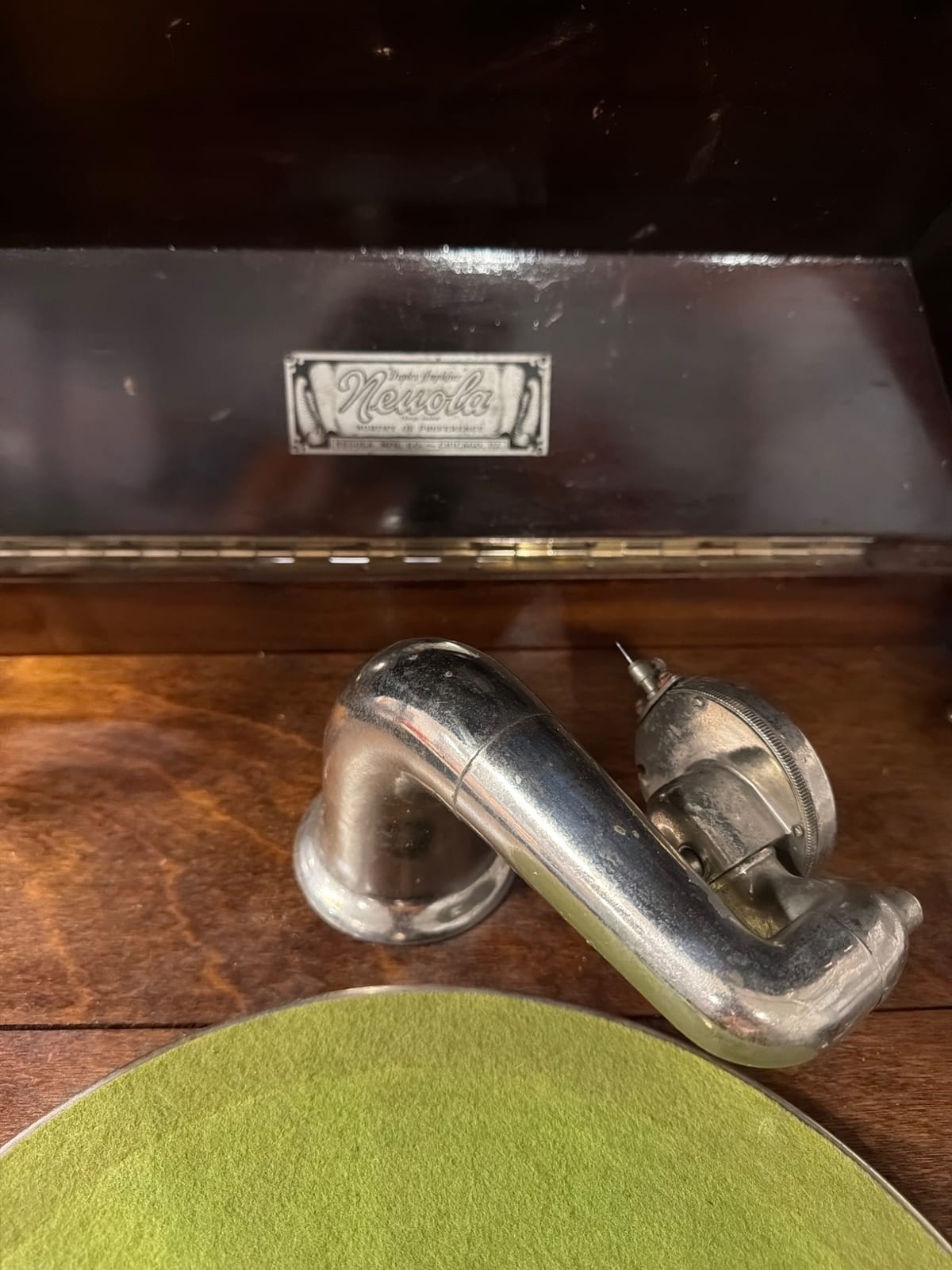
Neutrola branded phonograph/record player tonearm assembly
Estimated Value
$150-$500
The image shows the interior or upper section of a vintage phonograph or record player cabinet, identified by a maker's label reading 'Neutrola' and the visible metal tonearm/soundbox assembly. The cabinet appears to be finished in dark polished wood, with a hinged lid or interior panel. The prominent curved nickel-plated tonearm and circular soundbox are characteristic of acoustic or early mechanical playback equipment. The label suggests a branded machine or component associated with the Neutrola name, likely marketed as a phonograph or talking machine accessory. The piece shows honest age, with oxidation and wear to the metal surfaces, but no obvious major breaks are visible in the photographed area.
Era
Early 20th century, likely 1910s-1920s
Origin
United States
Material
Nickel-plated metal, steel, wood cabinet
Condition
Good overall condition with visible surface wear, tarnish, and age-related scuffing; appears mechanically intact from visible components, but full functionality cannot be confirmed from the image alone
Physical Details
Dimensions
Unknown for the full item; visible tonearm assembly appears approximately 8-12 inches long
Weight
Heavy
Authentication
Authenticity Score
Medium - The label and construction appear period-appropriate, but the image is limited and the exact model/maker cannot be confirmed without additional views of the cabinet, mechanism, and any serial or patent markings
Provenance
Likely American manufacture, possibly sold through a regional phonograph dealer or distributor under the Neutrola name; exact maker and model are not fully legible from the image
Historical Significance
Early phonographs and talking machines are significant as transitional audio technology from the acoustic era before electric amplification became standard. Branded components like this reflect the widespread commercial competition among phonograph makers and distributors in the early 20th century.
Restoration Notes
- •No clear evidence of restoration visible in the photo
- •Possible polishing of nickel-plated parts, though this cannot be confirmed
- •Surface wear and tarnish consistent with age
This identification and value range are AI-generated research aids, not authentication, certification, or a formal appraisal. Learn about the limitations and when to consult a qualified professional appraiser.