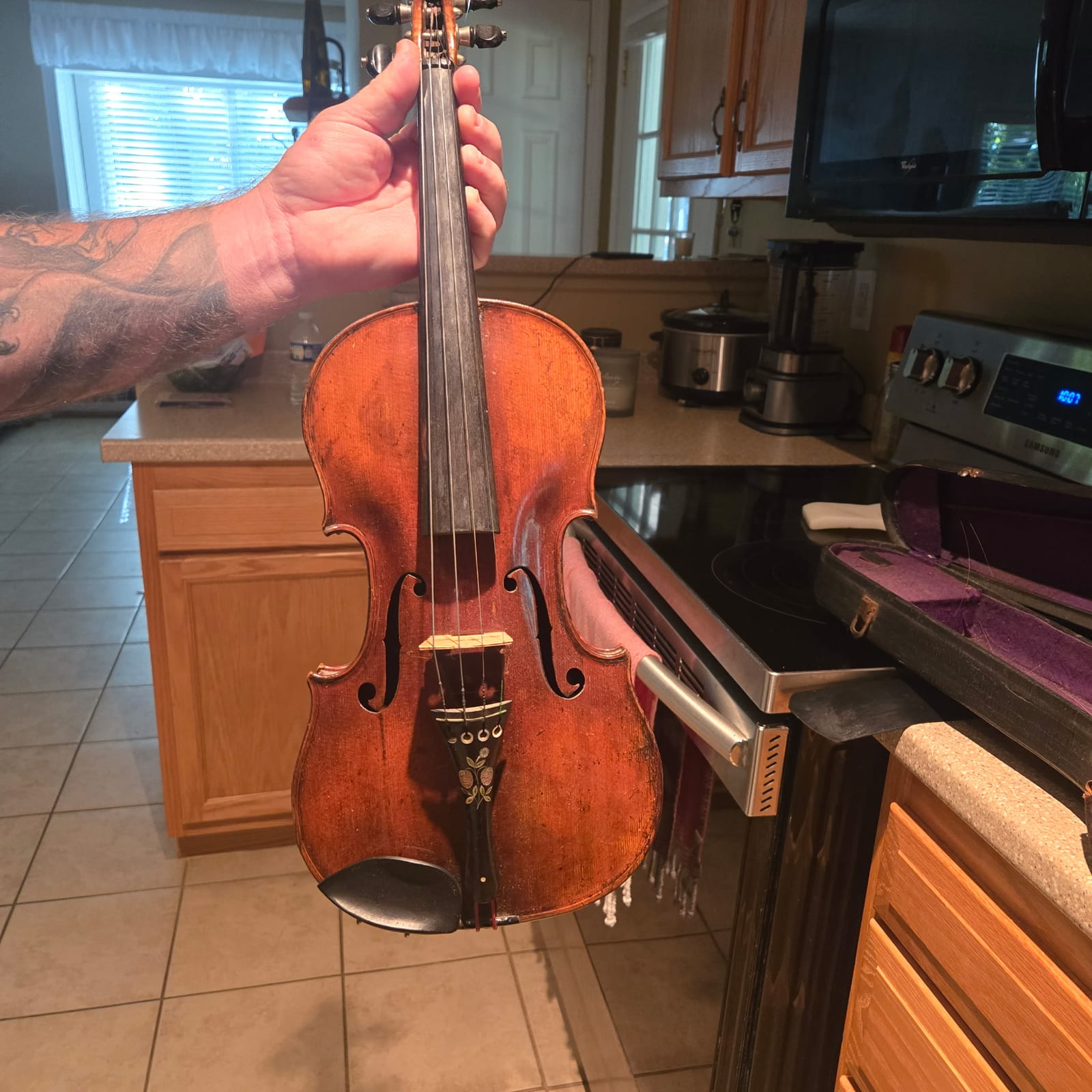
Violin (likely early 20th-century student or trade instrument)
Estimated Value
$150-$600 USD
A full-size violin with a warm amber-brown varnish, dark fingerboard, and decorative tailpiece with floral inlay. The instrument shows a traditional hand-shaped body with f-holes, a standard chinrest, and a worn finish consistent with regular use. The craftsmanship appears more consistent with a mass-produced or workshop-made instrument than a high-end master violin, though the photo does not show labels, interior markings, or the back of the instrument. The overall appearance suggests an older playable violin rather than a museum-grade antique.
Era
Late 19th century to early 20th century (approx. 1890s-1930s), possibly later trade production
Origin
Likely Central Europe (Germany/Czechoslovakia) or possibly France; exact origin unknown from image alone
Material
Wooden body with ebony fingerboard and fittings; varnish finish; metal strings and tailpiece hardware
Condition
Fair to Good overall; visible wear to varnish, edge wear, surface scratches, and age-related patina. No obvious major structural cracks visible in the photo, but internal condition, neck angle, seams, and soundpost cannot be assessed from this image.
Physical Details
Dimensions
Approximately full-size violin, about 23.5 inches long overall
Weight
Light
Authentication
Authenticity Score
Medium-Low; the instrument appears genuinely old, but exact age, maker, and authenticity as an antique cannot be confirmed from a single front-view photo. Label, internal construction, scroll, back, and corner/block details would be needed for stronger attribution.
Provenance
Likely a workshop or trade violin made for student or intermediate use, possibly imported from a major European violin-making center. No maker's label or provenance evidence is visible in the image.
Historical Significance
Violins of this type were widely produced for students, amateur musicians, and orchestral use during the late 19th and early 20th centuries. While not especially rare, older surviving examples can have historical and musical interest, especially if they are playable and retain original fittings or varnish.
Restoration Notes
- •Possible replacement or later-added chinrest and tailpiece hardware
- •General wear and possible polishing/cleaning over time
- •No obvious major repairs visible in the photo
This identification and value range are AI-generated research aids, not authentication, certification, or a formal appraisal. Learn about the limitations and when to consult a qualified professional appraiser.