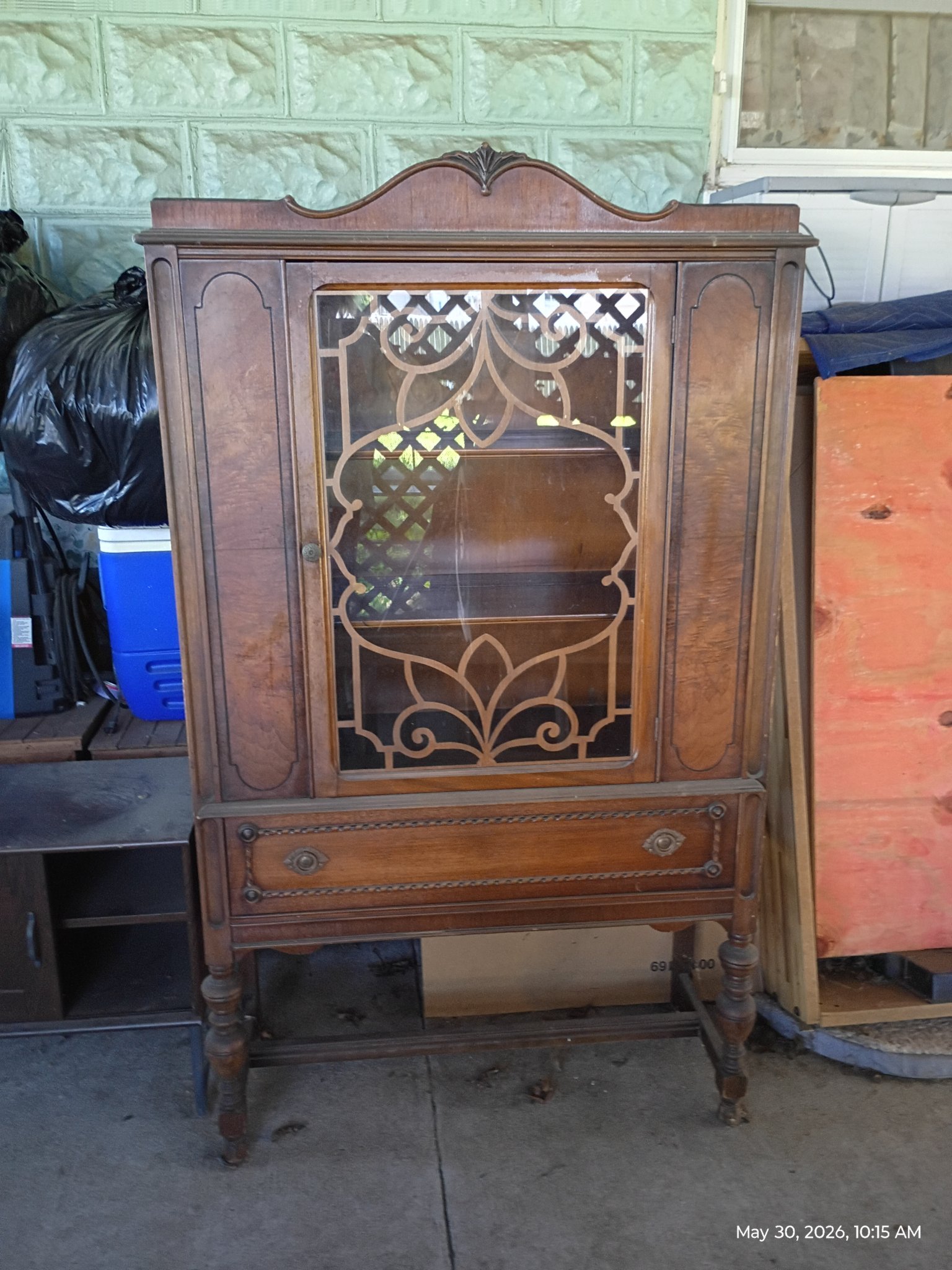
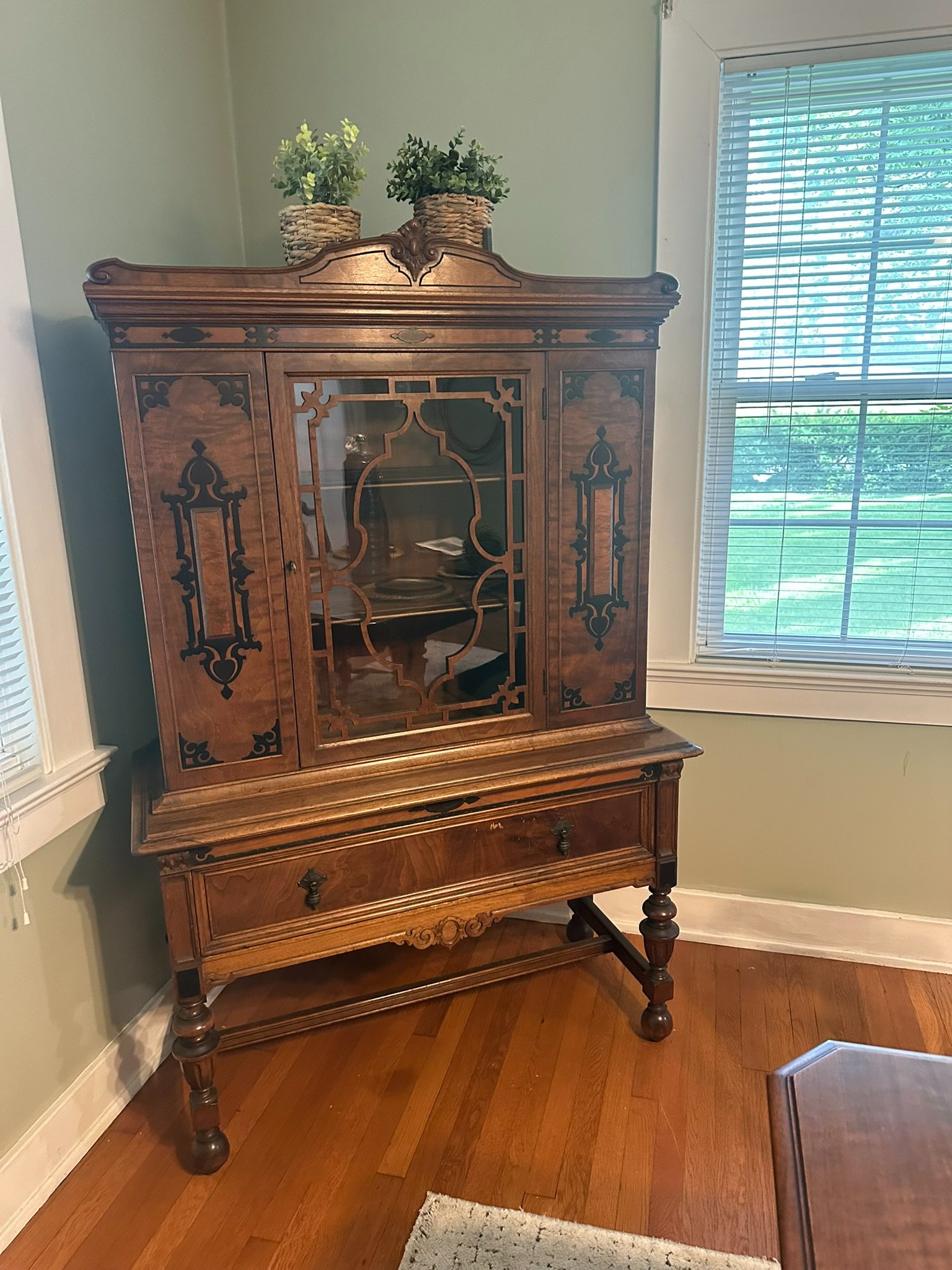
Victorian-style display cabinet / china cabinet
Estimated Value
$150-$500
Tall wooden display cabinet with a single glazed front door featuring decorative etched or applied geometric/foliate glass design. The cabinet has a shaped crest rail with a central carved flourish, paneled sides, and turned front legs. The lower section includes a single drawer with decorative trim and metal pulls. Overall styling suggests a late 19th to early 20th century revival piece inspired by Victorian or Eastlake design, though it may be a later reproduction. The piece appears intended for displaying china, books, or collectibles.
Era
Late Victorian to Edwardian Revival, likely c. 1890s-1910s
Origin
United States or United Kingdom (likely Anglo-American mass-produced furniture)
Material
Wood veneer over hardwood frame, glass panel, metal hardware
Condition
Fair. Visible surface wear, finish loss, scratches, and age-related patina. Glass appears intact. No obvious major structural breaks visible, but the lower legs and base show wear and possible instability from age/use.
Physical Details
Dimensions
Approximately 60-72 inches tall, 30-40 inches wide, and 14-18 inches deep
Weight
Heavy
Authentication
Authenticity Score
Medium. The construction and styling are consistent with an antique or early 20th-century cabinet, but the image does not show joinery, labels, or hardware details needed to confirm age definitively. It could also be a later reproduction in antique style.
Provenance
Likely from a domestic household furnishing tradition in the United States or Britain. No maker's mark or label is visible, so exact provenance cannot be determined from the image alone.
Historical Significance
Cabinets of this type reflect the popularity of display furniture in the Victorian and Edwardian periods, when households showcased porcelain, glass, and decorative objects in formal rooms. The decorative glass and turned legs are characteristic of the era's emphasis on ornament and craftsmanship.
Restoration Notes
- •Finish appears worn and possibly cleaned or refinished at some point
- •Minor surface scratches and age-related wear visible
- •No obvious repairs visible from the front image
This identification and value range are AI-generated research aids, not authentication, certification, or a formal appraisal. Learn about the limitations and when to consult a qualified professional appraiser.
Research this item further
Related Identifications
Browse all →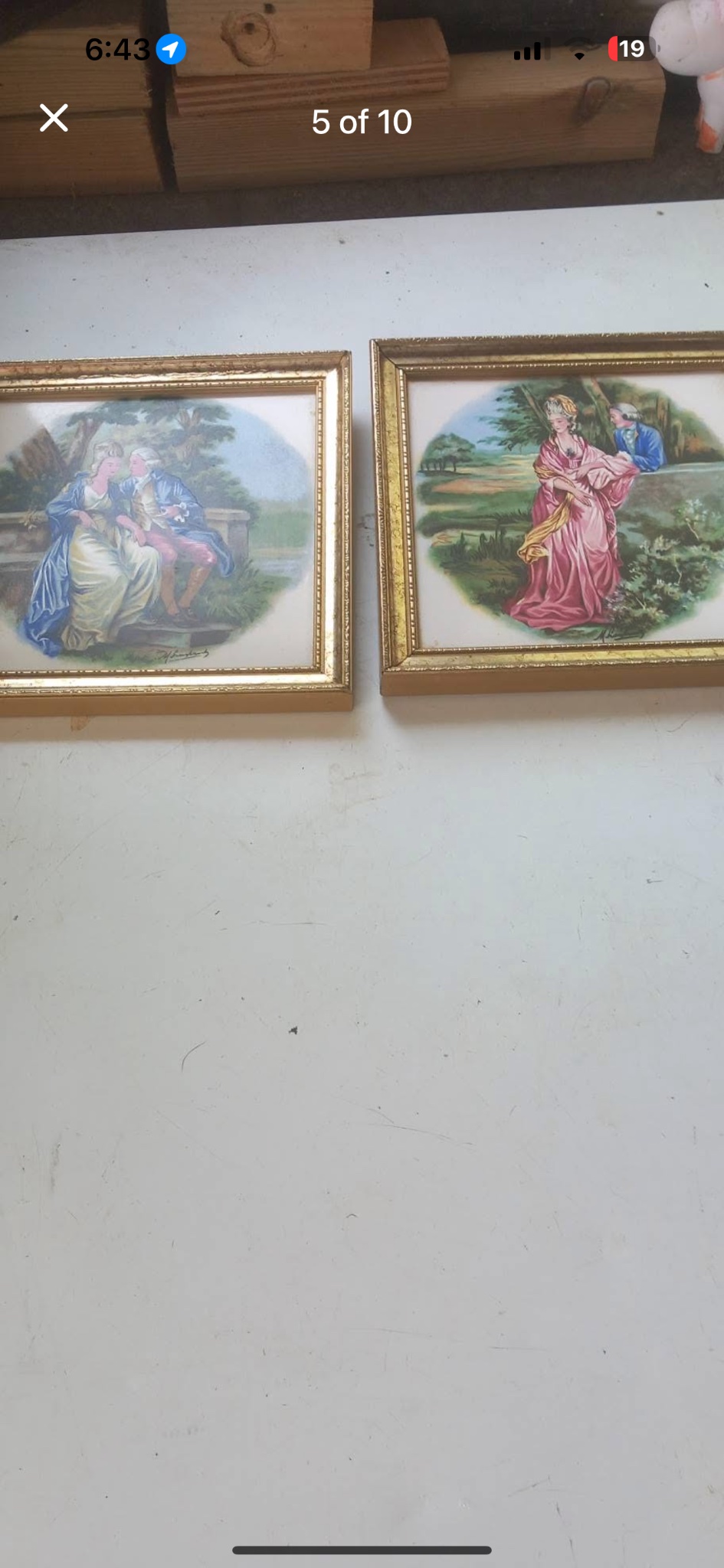
Pair of framed decorative porcelain or ceramic plaque prints with Rococo-style courting scenes
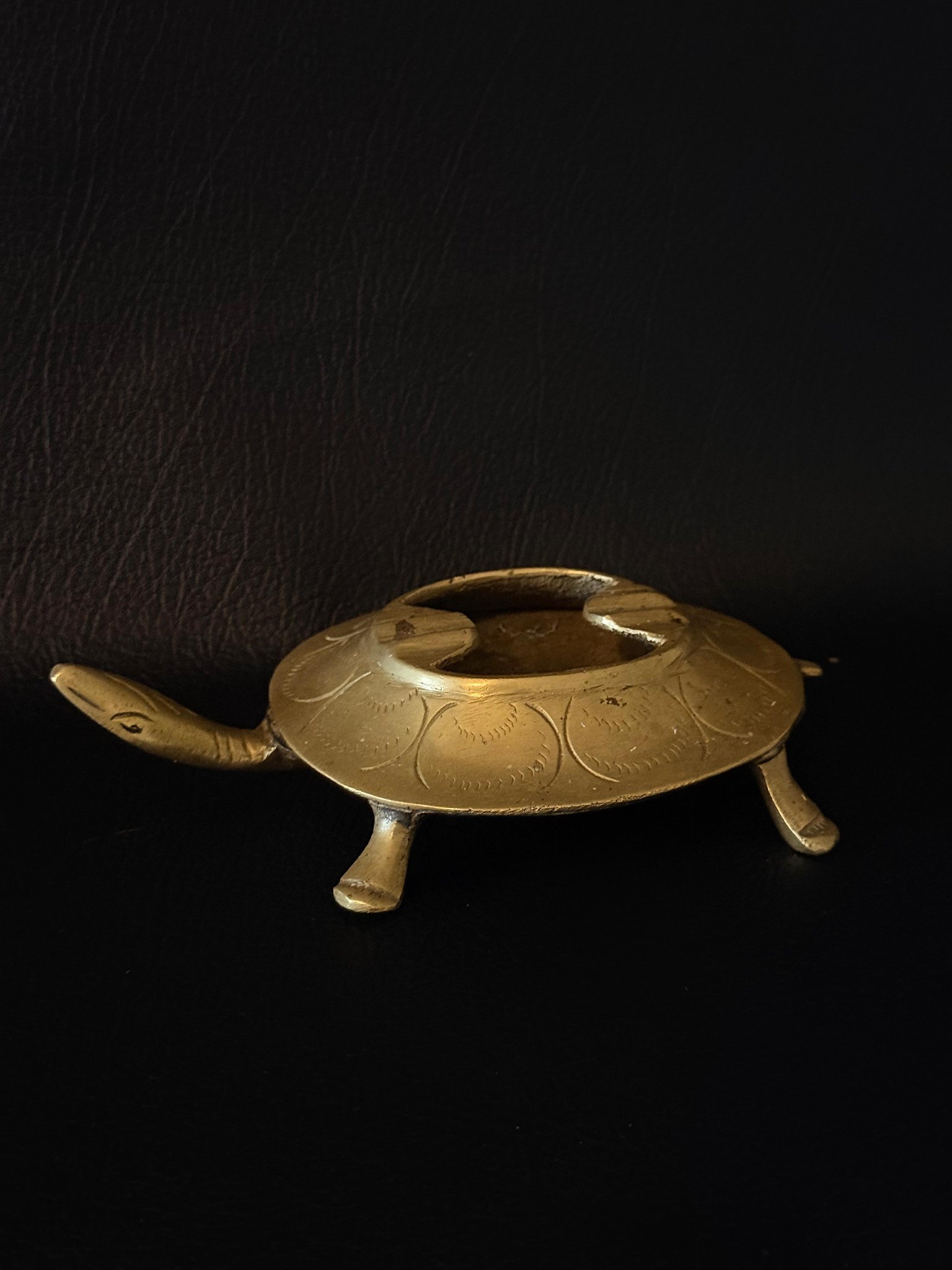
Decorative brass turtle-form ashtray or trinket dish
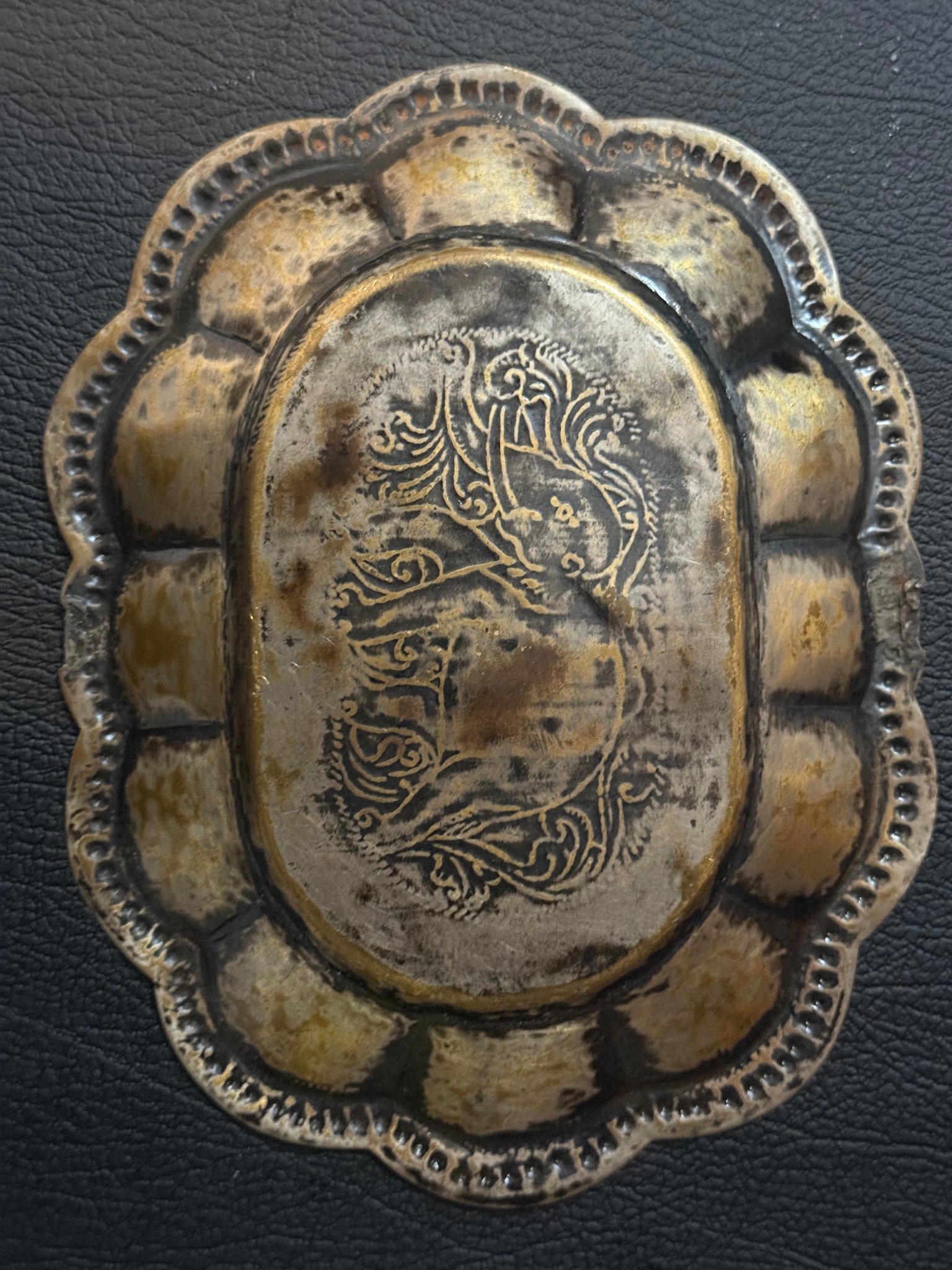
Decorative small metal dish or ashtray with engraved/etched monogram
Victorian-style display cabinet / china cabinet
Vintage tabletop vanity mirror
Blue-and-white porcelain garden seat / stool
Victorian-style wooden chest of drawers / commode
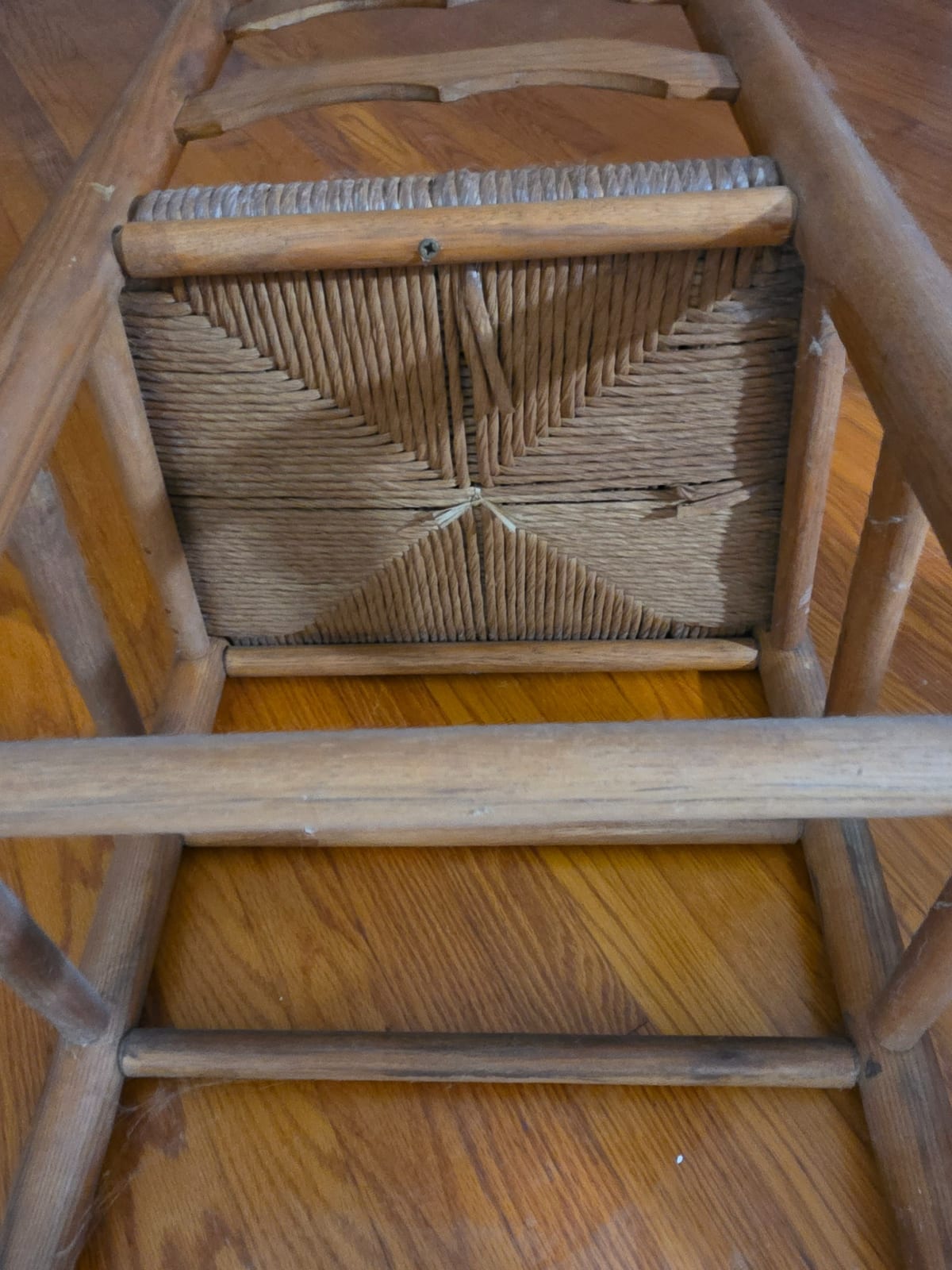
Woven rush-seat wooden stool or chair base