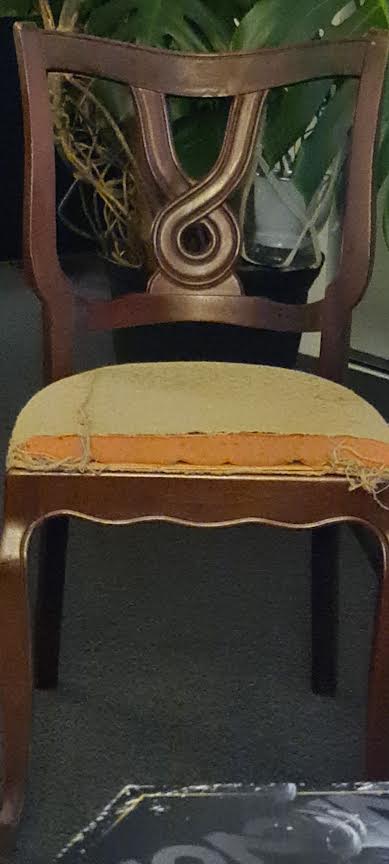
Wooden dining chair with decorative lyre/splat back
Estimated Value
$75-$250
This appears to be an antique or vintage wooden dining chair with a decorative back splat featuring a lyre-like scroll motif. The frame has a dark stained finish and a shaped crest rail, with curved side rails and a scalloped apron beneath the seat. The seat is upholstered in a light-colored woven fabric that is significantly worn and torn, exposing underlying layers. The design suggests a formal dining or parlor chair, likely produced as part of a matched set. The overall styling is decorative rather than utilitarian, with an emphasis on curved lines and ornamental back carving.
Era
Late 19th century to early 20th century, likely Victorian/Edwardian revival style
Origin
Likely United States or Europe; exact origin unknown
Material
Stained hardwood frame with upholstered seat; possible cane or fabric underlayer beneath seat covering
Condition
Fair. The chair appears structurally intact from the front, but the seat upholstery is heavily worn, frayed, and partially detached. Finish shows age and surface wear; no obvious major breaks visible in the image.
Physical Details
Dimensions
Approximately 36-40 inches tall, 17-20 inches wide, 16-18 inches deep
Weight
Medium
Authentication
Authenticity Score
Medium. The chair appears period-style and plausibly antique, but the image does not show construction details, joinery, labels, or underside markings needed for firm authentication.
Provenance
Likely from a domestic dining room or parlor set; without maker's marks or a view of the underside, precise provenance cannot be determined.
Historical Significance
Chairs of this type reflect late 19th- and early 20th-century decorative furniture trends, when revival styles and ornamental back splats were popular in middle- and upper-middle-class interiors. Lyre and scroll motifs were commonly used to evoke classical design.
Restoration Notes
- •Seat upholstery appears replaced or heavily repaired at some point
- •Visible wear, fraying, and possible seam separation on the seat cover
- •No clear evidence of structural restoration visible from this angle
This identification and value range are AI-generated research aids, not authentication, certification, or a formal appraisal. Learn about the limitations and when to consult a qualified professional appraiser.
Research this item further
Related Identifications
Browse all →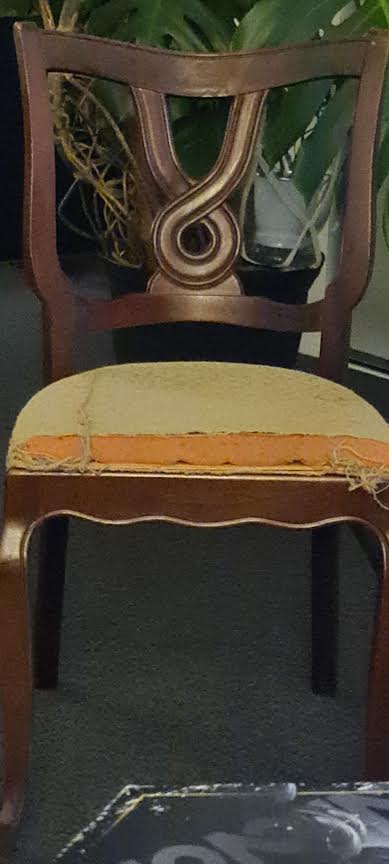
Wooden upholstered side chair with decorative splat back
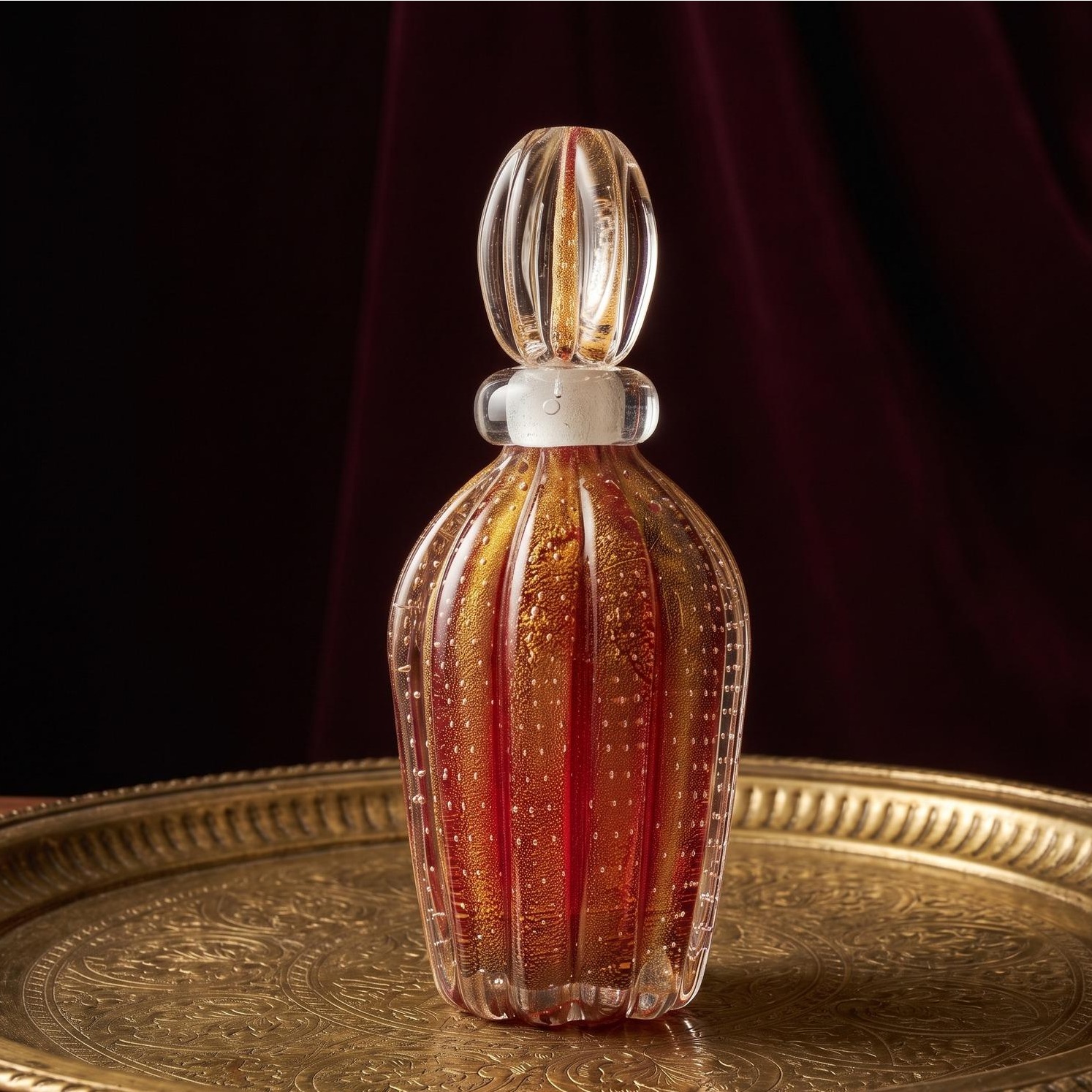
Art glass perfume bottle or scent bottle
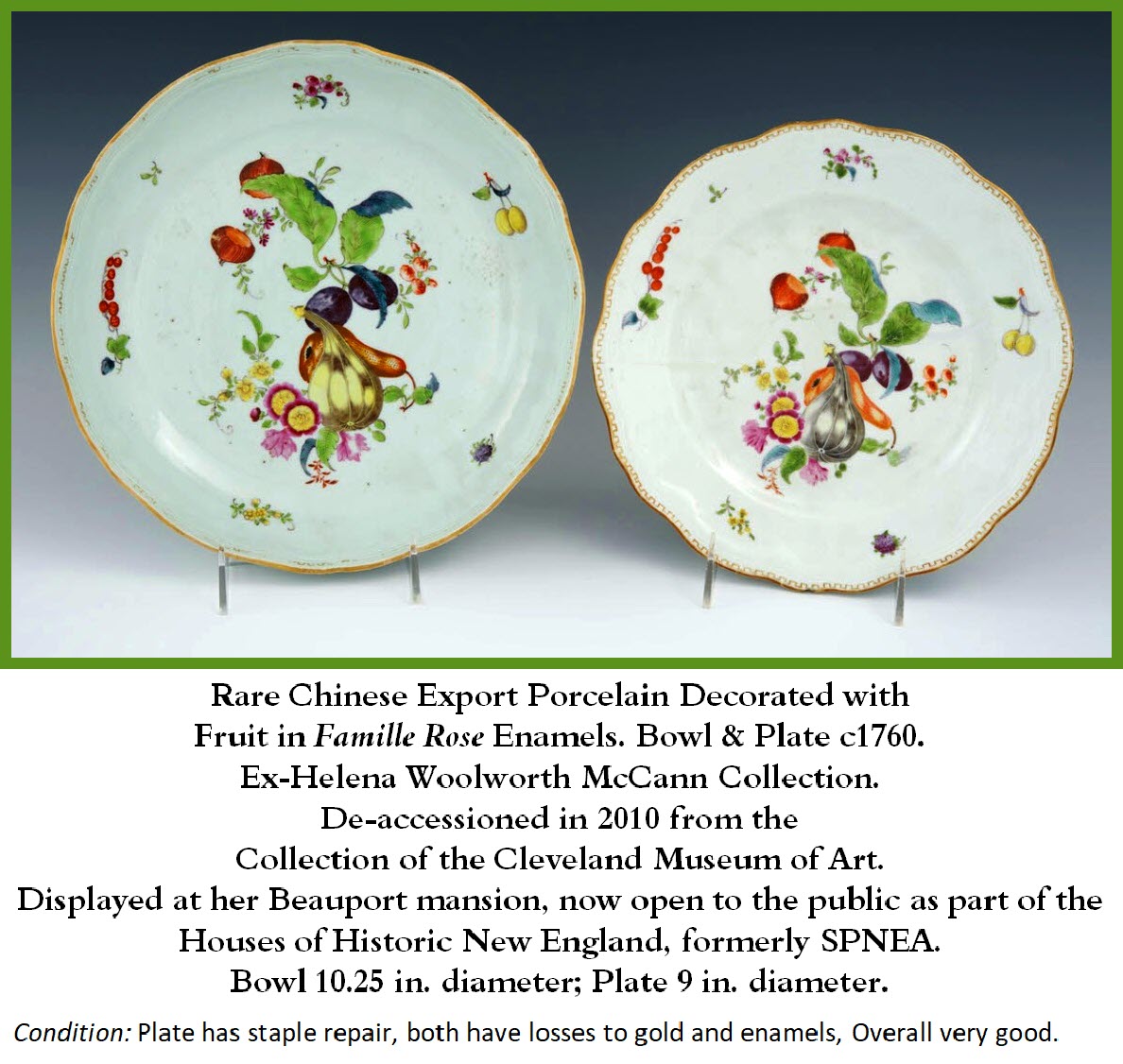
Chinese Export Porcelain Fruit-Decorated Bowl and Plate
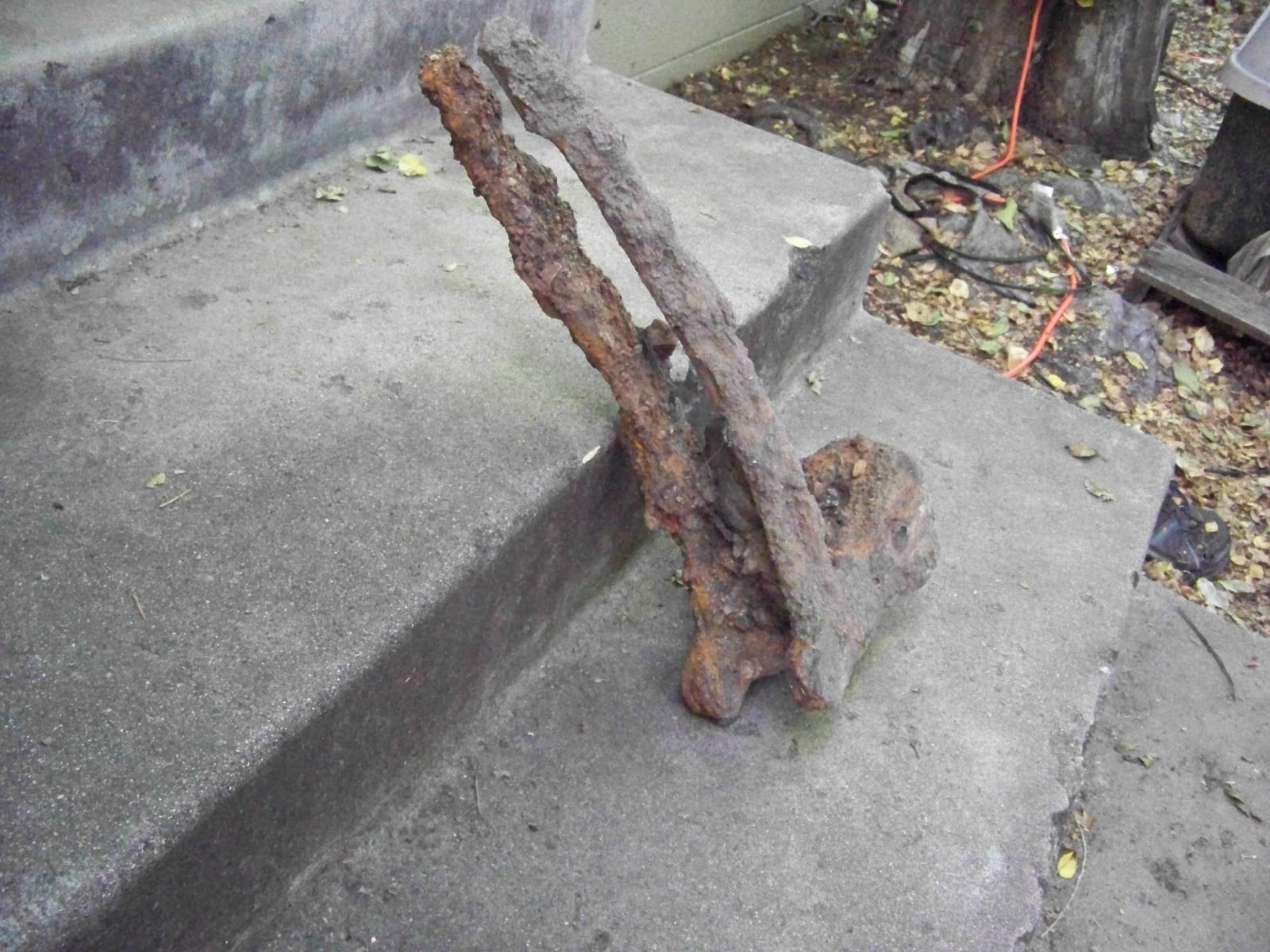
Heavily rusted wrought iron or cast iron hardware fragment
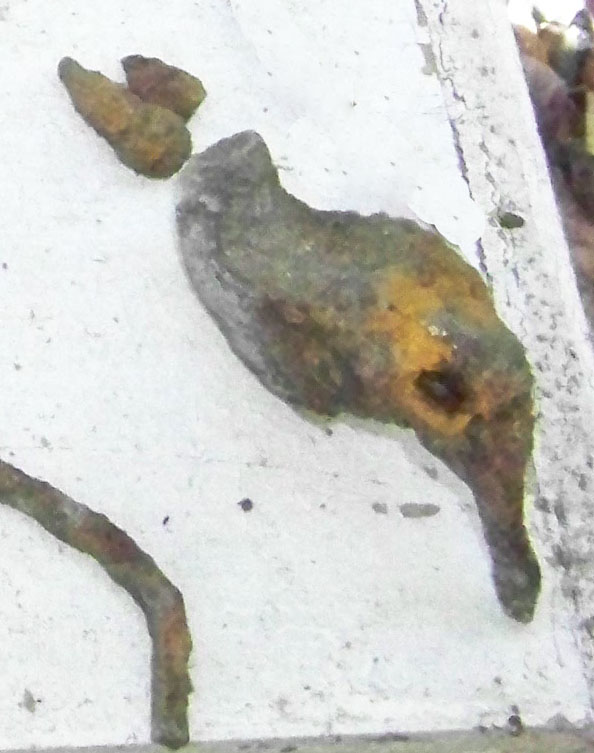
Unknown decorative metal appliqué or cast ornament fragment
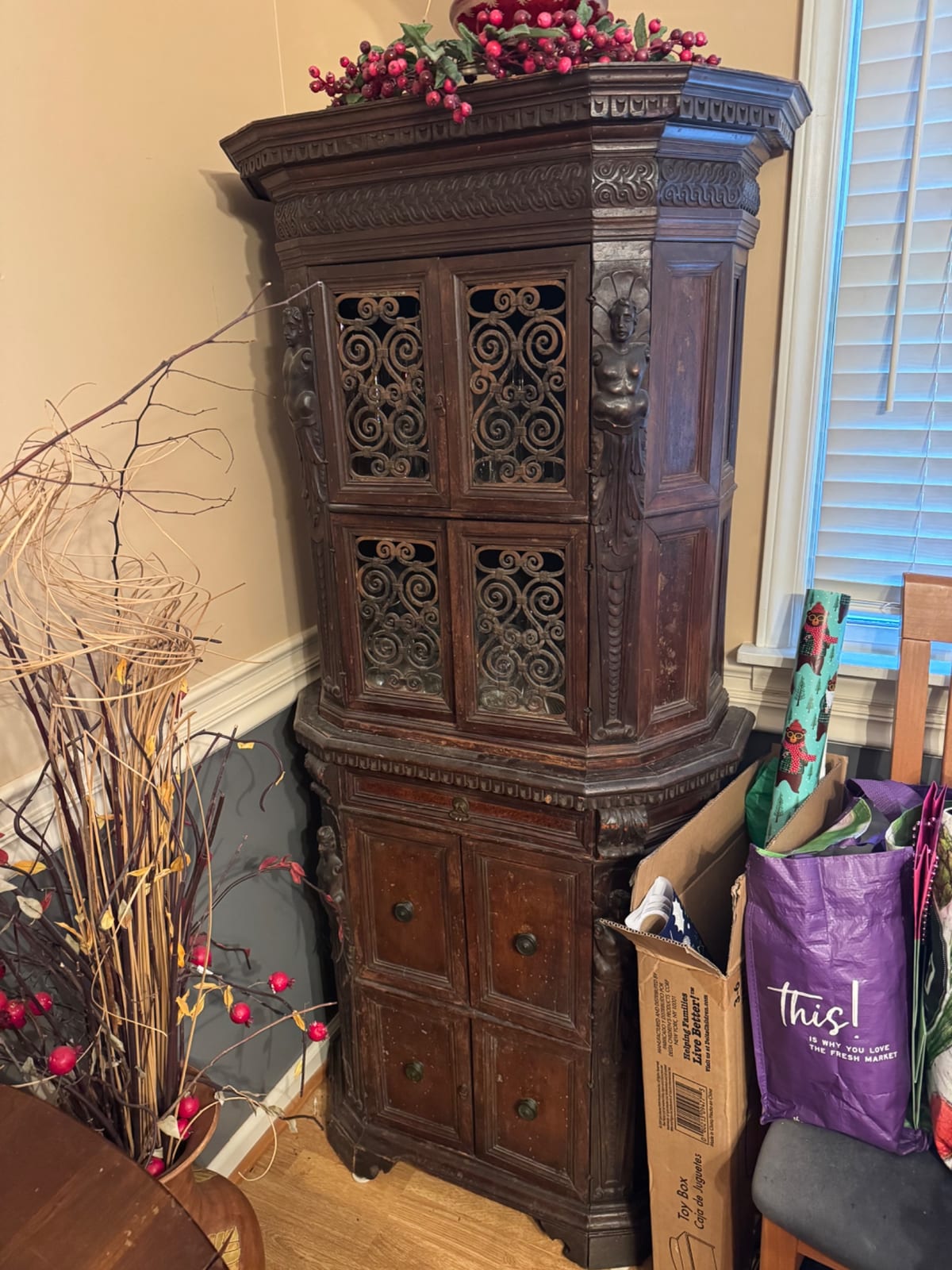
Carved corner cabinet / display cabinet with wrought-iron grille doors
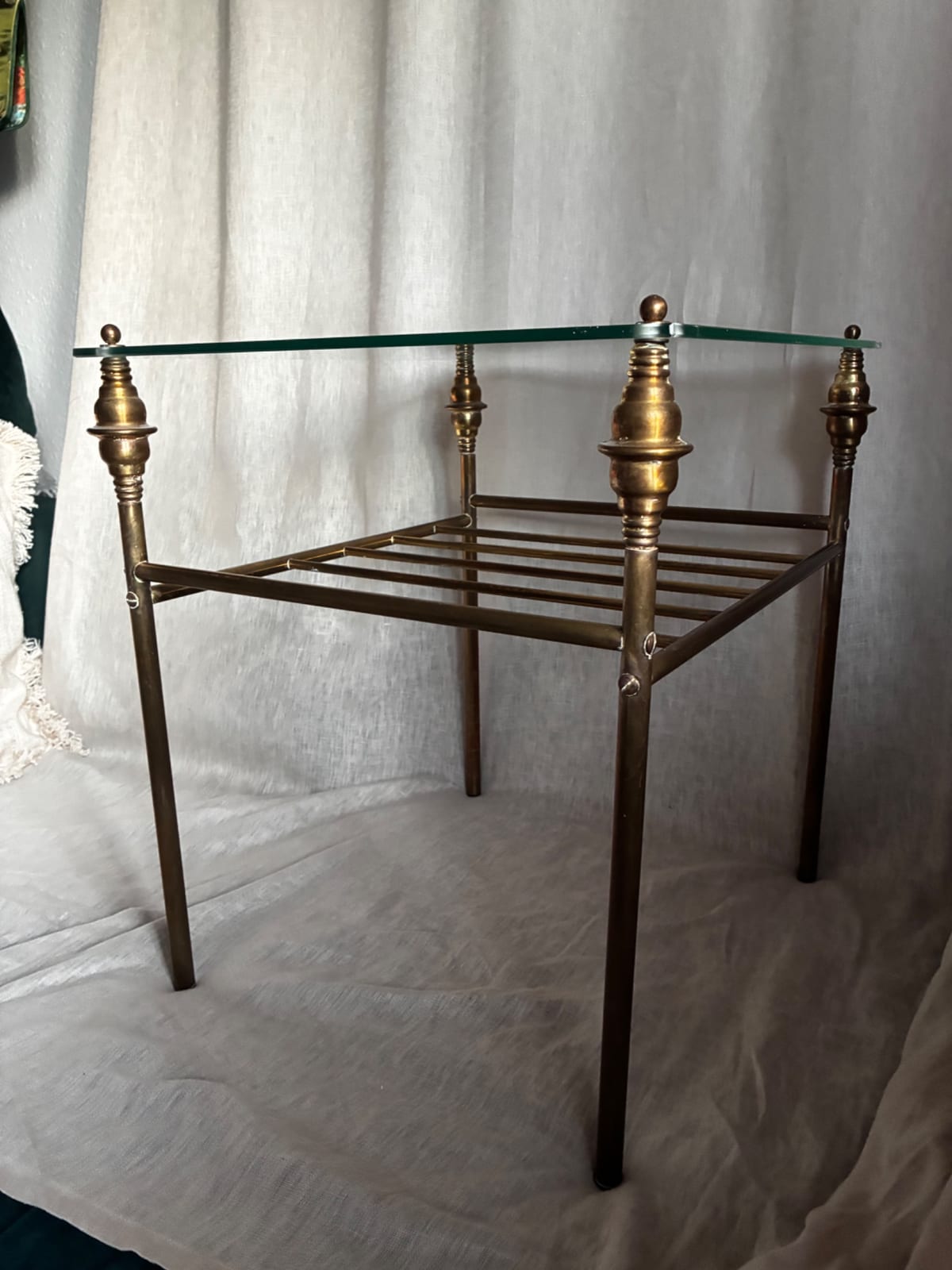
Brass and glass side table / occasional table