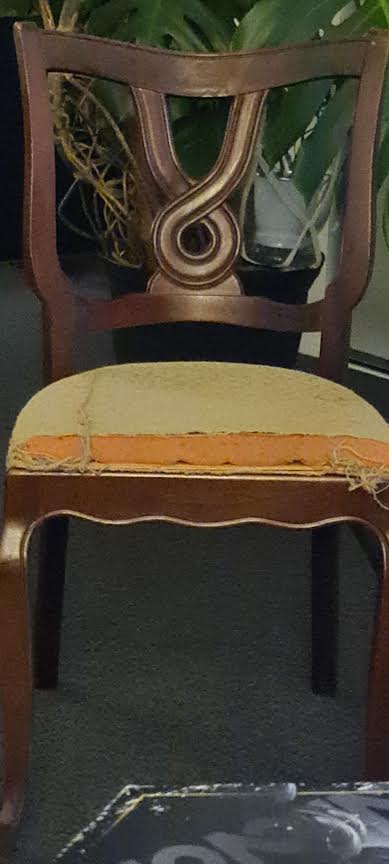
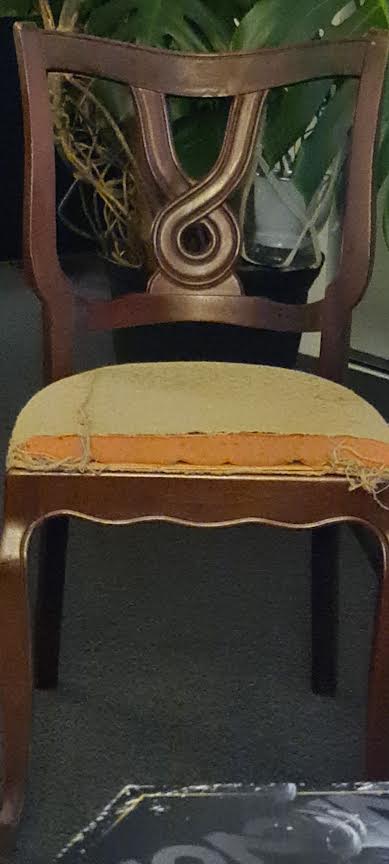
Wooden upholstered side chair with decorative splat back
Estimated Value
$75-$250
A decorative wooden dining or parlor chair with a curved top rail, rectangular side stiles, and an ornate central splat featuring a looping, scroll-like carved or molded design. The frame appears to be a dark-stained hardwood with a traditional form. The seat is upholstered and shows significant wear, with exposed edges and fraying fabric. The design suggests a late Victorian or early 20th-century revival style rather than a highly formal or rare maker-specific piece.
Era
Late 19th century to early 20th century, likely Victorian Revival / Edwardian period
Origin
Likely United States or Europe; exact origin unknown
Material
Stained or finished hardwood frame, woven or upholstered seat padding, textile covering, possible horsehair or foam underlayer
Condition
Fair. The chair appears structurally intact from the front, but the seat upholstery is visibly worn, frayed, and partially detached. Finish shows age and use wear; no clear major breaks visible in the image.
Physical Details
Dimensions
Approximately 36-40 inches tall, 17-19 inches wide, 16-18 inches deep
Weight
Medium
Authentication
Authenticity Score
Medium. The chair appears to be an older traditional piece, but the exact age, maker, and originality of upholstery cannot be confirmed from the image alone.
Provenance
Likely from a domestic dining room or parlor set; no maker's mark or label is visible, so precise provenance cannot be determined from the image alone.
Historical Significance
Chairs of this type reflect late 19th- and early 20th-century domestic furniture trends, when decorative carved backs and upholstered seats were common in dining and parlor furnishings. While not especially rare, they are representative of period craftsmanship and interior design tastes.
Restoration Notes
- •Seat upholstery appears to have been replaced or repaired at some point, though this cannot be confirmed.
- •Visible wear and fraying suggest the seat covering is not original or has deteriorated significantly.
This identification and value range are AI-generated research aids, not authentication, certification, or a formal appraisal. Learn about the limitations and when to consult a qualified professional appraiser.
Research this item further
Related Identifications
Browse all →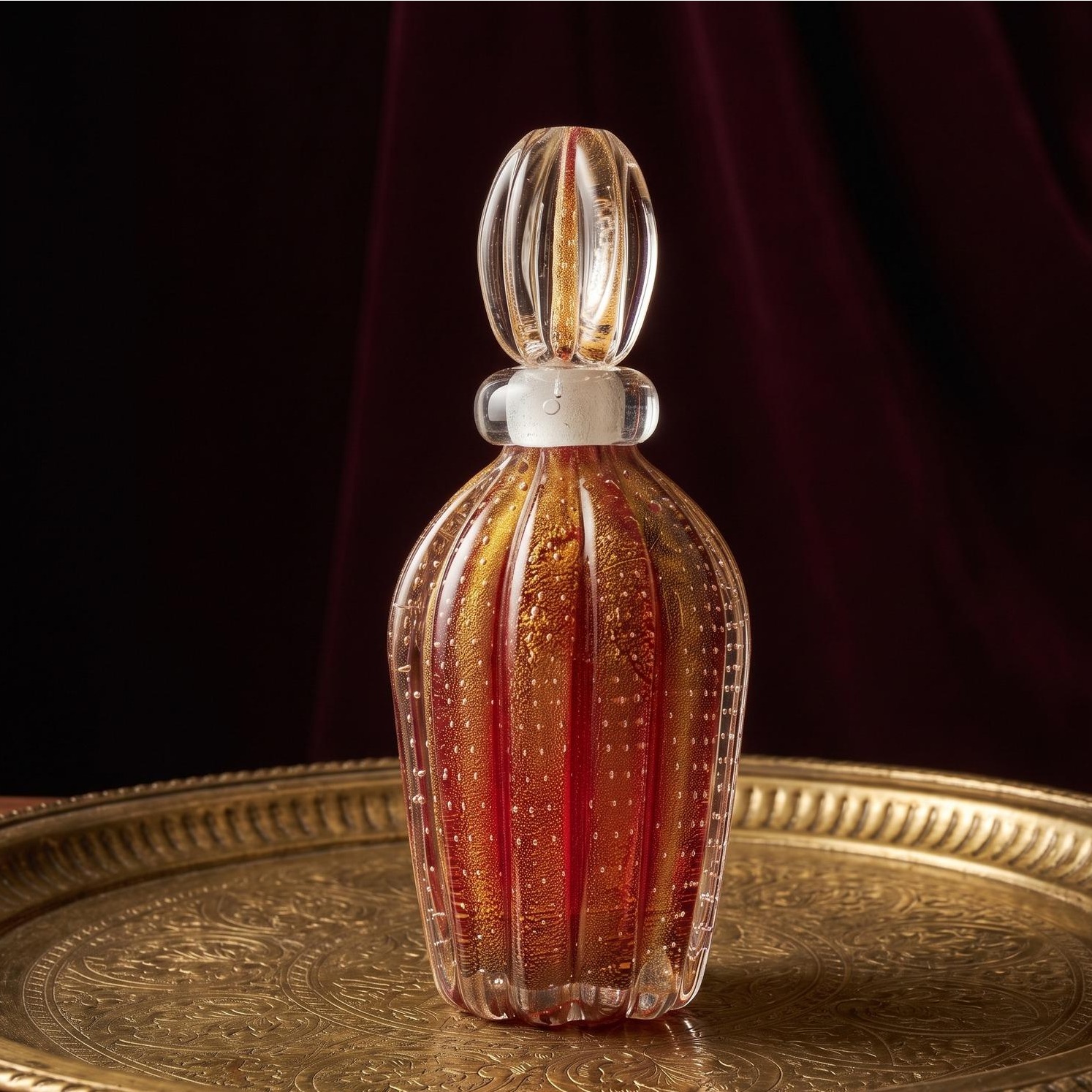
Art glass perfume bottle or scent bottle
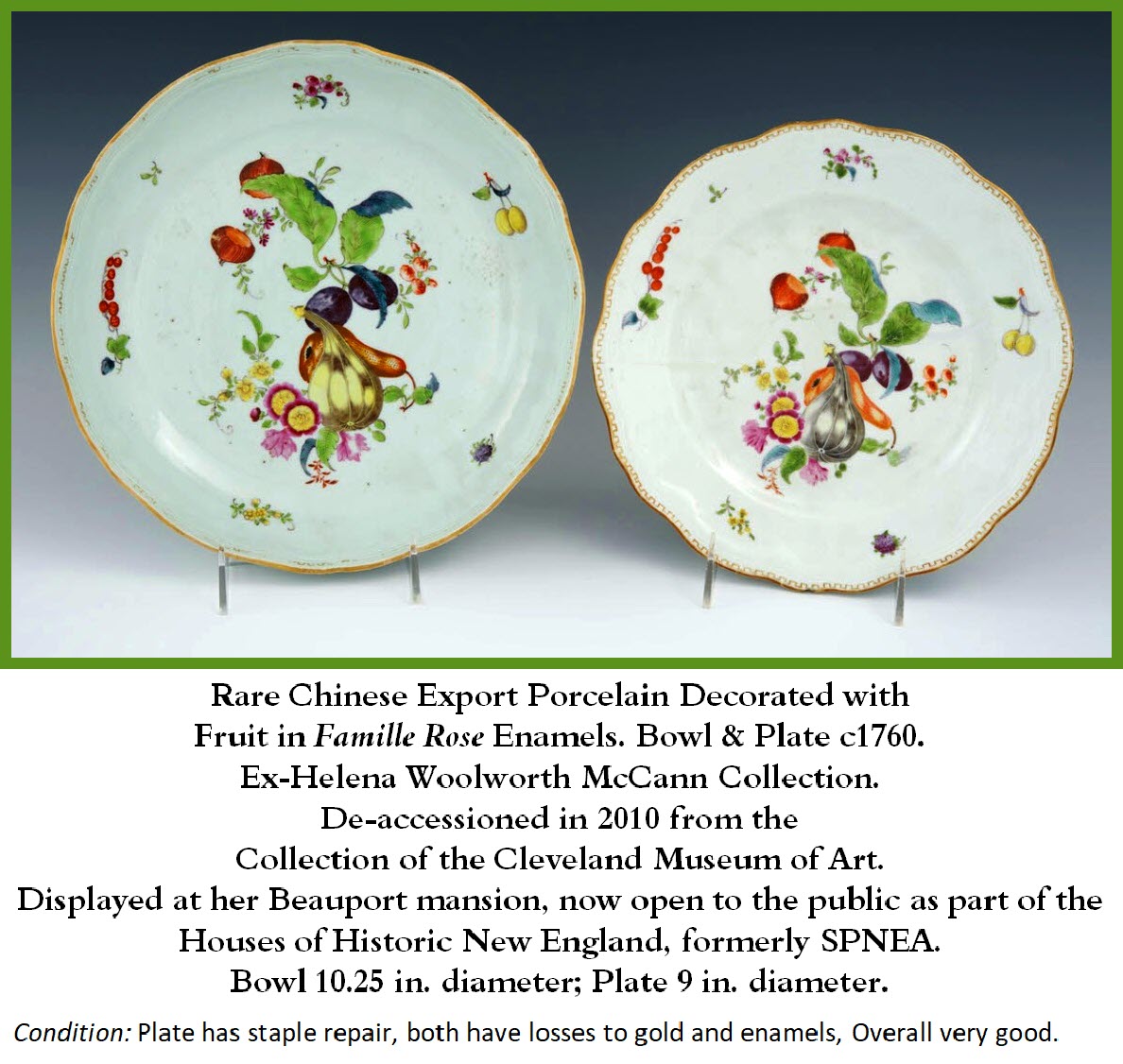
Chinese Export Porcelain Fruit-Decorated Bowl and Plate
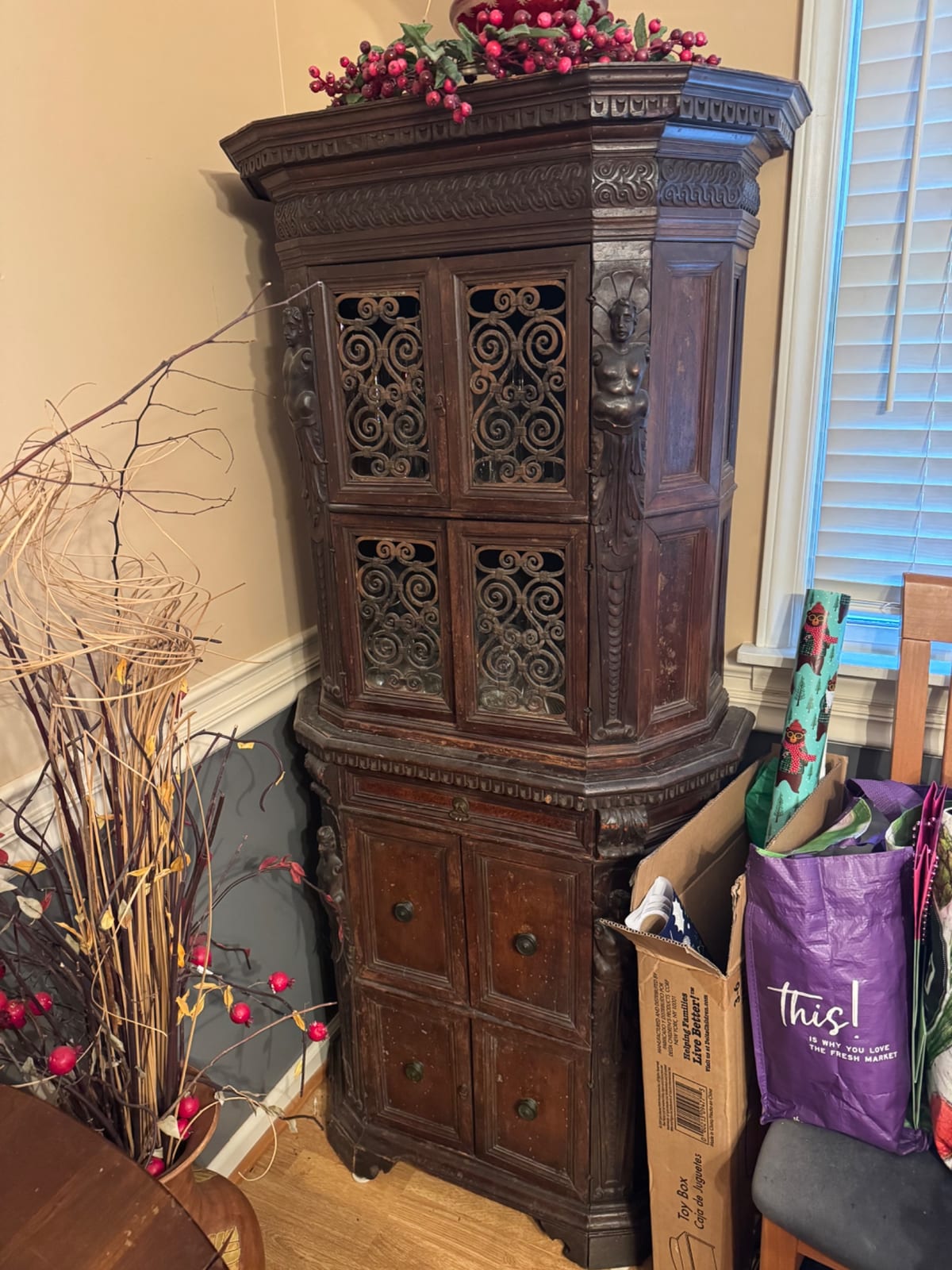
Carved corner cabinet / display cabinet with wrought-iron grille doors
Wooden dining chair with decorative lyre/splat back
Heavily rusted wrought iron or cast iron hardware fragment
Unknown decorative metal appliqué or cast ornament fragment
Brass and glass side table / occasional table