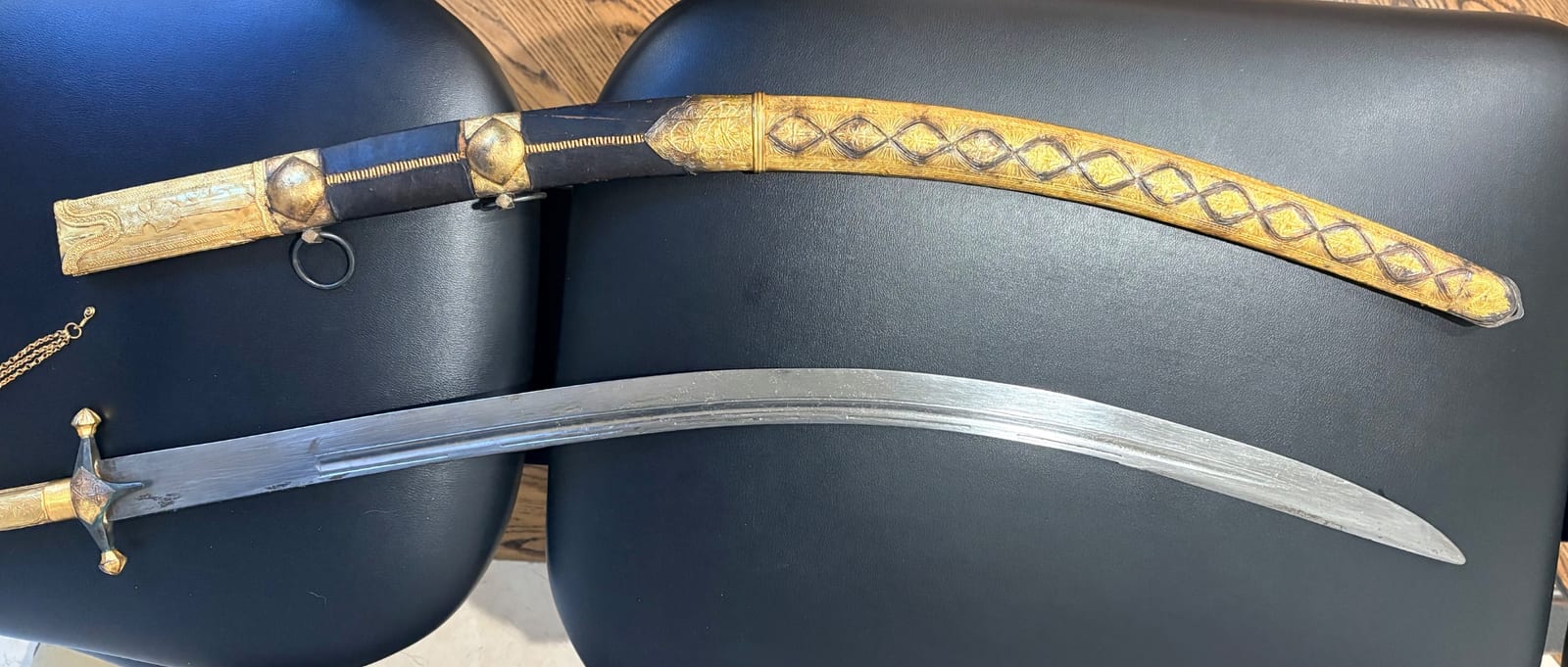
Decorative curved saber / shamshir-style sword with ornate scabbard
Estimated Value
$300-$1,200
A curved saber-style sword with a single-edged blade and an elaborately decorated scabbard. The scabbard features extensive gold-toned ornamentation with engraved or repoussé-style geometric and floral motifs, including repeating interlaced patterns along the length. The hilt area appears similarly decorated, with a dark wrapped section and metal mounts. The blade is broad, gently curved, and single-edged, consistent with a shamshir, kilij, or related ceremonial/functional saber form. The overall presentation suggests a decorative or ceremonial weapon rather than a plain military issue piece. No maker's mark or inscription is visible in the provided image.
Era
Likely 19th to early 20th century; exact dating unknown from image alone
Origin
Possibly Middle Eastern, Persian, Ottoman, or South Asian influence; exact origin unknown
Material
Steel blade; gilt/brass or brass-mounted scabbard; possible leather or textile wrapping; metal fittings
Condition
Good overall condition with visible wear, surface scratches, and age-related patina; blade shows polishing/abrasion and possible cleaning marks; scabbard decoration remains intact but shows handling wear
Physical Details
Dimensions
Approximately 30-36 inches blade length; overall length likely 36-42 inches
Weight
Medium
Authentication
Authenticity Score
Medium-Low; the object appears period-style and possibly antique, but the image alone does not confirm age, origin, or whether it is a genuine antique versus a later decorative reproduction
Provenance
Likely from a region where curved sabers were traditional, possibly Persian, Ottoman, or Indian subcontinental. Without inscriptions, hallmarks, or a full view of the hilt and blade tang, provenance cannot be confirmed.
Historical Significance
Curved sabers of this type are historically associated with cavalry, ceremonial display, and elite martial traditions across the Middle East, North Africa, and South Asia. Ornate examples were often carried by officers, nobles, or used as prestige items. Even when not combat-used, they reflect important regional metalworking and decorative arts traditions.
Restoration Notes
- •Possible blade polishing or cleaning visible
- •No obvious structural repairs visible from the image
- •No clear evidence of replacement parts, though close inspection would be needed
This identification and value range are AI-generated research aids, not authentication, certification, or a formal appraisal. Learn about the limitations and when to consult a qualified professional appraiser.
Research this item further
Related Identifications
Browse all →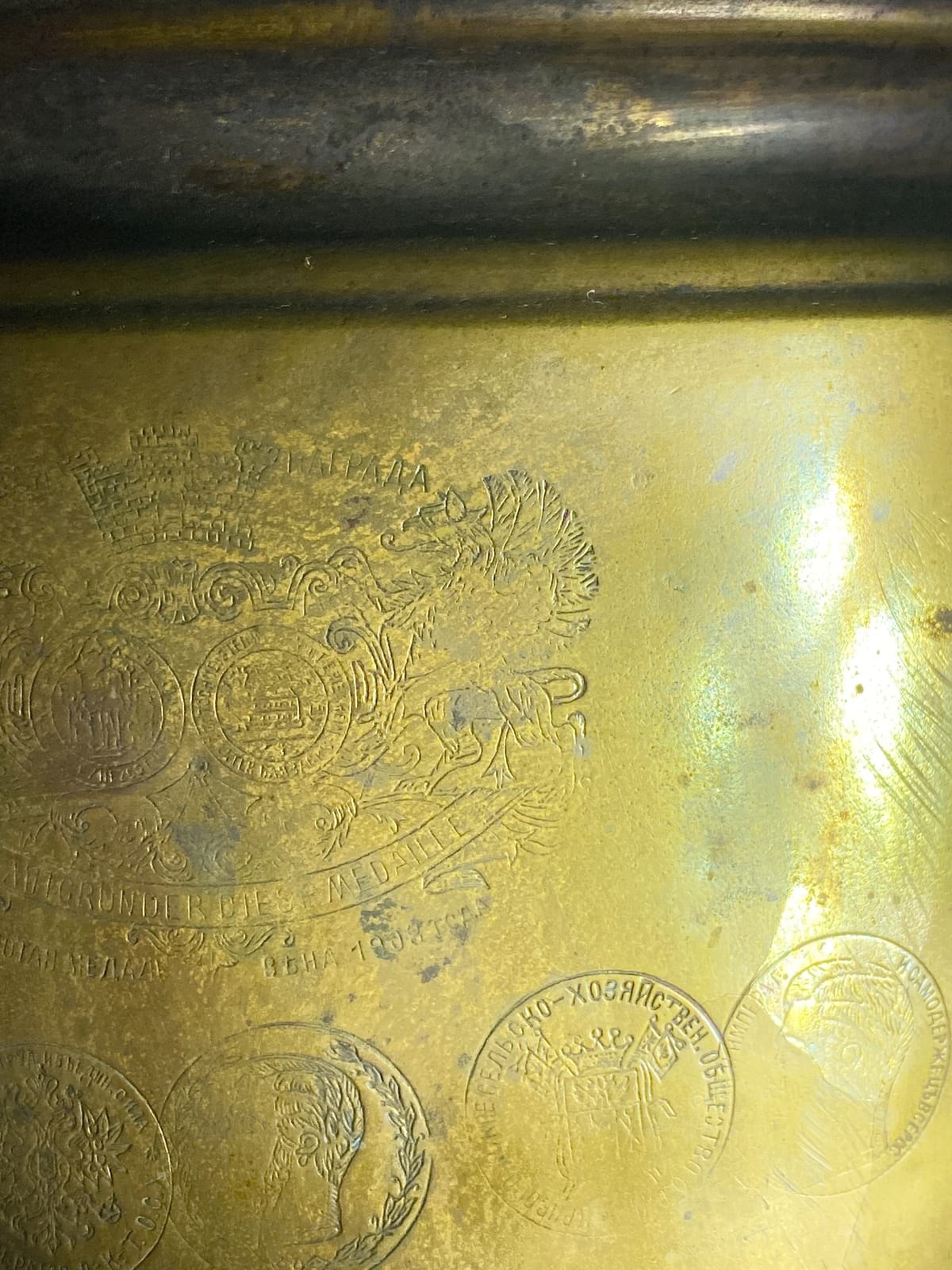
Brass samovar or large brass tea urn with Russian imperial-style commemorative engravings
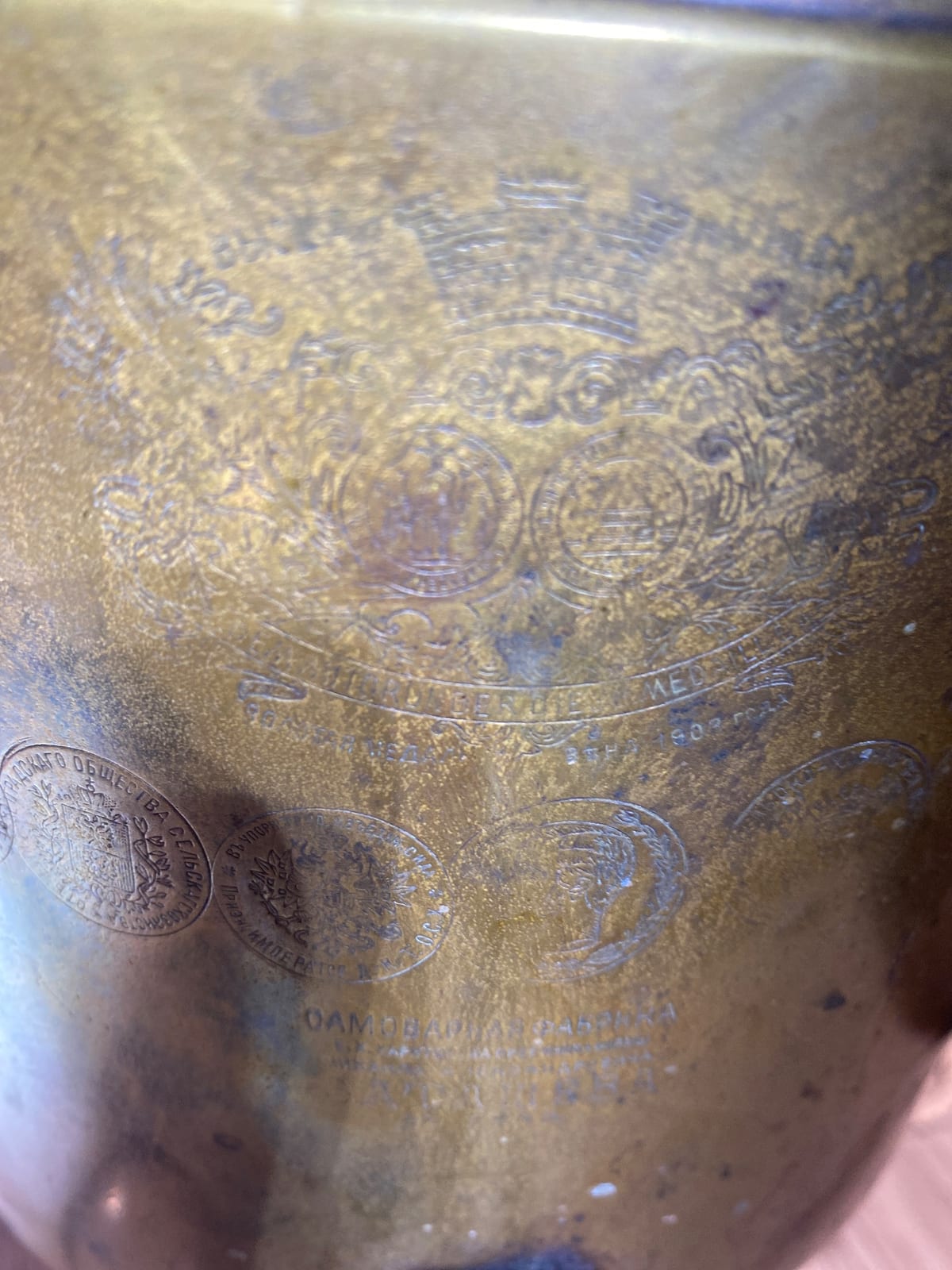
Russian Imperial-era commemorative brass/bronze vessel or samovar body with stamped seals
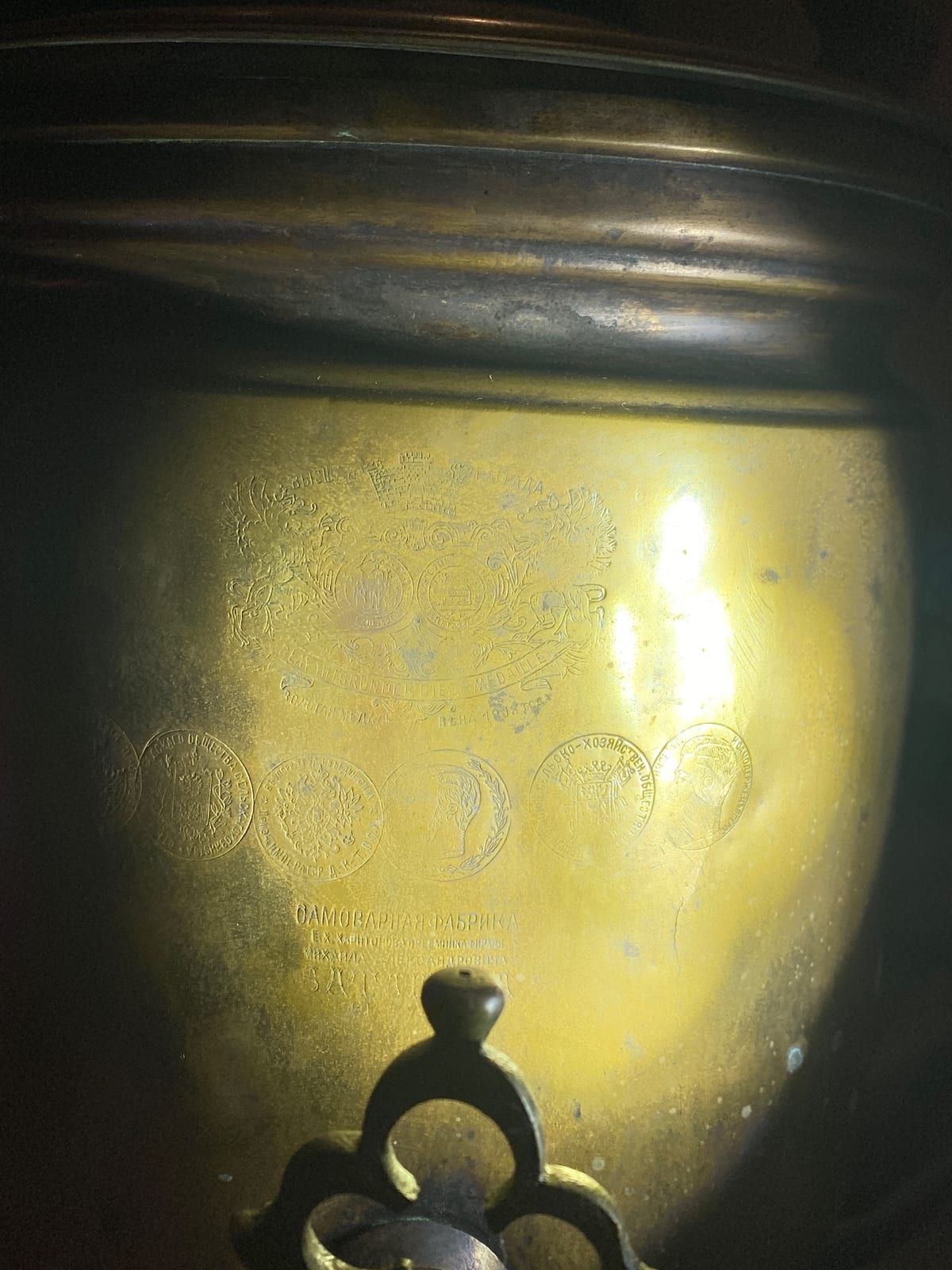
Russian brass samovar
Decorative dagger or short sword hilt with crossguard and blade fragment
Decorative ceremonial sword or dagger (likely Middle Eastern/Islamic-style, possibly a jambiya or khanjar-inspired piece)
Pink molded glass leaf-shaped serving dish / centerpiece bowl
Antique sword or short saber with disc guard